Back pain can make recovery feel confusing. One day you may be able to work, walk, or exercise normally, and the next day bending, sitting, or getting out of bed may hurt. When people search forhow to fix back pain, they are usually looking for a practical answer: what should I do first, what should I stop doing, and how can I tell whether I am actually getting better?
The important point is that back pain is a symptom, not one single condition with one universal treatment. Many uncomplicated episodes improve with time and conservative care, but severe pain after an injury, progressive weakness, significant numbness, or bladder and bowel changes can require medical evaluation rather than another home remedy.
A sensible recovery plan therefore starts by understanding the pattern of pain, reducing aggravating activities without becoming completely inactive, restoring comfortable movement, gradually rebuilding strength and function, and knowing when professional care is needed. This step-by-step approach explains how to move from the first painful days toward a safer return to normal activity.
What does it mean to “fix” back pain?
“Fixing” back pain does not necessarily mean finding one treatment that makes the pain disappear immediately. For many people, recovery means reducing pain, restoring movement, returning to normal activities, and addressing factors that may contribute to repeated episodes.
The first step is to determine whether the symptoms appear consistent with uncomplicated musculoskeletal back pain or whether something about the pattern requires evaluation.
If you are trying to understand what causes back pain, consider when the pain began and what was happening beforehand. Common triggers include lifting, repetitive activity, prolonged sitting, sudden changes in exercise, or an awkward movement, but other medical conditions can also produce back symptoms.
Low back pain is extremely common. Global estimates indicate that about 619 million people experienced low back pain in 2020, with the number projected to reach about 843 million by 2050. Non-specific low back pain is the most common presentation, meaning a specific structural disease is not identified as the sole explanation for many cases.
Step 1: Decide whether you can start with conservative care
Before trying to “fix” your back yourself, check for warning signs.
Conservative management may be reasonable when:
- Pain is mild or moderate and manageable.
- You can walk and perform basic daily activities.
- Symptoms began without major trauma.
- You do not have significant or progressive weakness.
- You do not have new bladder or bowel problems.
- There is no unexplained fever or serious illness accompanying the pain.
- Your overall function is stable or gradually improving.
The pattern matters more than pain intensity alone. A very painful muscle strain can improve normally, while a less dramatic symptom accompanied by neurological changes may need medical assessment.
For a broader overview of symptoms and causes, see understanding back pain.
Step 2: Reduce aggravating activities without stopping all movement
A common mistake is going from normal activity to complete bed rest. Another is continuing heavy lifting, intense exercise, or repetitive bending because you believe you need to “push through” the pain.
Neither extreme is usually necessary for uncomplicated back pain.
Instead, temporarily reduce the activities that clearly increase your symptoms while maintaining comfortable movement. For example, you might stop heavy lifting for several days but continue walking, light household activities, and ordinary movement.
| Instead of… | Try… |
|---|---|
| Staying in bed all day | Taking short, comfortable walks |
| Heavy lifting | Temporarily reducing the load |
| Repeated bending and twisting | Changing the task or movement pattern |
| Exercising through sharp pain | Switching to easier movement |
| Sitting for several hours | Taking regular movement breaks |
Clinical guidance has generally encouraged people with uncomplicated acute or subacute low back pain to remain active as tolerated. Research on the natural course of back pain also shows that many people experience substantial improvement during the first several weeks.
The goal is not to avoid all discomfort. The goal is to avoid repeatedly provoking symptoms while maintaining enough activity to preserve normal function.
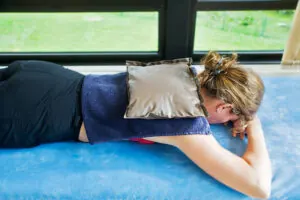
Step 3: Use heat or cold as symptom-relief tools
Heat and cold do not necessarily “fix” the underlying cause of back pain, but they may make movement and daily activities more comfortable.
A useful comparison is:
| Option | When it may help | What to watch for |
|---|---|---|
| Heat | Stiffness, tightness, general soreness | Excessive heat can burn skin |
| Cold | Short-term comfort after irritation or activity | Avoid prolonged direct skin exposure |
| Neither | When temperature treatment does not help | Focus on movement and positioning |
Clinical guidance has found moderate-quality evidence supporting superficial heat as one non-drug option for acute or subacute low back pain.
If you are unsure should you use heat or ice for back pain, choose whichever provides comfortable relief without irritating your skin or worsening symptoms.
Do not assume that more heat equals more healing. If you notice that heat can worsen back pain, stop using it rather than increasing the temperature or exposure time.
Step 4: Restore comfortable movement
Once the initial flare begins settling, movement becomes an important part of recovery.
Start with movements you can perform comfortably. Walking is often an accessible starting point because it requires relatively little equipment and allows you to control the pace and duration.
You can then gradually reintroduce activities such as:
- Walking for longer periods
- Comfortable bending
- Normal household activities
- Light mobility work
- Gradual strengthening
- Work-related movements
Do not use pain as the only measure of whether an activity is appropriate. Look at what happens afterward as well. If a small increase in soreness settles relatively quickly and your overall function continues improving, that is different from progressively worsening pain or the appearance of new neurological symptoms.
Step 5: Add exercises gradually
Exercise can become more important as recovery progresses, particularly when back pain becomes recurrent or persistent. However, the ideal exercise depends on the individual, the duration of symptoms, and the person’s physical capacity.
A 2024 systematic review and network meta-analysis involving 82 trials and 5,033 participants with chronic non-specific low back pain found a dose-response relationship between exercise and pain outcomes. The researchers also found that the relationship was not simply “more exercise is always better,” reinforcing the importance of appropriate dosage and progression.
For acute non-specific low back pain, the evidence is less straightforward. A 2024 systematic review found that exercise therapy may provide little clinically important short-term benefit compared with sham or no treatment, although the certainty of the evidence was very low.
This distinction is important: exercise can be useful for long-term recovery and function, but aggressively exercising during an acute flare is not automatically better.
For practical exercise ideas, see exercises for lower back pain.
How should exercise progress?
| Recovery stage | Main goal | Example approach |
|---|---|---|
| Early flare | Maintain comfortable movement | Short walks and gentle mobility |
| Improving symptoms | Restore normal movement | Longer walks and light exercises |
| Stable symptoms | Build capacity | Gradual strengthening |
| Recurrent or persistent pain | Improve strength and function | Structured exercise program |
| Return to demanding activity | Restore tolerance | Gradually increase load and intensity |
If exercise repeatedly causes sharp pain, significant symptom spreading, new weakness, or increasing numbness, stop and seek professional guidance.
Step 6: Address sleep and nighttime symptoms
Poor sleep can make recovery harder, particularly when pain makes it difficult to find a comfortable position.
There is no universally correct sleeping position. Some people find side sleeping with a pillow between the knees comfortable, while others prefer sleeping on their back with support beneath the knees.
The practical goal is to find a position that reduces strain and allows you to change position comfortably.
If you are looking for sleeping positions for back pain, experiment with support rather than forcing yourself into one posture that increases pain.
Your mattress can also influence comfort, although there is no simple rule that the firmest mattress is best. Support, comfort, and your ability to change position all matter. See how to choose a back-friendly mattress if your sleeping surface seems to be contributing to discomfort.
Persistent nighttime back pain deserves more attention when it is severe, progressive, unexplained, or associated with other concerning symptoms.
Step 7: Gradually return to normal activity
Recovery becomes more meaningful when you can resume the activities that matter to you.
If you normally exercise, do not jump immediately from rest back to your previous workload. Reduce the intensity or duration initially and build back gradually.
If your work involves lifting, consider returning to lighter loads before attempting your normal workload. If your work involves prolonged sitting, take regular movement breaks.
A useful progression is:
Comfortable daily movement → longer activity → light exercise → normal exercise → higher-demand activity.
The pace varies from person to person. Recovery is not necessarily linear, and a temporary increase in soreness after becoming more active does not automatically mean that you have caused new damage.
Step 8: Consider whether the pain location changes the next step
The location and pattern of pain can provide useful information.
For example, lower back pain causes can differ from causes of upper-back or rib-area symptoms. Pain concentrated on one side may also have different possible explanations.
If symptoms are mainly on the right side, causes of right lower back pain may be relevant. Women with left-sided lower-back symptoms and accompanying pelvic or abdominal symptoms may need to consider causes beyond the spine, including those discussed under lower left back pain in women.
Pain around the ribs also deserves a different approach. Rib and back pain can have musculoskeletal and non-musculoskeletal explanations, so the associated symptoms matter.
Step 9: Do not overlook symptoms outside the back
Not every episode of back pain originates from the muscles, joints, or spine.
Digestive symptoms can sometimes occur alongside back discomfort. For example, people commonly wonder about the connection between constipation and back pain. Persistent abdominal pain, bowel changes, vomiting, bleeding, or other unusual symptoms should not simply be attributed to the back.
Likewise, a hernia can sometimes be associated with back discomfort, but can a hernia cause back pain depends on the full clinical picture.
The same caution applies to chest or breathing symptoms. Back pain with breathing, especially when accompanied by shortness of breath or significant chest symptoms, should not automatically be treated as ordinary muscle soreness.
Step 10: Measure recovery by function, not just pain
Pain intensity can fluctuate from day to day. A better way to judge recovery is to consider several factors together.
Ask yourself:
- Can I walk farther than I could a few days ago?
- Can I sit or stand longer?
- Can I perform more normal activities?
- Is the pain less intense overall?
- Am I needing fewer periods of rest?
- Can I perform movements that previously aggravated me?
A person whose pain changes from 7/10 to 5/10 but can now walk, work, and sleep more normally may be recovering better than someone whose pain is 4/10 but is becoming increasingly restricted.
What does a typical recovery pattern look like?
| Time period | What may happen |
|---|---|
| First several days | Pain and stiffness may fluctuate considerably |
| First few weeks | Many acute episodes show substantial improvement |
| Around 4–6 weeks | Movement and function may improve significantly |
| Beyond several weeks | Persistent symptoms deserve reassessment if recovery is slow |
| Beyond 12 weeks | Ongoing pain may require a more structured management plan |
A systematic review and meta-analysis of the clinical course of low back pain found moderate-certainty evidence that people with acute and subacute low back pain generally experience substantial improvements in pain and disability during the first six weeks, with recovery tending to slow afterward.
That does not mean everyone should be pain-free within six weeks. Recovery varies, and some people need additional evaluation or treatment.
What should you avoid while trying to fix back pain?
Several approaches can interfere with recovery or create unnecessary problems.
Avoid:
- Prolonged bed rest without a medical reason
- Repeatedly testing a movement that sharply increases pain
- Heavy lifting during a significant flare
- Rapidly returning to high-intensity exercise
- Excessive heat exposure
- Assuming every episode has the same cause
- Ignoring progressively worsening symptoms
- Continuing home treatment despite neurological warning signs
The aim is not to eliminate every sensation before moving again. It is to progressively restore normal function while respecting significant symptoms.
When should you see a healthcare professional?
Arrange an evaluation when back pain is not following an expected recovery pattern or is significantly interfering with daily life.
Medical assessment is particularly appropriate when:
- Pain continues without meaningful improvement.
- Symptoms repeatedly return.
- Pain is progressively worsening.
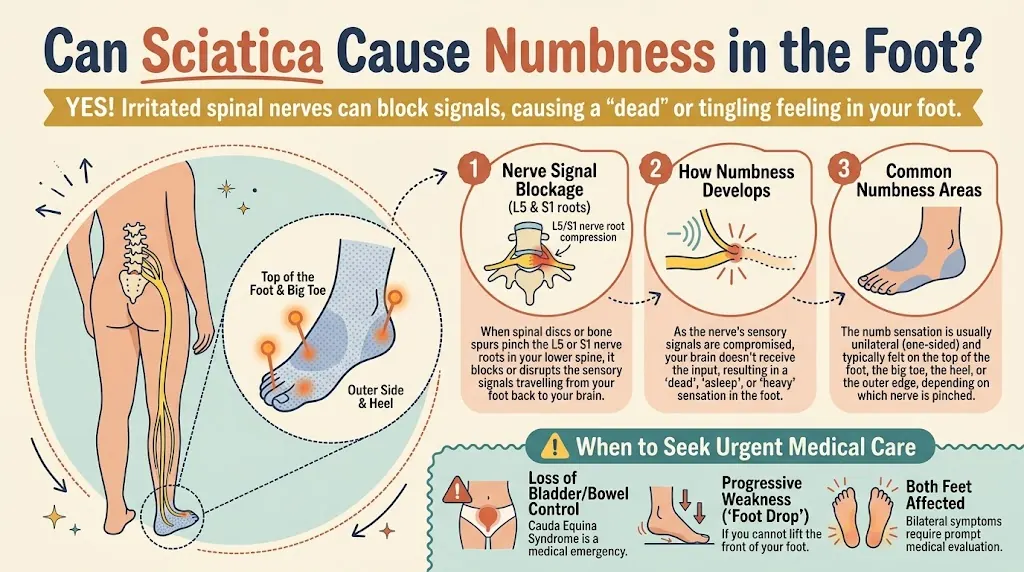
- Numbness or tingling persists.
- Pain travels into an arm or leg and does not settle.
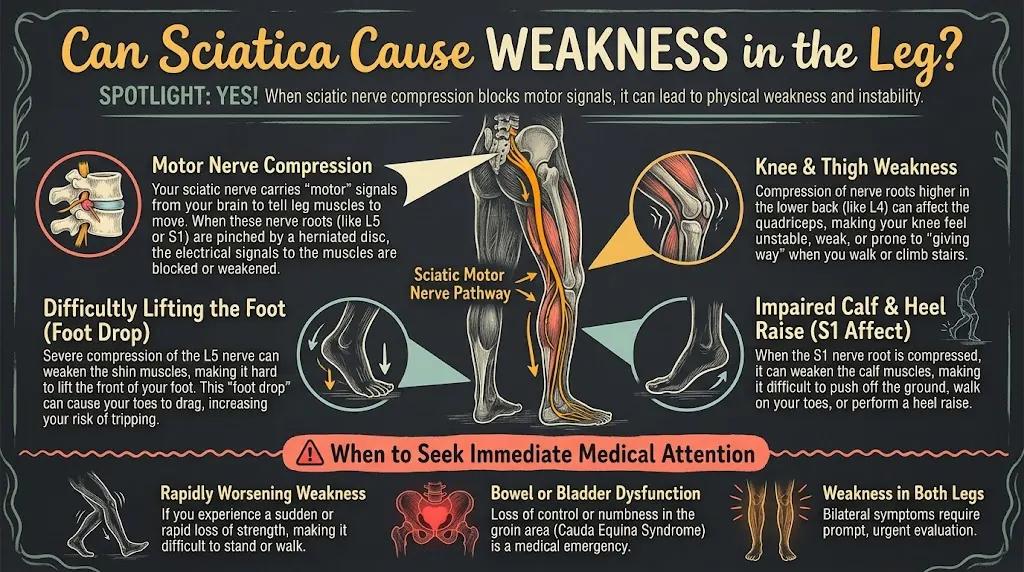
- Weakness develops.
- You have unexplained fever or systemic symptoms.
- Pain began after a significant injury.
For example, symptoms following a collision should not automatically be managed as an ordinary strain. Back pain after a car accident may involve injuries that need examination.
Weather changes are another commonly reported trigger, but research has not established a consistent cause-and-effect relationship between atmospheric pressure and new back pain. If you notice a personal pattern, whether changes in air pressure cause back pain can help put that observation into context.
When is back pain an emergency?
Some symptoms should not be managed at home.
Seek urgent or emergency medical attention for back pain associated with:
- New loss of bladder or bowel control
- Numbness around the groin, genitals, or inner thighs
- Significant or rapidly progressing weakness
- Severe pain following major trauma
- Serious chest pain
- Significant difficulty breathing
- Fainting or severe systemic symptoms
These symptoms do not automatically identify one particular diagnosis, but they can signal conditions requiring prompt assessment.
If you are uncertain when back pain is an emergency, it is safer to seek urgent medical guidance than to continue experimenting with home treatment.
Chest symptoms deserve particular caution. Although some back problems can be associated with chest discomfort, potentially serious heart or lung conditions can also cause chest and back symptoms. Do not assume chest pain caused by back problems is the explanation without appropriate evaluation when symptoms are concerning.
A practical back-pain recovery plan
If your symptoms appear uncomplicated, the process can be simplified into five stages:
1. Protect without immobilizing.
Reduce heavy or painful activities while continuing comfortable movement.
2. Calm the flare.
Use comfortable positioning and, when appropriate, heat or cold for short-term symptom relief.
3. Restore movement.
Walk and gradually resume normal daily activities as symptoms permit.
4. Build capacity.
Introduce appropriate exercises and gradually increase strength, endurance, and activity.
5. Reassess your progress.
If function is improving, continue progressing. If symptoms are worsening, persistent, or accompanied by warning signs, seek professional evaluation.
This approach is more realistic than searching for one treatment that permanently “fixes” every episode of back pain.
Frequently Asked Questions
1. Can back pain be fixed without surgery?
Many episodes of uncomplicated back pain improve without surgery. Treatment depends on the underlying cause, but conservative measures such as maintaining appropriate activity, exercise, education, and symptom management are often used first.
2. How long does it take to fix back pain?
Many acute episodes improve substantially during the first several weeks, although recovery varies. Persistent or worsening symptoms may require further evaluation rather than simply waiting longer.
3. Should I rest or exercise when my back hurts?
For uncomplicated back pain, prolonged bed rest is generally discouraged. Gentle movement is usually preferable, while strenuous exercise should be reduced when it clearly aggravates symptoms.
4. Is walking good for back pain?
Walking can help maintain mobility and normal activity during recovery. Start with a comfortable duration and gradually increase it rather than treating walking as a high-intensity workout.
5. Should I use heat every day for back pain?
Heat can provide short-term relief for some people, particularly with stiffness or muscle tightness, but it does not necessarily address the underlying cause. Use comfortable temperatures and avoid prolonged or excessive exposure.
6. When should I start back exercises?
Gentle movement can often begin early when tolerated, but strengthening should progress according to symptoms and physical capacity. Exercises that cause significant or progressively worsening symptoms should not simply be forced.
7. Why does my back pain keep coming back?
Recurrence can occur for many reasons, including repeated physical demands, inadequate recovery, deconditioning, or an underlying condition. Recurrent episodes that interfere with normal activities may benefit from a more structured assessment and rehabilitation plan.
8. Can a mattress actually fix back pain?
A mattress cannot be expected to correct every cause of back pain. However, a comfortable and supportive sleeping surface may improve sleep and reduce discomfort for some people.
9. What if my back pain is not improving?
If symptoms are not meaningfully improving, especially after several weeks, consider a healthcare evaluation. Persistent symptoms may require a different treatment approach or further assessment of possible causes.
10. What are the warning signs that back pain needs urgent care?
New bladder or bowel control problems, numbness around the groin, significant or rapidly progressing weakness, severe pain after major trauma, and serious chest or breathing symptoms require prompt medical attention rather than continued home treatment.
Conclusion
Knowing how to fix back pain starts with recognizing that recovery is usually a process rather than a single treatment. For uncomplicated symptoms, the practical sequence is to reduce aggravating loads, remain appropriately active, restore comfortable movement, gradually build strength and function, and monitor whether recovery is moving in the right direction.
Many acute episodes improve substantially during the first several weeks, but persistent, worsening, or unusual symptoms should be evaluated rather than repeatedly treated at home. The safest recovery plan is one that improves function while also recognizing when the symptoms fall outside the range of ordinary self-management.
Disclaimer: This article is provided for educational and informational purposes only. It is not a substitute for professional medical advice, diagnosis, or treatment