Lower back pain can make ordinary movements such as getting out of bed, sitting at a desk, bending over, or walking feel harder than usual. You may wonder whether exercising will help your back recover or whether movement could make the pain worse. The right approach is usually not about finding one “perfect” exercise, but choosing movements that you can perform comfortably and progress gradually.
It is also common to think that lower back pain means you should rest until the pain completely disappears. For many people with nonspecific lower back pain, prolonged inactivity can make returning to normal activity more difficult. At the same time, pushing through severe, worsening, or unusual symptoms is not a good strategy, particularly when warning signs suggest that the pain needs medical evaluation.
Exercises for lower back pain are movements or structured exercise programs intended to improve mobility, strength, physical function, and tolerance for everyday activity. This guide explains which types of movement may help, how to exercise without unnecessarily aggravating your symptoms, which exercises may need modification or avoidance, and when back pain should be assessed by a healthcare professional.
Do exercises help lower back pain?
Yes, exercise can help many people with lower back pain, particularly when symptoms are persistent or recurring. However, no single exercise works best for everyone, and the ideal program depends on the person’s symptoms, physical ability, preferences, and underlying cause.
For chronic primary low back pain, research supporting structured exercise is stronger than it is for very recent acute pain. A systematic review used to inform international guidance found that structured exercise programs probably reduce pain and functional limitations in adults and older adults with chronic primary low back pain.
For acute nonspecific lower back pain lasting less than six weeks, the evidence is less convincing. A 2024 systematic review and meta-analysis included 23 randomized controlled trials involving 2,674 participants and found very uncertain evidence that exercise produced clinically important short-term improvements compared with sham treatment or no treatment.
This does not mean you should avoid movement when your back hurts. It means exercise should be matched to the stage and severity of the problem rather than treated as a guaranteed pain-relief technique.
What the research suggests
| Situation | What research suggests | Practical takeaway |
|---|---|---|
| Acute nonspecific lower back pain | Evidence for a specific exercise benefit is very uncertain | Favor comfortable movement and gradual return to normal activity rather than forcing a workout |
| Persistent or chronic lower back pain | Structured exercise can reduce pain and functional limitations | A consistent, progressive program may be useful |
| Different exercise styles | No single style has clearly emerged as best for everyone | Choose movements that are appropriate, tolerable, and sustainable |
| Exercise causes mild temporary soreness | Can occur when activity increases | Reduce intensity or volume if symptoms consistently worsen |
| Exercise causes severe or progressive symptoms | Not expected from routine rehabilitation | Stop and seek appropriate medical advice |
Low back pain is extremely common. An estimated 619 million people worldwide experienced low back pain in 2020, and the number is projected to reach about 843 million by 2050. Because most low back pain is nonspecific, treatment often focuses on restoring movement and function rather than finding one structural abnormality responsible for every symptom.
If you are unsure whether your symptoms fit a typical pattern, understanding what causes back pain can help put exercise recommendations into context.
Which exercises are usually reasonable for lower back pain?
There is no universal exercise routine for lower back pain. A movement that feels helpful to one person may irritate another, so the goal is to start with movements your body tolerates and increase activity gradually.
1. Walking
Walking is one of the simplest ways to remain active when lower back pain makes more demanding exercise uncomfortable. It does not require specialized equipment, and you can adjust the pace and duration according to your tolerance.
Start with a manageable amount rather than trying to reach a specific distance immediately. If 20 minutes feels uncomfortable, several shorter walks may be easier.
Walking should not be viewed as a cure for every cause of lower back pain. If walking consistently causes increasing leg pain, weakness, numbness, or other concerning symptoms, stop and seek medical advice.
2. Gentle mobility exercises
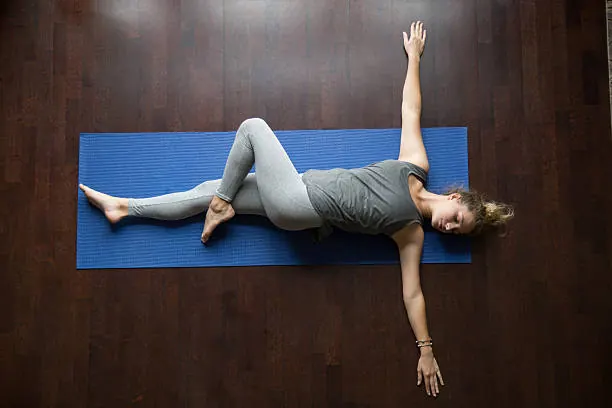
Gentle movements can help maintain or gradually restore spinal and hip mobility. Examples may include controlled pelvic movements, gentle knee-to-chest movements, or comfortable trunk movements, depending on the person’s symptoms.
The key is control rather than forcing a large range of motion. Stretching aggressively into pain is not necessary to make an exercise effective.
For a more structured approach, see exercises for lower back pain for additional movement ideas.
3. Core and trunk strengthening
Strengthening the muscles around the abdomen, hips, and trunk can improve physical capacity and make everyday activities easier. Examples may include modified bridges, abdominal bracing, bird-dog variations, or other controlled strengthening exercises.
These exercises should be progressed gradually. A movement that is appropriate later in recovery may be too demanding during a painful flare.
4. Hip and glute strengthening
The hips and gluteal muscles contribute to many movements that load the lower back, including standing, walking, lifting, and climbing stairs. Exercises such as supported bridges, controlled sit-to-stand movements, and hip-strengthening exercises may therefore be useful components of a broader program.
However, strengthening should not be used to explain every case of lower back pain. Pain can have many contributors, and exercise selection should reflect the person’s actual symptoms and functional limitations.
5. Low-impact aerobic exercise
Cycling, swimming, water exercise, and other low-impact activities may be useful when tolerated. The best choice is often the activity that allows you to stay active without repeatedly provoking symptoms.
You do not necessarily need a complex exercise plan. Consistency and gradual progression are generally more practical than doing a demanding workout occasionally.
How should you exercise when your lower back hurts?
A useful rule is to distinguish between tolerable discomfort and symptoms that indicate you are exceeding your current capacity.
Some people experience mild stiffness or temporary soreness when they begin increasing activity. That does not automatically mean damage has occurred. However, pain that becomes substantially worse during exercise, remains significantly worse afterward, or progressively worsens from session to session is a reason to reduce the intensity, modify the movement, or seek professional guidance.
A simple progression
| Stage | What to focus on | Example |
|---|---|---|
| Early flare | Comfortable movement | Short walks, gentle mobility |
| Improving symptoms | Increase activity gradually | Longer walks, basic strengthening |
| Persistent symptoms | Structured progression | Strength, aerobic exercise, mobility |
| Returning to demanding activity | Build task-specific capacity | Lifting, sport, work-specific movements |
Avoid treating pain intensity alone as the only measure of progress. You may still have some discomfort while becoming more capable of walking, working, sleeping, bending, or performing daily activities.
If you are looking for practical strategies beyond exercise, how to relieve back pain at home covers other conservative measures that may complement an activity-based approach.
Which exercises should you avoid with lower back pain?
You do not necessarily need to permanently avoid particular exercises just because you have lower back pain. Instead, exercises may need to be temporarily modified when they repeatedly aggravate symptoms or exceed your current physical capacity.
Exercises that deserve caution include:
- Heavy lifting during a severe flare when you cannot maintain reasonable control.
- Repeated twisting or bending that consistently increases your pain.
- High-impact activity when impact clearly aggravates symptoms.
- Aggressive stretching that produces sharp or escalating pain.
- Exercises that cause new or worsening numbness, tingling, weakness, or radiating symptoms.
- Complex movements performed with poor control because you are trying to progress too quickly.
The problem is not that bending, twisting, lifting, or resistance training are inherently harmful. Healthy backs normally perform these movements. The concern is whether the movement is currently appropriate for your symptoms and conditioning.
Exercises that cause pain: when should you stop?
| Response during or after exercise | What to do |
|---|---|
| Mild, manageable discomfort that settles | Consider continuing at the same or slightly reduced level |
| Mild soreness that lasts briefly | Monitor and allow adequate recovery |
| Pain clearly increases after every session | Reduce intensity, repetitions, or range of motion |
| Sharp or severe pain | Stop the movement |
| New weakness or significant numbness | Stop and seek medical assessment |
| New bowel or bladder problems with back symptoms | Seek urgent medical care |
A useful principle is modify before abandoning movement. You may be able to perform the same general exercise with fewer repetitions, a smaller range of motion, less resistance, slower movement, or more recovery time.
Is stretching good for lower back pain?
Stretching can be useful when restricted mobility contributes to discomfort, but more stretching is not automatically better.
Gentle stretching may be reasonable when it feels comfortable and improves movement. You should not force the spine or hips into a painful position simply because you believe tight muscles are the cause of your symptoms.
Exercise programs for lower back pain often combine mobility, strengthening, and aerobic activity rather than relying exclusively on stretching. Research has not established one exercise type as universally superior for every person with low back pain.
How often should you do exercises for lower back pain?
There is no single frequency that works for everyone. The appropriate amount depends on the type of exercise, your current fitness level, symptom severity, recovery, and whether you have acute, persistent, or recurrent pain.
For someone beginning after a painful flare, shorter sessions performed consistently may be more realistic than an intense workout once or twice a week. As tolerance improves, you can gradually increase duration, repetitions, resistance, or complexity.
If exercise repeatedly leaves you substantially worse the following day, that is useful feedback that the current workload may be too high.
Should you rest when your lower back hurts?
Usually, prolonged bed rest is not the preferred approach for uncomplicated lower back pain. Staying reasonably active can help maintain physical function and make the transition back to normal activities easier.
That does not mean you should ignore severe pain or force yourself through an activity that clearly worsens symptoms. Temporary reduction in activity may be appropriate during a flare, followed by gradual reintroduction of movement.
Sleep and recovery also matter. If symptoms are interfering with rest, you may benefit from reviewing the best sleeping positions for lower back pain or considering whether your sleeping surface is contributing to discomfort.
What if exercise makes lower back pain worse?
A temporary increase in symptoms does not automatically mean the exercise has injured your back. However, repeated worsening is a signal to reassess the exercise, dosage, technique, or diagnosis.
Ask yourself:
- Did the exercise require more strength or range of motion than you currently have?
- Did you suddenly increase the number of repetitions or resistance?
- Did symptoms begin radiating farther down a leg?
- Did you develop new numbness or weakness?
- Are symptoms returning to baseline within a reasonable period, or worsening each day?
If you are repeatedly getting worse, stop the aggravating exercise and consider professional assessment rather than simply pushing through.
For people whose symptoms are specifically worse at night, why back pain gets worse at night may provide useful context about when additional evaluation is appropriate.
Can you exercise with sciatica or pain going down the leg?
Exercise may still form part of treatment when lower back pain is accompanied by leg symptoms, but the approach should be more individualized.
Pain that travels down the leg, particularly when accompanied by numbness, tingling, or weakness, may indicate irritation of a spinal nerve or another condition that needs assessment. Not every exercise that feels good for ordinary lower back pain is appropriate for radiating symptoms.
If you develop significant or progressive weakness, widespread numbness, or changes in bladder or bowel function, do not attempt to manage the symptoms solely with home exercises.
When should you stop exercising and seek medical care?
Some symptoms should not be treated as ordinary exercise soreness.
Symptoms that can often be monitored
If your symptoms are mild, stable, and improving, you can often modify activity and monitor your response. Mild stiffness or temporary soreness after increasing activity can occur, especially if you have been inactive.
Symptoms that warrant medical evaluation
Arrange an evaluation if back pain:
- Persists without meaningful improvement.
- Repeatedly returns and limits normal activities.
- Travels into a leg and is accompanied by persistent numbness or tingling.
- Is associated with unexplained weight loss, fever, or feeling unwell.
- Began after a significant injury.
- Is becoming progressively worse.
- Regularly wakes you or is unusually severe at night.
Pain on one side may also require a different assessment depending on the accompanying symptoms. For example, lower back pain on the right side and lower left back pain in women can have different possible causes depending on the person’s broader symptoms.
Symptoms requiring urgent or emergency care
Seek urgent medical attention for severe back pain accompanied by new bowel or bladder dysfunction, numbness around the groin or inner thighs, or significant or rapidly progressing leg weakness.
Emergency evaluation may also be appropriate after major trauma or when severe back pain occurs with other potentially serious symptoms. See when back pain is an emergency for a more detailed discussion of these warning signs.
What should you do if exercise is not helping?
If a reasonable period of gradual activity is not improving your ability to function, do not assume that you simply need to exercise harder.
The cause of lower back pain may need to be reconsidered, particularly if symptoms have unusual features. For example, can a hernia cause back pain explores one possible non-spinal contributor, while gastrointestinal or pelvic conditions can sometimes produce pain that is felt in the back.
Similarly, can constipation cause back pain may be relevant when back discomfort occurs alongside significant bowel symptoms.
The purpose of these comparisons is not to diagnose yourself from a symptom list. Instead, they illustrate why persistent or unusual pain may require an evaluation rather than an increasingly aggressive exercise routine.
Exercise, heat, and other home strategies
Exercise does not have to be used alone. Some people combine activity with other conservative strategies that make movement more comfortable.
For example, you may want to compare heat or ice for back pain depending on when symptoms occur and which option you tolerate better. Heat can be soothing for some people, but heat can make back pain worse in certain situations, particularly when it is excessive or used to mask symptoms that need evaluation.
The aim should be to use these measures to support normal activity rather than replace movement altogether.
Three practical rules for choosing exercises
| Rule | What it means |
|---|---|
| Start below your maximum | Choose a level you can control rather than testing how much pain you can tolerate |
| Progress gradually | Increase one variable at a time, such as duration, repetitions, resistance, or complexity |
| Use symptoms as feedback | Persistent worsening means the program needs modification or assessment |
A good exercise program should become more manageable over time. You should gradually develop greater confidence and capacity for normal activities rather than becoming increasingly dependent on avoiding movement.
Frequently Asked Questions
1. What is the best exercise for lower back pain?
There is no single best exercise for everyone with lower back pain. Walking, mobility exercises, strengthening, and low-impact aerobic activity can all have a role depending on the person’s symptoms and physical capacity.
2. Should I exercise when my lower back hurts?
For many uncomplicated cases, gentle activity is preferable to prolonged inactivity. However, severe, worsening, or unusual symptoms should be evaluated rather than managed by simply exercising through them.
3. Can stretching make lower back pain worse?
Yes. Stretching can aggravate symptoms when it is too forceful, performed repeatedly into pain, or inappropriate for the underlying problem. Gentle, controlled movement is generally preferable to aggressive stretching.
4. Should I walk if I have lower back pain?
Walking is often a practical way to maintain activity because its intensity and duration can be adjusted easily. Start with an amount you tolerate and increase gradually rather than forcing a long walk during a flare.
5. Is it better to rest or exercise with lower back pain?
Prolonged bed rest is generally not preferred for uncomplicated lower back pain. A better approach is often to reduce aggravating activities temporarily while maintaining comfortable movement and gradually returning to normal activity.
6. Why does my back hurt more after exercise?
The exercise may be too demanding, the movement may need modification, or you may have increased the workload too quickly. If symptoms repeatedly worsen after exercise or new neurological symptoms appear, stop the aggravating activity and seek appropriate advice.
7. Can core exercises help lower back pain?
Core strengthening may improve trunk capacity and function, particularly as part of a broader exercise program. It is not necessary to assume that weak abdominal muscles are the sole cause of lower back pain.
8. How long should I exercise for lower back pain?
There is no universal session length. Start with an amount you can tolerate consistently, then gradually increase duration or intensity as your symptoms and physical capacity allow.
9. Can I lift weights with lower back pain?
Resistance training may eventually be appropriate and can help build strength and physical capacity. During a painful flare, however, reduce the load and complexity if lifting clearly aggravates symptoms, and seek assessment when pain is severe, persistent, or associated with neurological changes.
10. When should I stop exercising because of back pain?
Stop an exercise if it causes severe or sharp pain, new weakness, significant numbness, or progressively worsening symptoms. New bowel or bladder dysfunction, saddle-area numbness, or rapidly progressing weakness requires urgent medical assessment rather than continued exercise.
Conclusion
Exercises for lower back pain can be useful, particularly when they are matched to your symptoms and progressed gradually. Walking, gentle mobility, strengthening, and low-impact aerobic activity can all be reasonable options, while aggressive stretching, heavy loading, or exercises that repeatedly worsen symptoms should be modified or stopped.
The goal is not to eliminate every sensation before moving again. It is to gradually restore comfortable movement, strength, confidence, and everyday function while paying attention to warning signs. If symptoms persist, worsen, radiate into the legs, follow significant trauma, or occur with neurological or other concerning symptoms, professional evaluation is more appropriate than simply increasing exercise.
Disclaimer: This article is provided for educational and informational purposes only. It is not a substitute for professional medical advice, diagnosis, or treatment