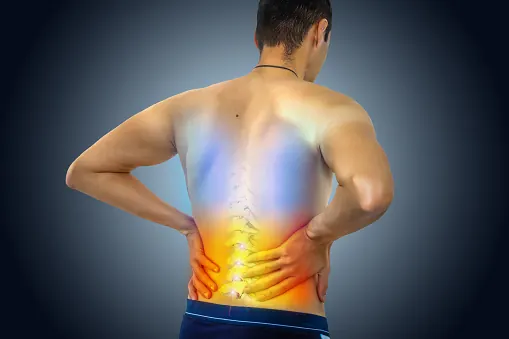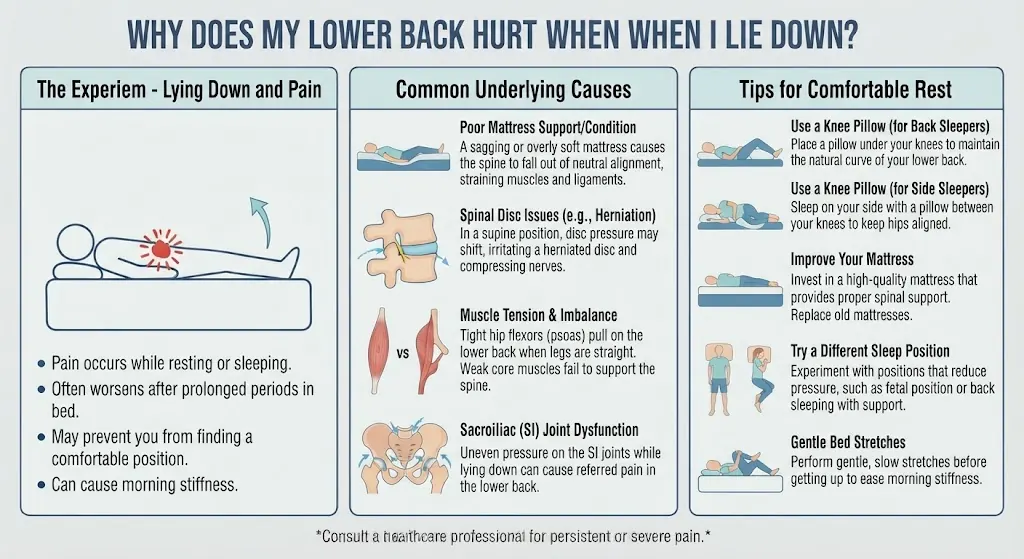

Back pain can range from a dull, persistent ache to sharp pain, stiffness, burning, or pressure. Even mild discomfort can interfere with everyday activities such as sitting, walking, sleeping, bending, working, or exercising.
In many cases, back pain is temporary and improves with appropriate self-care and gradual return to normal activity. However, persistent, severe, or unusual symptoms can sometimes point to an underlying condition that needs medical attention.
So, what causes back pain? The answer depends on where the pain occurs, how it started, how long it has lasted, and whether other symptoms are present. Problems involving muscles, ligaments, joints, discs, nerves, and bones can all cause back pain. In some cases, conditions outside the spine can also produce pain that is felt in the back.
Table of Contents
- What Is Back Pain?
- What Causes Back Pain?
- Can Medical Conditions Outside the Spine Cause Back Pain?
- What Do Different Back Pain Patterns Mean?
- What Are the Symptoms of Back Pain?
- How Is the Cause of Back Pain Diagnosed?
- How Is Back Pain Treated?
- What Can You Do at Home for Back Pain?
- When Should You See a Doctor for Back Pain?
- Seek Urgent Medical Help for These Warning Signs
- How Can You Reduce Your Risk of Back Pain?
- How Long Does Back Pain Take to Improve?
- Frequently Asked Questions About Back Pain
- Conclusion
What Is Back Pain?
Back pain is a symptom rather than a single disease. It can develop suddenly after lifting, twisting, exercising, or an injury, or it can gradually appear after prolonged sitting, repetitive activity, reduced physical conditioning, or age-related changes.
The lower back is particularly susceptible because the lumbar spine supports much of the body’s weight and is involved in standing, walking, bending, and lifting. However, pain can occur anywhere along the back, including the upper, middle, and lower regions.
Back pain may also spread beyond the area where it begins. Depending on the underlying cause, discomfort can extend toward the hips, buttocks, legs, ribs, or chest.
The duration of symptoms is commonly described as:
-
Acute back pain: develops suddenly and lasts for a relatively short period.
-
Subacute back pain: continues for several weeks and may require evaluation if it is not improving.
-
Chronic back pain: persists for several months or longer and may require a broader management approach.
What Causes Back Pain?
There is no single cause of back pain. Common contributors include muscle strain, prolonged inactivity, repetitive movements, injuries, spinal disc problems, arthritis-related changes, and irritation or compression of nerves.
In some people, several factors occur together. For example, prolonged sitting may contribute to stiffness and reduced conditioning, while an awkward lifting movement may then place additional stress on already deconditioned muscles.
Common causes include:
1. Muscle or Ligament Strain
Muscle and ligament strain is a frequent cause of back pain. It can occur after lifting, bending, twisting, exercising, or performing an activity that places more demand on the back than the body is accustomed to handling.
Pain may be accompanied by stiffness, tenderness, or muscle spasms and often becomes more noticeable with certain movements.
2. Prolonged Sitting and Physical Inactivity
Spending long periods in one position can contribute to stiffness and discomfort. Limited movement may also reduce the strength and conditioning of the muscles that support the spine.
Rather than focusing on one “perfect” sitting posture, it is often more useful to change positions regularly, take movement breaks, and maintain an appropriate level of physical activity.
3. Herniated or Bulging Disc
Spinal discs sit between the vertebrae and help absorb forces during movement. A disc can bulge or herniate and, in some cases, irritate a nearby spinal nerve.
This may cause back pain along with symptoms such as pain traveling into the buttocks or leg, tingling, numbness, or weakness. The presence of a disc abnormality on imaging does not necessarily mean it is the source of someone’s symptoms.
4. Osteoarthritis and Age-Related Changes
The joints and discs of the spine naturally change over time. Osteoarthritis can affect the small joints in the spine and may contribute to pain, stiffness, and reduced mobility.
Age-related findings on an X-ray or MRI are not always responsible for pain, so imaging results need to be interpreted alongside symptoms and physical examination findings.
5. Spinal Stenosis
Spinal stenosis occurs when areas of the spinal canal or nerve passageways become narrower. When nerves are affected, symptoms can include back pain, leg discomfort, numbness, or weakness.
Some people notice that leg symptoms become worse with prolonged standing or walking and improve when sitting or changing position.
6. Injuries and Accidents
Falls, sports injuries, workplace accidents, and vehicle collisions can affect muscles, ligaments, joints, discs, or bones.
Significant trauma deserves medical assessment, particularly when pain is severe or accompanied by weakness, numbness, difficulty walking, or other concerning symptoms.
7. Osteoporosis and Compression Fractures
Osteoporosis weakens bones and can increase the risk of fractures. A compression fracture involving a spinal vertebra can cause sudden or persistent back pain.
A fracture may sometimes occur after relatively minor trauma in someone with significantly weakened bones, so sudden severe pain should not automatically be assumed to be a muscle strain.
8. Nerve Irritation and Sciatica
When a spinal nerve becomes irritated or compressed, pain may extend from the lower back into the buttock and leg. This pattern is commonly associated with sciatica.
Nerve-related symptoms can include shooting or burning pain, tingling, numbness, or weakness. New or worsening weakness requires prompt medical evaluation.
Can Medical Conditions Outside the Spine Cause Back Pain?
Yes. Not every type of back pain originates from the muscles or structures of the spine.
Digestive, urinary, pelvic, and other medical conditions can sometimes cause pain that is felt in the back. For example, bowel problems may occur alongside abdominal discomfort and changes in bowel habits. If you are wondering can constipation cause back pain, the relationship is possible, but persistent or severe symptoms should not automatically be attributed to constipation.
Kidney problems can also cause pain in the back or flank, particularly when other urinary symptoms or systemic symptoms are present.
In women, some pelvic or reproductive conditions can produce lower abdominal or pelvic discomfort that is also felt in the back. The location and associated symptoms matter; for example, lower left-sided back pain in women can have several possible explanations and should be considered in the context of the person’s other symptoms.
What Do Different Back Pain Patterns Mean?
The location and pattern of pain can provide useful clues, although they cannot establish a diagnosis by themselves.
Upper Back Pain
Upper back pain affects the area around the thoracic spine and between the neck and lower back. Muscle tension, repetitive activity, prolonged computer use, and injuries can contribute.
Pain involving the upper back and ribs can have several possible causes. Symptoms may be described as back and rib pain when discomfort involves both areas.
Middle Back Pain
Middle back pain usually involves the thoracic region around the ribs or between the shoulder blades. Muscle strain, joint irritation, repetitive movements, and prolonged positioning can contribute.
If discomfort is specifically felt around the rib cage and back, the pattern may be better described as pain around the ribs and back. Additional symptoms are important when determining whether medical evaluation is appropriate.
Lower Back Pain
The lumbar region is the most common location for back pain. Causes can include muscle strain, disc problems, joint irritation, injuries, and other spinal or non-spinal conditions.
Symptoms may remain in the lower back or extend into the buttocks and legs. One-sided symptoms can also have different patterns; for example, lower back pain on the right side may arise from several different structures or conditions.
What Are the Symptoms of Back Pain?
Back pain does not feel the same for everyone. The sensation and associated symptoms can vary depending on the structures involved.
Common symptoms include:
-
Dull, aching, or sore discomfort
-
Sharp or stabbing pain
-
Burning or shooting sensations
-
Back stiffness
-
Muscle spasms or tightness
-
Difficulty bending or twisting
-
Pain that spreads into the buttocks or legs
-
Tingling or numbness
-
Weakness affecting a leg
The pattern of symptoms is often more useful than the description of the pain alone. A healthcare professional may ask what triggers the pain, whether it travels, how long it has been present, and whether symptoms are changing.
How Is the Cause of Back Pain Diagnosed?
Diagnosis usually starts with a medical history and physical examination.
A clinician may ask:
-
When did the pain begin?
-
Did it follow an injury or unusual activity?
-
Where exactly is the pain located?
-
Does it spread into the hip, buttock, leg, chest, or another area?
-
What movements make it better or worse?
-
Are there symptoms such as numbness, weakness, fever, or changes in bladder or bowel function?
The examination may include assessment of spinal movement, muscle strength, reflexes, sensation, walking, and other neurological findings.
Do You Need an X-Ray or MRI?
Not everyone with back pain needs imaging. X-rays, MRI scans, or CT scans may be considered when symptoms, examination findings, trauma, or other factors suggest that imaging could change management.
-
X-rays can show certain bone abnormalities, fractures, and structural changes.
-
MRI scans provide detailed images of discs, nerves, and other soft tissues.
-
CT scans provide cross-sectional images that can be useful for evaluating certain injuries and bone problems.
-
Blood tests may be considered when infection, inflammation, or another systemic condition is suspected.
Imaging should generally be interpreted together with the person’s symptoms and clinical examination rather than treated as a diagnosis on its own.
How Is Back Pain Treated?
Treatment depends on the cause, severity, duration, and other health factors.
For many uncomplicated cases, remaining reasonably active is preferable to prolonged bed rest. Activities that clearly aggravate symptoms may need to be temporarily modified while normal movement is gradually restored.
Treatment may include:
-
Activity modification: Reducing aggravating movements while maintaining appropriate daily activity.
-
Physical therapy: Exercises and movement strategies designed around the individual’s symptoms and physical limitations.
-
Pain medication: Certain over-the-counter or prescription medicines may be appropriate for some people.
-
Heat or cold: Short periods may provide temporary symptom relief for some individuals.
-
Targeted injections: May be considered for selected spinal or joint conditions.
-
Surgery: May be appropriate for specific structural or neurological problems when other treatment is unsuccessful or when urgent intervention is necessary.
What Can You Do at Home for Back Pain?
For mild, uncomplicated back pain, several measures may help manage symptoms:
-
Keep moving within a comfortable range rather than remaining in bed for prolonged periods.
-
Take regular breaks from sitting.
-
Temporarily reduce activities that clearly worsen the pain.
-
Use heat or cold if it provides relief.
-
Gradually return to normal activities as symptoms improve.
-
Consider gentle walking or other low-impact movement.
-
Follow an exercise program appropriate for your condition.
Exercise can be helpful, but there is no single routine that is appropriate for every type of back pain. Persistent symptoms, significant injuries, or neurological symptoms should be evaluated before beginning a demanding exercise program.
When Should You See a Doctor for Back Pain?
Consider professional evaluation when back pain is:
-
Severe or progressively worsening
-
Persistent without meaningful improvement
-
Repeatedly returning
-
Interfering substantially with work, sleep, walking, or daily activities
-
Associated with numbness, tingling, or weakness
-
Developing after significant trauma
-
Accompanied by symptoms suggesting another medical condition
Back pain that occurs with chest discomfort should not automatically be assumed to originate from the spine. Some musculoskeletal problems can contribute to chest symptoms, including situations described as chest pain from back problems, but new or unexplained chest pain warrants appropriate medical assessment.
Similarly, pain that becomes significantly worse with breathing should not automatically be considered a simple muscle strain. If you experience back pain when breathing together with breathing difficulty, chest pressure, fainting, or severe illness, seek urgent medical care.
Seek Urgent Medical Help for These Warning Signs
Some symptoms require urgent evaluation because they may indicate significant nerve compression, infection, fracture, or another serious condition.
Seek urgent medical attention for back pain accompanied by:
-
New loss of bladder or bowel control
-
Numbness around the groin, inner thighs, or buttocks
-
New or worsening weakness in one or both legs
-
Severe pain after major trauma
-
Fever with significant back pain or feeling seriously unwell
-
Unexplained weight loss with persistent back pain
-
Severe chest pain or difficulty breathing
-
Fainting or other serious symptoms
These warning signs do not identify a specific diagnosis, but they should not be ignored.
How Can You Reduce Your Risk of Back Pain?
Not every episode can be prevented, but several habits can support a stronger and more resilient back.
Stay Physically Active
Regular movement helps maintain strength, mobility, and physical conditioning. Walking, strengthening exercises, and other appropriate activities can help maintain overall physical capacity.
Break Up Long Periods of Sitting
Change positions regularly and take short movement breaks instead of remaining stationary for hours.
Use Safe Lifting Techniques
Keep heavy objects close to your body, avoid sudden twisting while lifting, and ask for help when a load is too heavy or awkward to handle safely.
Build Strength Gradually
Strengthening the abdominal, hip, and back muscles can improve your ability to handle everyday physical demands. Increase exercise gradually rather than making sudden large changes in activity.
Maintain a Healthy Body Weight
Managing body weight can reduce the physical demands placed on the spine and supporting structures, although body weight is only one of many factors associated with back pain.
How Long Does Back Pain Take to Improve?
Recovery time varies considerably.
A minor muscle strain may improve over days or weeks, while pain associated with nerve irritation, significant injury, fractures, or chronic conditions may take longer to settle.
Rather than relying on one fixed recovery deadline, pay attention to the overall trend. Gradual improvement is generally reassuring. Pain that continues to worsen, repeatedly returns, or fails to improve as expected deserves professional evaluation.
Frequently Asked Questions About Back Pain
What is the most common cause of back pain?
Muscle or ligament strain is a common cause, particularly after lifting, repetitive activity, or sudden movement. However, back pain can result from many different conditions, and the cause cannot always be determined from symptoms alone.
Can sitting too much cause back pain?
Prolonged sitting can contribute to stiffness, reduced movement, and discomfort, particularly when combined with poor physical conditioning. Regular movement breaks and changing positions can help reduce prolonged static loading.
Can a herniated disc cause back pain?
Yes. A herniated disc can cause back pain and may irritate a nearby nerve, potentially producing pain, tingling, numbness, or weakness that extends into the buttock or leg.
Can stress cause back pain?
Stress can contribute to muscle tension and may influence how pain is experienced, but it should not automatically be assumed to be the sole cause of persistent or severe back pain.
Can poor posture cause back pain?
Prolonged or uncomfortable positioning can contribute to discomfort, but posture is only one possible factor. Movement habits, physical conditioning, injuries, and underlying medical conditions can also influence back pain.
Is walking good for back pain?
Walking is a low-impact activity that many people can tolerate during recovery. If walking substantially increases pain or causes new numbness or weakness, stop and seek professional guidance.
Can kidney problems cause back pain?
Some kidney conditions can cause pain in the back or flank, particularly when urinary symptoms, fever, nausea, or other systemic symptoms are also present. Persistent or unexplained symptoms should be medically evaluated.
When should I worry about back pain?
Seek urgent medical attention for back pain associated with new bladder or bowel problems, numbness around the groin, significant leg weakness, major trauma, severe chest symptoms, difficulty breathing, or other serious warning signs.
Can back pain go away on its own?
Yes, many uncomplicated episodes improve without invasive treatment. The expected recovery depends on the underlying cause, severity, and individual circumstances.
When should back pain be evaluated by a professional?
Professional evaluation is appropriate when pain is severe, persistent, worsening, repeatedly returning, substantially limiting normal activities, or accompanied by neurological or systemic symptoms.
Conclusion
Back pain can result from relatively simple problems such as muscle strain and prolonged inactivity, but it can also be associated with disc disorders, nerve irritation, spinal stenosis, arthritis, fractures, injuries, inflammatory conditions, or medical problems outside the spine.
The location, duration, severity, triggers, and accompanying symptoms can all provide useful clues about the possible cause. However, these features cannot replace an individualized medical assessment when symptoms are persistent, severe, or concerning.
Many uncomplicated episodes improve with appropriate activity, gradual exercise, symptom management, and time. When warning signs are present or symptoms are not improving as expected, professional evaluation can help determine the appropriate next step.
Disclaimer: This article is intended for educational purposes only and should not be considered personalized medical advice.