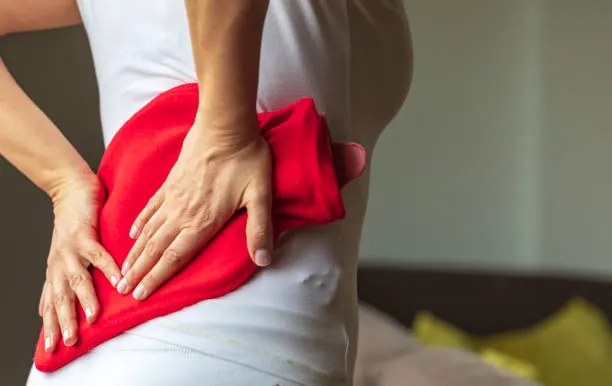
Heat can feel surprisingly soothing when your back is tight or sore. A heating pad, warm shower, or heat wrap may reduce stiffness enough to make sitting, walking, or getting out of bed easier. But some people notice that heat makes their pain throb, feel more irritated, or simply worse after several minutes.
So, can heat make back pain worse? Yes, it can in some situations, but heat is also a reasonable short-term treatment for many episodes of uncomplicated low back pain. The key is how your symptoms respond, how hot the treatment is, how long you use it, and whether the pain has features that need medical evaluation.
This guide explains when heat is most likely to help, when it may aggravate symptoms, how to use it more safely, how heat compares with ice, and which symptoms should not be treated with heat alone.
Can heat make back pain worse?
Yes. Heat can make back pain feel worse if it is too hot, used for too long, applied directly to vulnerable skin, or used when another problem requires medical evaluation.
For ordinary muscle-related back pain, however, heat can provide short-term relief. Clinical guidelines have recommended superficial heat as one non-drug option for acute and subacute low back pain, while newer research continues to examine how much benefit heat provides and which patients respond best.
Heat is best viewed as a symptom-management tool, not a treatment that identifies or cures the underlying cause of back pain.
If you are still trying to understand why your back hurts, the pattern of your symptoms matters more than whether heat feels good.
When does heat usually help back pain?
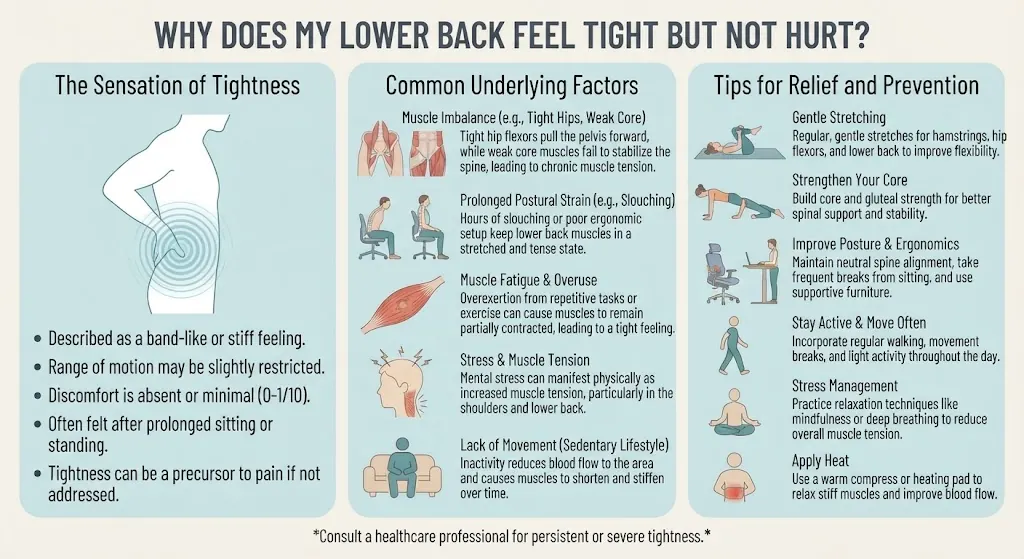
Heat is most likely to feel helpful when your back feels stiff, tight, achy, or uncomfortable with movement.
Warmth can be particularly appealing when muscles feel tense after prolonged sitting, repetitive activity, or an otherwise uncomplicated episode of lower-back pain. It may temporarily reduce the sensation of stiffness and make movement more comfortable.
Clinical guidance has supported superficial heat as an initial non-drug option for acute and subacute low back pain. An earlier evidence review found moderate-quality evidence that heat wraps could improve pain and disability compared with placebo in some people.
That does not mean everyone will respond. Some people obtain little benefit, while others prefer movement, ice, medication, or another approach.
| Situation | Is heat reasonable to try? | What to watch for |
|---|---|---|
| Mild muscle tightness or stiffness | Often reasonable | Stop if pain increases |
| Uncomplicated acute low back pain | Often reasonable for short-term relief | Avoid excessive temperature |
| Chronic stiffness | May provide temporary comfort | It does not address the underlying cause |
| Recent significant injury | Use caution | Consider medical evaluation if pain is severe |
| Numb or poorly sensitive skin | Usually avoid unsupervised heat | Burns may occur without being noticed |
| Increasing swelling or unusual symptoms | Do not rely on heat alone | Seek appropriate evaluation |
For broader self-care options, see how to relieve back pain at home.
Why can heat sometimes make back pain feel worse?
There are several possibilities.
The temperature is too high
A heating pad does not need to feel extremely hot to be useful. Excessive heat can irritate the skin and may make an already uncomfortable area feel more painful.
A useful rule is simple: warm and comfortable is preferable to very hot.
If you find yourself repeatedly increasing the temperature because the original setting no longer feels strong enough, take a break instead of continuing to turn up the heat.
You are using heat for too long
Long, continuous exposure increases the risk of skin irritation and burns. It can also make you less aware of how much heat your skin is receiving, especially if you become sleepy.
Heat should be treated as a temporary comfort measure rather than something that needs to remain on your back for hours.
Your symptoms are not primarily muscle-related
Back pain has many possible causes. Muscle tension is only one possibility.
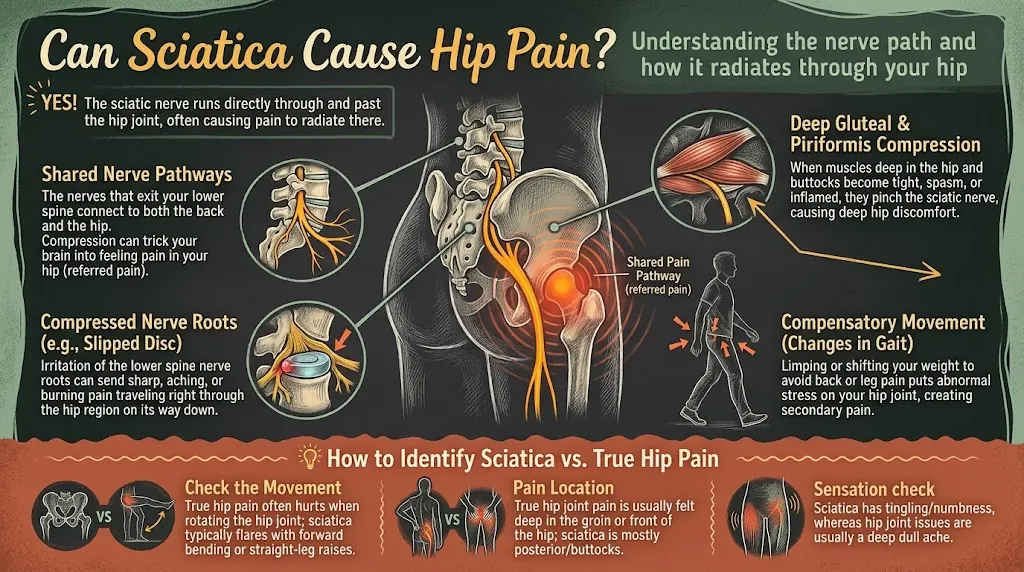
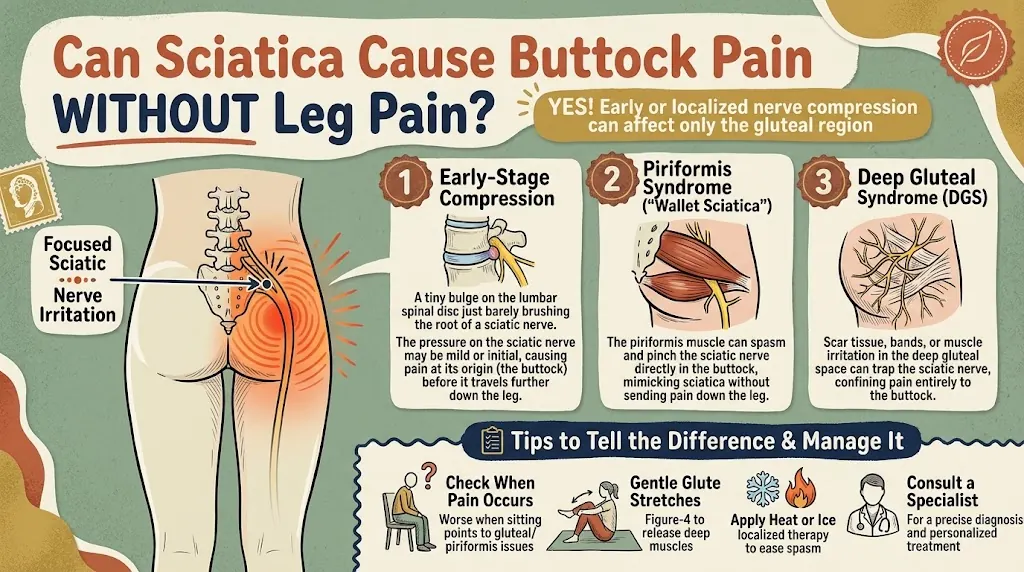
Pain may arise from joints, discs, nerves, fractures, inflammatory conditions, or problems outside the spine. Heat might temporarily change how the pain feels without addressing the actual source.
That is why persistent or unusual symptoms should not automatically be labeled as muscle pain simply because a heating pad provides some relief.
For a broader explanation of common causes of back pain, consider the location, duration, triggers, and accompanying symptoms.
Heat is aggravating another symptom
If warmth clearly increases your pain, swelling, throbbing, or discomfort, there is no reason to force yourself to continue using it.
A treatment does not need to be universally effective to be useful, and you do not need to keep using heat simply because it is commonly recommended.
Does heat make inflammation worse?
Not necessarily.
The idea that all heat should be avoided whenever inflammation is present is too simplistic. Back pain is not one single condition, and the effect of superficial warmth depends on the underlying problem.
Heat may provide comfort for some painful musculoskeletal conditions, while other situations may require a different approach. If you have a new injury with substantial swelling, severe pain, deformity, or loss of function, it is more important to determine what happened than to decide whether heat or ice is better.
For a practical comparison, see should you use heat or ice for back pain.
Heat vs. ice: which is better for back pain?
Neither is automatically better for everyone.
Heat tends to be preferred by people who experience stiffness or muscle tightness, while cold may feel more comfortable after certain recent injuries. Evidence for low back pain does not support treating heat and ice as interchangeable cures; both are primarily used for symptom relief.
| Feature | Heat | Ice |
|---|---|---|
| Common reason people use it | Stiffness, tightness, aching | Cooling an irritated or recently injured area |
| Main purpose | Temporary symptom relief | Temporary symptom relief |
| Best response | Warmth feels soothing | Cold feels soothing |
| Main safety concern | Burns and skin injury | Skin damage from excessive cold |
| Should it be painful? | No | No |
| Does it identify the cause? | No | No |
Your response is useful information. If gentle warmth consistently makes you feel better, it may be a reasonable part of your self-care routine. If it consistently makes symptoms worse, stop using it and consider another approach.
How should you use heat for back pain safely?
Start with a comfortably warm temperature rather than the highest setting.
Place a barrier between a heating device and your skin when appropriate, and check the skin periodically. Avoid falling asleep while using a heating pad unless the device is specifically designed and medically appropriate for that type of use.
Do not place heat over areas where you cannot reliably feel temperature. Reduced sensation can occur with certain nerve problems, medical conditions, or medications, increasing the risk of burns.
You should also avoid using excessive heat to try to “push through” worsening pain.
A practical approach is:
- Use comfortable warmth rather than intense heat.
- Apply it for a limited period rather than continuously.
- Check your skin for excessive redness or irritation.
- Stop if pain, swelling, burning, or discomfort increases.
- Do not use heat as a reason to delay evaluation of unusual symptoms.
If you want to understand how different home strategies fit together, see ways to treat back pain.
What does research say about heat therapy for back pain?
Research supports some short-term benefit, but the evidence is not uniform and heat should not be presented as a guaranteed treatment.
An American College of Physicians guideline rated the evidence for superficial heat as moderate quality for acute and subacute low back pain. Earlier trials of continuous low-level heat wraps also reported improvements in pain, stiffness, flexibility, and disability over several days.
However, more recent research has produced a more cautious picture. A 2026 randomized trial involving 99 adults with acute low back pain compared heat wrap alone, heat combined with exercise, and a sham heat wrap. At one week, neither heat alone nor heat plus exercise produced a statistically significant improvement in disability compared with the sham treatment.
That newer result does not prove that heat is useless. Instead, it reinforces an important point: heat may help some people with short-term symptoms, but its effects can be modest and are not guaranteed.
A 2025 overview of 31 systematic reviews covering 644 trials and 97,183 adults with low back pain also illustrates how broad and variable the evidence base is for non-drug treatments. Different interventions and outcomes produced different levels of evidence, making it inappropriate to assume that one treatment works equally well for everyone.
| Evidence finding | What it means for you |
|---|---|
| Guidelines support superficial heat for acute/subacute low back pain | Heat is a reasonable option to try |
| Earlier trials found short-term improvements with heat wraps | Some people may experience meaningful temporary relief |
| A 2026 trial found no significant disability advantage for heat wrap over sham treatment | Heat does not reliably improve outcomes for everyone |
| Large reviews show variable evidence across non-drug treatments | Treatment should be individualized |
Should you use heat after an injury?
Be more cautious after a significant injury.
If your back pain began after a car crash, fall, heavy impact, or other substantial trauma, the priority is determining whether an injury requires evaluation. Heat may make the area feel temporarily different, but that does not rule out a more serious problem.
For symptoms that began after a collision, see back pain after a car accident.
You should also seek medical advice when pain is severe, rapidly worsening, associated with major weakness or numbness, or accompanied by other concerning symptoms.

Can heat make nerve-related back pain worse?
It can make symptoms feel worse, but heat does not necessarily mean that a nerve problem is present.
Nerve-related pain may feel burning, electric, shooting, tingling, or numb rather than simply sore or tight. Heat might provide temporary comfort for some people, while others find that it increases discomfort.
Do not use your response to heat as a way to determine whether you have a pinched nerve or another specific condition.
If you have significant neurological symptoms, especially progressive weakness or new bladder or bowel problems, seek medical evaluation rather than continuing home treatment.
What if heat helps temporarily but the back pain keeps returning?
Temporary relief does not necessarily mean the underlying problem has been resolved.
For example, heat may make it easier to move when your muscles feel stiff, but recurring pain may still be associated with prolonged sitting, repetitive lifting, inadequate conditioning, sleep problems, or another cause.
If your pain keeps returning, focus on the overall pattern rather than repeatedly increasing heat exposure.
For recurring lower-back symptoms, lower back pain causes may help you consider the different patterns that can produce discomfort.
Gentle activity can also be important. When appropriate for your symptoms, lower back pain exercises may help you gradually restore movement and function.
Can heat help back pain from sitting at a desk?
It may provide temporary relief when prolonged sitting leaves your back feeling stiff or tight, but it should not replace regular movement.
Long periods at a desk can encourage people to stay in one position for too long. Instead of relying on a heating pad at the end of the day, try changing position regularly, standing briefly, walking, and adjusting your workspace.
If you experience persistent pain from sitting, understanding what causes back pain can help you consider factors beyond heat.
If the pain is specifically concentrated in the lower back, see common causes of lower back pain for additional context.
When should you stop using heat and seek medical care?
Stop self-treating with heat and seek medical advice if your pain is becoming progressively worse, does not improve as expected, or is significantly interfering with normal activities.
Some symptoms require more urgent attention. Severe back pain accompanied by significant weakness, loss of bladder or bowel control, numbness around the groin or inner thighs, major trauma, fainting, difficulty breathing, or severe chest pain should not be managed with a heating pad at home.
For a more detailed guide to urgent symptoms, see when back pain is an emergency.
Pain associated with breathing or chest symptoms also deserves particular caution. For example, back pain when taking a deep breath can have causes that are not simply muscular.
Likewise, pain involving the chest should not automatically be assumed to come from the back. Chest pain caused by back problems is only one possible explanation for chest discomfort.
Can heat make back pain worse at night?
It can if you fall asleep with excessive heat against your skin or if warmth makes your symptoms more uncomfortable.
Nighttime back pain also deserves attention when it is persistent, severe, or repeatedly wakes you from sleep. The fact that heat changes the sensation does not establish the cause.
If your main problem is nighttime discomfort, see why back pain gets worse at night.
Your sleeping position can also affect comfort. Learning how to sleep with lower back pain may be more useful than simply increasing the temperature of a heating device.
Frequently Asked Questions
Can a heating pad make back pain worse?
Yes. A heating pad can aggravate discomfort when it is too hot, used too long, or applied to skin with reduced sensation. If warmth consistently increases pain rather than relieving it, stop using it.
Is heat good for lower back pain?
Heat can provide short-term relief for some people with acute or subacute low back pain, particularly when stiffness or muscle tightness is prominent. It is not a guaranteed treatment and does not determine the underlying cause.
How long should I use heat for back pain?
There is no single duration that is appropriate for everyone or every device. Follow the instructions for the specific product, use comfortable warmth rather than intense heat, and avoid prolonged or unattended exposure.
Is heat or ice better for a pulled back muscle?
Either may provide temporary symptom relief, depending on which feels more comfortable. The choice should not replace evaluation when the injury is severe or symptoms are unusual.
Can heat make inflammation worse?
Heat is not automatically harmful whenever inflammation is present, but the appropriate treatment depends on the underlying problem. If a new injury causes substantial swelling, severe pain, or loss of function, medical evaluation may be more important than choosing between heat and ice.
Should I sleep with a heating pad on my back?
Generally, you should avoid falling asleep with a standard heating pad operating against your skin. Prolonged exposure can cause burns, particularly if you do not wake when the temperature becomes excessive.
Why does my back feel worse after using heat?
The temperature may be too high, the exposure may be too long, or warmth may simply not suit your symptoms. Worsening pain is a reason to stop rather than increase the heat.
Can I exercise after using heat for back pain?
If your symptoms are mild and movement is comfortable, heat may make it easier to move before activity. Exercise should still be gradual, and you should stop if activity causes significant or progressively worsening symptoms.
When should I not use heat for back pain?
Avoid unsupervised heat when you have reduced sensation in the area, significant skin problems, or difficulty recognizing when something is too hot. Also do not rely on heat when severe pain, major trauma, neurological symptoms, or other warning signs require medical evaluation.
What should I do if heat does not help my back pain?
You do not need to keep using heat if it provides no benefit. Consider gentle movement and other appropriate self-care measures, and seek medical advice if the pain persists, worsens, or interferes substantially with normal activities.
Conclusion
Heat can make back pain worse, but it can also provide short-term relief for many people with uncomplicated low back pain. The safest approach is to use comfortable warmth for a limited period, monitor your response, and stop if symptoms become more painful or the skin becomes irritated.
Research supports heat as a reasonable option for some acute and subacute low back pain, but newer evidence shows that its benefits are not universal. If your pain is severe, persistent, associated with neurological symptoms, follows significant trauma, or comes with other warning signs, finding the cause is more important than choosing between heat and ice.
Disclaimer: This article is provided for educational and informational purposes only. It is not a substitute for professional medical advice, diagnosis, or treatment