Most back pain is not an emergency, but certain symptoms can signal a problem that needs immediate medical attention. Severe pain after a major injury, new weakness in the legs, loss of bladder or bowel control, or numbness around the groin and inner thighs should not be treated like ordinary muscle soreness. Knowing the difference between common back pain and potentially dangerous symptoms can help you decide when to monitor symptoms, when to arrange medical care, and when to seek emergency help.
It is easy to become alarmed when back pain suddenly becomes intense, especially if it appears at night or after lifting something heavy. At the same time, pain severity alone does not tell you whether a condition is dangerous. Some serious conditions can initially resemble ordinary back pain, while severe pain can also occur with problems that are not emergencies.
This guide explains when back pain is an emergency, which warning signs deserve urgent attention, what symptoms may require a routine medical evaluation, and what you can reasonably do when there are no red flags. It is designed to help you recognize important patterns without attempting to diagnose the cause of your pain yourself.
When is back pain an emergency?
Back pain is an emergency when it occurs with symptoms suggesting possible spinal cord or nerve compression, major trauma, a serious infection, significant bleeding, or another potentially life-threatening condition.
The most important warning signs include:
- New loss of bladder or bowel control.
- Difficulty starting urination or inability to urinate.
- New numbness around the groin, genitals, buttocks, or inner thighs.
- New or rapidly worsening weakness in one or both legs.
- Severe back pain following major trauma.
- Back pain accompanied by fainting, severe chest pain, severe abdominal pain, or difficulty breathing.
- Back pain with a high fever and significant illness, particularly when infection risk is present.
- Severe pain with rapidly deteriorating neurological symptoms.
These symptoms do not prove that a particular emergency is occurring. They mean the symptoms should not be managed at home without prompt assessment.
How common are serious causes?
Serious spinal conditions are uncommon among people seeking care for low back pain, but they are important because delayed treatment can have serious consequences.
A 2026 systematic review and meta-analysis of 11 studies found that serious spinal pathology occurred in about 2.9% of people presenting with low back pain overall. The pooled estimate was lower in primary care, around 0.8%, and higher in emergency and tertiary-care populations. Individual conditions were less common: spinal fracture was about 2.4%, spinal infection 0.7%, malignancy 0.5%, and cauda equina syndrome 0.3% in the pooled analysis.
These figures should not be interpreted as an individual’s personal risk. People presenting to emergency departments are not necessarily comparable with people experiencing uncomplicated back pain at home.
| Possible serious problem | Approximate pooled prevalence among people seeking care for low back pain | Why prompt assessment matters |
|---|---|---|
| Spinal fracture | 2.4% | May require stabilization and treatment |
| Spinal infection | 0.7% | Can progress and damage neurological structures |
| Spinal malignancy | 0.5% | Requires timely investigation and treatment |
| Cauda equina syndrome | 0.3% | Nerve compression can cause permanent neurological problems |
| Any serious spinal pathology | 2.9% | Different conditions require different urgent pathways |
The important point is not to memorize these numbers. It is to recognize that serious causes are uncommon but real, and certain symptom combinations deserve rapid evaluation.
What back pain symptoms require emergency care?
1. New loss of bladder or bowel control
Back pain accompanied by new inability to control urination or bowel movements is one of the most important emergency warning signs.
This is different from ordinary constipation or difficulty having a bowel movement because of pain, reduced activity, dehydration, or medication. A sudden change in bladder or bowel control together with significant back symptoms requires urgent assessment.
If you are wondering about the relationship between bowel symptoms and back discomfort, can back pain cause constipation discusses a different and generally less urgent situation.
2. Numbness around the groin or inner thighs
New loss of sensation around the saddle area—the region that would contact a bicycle seat—is particularly concerning when it occurs with back pain or leg symptoms.
Do not wait to see whether the numbness disappears after sleeping or resting. This symptom warrants urgent medical assessment.
3. New or worsening leg weakness
Pain traveling down a leg can occur with nerve irritation and does not automatically mean an emergency. Weakness is different.
Difficulty lifting the foot, repeated tripping, an inability to stand normally, or rapidly worsening weakness may indicate significant nerve involvement. Emergency assessment becomes particularly important when weakness progresses quickly or occurs together with bladder, bowel, or saddle-area sensory changes.
4. Severe back pain after major trauma
A high-speed vehicle collision, significant fall, or other major impact can cause spinal fractures or other injuries even when there is no obvious external wound.
Pain that appears immediately after an accident deserves appropriate assessment, particularly when it is severe or accompanied by weakness, numbness, difficulty walking, or other injuries. For more context, see back pain after a car accident.
Research on red flags for vertebral fracture has found that trauma, older age, and corticosteroid use can be useful clues in certain settings, although individual warning signs are not perfectly reliable. The combination of several concerning features may be more informative than relying on one symptom alone.
5. Back pain with fever and feeling very ill
Fever does not automatically mean that back pain is caused by an infection. However, back pain accompanied by fever, chills, significant weakness, confusion, or a generally severe illness warrants prompt medical attention.
The concern is greater when there are additional infection risk factors, such as recent bloodstream infection, certain invasive medical procedures, immune suppression, or intravenous drug use.
Do not use pain medication to simply suppress symptoms and delay assessment when you are becoming systemically unwell.
What symptoms need medical evaluation but may not be an emergency?
Not every red flag means you need an ambulance or emergency department immediately. Some symptoms warrant timely medical evaluation because they could represent a condition that needs investigation.
Consider arranging medical care when back pain:
- Continues to worsen instead of gradually improving.
- Persists and significantly interferes with normal activities.
- Repeatedly wakes you from sleep.
- Occurs with unexplained weight loss.
- Occurs in someone with a history of cancer.
- Develops without an obvious mechanical trigger and is unusually persistent.
- Is accompanied by recurrent fever or other systemic symptoms.
- Begins after a significant injury.
- Is associated with persistent numbness, tingling, or leg symptoms.
- Occurs in someone with substantial risk factors for fracture or infection.
For example, back pain at night can have many explanations and is not automatically an emergency. The concern increases when nighttime pain is persistent, severe, progressive, or accompanied by other warning signs.
Red flags should be considered together
Research examining warning signs for fracture and cancer has found that many individual red flags are less useful when considered in isolation than people often assume. Some findings become more meaningful when combined with the patient’s age, medical history, mechanism of injury, and other symptoms.
| Symptom or risk factor | Usually an emergency by itself? | Why it matters |
|---|---|---|
| Severe pain alone | No | Pain intensity does not reliably identify the cause |
| Nighttime pain alone | Usually no | Many non-emergency conditions can disturb sleep |
| Older age | No | Can increase concern for some conditions, especially after trauma |
| History of cancer | No, but needs evaluation | Raises concern for possible spinal malignancy |
| Fever with back pain | Not always | Context and overall illness matter |
| Major trauma | Potentially | Raises concern for fracture or other injury |
| New leg weakness | Potentially urgent | May indicate significant nerve involvement |
| Saddle numbness plus bladder changes | Yes | Requires urgent assessment for possible severe nerve compression |
This is why a list of red flags should not be used as a self-diagnosis checklist. The clinical context matters.
Can back pain with chest pain be an emergency?
Yes. Chest pain occurring with back pain can sometimes represent a medical emergency, particularly when the discomfort is sudden, severe, pressure-like, or associated with shortness of breath, sweating, fainting, nausea, or other concerning symptoms.
Not all chest and back discomfort comes from the heart or major blood vessels. Musculoskeletal and spinal problems can sometimes produce chest-area symptoms, but it is not safe to assume that chest pain is caused by your back without appropriate assessment.
If you have chest symptoms, chest pain caused by back problems can help explain possible musculoskeletal patterns, but new or severe chest pain with concerning symptoms should receive urgent medical evaluation.
What about back pain when breathing?
Pain that becomes noticeable when taking a deep breath can come from muscles, ribs, or the structures around the spine. However, pain associated with breathing can also occur with conditions affecting the lungs, heart, or blood vessels.
Seek urgent medical attention when back or chest pain with breathing is accompanied by significant shortness of breath, fainting, coughing up blood, severe chest pressure, a very rapid heartbeat, or sudden severe symptoms.
For less urgent situations, back pain when breathing explains why respiratory movement can sometimes make musculoskeletal pain more noticeable.
Can one-sided back pain be an emergency?
Pain on the right or left side is not automatically an emergency. The significance depends on the location, severity, duration, associated symptoms, and possible cause.
For example, lower back pain on the right side can have musculoskeletal, spinal, urinary, gastrointestinal, or other possible causes. Similarly, lower left back pain in women can have several possible explanations depending on accompanying symptoms.
Seek urgent care if one-sided back pain is severe and sudden or occurs with fainting, significant abdominal or chest symptoms, fever and serious illness, neurological changes, or other emergency warning signs.
Can abdominal or digestive symptoms with back pain be serious?
Sometimes. Back pain can occur alongside digestive symptoms for relatively minor reasons, but abdominal conditions can also cause referred pain in the back.
For example, constipation can produce abdominal pressure and discomfort that may be felt in the back. Constipation and back pain explains this relationship.
Other gastrointestinal symptoms may also overlap with back discomfort. GERD and back pain and gastritis and back pain discuss possible connections, but severe abdominal pain, fainting, vomiting blood, black stools, or significant deterioration should not be assumed to be a simple digestive or back problem.
When is back pain after an injury an emergency?
The severity and mechanism of the injury matter.
A minor strain after ordinary activity is very different from severe pain following a high-impact collision or significant fall. Emergency assessment is particularly important when an injury is followed by weakness, numbness, inability to walk normally, loss of bladder or bowel control, severe deformity, or rapidly increasing pain.
The risk of vertebral fracture is also affected by factors such as age, bone health, trauma, and prolonged corticosteroid use. If you have significant risk factors, a seemingly modest injury may warrant more attention than it would in someone without those risks.
What should you do if there are no emergency warning signs?
When back pain does not involve emergency symptoms and you can move safely, conservative self-care may be reasonable while monitoring your progress.
Depending on your symptoms, this may include:
- Staying gently active rather than remaining in bed for prolonged periods.
- Temporarily reducing activities that clearly aggravate the pain.
- Returning gradually to normal daily activities.
- Using comfortable movement and appropriately selected exercises.
- Trying heat or cold if it provides temporary relief.
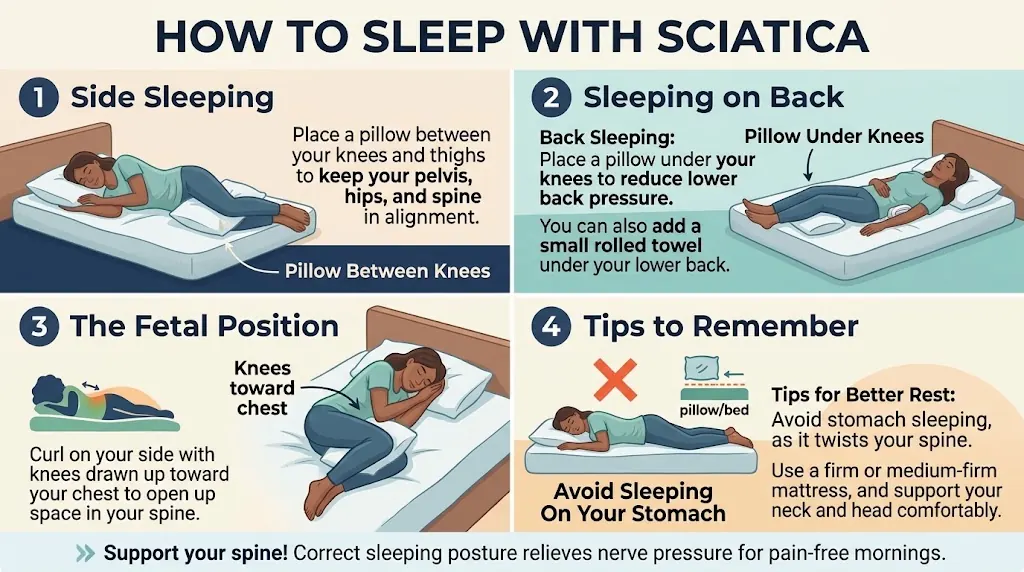
- Getting adequate sleep and changing positions when necessary.
- Seeking medical advice if symptoms persist, worsen, or interfere substantially with daily life.
For practical home strategies, see how to relieve back pain at home.
If you are deciding between cold and heat, heat or ice for back pain explains how they differ and why neither should be used to mask symptoms that require medical attention.
What not to do
Do not:
- Continue an activity that causes rapidly increasing neurological symptoms.
- Ignore new bladder or bowel dysfunction.
- Assume severe chest or abdominal symptoms are simply coming from your back.
- Use repeated pain relief to postpone assessment of serious symptoms.
- Begin aggressive exercises during an unexplained severe flare.
- Rely on online symptom lists to diagnose a potentially serious condition.
Understanding what causes back pain can help explain why different symptoms require different responses, but persistent or concerning symptoms should be assessed clinically.
Emergency vs urgent vs routine care
The following comparison can make the decision easier.
| Situation | Recommended response |
|---|---|
| Back pain is mild or moderate and gradually improving | Monitor and use appropriate self-care |
| Pain persists and limits normal activities | Arrange a medical evaluation |
| Persistent pain with unexplained weight loss, cancer history, fever, or other concerning features | Arrange prompt medical evaluation |
| Severe pain after significant trauma | Urgent assessment; emergency care may be appropriate |
| New significant weakness | Urgent/emergency assessment |
| Saddle-area numbness with back or leg symptoms | Emergency assessment |
| New bladder or bowel dysfunction with significant back symptoms | Emergency assessment |
| Back/chest pain with severe breathing difficulty, fainting, or severe chest symptoms | Emergency assessment |
The right level of care depends on the complete symptom pattern, not simply how high the pain score feels.
What happens when you seek emergency care for back pain?
Emergency clinicians will generally first assess whether there are signs of neurological compromise, major trauma, infection, vascular or other serious illness, or another condition requiring immediate treatment.
The evaluation may include questions about:
- When the pain began.
- Whether there was trauma.
- Whether pain travels into the legs.
- Changes in strength or sensation.
- Bladder and bowel function.
- Fever or recent infection.
- Previous cancer or other major medical conditions.
- Medications and relevant risk factors.
A physical examination may assess strength, sensation, reflexes, walking ability, spinal tenderness, and other findings. Imaging or laboratory testing is not automatically necessary for every episode of back pain; it is generally guided by the clinical assessment and the suspected cause.
Frequently Asked Questions
1. What are the biggest emergency warning signs for back pain?
The most concerning signs include new bladder or bowel dysfunction, saddle-area numbness, significant or rapidly worsening leg weakness, and severe symptoms after major trauma. Back pain accompanied by severe chest pain, difficulty breathing, fainting, or serious systemic illness can also require emergency care.
2. Is severe back pain by itself an emergency?
Not necessarily. Severe pain can occur with conditions that are not emergencies, so intensity alone cannot determine the cause. The urgency increases when severe pain occurs with neurological changes, major trauma, systemic illness, chest or abdominal symptoms, or other warning signs.
3. Can back pain cause paralysis?
Most back pain does not lead to paralysis. However, severe compression of the spinal cord or nerve structures can cause serious neurological problems, which is why rapidly worsening weakness or other neurological changes require urgent assessment.
4. Is numbness in the groin with back pain an emergency?
Yes, new numbness around the groin, genitals, buttocks, or inner thighs can be an emergency warning sign, especially when it occurs with bladder or bowel changes or leg weakness. It should be assessed urgently rather than monitored at home.
5. When should I go to the ER for lower back pain?
Emergency care is appropriate when lower back pain occurs with new bladder or bowel dysfunction, saddle-area numbness, significant or progressive weakness, major trauma, or severe symptoms suggesting another medical emergency. Severe chest pain, breathing difficulty, fainting, or serious systemic illness alongside back pain also warrants emergency assessment.
6. Can back pain at night mean cancer?
Nighttime back pain does not automatically mean cancer. Many non-cancerous conditions can hurt at night, but persistent unexplained pain combined with a history of cancer, unexplained weight loss, progressive symptoms, or other concerning findings deserves medical evaluation.
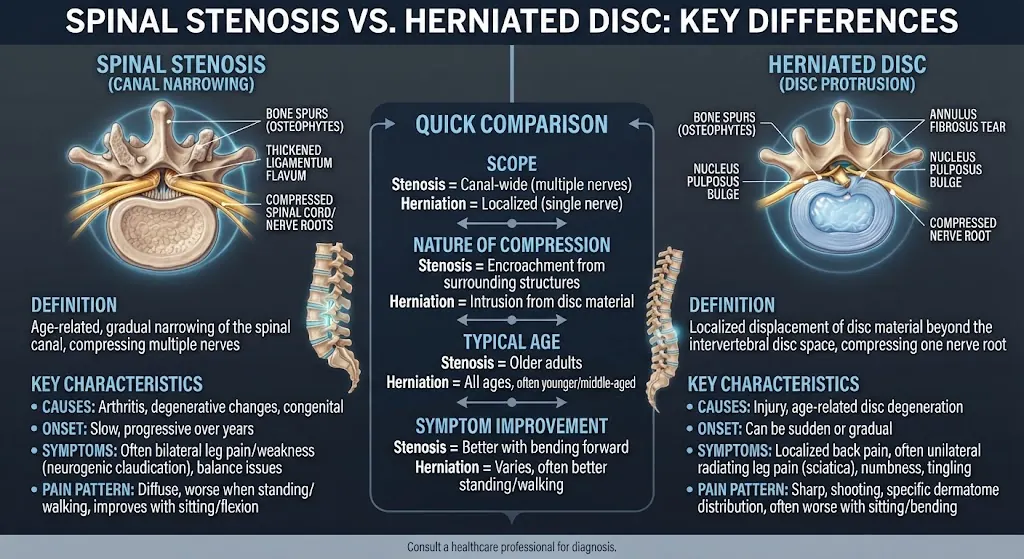
7. Can a herniated disc be an emergency?
Most herniated discs are not emergencies. They become more concerning when nerve compression produces significant or worsening weakness, saddle-area numbness, or bladder or bowel dysfunction.
8. Should I exercise if my back pain might be serious?
Do not rely on exercise to treat unexplained severe or potentially serious back pain. If you have neurological warning signs, major trauma, fever with serious illness, or other emergency symptoms, seek medical evaluation rather than attempting to exercise through them.
9. Can constipation and back pain be an emergency?
Constipation can sometimes accompany ordinary back discomfort and does not automatically indicate an emergency. However, new bowel-control problems are different from constipation and can be a serious neurological warning sign when they occur with significant back pain.
10. What if my back pain is getting worse but I have none of the major red flags?
Progressively worsening pain still deserves medical attention, particularly if it is interfering with normal activities or failing to improve. A clinician can determine whether further examination or testing is appropriate rather than relying on emergency warning signs alone.
Conclusion
Most episodes of back pain are not emergencies, but certain symptoms should never be ignored. New bladder or bowel dysfunction, saddle-area numbness, significant or rapidly progressing weakness, major trauma, and severe back pain accompanied by serious chest, breathing, abdominal, or systemic symptoms require prompt attention.
If none of these warning signs are present, gentle activity and appropriate home care may be reasonable while you monitor the course of your symptoms. If pain persists, progressively worsens, repeatedly disrupts sleep, or is accompanied by other concerning features, arrange a medical evaluation rather than simply treating it as routine back pain.
Disclaimer: This article is provided for educational and informational purposes only. It is not a substitute for professional medical advice, diagnosis, or treatment