If your back hurts when you wake up, you may start wondering whether your mattress is helping or making the problem worse. A mattress that feels comfortable at bedtime can still leave you stiff, sore, or unable to find a comfortable position during the night. For people dealing with nighttime back pain, the right sleep surface may be one practical part of improving comfort.
A common misconception is that a very firm mattress automatically provides better support for a painful back. Research does not support that simple rule. Mattress firmness, body position, body weight, pressure distribution, sleep comfort, and the condition of the mattress all matter, so the best choice is usually the one that supports your body without creating excessive pressure.
This guide explains what to look for when choosing the best mattress for back pain, whether medium-firm mattresses are actually better, how old or sagging mattresses can affect comfort, what mattress materials and features are worth considering, and how to test a mattress before committing to a purchase.
What is the best mattress for back pain?
For many people with nonspecific low back pain, a medium-firm mattress is a reasonable starting point. Studies comparing mattress firmness have generally found better comfort and pain-related outcomes with medium-firm surfaces than with very firm mattresses, although the evidence does not mean that every person should use the same firmness.
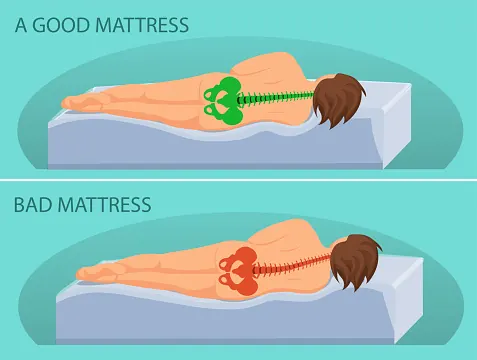
The goal is not to make your back completely rigid while you sleep. A useful mattress should provide enough support to prevent excessive sinking while allowing the shoulders, hips, and other pressure points to settle comfortably.
A 2003 randomized trial involving 313 adults with chronic nonspecific low back pain found that participants assigned to a medium-firm mattress had better outcomes for pain while lying in bed, pain on rising, and disability than those assigned to a firm mattress after 90 days. More recent reviews have also generally favored medium-firm surfaces, although differences between studies and mattress designs mean the evidence is not strong enough to identify one universally ideal mattress.
Medium-firm does not mean hard
Mattress firmness and support are not exactly the same thing.
A mattress can feel relatively soft at the surface while still providing adequate support underneath. Conversely, a very firm mattress may prevent your shoulders and hips from sinking enough, creating uncomfortable pressure or forcing your spine into an awkward position.
| Mattress feel | Potential benefit | Potential problem |
|---|---|---|
| Soft | Cushions shoulders and hips | May allow excessive sinking |
| Medium-firm | Balances cushioning and support | May not suit every body type or sleep position |
| Very firm | Less sinking | Can create pressure and feel uncomfortable |
| Sagging/uneven | May initially feel familiar | Can allow poor support and awkward positioning |
The most important question is therefore not simply, “Is this mattress firm enough?” It is, “Does this mattress support me comfortably in my usual sleeping position?”
How do you know if your mattress is causing back pain?
A mattress may be contributing to discomfort if your symptoms are consistently worse after sleeping and improve after you get up and move around.
Other clues include:
- You wake with stiffness or aching that was not as noticeable before bed.
- You repeatedly change positions because you cannot get comfortable.
- You feel as though your hips or shoulders sink much farther than the rest of your body.
- The mattress has a visible dip or permanent indentation.
- You sleep noticeably better on a different mattress.
- Your discomfort is strongest after several hours in bed rather than immediately after activity.
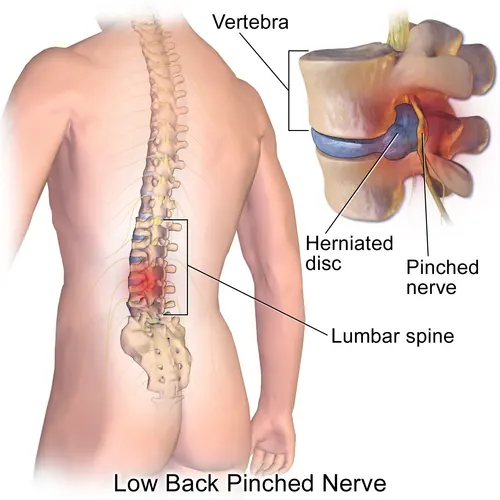
These clues do not prove that your mattress is the cause. Back pain can have many possible contributors, so understanding what causes back pain is important before assuming that replacing a mattress will solve the problem.
If your symptoms are mainly in the lower back, learning about common causes of lower back pain can also help you distinguish a sleep-surface issue from other possible causes.
Morning pain matters, but it is not a diagnosis
Waking up sore does not automatically mean your mattress is damaging your spine. Sleep position, prolonged inactivity, existing muscle or joint problems, and the natural course of back pain can all contribute to morning discomfort.
Think of the mattress as one factor that can influence comfort rather than as a universal explanation for back pain.
What should you look for when buying a mattress for back pain?
A good mattress-shopping decision should consider more than firmness. Look at how well the mattress distributes pressure, whether it keeps your body supported in your normal position, whether you can change positions easily, and whether you can realistically sleep comfortably on it.
1. Choose support without excessive pressure
A supportive mattress should not allow your pelvis to sink dramatically lower than the rest of your body. At the same time, your shoulders and hips should not feel as though they are being pressed against an unyielding surface.
If you sleep on your side, pressure around the shoulder and hip may become especially noticeable. If you sleep on your back, excessive sinking around the pelvis may feel uncomfortable.
2. Consider your usual sleeping position
Your sleep position affects how a mattress feels.
People who sleep on their side often need enough cushioning around the shoulder and hip. Back sleepers may prefer a surface that supports the pelvis without allowing it to sink excessively. Stomach sleeping can place different demands on the lower back and neck and may be uncomfortable for some people with back pain.
Your mattress should work with your normal position rather than forcing you to adopt a completely different sleeping style.
For practical guidance on positioning, see how to sleep with lower back pain.
3. Look for even support
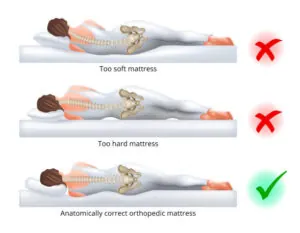
Lie on the mattress in your normal position for several minutes. Pay attention to whether your body feels evenly supported or whether one area sinks noticeably deeper.
A mattress does not need to feel perfectly rigid or perfectly flat. The goal is comfortable support without obvious gaps, pressure points, or excessive sinking.
4. Check whether the mattress is sagging
An older mattress can lose its original support characteristics. A permanent dip may become more important than the material listed on the mattress label.
If you can see or feel a pronounced indentation when nobody is lying on the bed, replacing the mattress may be more sensible than trying to compensate with pillows or additional bedding.
5. Prioritize a trial period
A showroom test lasting a few minutes cannot reproduce an entire night of sleep.
If possible, choose a mattress with a meaningful home trial and a clearly stated return policy. Give yourself enough time to determine whether you consistently sleep more comfortably rather than deciding solely from the first impression.
Mattress firmness vs. other features
Firmness gets most of the attention, but it is not the only feature worth evaluating.
| Feature | Why it matters | What to consider |
|---|---|---|
| Firmness | Influences pressure and sinking | Medium-firm is a reasonable starting point |
| Pressure relief | Affects comfort at shoulders, hips, and other contact points | Especially important for side sleepers |
| Edge support | Helps with getting in and out of bed | Useful if mobility is limited |
| Temperature regulation | Can affect sleep comfort | Consider whether you tend to sleep hot |
| Motion isolation | Limits disturbance from a partner | More relevant for couples |
| Durability | Determines how long support may remain consistent | Look for signs of early sagging or deterioration |
| Trial/return policy | Reduces the risk of choosing poorly | Particularly important when buying online |
No single material automatically makes a mattress better for back pain. Foam, springs, hybrid constructions, and adjustable designs can all have advantages and disadvantages depending on the sleeper.
Is a memory foam mattress good for back pain?
Memory foam can be comfortable for some people because it can distribute pressure and contour around the body. However, a memory foam mattress is not automatically appropriate for back pain.
If the foam allows too much sinking, you may feel unsupported or have difficulty changing positions. If it is excessively firm, pressure around the hips and shoulders may become uncomfortable.
Instead of choosing a mattress because it is labeled “memory foam,” evaluate the firmness, support, pressure relief, temperature, and trial policy together.
Is a firm mattress better for lower back pain?
Not necessarily. The belief that a very firm mattress is best for lower back pain is not supported by the strongest comparative evidence.
In the randomized trial of 313 adults with chronic nonspecific low back pain, the medium-firm group performed better than the firm-mattress group on several pain and disability outcomes. A later systematic review of controlled trials similarly found evidence favoring medium-firm mattresses for comfort, sleep quality, and spinal alignment.
That does not mean a soft mattress is better either. A mattress that allows excessive sinking can be uncomfortable for some people, while an overly firm surface can create pressure. Individual fit remains important.
How does your body weight affect mattress choice?
Body weight can change how deeply you sink into a mattress.
A person with a higher body weight may experience more compression on a softer surface, while a lighter person may find the same mattress relatively firm. This is one reason a manufacturer’s firmness label should not be treated as an exact clinical measurement.
| Situation | What may happen | What to test |
|---|---|---|
| Lighter body weight | Less compression | Whether the mattress feels too firm |
| Higher body weight | More sinking | Whether hips and pelvis remain supported |
| Broad shoulders/hips | Greater pressure at contact points | Pressure relief |
| Two people with different builds | Different perceptions of firmness | Individual comfort on both sides |
The practical test is simple: lie in your usual sleeping position and assess whether your body feels supported without excessive pressure or sinking.
Can an old mattress make back pain worse?
An old mattress may contribute to discomfort when it has lost its original support, developed visible sagging, or no longer feels comfortable.
There is no universal number of years at which every mattress should be replaced. Materials, construction, body weight, use, and mattress quality all affect how long it remains supportive.
If you regularly wake with discomfort and your mattress is visibly uneven, comparing how you feel after sleeping elsewhere can provide useful information.
However, replacing the mattress should not delay evaluation of persistent or worsening symptoms. A new mattress cannot correct every cause of back pain symptoms.

Can a mattress fix back pain?
A mattress may improve sleep comfort, but it should not be expected to fix the underlying cause of back pain.
Mattress research mainly addresses outcomes such as pain while lying down, morning pain, disability, comfort, sleep quality, and spinal alignment. A mattress is therefore better viewed as one part of a broader approach to managing symptoms.
If you are trying to understand how to fix back pain, consider the whole picture: activity, exercise, sleep habits, symptom duration, daily movements, and whether a clinician needs to evaluate the problem.
For uncomplicated symptoms, practical ways to relieve back pain at home may also be useful alongside improving your sleep setup.
What else can improve sleep when you have back pain?
Changing the mattress is only one option. Your pillow arrangement, sleeping position, activity level, and evening routine may also affect comfort.
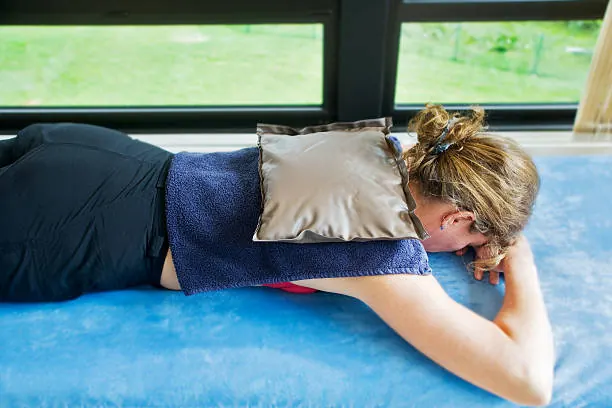
If you are deciding between heat and cold for temporary symptom relief, learn about whether you should use heat or ice for back pain. Heat may feel soothing for some people, but it is not appropriate for every situation, and heat can sometimes worsen back pain depending on the circumstances.
Regular movement may also matter. Depending on the cause and severity of your symptoms, appropriately selected exercises for lower back pain can be part of a broader recovery plan.
When should you replace your mattress?
Consider replacing your mattress if several of the following apply:
- It has visible or noticeable sagging.
- You consistently wake with more discomfort than when you went to bed.
- You sleep more comfortably on other mattresses.
- The mattress no longer provides even support.
- You regularly wake because you cannot find a comfortable position.
- Its condition has clearly deteriorated.
Do not replace a mattress simply because you have back pain. If the mattress is comfortable, supportive, and in good condition, there may be little reason to change it solely because you have developed symptoms.
What if back pain continues despite a new mattress?
If your back pain continues after changing your mattress, the mattress may not have been the primary factor.
Persistent symptoms can have many possible causes. Symptoms that are clearly one-sided may require a different evaluation; for example, right-sided lower back pain and lower left back pain in women can have different possible explanations depending on the accompanying symptoms.
Likewise, pain involving the upper back or ribs may need a different approach from ordinary low back discomfort. Information about pain around the ribs and back and back pain when breathing can help explain why symptom location and associated symptoms matter.
When is back pain not a mattress problem?
A mattress should not be blamed when symptoms suggest another medical issue or when pain follows a significant injury.
For example, back pain following a collision deserves appropriate attention, particularly if there are neurological symptoms or significant trauma. Learn more about back pain after a car accident.
Other symptoms can also point away from a simple sleep-surface issue. Back discomfort accompanied by digestive symptoms, for example, may warrant considering causes such as the connection between constipation and back pain or whether a hernia can cause back pain.
Warning signs: when back pain needs medical attention
Most mattress-related discomfort can be assessed without emergency care, but certain symptoms should not be attributed to your bed.
Usually reasonable to monitor
Mild stiffness that improves after getting up and moving, especially when there are no other concerning symptoms, can often be monitored while you adjust your sleep setup.
Arrange medical evaluation
Consider speaking with a healthcare professional if pain persists, repeatedly interferes with sleep, progressively worsens, or is associated with symptoms that concern you.
Seek urgent or emergency care
Seek urgent medical attention for serious warning signs such as new loss of bladder or bowel control, significant weakness or numbness, numbness around the groin or saddle area, severe symptoms after major trauma, or other rapidly worsening neurological symptoms.
For a fuller guide to when back pain is an emergency, focus on the associated symptoms rather than assuming your mattress is responsible.
What is the simplest way to choose a mattress for back pain?
Start with a medium-firm option that provides comfortable support without excessive sinking or pressure. Then test it in your normal sleeping positions and, whenever possible, use a home trial or return period.
Research suggests that medium-firm mattresses are a reasonable choice for many people with chronic nonspecific low back pain, but there is no universal mattress that works for everyone. The best mattress is the one that allows you to sleep comfortably, provides consistent support, and does not leave you repeatedly waking with increased pain.
Frequently Asked Questions
1. What firmness is best for back pain?
Medium-firm is a reasonable starting point for many people with nonspecific low back pain. Research comparing firm and medium-firm mattresses has generally favored medium-firm surfaces, but individual comfort and body characteristics still matter.
2. Is a hard mattress good for lower back pain?
Not necessarily. A very firm mattress can create pressure and may not provide better outcomes than a medium-firm surface.
3. Can a soft mattress cause back pain?
A mattress that is excessively soft may allow the pelvis and trunk to sink too deeply for some people, which can feel uncomfortable. However, softness alone does not prove that a mattress is causing back pain.
4. How can I tell if my mattress is too soft?
Look for excessive sinking, difficulty changing positions, or a noticeable dip around the hips or pelvis. Persistent morning discomfort that improves after getting up may also be a reason to test another sleep surface.
5. How can I tell if my mattress is too firm?
Pressure around the shoulders, hips, or other contact points may suggest that the surface is too firm for you. If you repeatedly wake because you cannot find a comfortable position, try comparing it with a different mattress.
6. Is memory foam good for back pain?
Memory foam can provide pressure relief and may feel comfortable for some sleepers. The material itself does not determine whether it is suitable; firmness, support, temperature, and personal comfort are also important.
7. How long should I test a new mattress?
A few minutes in a showroom cannot tell you how the mattress will feel after several nights. If possible, choose a mattress with a home trial that gives you enough time to assess repeated sleep and morning comfort.
8. Can replacing my mattress get rid of back pain?
Replacing an unsuitable or sagging mattress may improve sleep comfort, but it should not be expected to eliminate every type of back pain. Back pain can have many possible causes unrelated to the mattress.
9. Should I replace my mattress if I wake up with back pain?
Not automatically. First consider whether the mattress is sagging, uncomfortable, or consistently associated with worse symptoms, while also considering other possible causes of your back pain.
10. What should I do if my back still hurts after buying a new mattress?
Give yourself an appropriate adjustment period while monitoring whether sleep and morning comfort improve. If symptoms persist, worsen, or include concerning neurological or systemic symptoms, discuss them with a healthcare professional rather than repeatedly changing mattresses.
Conclusion
The best mattress for back pain is not necessarily the firmest one or the most expensive one. For many people, a medium-firm mattress offers a useful balance between support and pressure relief, but individual fit remains important.
When shopping, focus on firmness, even support, pressure relief, your normal sleeping position, mattress condition, and the availability of a trial or return period. A mattress can support better sleep and comfort, but persistent or concerning back pain still deserves appropriate medical evaluation.
Disclaimer: This article is provided for educational and informational purposes only. It is not a substitute for professional medical advice, diagnosis, or treatment