Pain on the right side of your lower back can make ordinary movements unexpectedly uncomfortable. You may notice it when getting out of bed, bending over, sitting at work, walking, lifting something, or turning your body. Sometimes the discomfort stays in one small area and feels like a sore or tight muscle. In other cases, it can spread toward the hip, buttock, abdomen, or leg.
What causes lower back pain on the right side? The answer depends on how the pain started, where it travels, what makes it worse or better, and whether you have other symptoms. A muscle strain is a common explanation, but pain in this area can also involve the spinal joints, discs, nerves, kidneys, or structures in the abdomen and pelvis.
The good news is that most uncomplicated lower back pain is not an emergency. However, symptoms such as progressive leg weakness, loss of bladder or bowel control, fever, significant urinary changes, or severe pain after an injury can change the situation and warrant prompt medical attention.
Table of Contents
- What Causes Lower Back Pain on the Right Side?
- 1. Muscle Strain on the Right Side
- 2. Prolonged Sitting and Reduced Movement
- 3. Herniated or Bulging Disc
- 4. Sciatica and Right-Sided Nerve Pain
- 5. Sacroiliac Joint Pain
- 6. Arthritis and Age-Related Spinal Changes
- 7. Pain After a Fall or Accident
- 8. Kidney-Related Problems
- 9. Kidney Stones
- 10. Constipation and Abdominal Causes
- Can Digestive Problems Cause Right-Sided Back Pain?
- Can Reproductive Conditions Cause Right-Sided Lower Back Pain?
- What Does Right-Sided Lower Back Pain Feel Like?
- When Is Right-Sided Back Pain a Warning Sign?
- When Should You See a Doctor for Right-Sided Back Pain?
- How Is Right-Sided Lower Back Pain Diagnosed?
- How to Relieve Right-Sided Lower Back Pain
- How Long Does Right-Sided Lower Back Pain Last?
- How to Prevent Right-Sided Lower Back Pain
- Conclusion
- Frequently Asked Questions
What Causes Lower Back Pain on the Right Side?
The lower back contains muscles, ligaments, spinal joints, discs, nerves, and vertebrae. Pain felt on the right side can originate from any of these structures. It can also be referred from organs or tissues located elsewhere in the body.
Common possibilities include:
-
Muscle strain: A sudden lift, twist, workout, or repetitive activity can overload the muscles on one side of the lower back.
-
Spinal joint irritation: The small joints between the vertebrae can become painful and cause localized discomfort.
-
Disc problems: A bulging or herniated disc may irritate a nearby nerve.
-
Nerve irritation: Nerve-related pain can travel from the lower back into the buttock or leg.
-
Sacroiliac joint pain: Irritation around the joint connecting the lower spine and pelvis can cause one-sided pain.
-
Injury: Falls, sports injuries, workplace accidents, or vehicle collisions can damage tissues around the spine.
-
Kidney problems: Certain kidney conditions can cause pain toward the side or back, particularly when other symptoms are present.
-
Abdominal or pelvic conditions: Problems outside the spine can sometimes be felt as lower back pain.
If you are trying to understand the broader range of possible triggers, a general overview of what causes back pain can provide useful context.
1. Muscle Strain on the Right Side
A muscle strain is one of the more common causes of one-sided lower back pain.
It can happen after lifting something heavy, twisting suddenly, exercising harder than usual, or performing repetitive activities. For example, someone who spends most of the week sitting may develop soreness after spending several hours gardening, cleaning, or moving furniture.
Muscle-related pain may feel sore, tight, tender, or aching. It often becomes more noticeable with movements that load the affected muscles, such as bending, twisting, or lifting.
A mild strain may gradually improve as the tissues recover. Persistent or worsening pain should not automatically be assumed to be a muscle strain, especially when other symptoms are present.
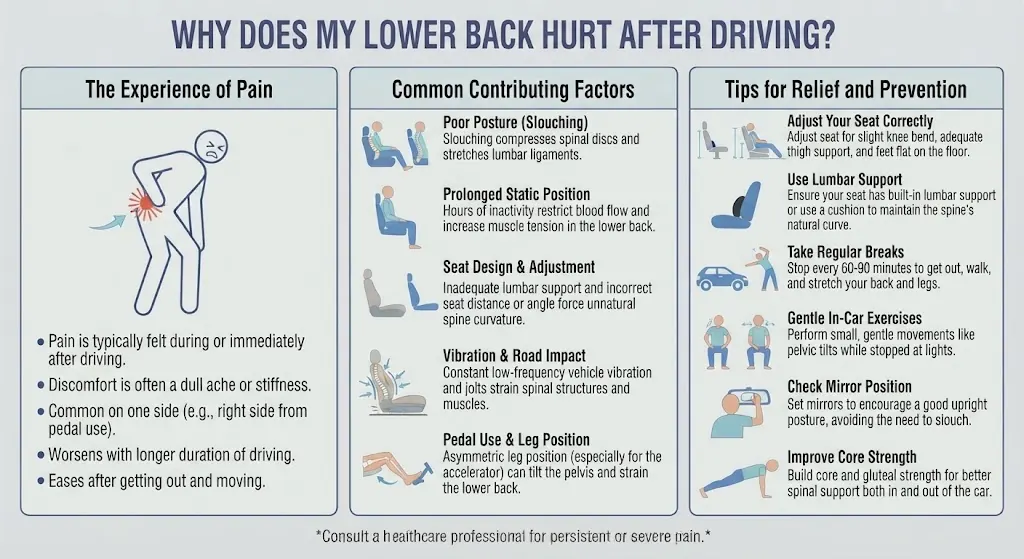
2. Prolonged Sitting and Reduced Movement
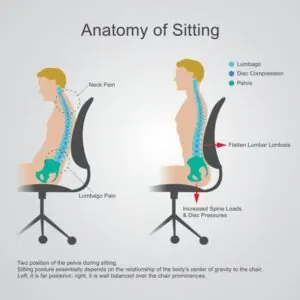
Spending long periods in one position can contribute to stiffness and discomfort in the lower back. This is particularly common when sitting is combined with little physical activity throughout the day.
The issue is not necessarily one specific “bad” posture. Staying still for hours can simply reduce movement and place repeated demands on the same tissues.
Taking regular movement breaks, walking briefly, changing positions, and maintaining general physical conditioning can help reduce the amount of time your back remains in one position.
3. Herniated or Bulging Disc
Spinal discs sit between the vertebrae and help absorb forces during movement. A disc can bulge or herniate and sometimes irritate a nearby spinal nerve.
Importantly, not every disc bulge causes pain. Disc changes can appear on imaging in people who have no symptoms, so scan results need to be interpreted alongside the person’s symptoms and physical examination.
When a disc irritates a nerve on the right side, symptoms may include:
-
Pain that travels into the right buttock or leg
-
Tingling or pins-and-needles sensations
-
Numbness in part of the leg or foot
-
Weakness affecting particular muscles
New or worsening weakness deserves medical assessment because it can indicate significant nerve involvement.
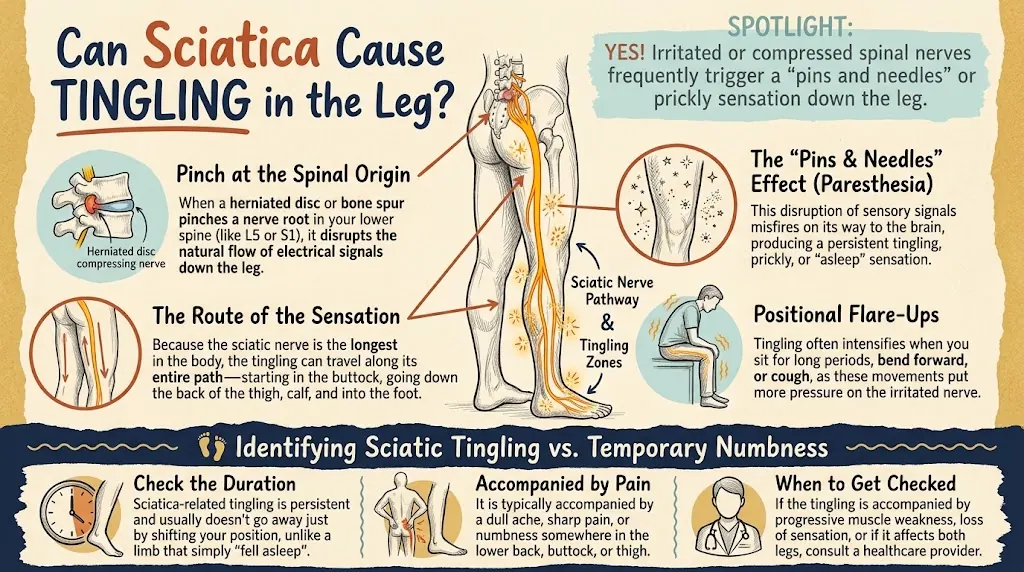
4. Sciatica and Right-Sided Nerve Pain
Sciatica refers to pain involving the sciatic nerve, usually affecting one side. It may begin around the lower back or buttock and extend down the leg.
Unlike typical muscle soreness, nerve pain may feel burning, shooting, electric, sharp, or unusually intense. Some people also experience tingling or numbness.
If right lower back pain is accompanied by symptoms extending down the right leg, nerve irritation becomes more relevant to consider. A healthcare professional can assess strength, sensation, reflexes, and movement to determine whether a spinal nerve may be involved.
5. Sacroiliac Joint Pain
The sacroiliac joints connect the lower spine with the pelvis. Irritation in this region can produce pain on one side of the lower back, around the buttock, or near the back of the hip.
Symptoms can overlap with muscle, hip, and spinal problems, so the location of the pain alone cannot confirm that the sacroiliac joint is responsible.
If the pain repeatedly occurs around the lower back and buttock during activities such as walking, standing, climbing stairs, or changing position, a professional assessment may help clarify the source.
6. Arthritis and Age-Related Spinal Changes
The discs and joints of the spine naturally change with age. These changes can contribute to stiffness and discomfort, particularly during certain movements.
However, an X-ray or MRI showing arthritis, disc degeneration, or other age-related changes does not automatically mean that those findings are causing the pain.
Healthcare professionals generally interpret imaging together with the symptoms and physical examination rather than treating an imaging finding by itself.
For a broader understanding of symptoms that can affect different parts of the spine, see this guide to lower back pain.
7. Pain After a Fall or Accident
Right-sided lower back pain can develop after a fall, sports injury, workplace accident, or vehicle collision.
A relatively minor injury may strain muscles or ligaments. A more significant impact can potentially affect the vertebrae, discs, joints, or nerves.
Medical evaluation is particularly important when severe pain begins after major trauma or when the pain is accompanied by weakness, numbness, difficulty walking, or other neurological symptoms.
8. Kidney-Related Problems
The kidneys are located toward the back of the abdomen, so certain kidney conditions can cause pain that is felt around the side or back.
Kidney-related pain may have a different pattern from ordinary mechanical back pain. Depending on the underlying problem, it can occur with fever, chills, nausea, urinary changes, or pain that moves toward the abdomen or groin.
This distinction matters because right-sided back pain with urinary symptoms should not automatically be treated as a pulled muscle.
9. Kidney Stones
Kidney stones can cause severe pain in the side or back. The discomfort may move toward the lower abdomen or groin and can sometimes come in waves.
Nausea, vomiting, blood in the urine, urinary urgency, or pain while urinating may occur as well.
Severe unexplained flank or back pain, especially when accompanied by fever, chills, blood in the urine, or difficulty urinating, requires medical evaluation.
10. Constipation and Abdominal Causes
Digestive problems can sometimes produce discomfort that is felt in the abdomen, pelvis, or back. Constipation may cause abdominal pressure, bloating, or discomfort that some people perceive around the lower back.
If constipation seems to coincide with your back symptoms, you can read more about whether constipation can cause back pain.
However, severe or persistent right-sided pain should not automatically be blamed on constipation. Significant abdominal pain, vomiting, fever, blood in the stool, or other concerning symptoms should be medically assessed.
Can Digestive Problems Cause Right-Sided Back Pain?
Yes, some digestive conditions can cause abdominal pain that is felt toward the back. The location and accompanying symptoms are important because several abdominal organs are located on the right side.
For example, gallbladder problems commonly cause pain in the upper right abdomen and may sometimes cause discomfort toward the back or right shoulder. Appendicitis can cause abdominal pain that may eventually become concentrated in the lower right abdomen.
These conditions should not be assumed to be ordinary lower back pain.
The broader relationship between abdominal symptoms and back discomfort can sometimes be confusing, particularly when pain seems to move between the two areas.
Can Reproductive Conditions Cause Right-Sided Lower Back Pain?
In people with a uterus and ovaries, some reproductive health conditions can cause pelvic or lower abdominal pain that extends toward the back.
Conditions such as ovarian cysts, endometriosis, and uterine fibroids can be associated with pelvic discomfort and may sometimes cause lower back symptoms. Menstrual timing and other accompanying symptoms can provide useful information when discussing the problem with a healthcare professional.
Sudden, severe pelvic or abdominal pain should not automatically be attributed to a reproductive condition and may require urgent evaluation.
What Does Right-Sided Lower Back Pain Feel Like?
The sensation can vary considerably depending on the underlying cause.
A muscle strain may feel like an ache, tightness, or tenderness that becomes worse with movement. Nerve irritation may feel burning, shooting, electric, or sharp and may travel into the leg.
The pain may be constant, intermittent, mild, or severe. Some people notice it mainly when bending, standing, or walking, while others experience discomfort even while resting.
Instead of focusing only on pain intensity, consider the overall pattern:
-
When did the pain begin?
-
Did it follow lifting, exercise, twisting, or an injury?
-
Does the pain stay in the back or travel into the buttock or leg?
-
Does movement make it worse?
-
Do you have numbness, tingling, or weakness?
-
Are there urinary, abdominal, pelvic, or fever-related symptoms?
These details can help a healthcare professional narrow down possible causes.
When Is Right-Sided Back Pain a Warning Sign?
Most lower back pain is not an emergency, but certain symptoms require prompt medical attention.
Seek Urgent Medical Attention If You Have:
-
Loss of bladder or bowel control: New loss of control over urination or bowel movements with back pain can be a sign of serious nerve compression.
-
Numbness around the groin: Reduced sensation around the genitals, anus, or inner thighs is an important neurological warning sign.
-
Severe or worsening leg weakness: Progressive weakness requires prompt assessment.
-
Pain after major trauma: Significant pain after a serious accident or fall should be evaluated.
-
Fever with severe back pain: Fever, chills, or feeling seriously unwell alongside back pain can indicate an underlying medical problem.
-
Unexplained weight loss: Persistent back pain accompanied by unexplained weight loss should be discussed with a healthcare professional.
Severe chest pain, major difficulty breathing, fainting, or other emergency symptoms also warrant immediate medical attention. Back-related chest discomfort is discussed in more detail in this guide to chest pain from back problems.
When Should You See a Doctor for Right-Sided Back Pain?
Arrange a medical assessment if the pain is persistent, repeatedly returns, interferes with normal activities, or has no obvious explanation.
It is particularly important to seek medical advice when symptoms extend beyond the back. A healthcare professional may need to determine whether the source is musculoskeletal, neurological, urinary, abdominal, or pelvic.
You should also seek advice if the pain is getting worse rather than gradually improving.
How Is Right-Sided Lower Back Pain Diagnosed?
Diagnosis usually starts with a medical history and physical examination.
A healthcare professional may ask:
-
When did the pain start?
-
Was there an injury?
-
What movements make it better or worse?
-
Does it travel into the leg?
-
Are there numbness, tingling, or weakness?
-
Do you have urinary or bowel changes?
-
Have you had fever, unexplained weight loss, or abdominal symptoms?
The physical examination may include checking movement, muscle strength, reflexes, sensation, walking, and areas of tenderness.
Imaging is not automatically needed for every episode of lower back pain. Depending on the symptoms and examination findings, a clinician may consider an X-ray, MRI, CT scan, ultrasound, blood tests, or urine testing.
How to Relieve Right-Sided Lower Back Pain
If your pain is mild and you have no warning signs, several conservative measures may help.
Keep Moving
Avoid spending the entire day in bed. Gentle movement and normal daily activity can help prevent stiffness.
A short walk may be more useful than remaining seated or lying down for prolonged periods. Increase activity gradually and avoid pushing through significant pain.
Try Heat or Cold
Some people find heat soothing when the back feels stiff or tight. Cold may provide temporary comfort following certain acute injuries.
Protect your skin by placing a cloth or towel between your skin and the heat or cold source.
Modify Activities That Aggravate the Pain
If lifting, twisting, or a particular exercise clearly increases your symptoms, temporarily reduce or modify that activity.
The goal is not complete inactivity. Instead, allow irritated tissues to settle while maintaining appropriate movement.
Gradually Rebuild Strength
Once the acute symptoms settle, gradually improving strength, mobility, and physical capacity can support a return to normal activity.
A physical therapist can tailor an exercise program to your symptoms, limitations, and underlying condition instead of relying on a generic exercise routine.
How Long Does Right-Sided Lower Back Pain Last?
Recovery depends on the cause.
A minor muscle strain may improve over days or weeks, while symptoms caused by a disc problem, nerve irritation, fracture, inflammatory condition, or another medical issue can follow a different course.
The overall trend is important. Pain that is gradually improving is generally less concerning than pain that is becoming increasingly severe or is accompanied by new symptoms.
If symptoms persist without improvement, repeatedly return, or begin interfering with walking and everyday activities, medical evaluation can help identify the underlying cause.
How to Prevent Right-Sided Lower Back Pain
Not every cause of back pain can be prevented, but maintaining physical capacity can reduce some avoidable stresses on the back.
-
Stay physically active: Regular movement helps maintain strength, mobility, and endurance.
-
Build strength gradually: Increase exercise intensity step by step rather than suddenly starting demanding workouts.
-
Take breaks from sitting: Stand up, walk, and change positions regularly if you work at a desk.
-
Lift carefully: Keep heavy objects close to your body and avoid sudden twisting while carrying them.
-
Return to exercise gradually: After an injury or period of inactivity, increase your activity in stages.
-
Pay attention to recurring pain: Repeated episodes may deserve assessment rather than repeated self-treatment.
Conclusion
Lower back pain on the right side can result from a muscle strain, irritated spinal joint, disc problem, nerve irritation, sacroiliac joint problem, injury, or a condition affecting structures outside the spine.
The location of the pain is useful, but it cannot identify the cause by itself. A sore back after lifting is different from pain traveling down the leg, and both are different from back pain accompanied by urinary symptoms, fever, abdominal pain, or neurological changes.
For mild symptoms without warning signs, staying gently active, modifying aggravating activities, and gradually returning to normal movement may help. If the pain is severe, persistent, worsening, follows significant trauma, or occurs with concerning symptoms, professional medical evaluation is the safer choice.
Frequently Asked Questions
1. What causes lower back pain on the right side?
Common causes include muscle strain, spinal joint irritation, disc problems, nerve irritation, and sacroiliac joint pain. Kidney, abdominal, pelvic, and other medical conditions can also sometimes cause pain in this area.
2. Is right-sided lower back pain serious?
Not necessarily. Many cases are related to musculoskeletal problems. However, severe or worsening pain, neurological symptoms, fever, urinary changes, or pain after significant trauma should be evaluated.
3. Can kidney problems cause right-sided lower back pain?
Yes. Kidney problems can cause pain toward the side or back and may occur with urinary changes, fever, chills, nausea, or pain that moves toward the abdomen or groin.
4. Can a herniated disc cause pain on one side?
Yes. A herniated disc can irritate a nerve on one side and cause lower back pain that travels into the buttock or leg, sometimes with tingling, numbness, or weakness.
5. Why does my right lower back hurt when I move?
Movement-related pain can occur with muscle strain, joint irritation, disc problems, or other musculoskeletal conditions. The specific movement that triggers the pain can provide a clue but cannot establish the exact diagnosis.
6. Can constipation cause right-sided lower back pain?
Constipation can cause abdominal pressure and discomfort that may be perceived around the back. However, persistent or severe right-sided pain should not automatically be attributed to constipation.
7. Should I walk with right-sided lower back pain?
If the pain is mild and walking does not significantly worsen your symptoms, gentle walking may help you remain active. Stop and seek medical advice if activity causes significant worsening or new neurological symptoms.
8. When should I worry about right-sided back pain?
Seek urgent medical attention for new bladder or bowel control problems, numbness around the groin, significant or progressive leg weakness, severe pain after major trauma, or serious symptoms such as fever with severe pain.
9. Can poor posture cause right-sided lower back pain?
Prolonged positioning can contribute to stiffness and discomfort, but right-sided pain has many possible causes. Regular movement and overall physical conditioning are generally more useful than focusing on maintaining one perfect posture.
10. How can I relieve right-sided lower back pain?
For mild symptoms, staying gently active, changing positions regularly, temporarily reducing aggravating activities, and using comfortable heat or cold may provide relief. Persistent or worsening symptoms should be assessed by a healthcare professional.
Disclaimer: This article is intended for educational purposes only and should not be considered personalized medical advice.