Back pain can feel like a dull, persistent ache, a sharp sensation with movement, tightness, stiffness, or pain that travels into another part of the body. Even moderate discomfort can make ordinary activities such as sitting at a desk, bending, walking, lifting, exercising, or sleeping more difficult. When back pain appears without an obvious reason, it is natural to wonder what is causing it.
There is no need to assume that every episode of back pain means something is seriously wrong. Many cases are related to muscle strain, prolonged inactivity, awkward movement, or other common musculoskeletal problems and improve with time and appropriate care. At the same time, certain symptoms can indicate that a more specific medical condition needs attention.
What causes back pain? The answer depends on where the pain occurs, how long it has lasted, how severe it is, what triggered it, and whether other symptoms are present. Back pain can originate from muscles, ligaments, joints, spinal discs, nerves, or bones. It can also sometimes be related to conditions outside the spine. Identifying the likely source matters because treatment and recovery can vary considerably.
Table of Contents
- What Causes Back Pain?
- 1. Muscle or Ligament Strain
- 2. Prolonged Sitting and Low Physical Activity
- 3. Herniated or Bulging Disc
- 4. Osteoarthritis and Age-Related Spinal Changes
- 5. Spinal Stenosis
- 6. Injuries and Accidents
- 7. Osteoporosis and Vertebral Compression Fractures
- 8. Nerve Compression and Sciatica
- 9. Inflammatory C
- onditions
- 10. Conditions Outside the Spine
- Can Constipation Cause Back Pain?
- Can Back Pain Affect the Right or Left Side?
- What Does Back Pain Feel Like?
- Can Back Problems Cause Rib or Chest Pain?
- How Is Back Pain Diagnosed?
- How Is Back Pain Treated?
- How to Relieve Back Pain at Home
- When Should You See a Doctor for Back Pain?
- When Is Back Pain an Emergency?
- How to Prevent Back Pain
- How Long Does Back Pain Last?
- Conclusion
- Frequently Asked Questions
What Causes Back Pain?
Back pain has many possible causes, and more than one factor can contribute at the same time. A person may strain a muscle after lifting something heavy, for example, while prolonged sitting or reduced physical conditioning may also make the back less prepared for sudden physical demands.
Common causes include:
-
Muscle or ligament strain
-
Prolonged sitting and physical inactivity
-
Herniated or bulging discs
-
Osteoarthritis and age-related spinal changes
-
Spinal stenosis
-
Nerve irritation and sciatica
-
Injuries and accidents
-
Osteoporosis and vertebral fractures
-
Inflammatory conditions
-
Kidney, abdominal, pelvic, or other medical conditions
The location and pattern of symptoms can provide useful clues, but they cannot confirm a diagnosis by themselves.
1. Muscle or Ligament Strain
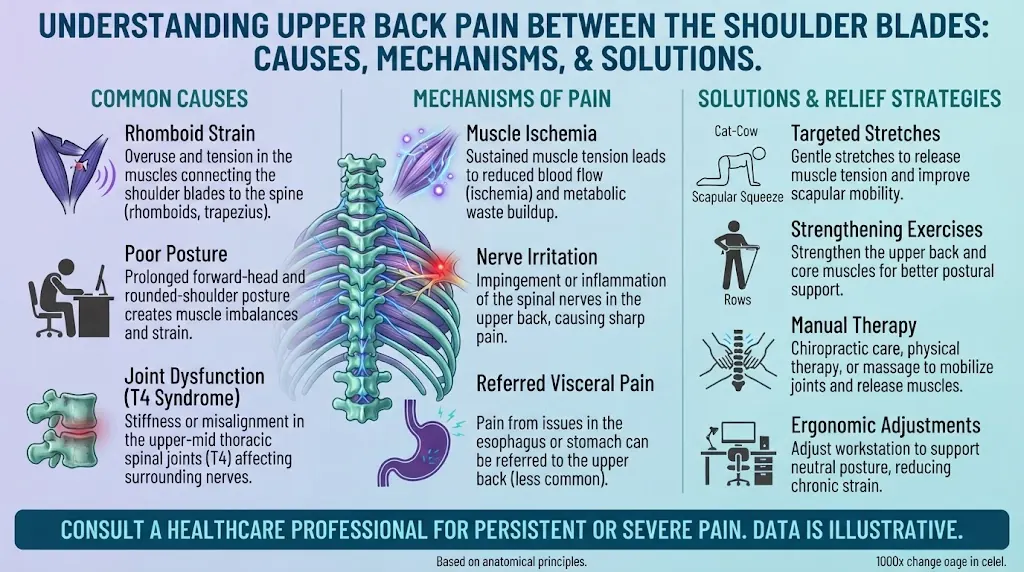
Muscle or ligament strain is one of the most common explanations for sudden back pain. It can happen after lifting something heavy, twisting unexpectedly, exercising beyond your usual level, or repeatedly performing the same movement.
When the supporting tissues of the back are overloaded, the result may be localized soreness, stiffness, tenderness, or pain that becomes more noticeable with movement.
For example, someone who spends most of the week relatively inactive may suddenly spend several hours gardening, cleaning, moving furniture, or exercising. The back may tolerate the activity initially, with soreness becoming more noticeable later.
Common features of muscle-related pain include:
-
Localized soreness: Pain often remains around the affected area.
-
Movement-related discomfort: Bending, twisting, lifting, or changing position may increase symptoms.
-
Tightness: The surrounding muscles may feel tense or stiff.
-
Tenderness: The painful area may feel uncomfortable when touched or used.
A mild strain often improves gradually, but persistent or worsening pain should not automatically be assumed to be muscular.
2. Prolonged Sitting and Low Physical Activity
Sitting itself is not necessarily harmful, but remaining in one position for hours can contribute to stiffness and discomfort.
When someone spends much of the day sitting and has little regular physical activity, the muscles involved in movement may also have less strength and endurance. A sudden physical demand can then feel more difficult for the body to handle.
The goal is not to maintain one perfect sitting posture throughout the day. Regularly changing positions, standing up, walking, and maintaining general physical conditioning are more practical ways to keep the body moving.
3. Herniated or Bulging Disc
Spinal discs sit between the vertebrae and help absorb forces during everyday movement. A disc can develop a bulge or herniation that may irritate a nearby nerve.
Not every disc abnormality causes symptoms. Some people have disc changes visible on imaging without experiencing pain. A disc finding therefore needs to be considered alongside the person’s symptoms and physical examination.
When a disc affects a nerve, symptoms may extend beyond the back and include:
-
Radiating pain: Pain may travel toward the buttock, thigh, or leg.
-
Tingling: An irritated nerve can produce pins-and-needles sensations.
-
Numbness: Parts of the leg or foot may feel less sensitive.
-
Weakness: Significant nerve involvement can affect the strength of specific muscles.
A herniated disc is one possible cause of symptoms associated with sciatica.
4. Osteoarthritis and Age-Related Spinal Changes
The discs and joints of the spine naturally change with age. Discs can lose some height and flexibility, while cartilage within spinal joints can gradually change.
These changes may contribute to stiffness and pain, particularly during or after certain activities. However, an age-related finding on an X-ray or MRI does not automatically mean that it is responsible for someone’s symptoms.
Osteoarthritis can affect the small facet joints at the back of the spine. Irritation in these joints may contribute to localized pain and reduced mobility.
A healthcare professional considers imaging alongside the person’s symptoms and examination rather than treating the scan alone.
For a broader overview of the condition and its common patterns, see this guide to common back pain symptoms.
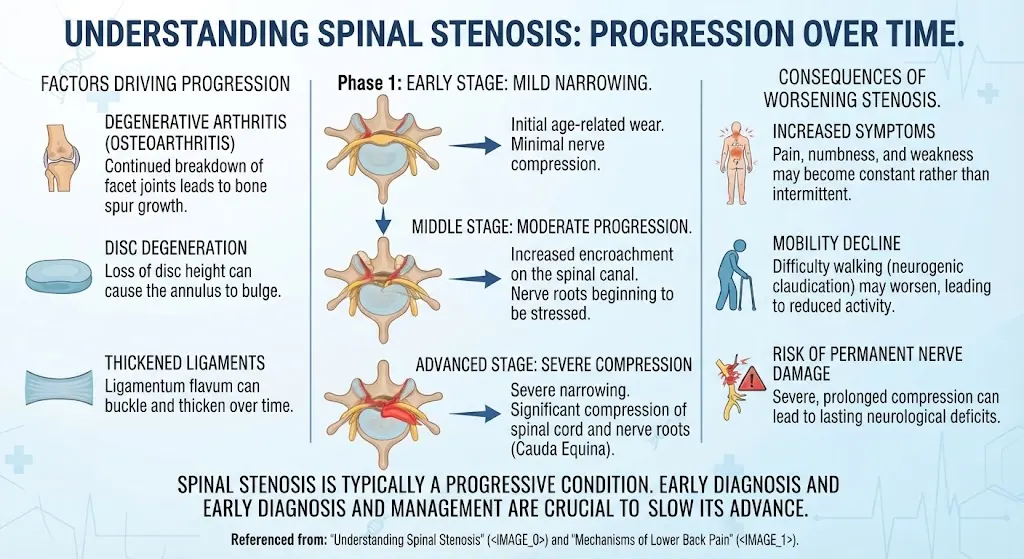
5. Spinal Stenosis
Spinal stenosis occurs when the spaces available for the spinal cord or spinal nerves become narrower. It can develop because of several structural changes, including disc changes, bone growth, or thickening of tissues around the spine.
When nerves become compressed, some people experience pain, heaviness, numbness, or weakness in the legs. Symptoms may become more noticeable when standing or walking and improve when sitting or leaning forward.
The pattern varies between individuals. Persistent leg symptoms, particularly numbness or weakness, should be evaluated rather than assumed to be ordinary muscle pain.
6. Injuries and Accidents
Back pain can develop after a fall, sports injury, workplace accident, or vehicle collision.
Minor injuries may strain muscles or ligaments, while stronger impacts can affect vertebrae, discs, joints, or nerves. The amount of pain does not always indicate the extent of the underlying injury.
After a significant accident, symptoms such as severe pain, weakness, numbness, difficulty walking, or other neurological changes should receive prompt medical attention.
Back Pain After a Car Accident
A vehicle collision can expose the body to sudden forces that strain or injure tissues throughout the back. Symptoms may appear immediately or become more noticeable later.
Medical evaluation is particularly important when pain follows significant trauma or is accompanied by neurological symptoms.
7. Osteoporosis and Vertebral Compression Fractures
Osteoporosis reduces bone density and can make vertebrae more susceptible to fractures. A compression fracture may cause sudden or persistent back pain and can sometimes occur after relatively minor stress when the bones are significantly weakened.
The possibility of a vertebral fracture becomes more important in people with known osteoporosis or other risk factors for reduced bone strength.
Sudden unexplained back pain after a fall or relatively minor injury should be discussed with a healthcare professional when a fracture is possible.
8. Nerve Compression and Sciatica
Nerve-related back pain occurs when a spinal nerve becomes irritated or compressed. Sciatica is a common example and typically affects one side of the body.
Instead of remaining entirely in the back, the pain may travel through the buttock and down the leg. It can feel burning, electric, shooting, sharp, or unusually intense.
Symptoms can include:
-
Leg pain: Discomfort may travel from the back into the buttock and leg.
-
Tingling: The affected area may feel prickly or like pins and needles.
-
Numbness: Sensation may be reduced in part of the leg or foot.
-
Weakness: Nerve compression can interfere with normal muscle function.
Severe or progressive weakness requires prompt medical assessment.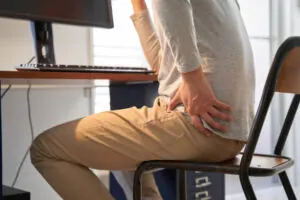
9. Inflammatory C
onditions
Certain inflammatory conditions can affect the spine and cause persistent back pain and stiffness. Ankylosing spondylitis is one example.
Inflammatory back pain may have a different pattern from a typical muscle strain. Symptoms can be worse after prolonged rest and may improve somewhat with movement.
Persistent morning stiffness, recurring symptoms, or pain that does not behave like typical mechanical back pain should be discussed with a healthcare professional.
10. Conditions Outside the Spine
Not every episode of back pain begins in the muscles, joints, discs, or nerves.
Certain kidney problems can produce pain toward the side or back. Digestive, urinary, gynecological, and other medical conditions can also sometimes cause pain that is felt in the back.
The presence of additional symptoms is therefore important. Back pain combined with fever, urinary changes, abdominal pain, unexplained weight loss, or feeling unusually unwell should not automatically be treated as a routine musculoskeletal problem.
Can Constipation Cause Back Pain?
Constipation can cause abdominal pressure, bloating, and discomfort that may sometimes be perceived around the back. When bowel symptoms and back discomfort appear together, constipation may be contributing to the overall symptoms.
However, persistent or severe back pain should not automatically be blamed on constipation. Significant abdominal pain, vomiting, fever, blood in the stool, or symptoms that do not improve warrant medical evaluation.
For more detail about this specific connection, see how constipation can cause back pain.
Can Back Pain Affect the Right or Left Side?
Back pain can affect one side more than the other. Muscle strain, joint irritation, disc problems, and nerve irritation can all produce one-sided symptoms.
For example, right-sided lower back pain may occur after lifting or twisting, but pain in that location can also overlap with kidney or abdominal conditions when other symptoms are present.
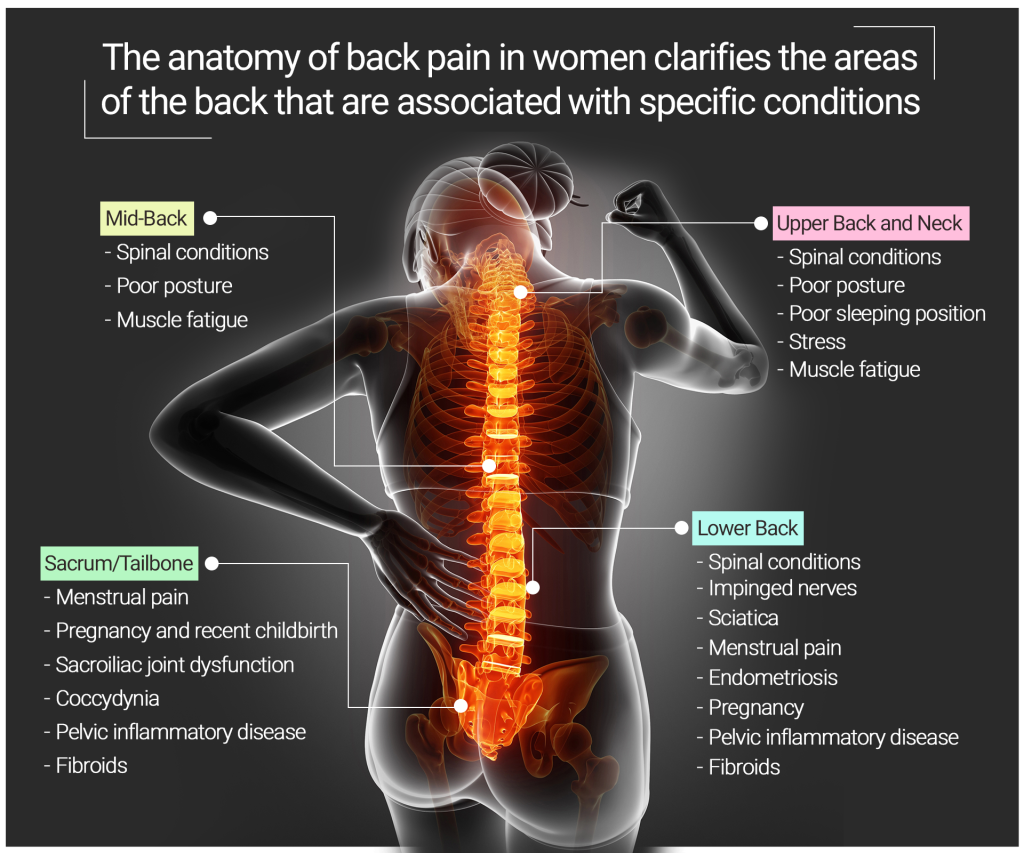
Similarly, lower left-sided back pain in women can have musculoskeletal causes while also overlapping with certain pelvic or reproductive conditions.
The side of the pain is therefore useful information, but it cannot identify the cause by itself.
What Does Back Pain Feel Like?
Back pain can vary significantly depending on its cause.
Common descriptions include:
-
Dull aching: A persistent soreness may remain in one area.
-
Sharp pain: Certain movements may trigger a sudden or stabbing sensation.
-
Stiffness: The back may feel difficult to move after sleeping or sitting.
-
Tightness: Muscles around the painful area may feel tense.
-
Burning or electric pain: These sensations may occur with nerve irritation.
-
Radiating pain: Symptoms may extend into the buttock, hip, leg, or another area.
-
Numbness or weakness: These symptoms may indicate neurological involvement.
The pattern is often more informative than the pain score alone. Consider when the pain began, what triggers it, where it travels, and whether other symptoms have developed.
Can Back Problems Cause Rib or Chest Pain?
Pain from the back can sometimes be felt around connected areas of the trunk, particularly when muscles, joints, or nerves are involved.
For example, pain around the ribs and back may involve structures of the chest wall, thoracic spine, or surrounding muscles.
Similarly, back and rib pain can occur when pain is felt across more than one area of the trunk.
If discomfort becomes noticeable specifically when breathing deeply, coughing, or sneezing, back pain when breathing may have a different range of possible causes and should be assessed according to the accompanying symptoms.
Importantly, new or severe chest pain should not automatically be attributed to the spine. Chest pain accompanied by significant breathing difficulty, fainting, sweating, or other emergency symptoms requires immediate medical attention.
How Is Back Pain Diagnosed?
Diagnosis usually begins with a medical history and physical examination.
A healthcare professional may ask:
-
When did the pain begin?
-
Was there an injury or sudden change in activity?
-
What movements make it better or worse?
-
Does the pain travel into the buttocks or legs?
-
Do you have numbness, tingling, or weakness?
-
Have you noticed urinary or bowel changes?
-
Do you have fever, abdominal symptoms, or unexplained weight loss?
-
Has the pain affected walking or normal daily activities?
The physical examination may involve assessing spinal movement, muscle strength, reflexes, sensation, walking, and areas of tenderness.
Do You Need an X-Ray or MRI?
Not necessarily.
Imaging is not routinely required for uncomplicated back pain. A clinician may recommend an X-ray, MRI, CT scan, or another test when the symptoms or examination findings suggest that imaging could provide useful information or change treatment.
An MRI provides detailed views of discs, nerves, and other soft tissues. X-rays can be useful for evaluating certain bone-related problems, while CT scans can provide detailed cross-sectional views, particularly in some injury settings.
Because imaging can reveal changes that are also found in people without pain, results should be interpreted in the context of the entire clinical picture.
How Is Back Pain Treated?
Treatment depends on the underlying cause rather than simply the intensity of the pain.
For uncomplicated back pain, maintaining appropriate daily activity and gradually returning to normal movement are often important parts of recovery. Prolonged bed rest is generally not recommended for routine back pain.
Treatment may include:
-
Physical therapy: Exercises can improve strength, mobility, flexibility, and physical function.
-
Activity modification: Temporarily reducing movements that significantly aggravate symptoms may help.
-
Heat or cold: Some people find these useful for temporary symptom relief.
-
Medication: Certain pain-relieving or anti-inflammatory medicines may be appropriate for some people.
-
Condition-specific treatment: Fractures, inflammatory conditions, nerve compression, and other disorders may require targeted medical care.
Treatment should be matched to the suspected cause rather than based solely on where the pain is located.
How to Relieve Back Pain at Home
If your symptoms are mild and there are no warning signs, several practical measures may help.
Keep Moving
Avoid spending the entire day in bed. Gentle movement and normal daily activity can help reduce stiffness.
A short walk may be easier to tolerate than sitting or lying down for prolonged periods. Increase activity gradually rather than exercising through significant pain.
Change Positions Regularly
If you spend much of the day sitting, stand up, walk around, or change position regularly.
You do not need to maintain one perfect posture. The goal is to avoid remaining in one position for hours at a time.
Temporarily Modify Aggravating Activities
If lifting, twisting, or a particular exercise clearly makes your symptoms worse, reduce or modify that activity temporarily.
As the pain improves, gradually return to normal activity rather than remaining inactive for an extended period.
Use Heat or Cold for Temporary Relief
Heat may feel soothing when muscles are tight or the back feels stiff. Cold may provide temporary comfort after some acute injuries.
Use a protective layer between your skin and the heat or cold source.
When Should You See a Doctor for Back Pain?
Consider medical assessment when back pain:
-
Does not gradually improve
-
Keeps returning
-
Interferes substantially with normal activities
-
Is severe or progressively worsening
-
Has no clear explanation
-
Occurs with symptoms outside the back
Medical evaluation becomes particularly important when back pain occurs with fever, urinary changes, abdominal symptoms, unexplained weight loss, significant numbness, or weakness.
When Is Back Pain an Emergency?
Most back pain is not an emergency. Certain symptoms, however, require urgent medical attention because they can indicate serious nerve compression, infection, fracture, or another significant condition.
Seek Urgent Medical Help If You Have:
-
New loss of bladder or bowel control: This can indicate serious nerve compression.
-
Numbness around the groin or inner thighs: Reduced sensation in this region is an important neurological warning sign.
-
Significant or progressive leg weakness: New or worsening weakness requires prompt evaluation.
-
Symptoms affecting both legs: New neurological symptoms in both legs should be assessed urgently.
-
Severe pain after major trauma: A serious fall or accident can cause fractures or other significant injuries.
-
Fever with severe back pain: This may indicate an infection or another condition requiring urgent assessment.
-
Severe chest pain or breathing difficulty: These symptoms should not be assumed to originate from the back.
How to Prevent Back Pain
Not every cause of back pain can be prevented, but improving physical conditioning and maintaining regular movement can help reduce some avoidable stresses.
Useful habits include:
-
Stay active: Regular movement supports strength, mobility, and endurance.
-
Build strength gradually: Increase exercise intensity instead of suddenly starting demanding workouts.
-
Take breaks from sitting: Stand, walk, or change positions throughout the day.
-
Lift with control: Keep heavy objects close to your body and avoid sudden twisting while carrying them.
-
Return to exercise gradually: Increase activity in stages after an injury or period of inactivity.
-
Maintain bone health: People with risk factors for osteoporosis should discuss bone health with a healthcare professional.
-
Pay attention to recurring symptoms: Repeated episodes may deserve evaluation rather than repeated self-treatment.
How Long Does Back Pain Last?
There is no single recovery time because back pain has many possible causes.
Many uncomplicated episodes improve over days or weeks. Pain associated with nerve irritation, fractures, inflammatory conditions, or other medical disorders can follow a different course.
The direction of symptoms matters. Gradual improvement is generally more reassuring than pain that becomes progressively worse or develops new neurological or systemic symptoms.
If pain continues without improvement, repeatedly returns, or interferes with everyday activities, professional assessment can help determine why.
Conclusion
There is no single answer to what causes back pain. Muscle and ligament strain, prolonged inactivity, disc problems, arthritis, spinal stenosis, injuries, osteoporosis, nerve compression, inflammatory conditions, and problems outside the spine can all contribute to back symptoms.
The pattern of pain provides important clues. Localized soreness after unusual activity may have a different cause from pain that travels down a leg, appears after significant trauma, or occurs alongside fever, urinary changes, abdominal symptoms, numbness, or weakness.
For mild back pain without warning signs, staying gently active, changing positions regularly, modifying aggravating activities, and gradually rebuilding physical capacity may support recovery.
However, persistent, worsening, or severe pain should not simply be ignored. New bladder or bowel problems, numbness around the groin, significant weakness, severe pain after major trauma, or serious chest or breathing symptoms require prompt medical attention.
Frequently Asked Questions
1. What causes back pain?
Common causes include muscle or ligament strain, prolonged inactivity, disc problems, arthritis, spinal stenosis, nerve irritation, and injuries. Kidney, abdominal, pelvic, inflammatory, and other medical conditions can also cause pain felt in the back.
2. What is the most common cause of back pain?
Muscle or ligament strain is a common cause, especially after lifting, repetitive activity, sudden twisting, or an increase in physical activity. However, several factors can contribute to back pain at the same time.
3. Can sitting too much cause back pain?
Prolonged sitting can contribute to stiffness and discomfort, particularly when you rarely change position or engage in regular physical activity. Movement breaks and overall conditioning can help.
4. Can a herniated disc cause back pain?
Yes. A herniated disc can cause back pain and may irritate a nearby nerve, producing pain, tingling, numbness, or weakness that extends into the leg.
5. Can constipation cause back pain?
Constipation can cause abdominal pressure and discomfort that may be perceived around the back. Persistent or severe back pain should not automatically be attributed to constipation.
6. Can back pain affect only one side?
Yes. Muscle strain, joint irritation, disc problems, and nerve irritation can all cause one-sided pain. Problems outside the spine can also produce pain that is felt predominantly on one side.
7. How can I relieve back pain?
For mild symptoms without warning signs, staying gently active, changing positions regularly, temporarily reducing aggravating activities, and using comfortable heat or cold may help. Persistent or worsening symptoms should be assessed.
8. Is walking good for back pain?
Walking is an activity many people can tolerate during recovery from uncomplicated back pain. Start at a comfortable level and gradually increase activity rather than pushing through significant pain.
9. Do I need an MRI for back pain?
Not necessarily. Most uncomplicated back pain does not require immediate imaging. An MRI may be considered when symptoms or examination findings suggest that imaging could change treatment or investigate a significant underlying condition.
10. When should I worry about back pain?
Seek medical attention when pain is severe, persistent, worsening, or significantly interfering with daily activities. Urgent evaluation is needed for bladder or bowel control problems, groin numbness, significant weakness, severe pain after major trauma, or serious chest or breathing symptoms.
Disclaimer: This article is intended for educational purposes only and should not be considered personalized medical advice.