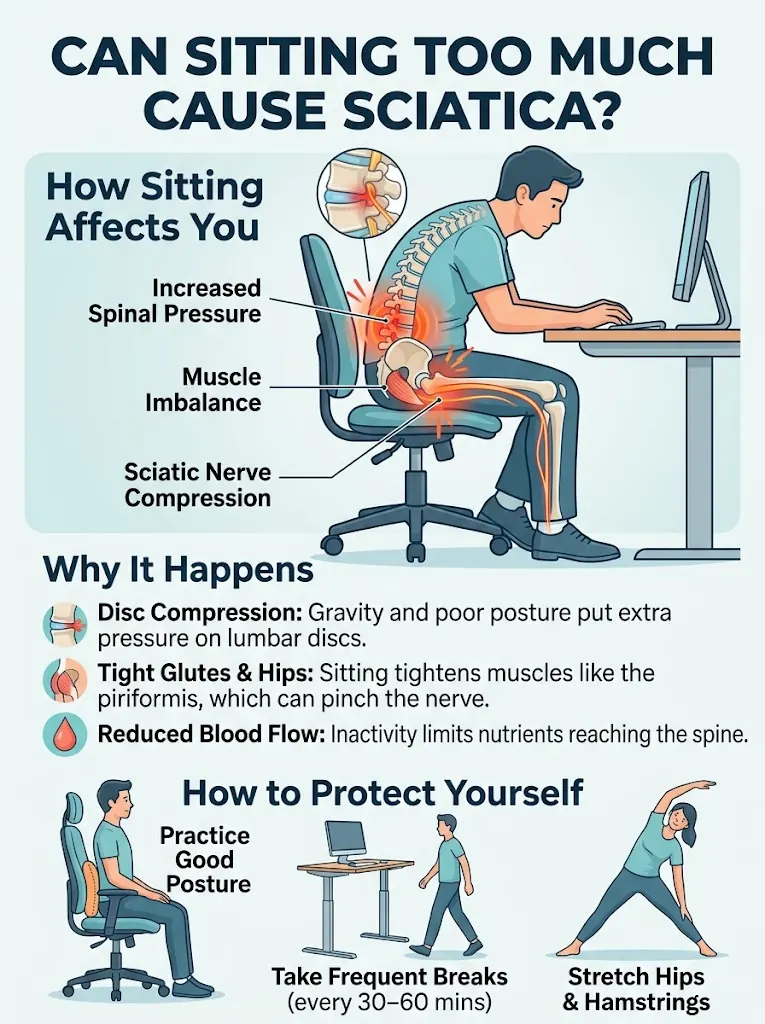
Leg weakness with sciatica deserves attention because it can sometimes indicate that a nerve is being compressed or irritated. Pain-related hesitation is not the same as true muscle weakness, and new or worsening weakness should not automatically be attributed to sciatica.
Understanding whether sciatica can cause weakness in the leg, what the weakness feels like, how nerve irritation affects movement, and when to seek medical care can help you decide what to do next. The following guide explains common causes, safe steps you can take, expected recovery, and warning signs that need prompt evaluation.
How Can Sciatica Cause Leg Weakness?
Sciatica describes pain and other symptoms associated with irritation or compression of nerve roots that contribute to the sciatic nerve. These nerves originate in the lower spine and help control sensation and movement in parts of the buttocks and legs.
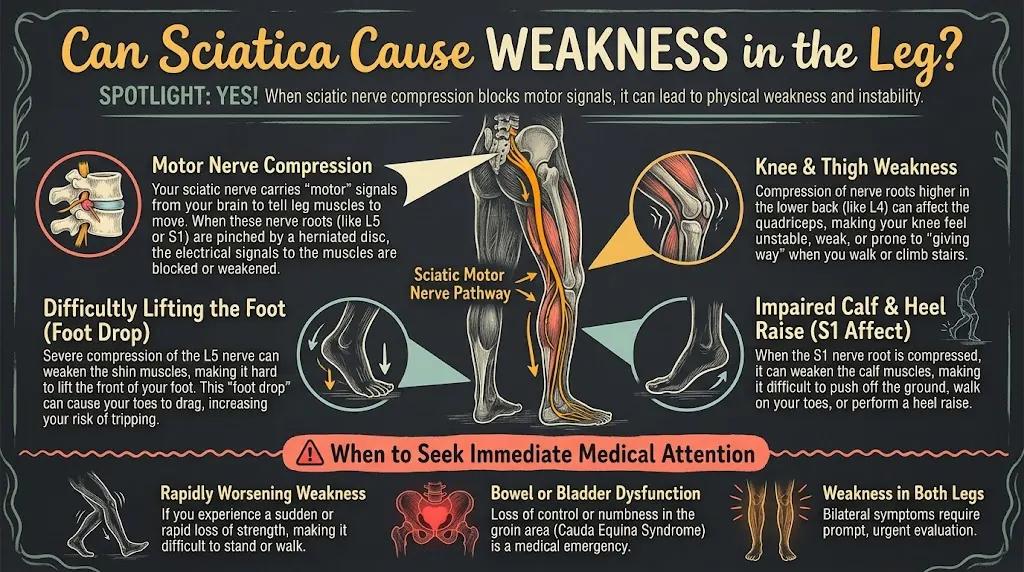
When a nerve root is compressed, it may interfere with the signals traveling between the brain and muscles. This can cause weakness in specific movements, such as straightening the knee, lifting the foot, or pushing off with the toes. A herniated disc is one possible cause, although spinal stenosis and other conditions can also affect these nerves.
Understanding the common causes of sciatica can help explain why symptoms vary from one person to another.
What Does Leg Weakness From Sciatica Feel Like?
Sciatica-related weakness can affect one or more muscle groups, depending on which nerve roots are involved. You might notice difficulty lifting your toes, pushing off the ground, climbing steps, or keeping your knee steady.
Common symptoms include:
-
A leg that feels weaker or less reliable than the other.
-
Difficulty lifting the front of the foot while walking.
-
Trouble standing on your toes or heels.
-
Reduced endurance when walking or standing.
-
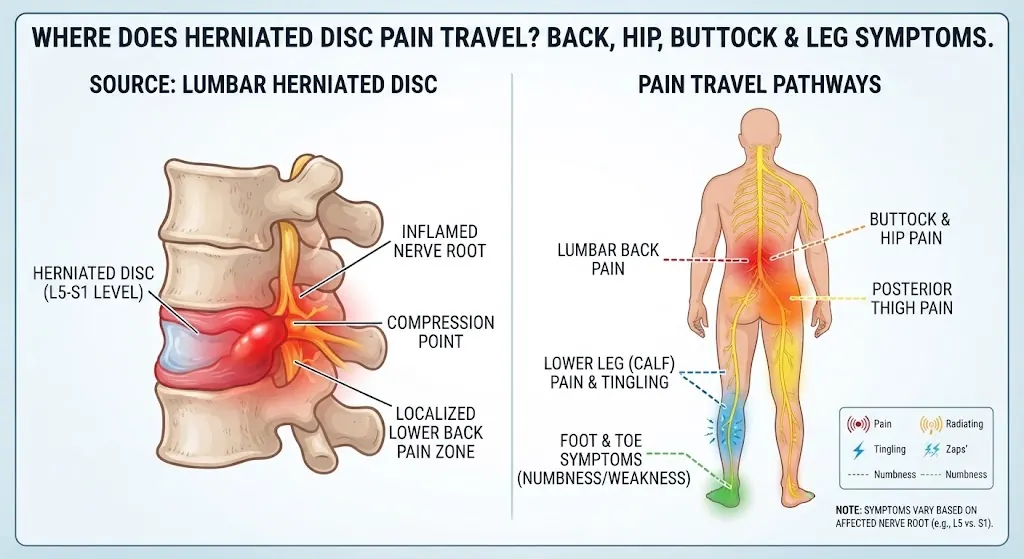
Tingling, numbness, or shooting pain traveling down the leg.
The first signs of sciatica may include radiating pain before noticeable weakness develops. Some people also experience tingling traveling down the leg or numbness in the foot from sciatica.
Is it true weakness or pain limiting movement?
Pain can make you hesitate to move, even when the muscles can still generate normal force. True neurological weakness means the muscle cannot produce its usual movement or strength because of a problem affecting its nerve supply.
| Symptom | What it may indicate |
|---|---|
| Movement stops because it hurts | Pain-related limitation |
| Foot repeatedly catches on the floor | Possible weakness affecting foot lifting |
| Difficulty rising onto the toes | Possible weakness affecting calf muscles |
| Leg gives way unexpectedly | Possible muscle weakness or another condition |
| Weakness that is progressively worsening | Requires prompt medical assessment |
These patterns are clues, not a diagnosis. A clinician can assess strength, sensation, reflexes, and walking ability to determine whether nerve dysfunction is present.
What Causes Sciatica-Related Leg Weakness?
The most common explanation is irritation or compression of a nerve root in the lower spine.
A herniated disc can press against a nearby nerve root and cause pain, sensory changes, or weakness. However, not every herniated disc causes symptoms, and imaging findings do not always explain what a person feels.
Other possible causes include:
-
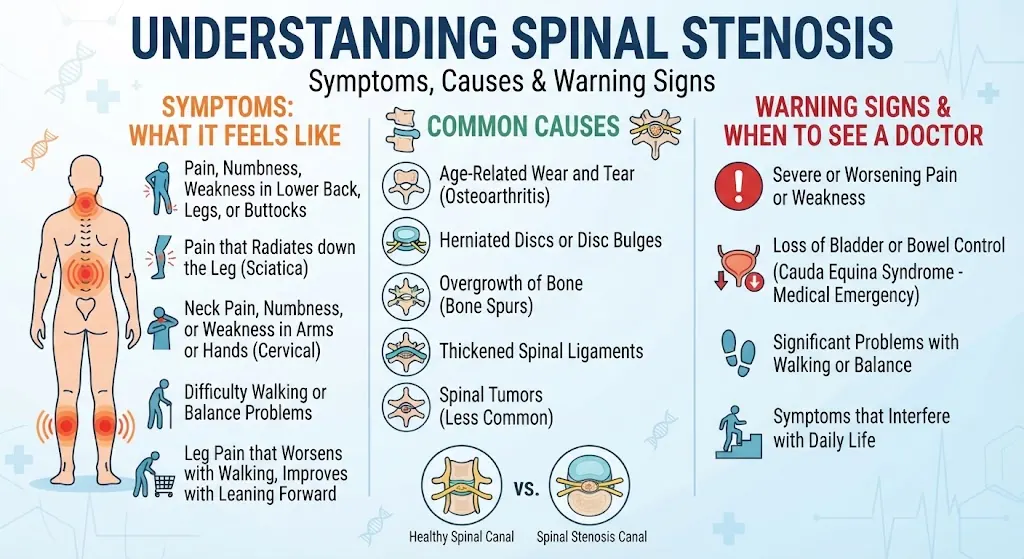
Spinal stenosis: Narrowing of the spinal canal or nerve openings can compress nerves, sometimes causing leg heaviness or weakness while walking.
-
Degenerative spinal changes: Changes involving discs and joints may narrow the spaces through which nerves travel.
-
Other nerve conditions: Peripheral nerve problems can cause weakness that resembles sciatica but requires a different evaluation.
A herniated disc versus sciatica comparison can clarify an important distinction: a herniated disc is a possible underlying cause, whereas sciatica describes a pattern of symptoms.
How Is Sciatica-Related Leg Weakness Diagnosed?
Diagnosis usually begins with a medical history and physical examination. Your clinician may ask when the weakness began, whether it is worsening, which movements are difficult, and whether you have changes in sensation or bladder and bowel function.
The examination may include testing muscle strength, reflexes, sensation, walking, and specific leg movements. Symptoms such as lower back pain with leg weakness or lower back pain with leg numbness help guide the evaluation.
An MRI is not automatically necessary for every episode of sciatica. It may be appropriate when weakness is significant or progressive, when serious causes are suspected, or when imaging would help guide treatment.
What Helps Sciatica-Related Leg Weakness?
The priority is to identify the cause of weakness before attempting to strengthen the leg. Mild sciatica without neurological deficits may improve with conservative care, but new or persistent muscle weakness warrants clinical assessment.
Safe steps while arranging care
-
Avoid heavy lifting, sudden twisting, and activities that worsen leg symptoms.
-
Change positions regularly rather than remaining in bed for prolonged periods.
-
Use short, comfortable walks if you can walk safely and movement does not worsen weakness.
-
Consider gentle heat or ice for discomfort, protecting your skin from direct heat or cold.
-
Avoid aggressive stretches or strengthening exercises that increase radiating pain, numbness, or weakness.
For general symptom management, what to avoid when you have sciatica and how to relieve back pain at home offer practical considerations. Once a clinician determines that exercise is appropriate, individualized exercises for lower back pain may help restore mobility and function.
What does the evidence say about recovery?
Clinical practice guideline reviews generally support education, appropriate physical activity, and targeted examination rather than routine imaging for every person with radiating leg pain. A 2021 systematic review evaluated 23 clinical practice guidelines for lumbosacral radicular pain and found consistent recommendations for assessing gait and neurological signs.
Recovery depends on the cause and severity of nerve involvement. Pain may improve before muscle strength returns, so reduced pain alone does not prove that nerve function has recovered.
| Treatment approach | When it may be appropriate | Important limitation |
|---|---|---|
| Activity modification | Mild symptoms without progressive weakness | Does not treat every cause of nerve compression |
| Physical therapy | After assessment and when movement is safe | Exercises must match symptoms and function |
| Medication | When recommended for pain control | Pain relief does not necessarily restore strength |
| MRI or other testing | When findings may change treatment | Imaging abnormalities do not always explain symptoms |
| Surgery or specialist treatment | Selected cases involving significant nerve compression or persistent symptoms | Depends on examination findings and the underlying cause |
For people who are unsure about resting, whether to rest or keep moving with lower back pain provides useful general guidance. If weakness continues, discuss how long lower back pain can last before evaluation and whether a referral is needed.
When Is Leg Weakness From Sciatica an Emergency?
Not every episode of leg weakness requires an emergency department visit, but certain symptoms need immediate attention.
| Level of concern | Signs and next steps |
|---|---|
| Monitor while arranging appropriate care | Mild discomfort without weakness, numbness, or changes in walking |
| Prompt medical evaluation | New leg weakness, persistent foot catching, difficulty walking, or worsening strength |
| Emergency care now | New bladder retention or loss of bladder control, loss of bowel control, numbness around the groin or saddle area, or rapidly progressing or severe weakness |
These warning signs can indicate serious nerve compression, including cauda equina syndrome. Do not wait for all symptoms to appear before seeking emergency care.
Review when back pain is an emergency and where to go for back pain: urgent care, ER, or a doctor for further guidance. If you have new or worsening weakness, contact a clinician promptly rather than relying on home treatment alone.
Frequently Asked Questions
1. Can sciatica cause leg weakness without back pain?
Yes. Nerve irritation can cause leg pain, sensory changes, or weakness even when back pain is absent. The absence of back pain does not rule out a spinal nerve problem.
2. Can sciatica make one leg feel heavy?
Yes. Nerve-related symptoms can include heaviness, fatigue, or difficulty moving the leg normally. Persistent heaviness accompanied by weakness deserves medical assessment.
3. Can sciatica cause foot drop?
Yes. Compression of nerves involved in lifting the front of the foot can cause foot drop, making the toes drag or the foot slap against the ground. New foot drop needs urgent medical evaluation.
4. How long does sciatica-related weakness last?
The duration depends on the cause and severity of nerve involvement. Some symptoms improve over weeks, but weakness may persist longer and should not be assumed to resolve simply because pain decreases.
5. Can walking make sciatica-related weakness worse?
Walking may aggravate symptoms in some people, particularly when spinal stenosis is involved. Stop if weakness increases, your leg becomes unstable, or you cannot walk safely.
6. Should I exercise if sciatica makes my leg weak?
Avoid starting strenuous strengthening or nerve-stretching exercises before new weakness has been assessed. A clinician or physical therapist can recommend movements appropriate to your strength and neurological findings.
7. Can a herniated disc cause leg weakness without sciatica pain?
Yes. A herniated disc can affect a nerve root and cause weakness even when typical radiating pain is absent. Examination is needed to identify the likely cause.
8. Does sciatica-related leg weakness mean permanent nerve damage?
No, weakness does not automatically mean permanent damage. However, significant or worsening weakness may reflect nerve dysfunction that needs timely treatment to reduce the risk of lasting impairment.
9. Can untreated sciatica lead to lasting weakness?
Some cases resolve without lasting problems, while severe or prolonged nerve compression can sometimes leave persistent deficits. Learn more about what can happen if sciatica goes untreated.
10. What doctor should I see for sciatica-related weakness?
Start with a primary care clinician or seek urgent assessment if weakness is new or worsening. Depending on the findings, you may need evaluation by a spine specialist, neurologist, or another appropriate clinician.
Conclusion
Sciatica can cause leg weakness when nerve irritation or compression interferes with muscle function. New weakness, difficulty lifting the foot, or worsening walking ability should be medically assessed rather than treated with exercises alone. Seek emergency care for bladder or bowel changes, saddle-area numbness, or rapidly progressing weakness.
Disclaimer: This article is provided for educational and informational purposes only.