Lower left-sided back pain in women can be confusing because the pain may feel as though it is coming from the back even when the underlying source is somewhere else. You might notice it after lifting, exercising, sitting for a long time, or waking up with an unexplained ache. The discomfort may stay in one spot or extend toward the hip, buttock, abdomen, pelvis, or leg.
Many episodes of lower back pain are related to muscles, joints, spinal discs, or nerves and improve with appropriate care. However, women can also experience lower back pain alongside menstrual, pelvic, urinary, digestive, or gynecological symptoms. Looking at the entire symptom pattern is therefore more useful than focusing on the location of the pain alone.
So, what causes lower left-sided back pain in women? Common possibilities include muscle strain, prolonged inactivity, disc or nerve problems, menstrual pain, endometriosis, fibroids, ovarian conditions, urinary or kidney problems, constipation, and pregnancy-related changes. Knowing which symptoms occur alongside the back pain can help determine whether monitoring it is reasonable or whether medical evaluation is needed.
Table of Contents
- What Can Cause Lower Left-Sided Back Pain in Women?
- 1. Muscle Strain
- 2. Prolonged Sitting and Limited Movemet
- 3. Herniated Disc or Nerve Irritation
- 4. Menstrual Cramps and Period-Related Back Pain
- 5. Endometriosis
- 6. Uterine Fibroids
- 7. Ovarian Causes
- 8. Urinary Tract and Kidney Problems
- 9. Constipation and Digestive Problems
- 10. Pregnancy-Related Changes
- Is Lower Left-Sided Back Pain Different in Women?
- When Should a Woman See a Doctor About Lower Left-Sided Back Pain?
- Warning Signs That Need Urgent Medical Attention
- How Is Lower Left-Sided Back Pain Diagnosed?
- Treatment for Lower Left-Sided Back Pain
- How to Track Lower Left-Sided Back Pain
- How to Reduce the Risk of Lower Back Pain
- Conclusion
- Frequently Asked Questions
What Can Cause Lower Left-Sided Back Pain in Women?
The lower left side of the back contains muscles, ligaments, joints, nerves, spinal discs, and vertebrae. Nearby structures in the abdomen and pelvis can also produce pain that is felt in or around the lower back.
Some common causes include:
-
Muscle strain: Lifting, twisting, exercise, or repetitive activity can irritate the muscles supporting the lower back.
-
Prolonged sitting or inactivity: Remaining in one position for extended periods can contribute to stiffness and discomfort.
-
Herniated or bulging disc: A disc problem may irritate a nearby nerve and cause back pain that travels into the buttock or leg.
-
Nerve irritation: Nerve-related pain may cause shooting, burning, tingling, numbness, or weakness.
-
Menstrual pain: Period-related cramping can sometimes spread into the lower back and thighs.
-
Endometriosis: Endometrial-like tissue growing outside the uterus can cause pelvic pain and, in some women, back pain.
-
Uterine fibroids: Depending on their size and location, fibroids can cause pelvic pressure or discomfort that is felt in the lower back.
-
Ovarian conditions: Some ovarian problems can cause one-sided pelvic or lower abdominal pain that may also be felt toward the back.
-
Urinary or kidney problems: Infections and kidney stones can cause pain in the back or side, often with other urinary or systemic symptoms.
-
Digestive problems: Constipation and abdominal conditions can sometimes be accompanied by back discomfort.
-
Pregnancy-related changes: Changes in weight distribution and loading around the pelvis and lower back can contribute to back discomfort during pregnancy.
1. Muscle Strain
A muscle strain is a common cause of lower left-sided back pain.
It can happen after lifting something heavy, twisting suddenly, cleaning, gardening, carrying bags, or doing an unfamiliar workout. The pain may appear immediately or become more noticeable several hours later.
A strained muscle often feels:
-
Aching or sore
-
Tight or stiff
-
Tender when touched
-
More painful with certain movements
-
Localized to one area of the back
Pain that remains around the lower back and gradually improves with normal movement is more consistent with a musculoskeletal problem than pain accompanied by significant neurological, urinary, or pelvic symptoms.
2. Prolonged Sitting and Limited Movemet
Spending much of the day sitting can contribute to lower back stiffness and discomfort. The issue is not necessarily one “bad” sitting posture. More often, the problem is remaining in the same position for too long without enough movement.
If your symptoms are related to prolonged sitting, try changing positions regularly, taking short walking breaks, and maintaining an appropriate level of physical activity.
It is also better to increase exercise gradually. Suddenly moving from little activity to intense workouts can place more stress on muscles and joints than they are prepared to handle.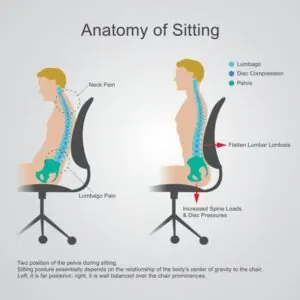
3. Herniated Disc or Nerve Irritation
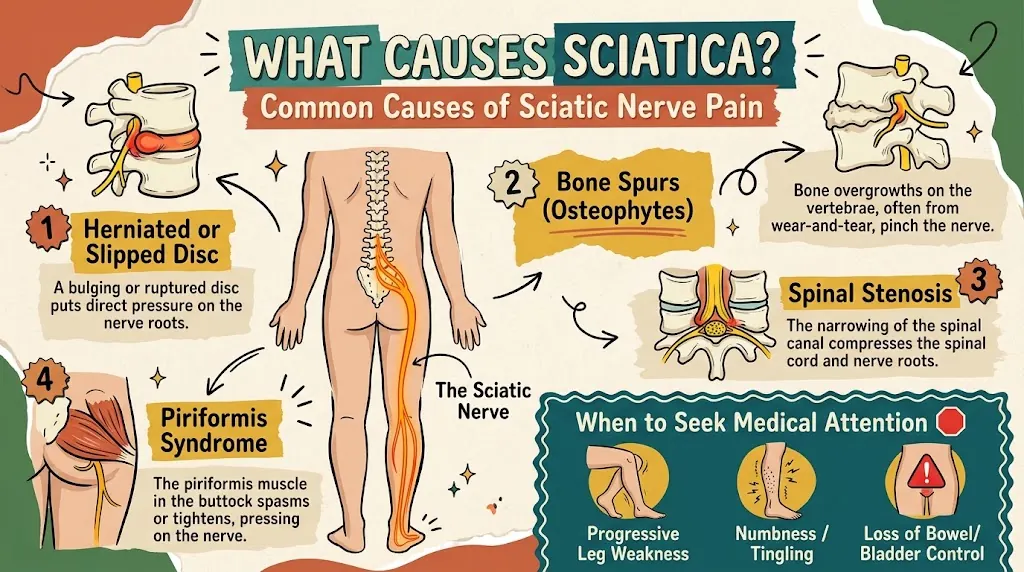
The spinal discs sit between the vertebrae and help distribute forces through the spine. A disc can bulge or herniate and sometimes irritate a nearby nerve.
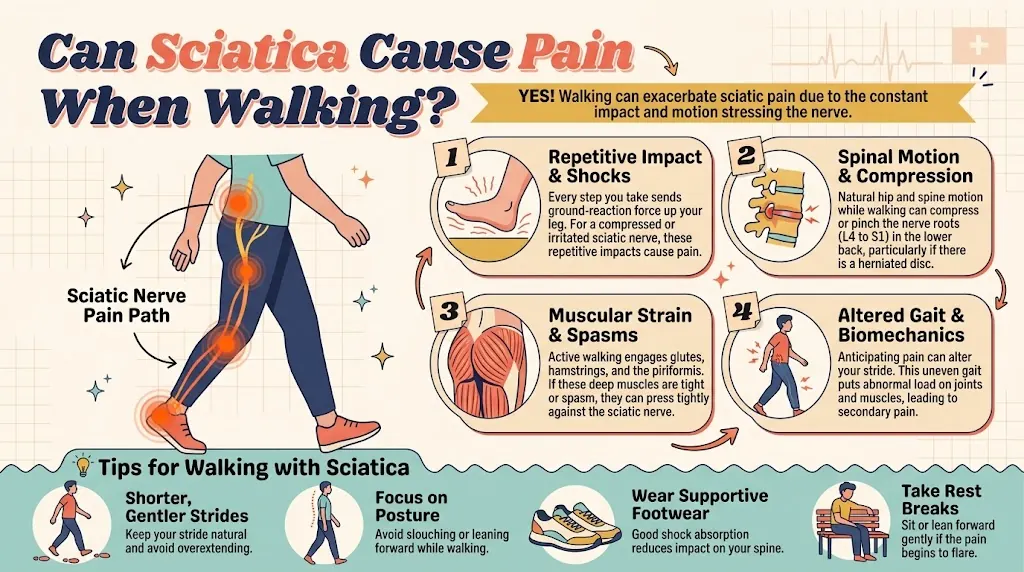
When the affected nerve is on the left side, symptoms may begin in the lower back and travel through the left buttock and leg.
Nerve-related symptoms can include:
-
Shooting or electric-like pain
-
Burning pain
-
Tingling or pins and needles
-
Numbness
-
Weakness in part of the leg or foot
Pain that travels down the leg is different from simple localized muscle soreness. New or worsening weakness should be evaluated by a healthcare professional.
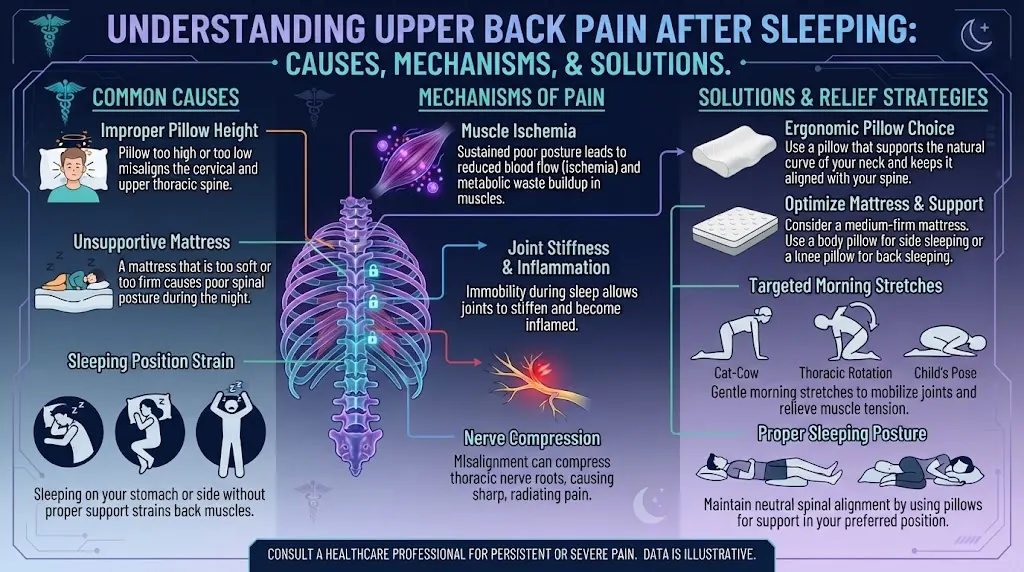
For a broader overview of possible spinal and non-spinal causes, see this guide to what causes back pain.
4. Menstrual Cramps and Period-Related Back Pain
Some women experience lower back pain around their menstrual period. The discomfort may occur with cramping in the lower abdomen or pelvis and may spread toward the thighs.
Period-related pain commonly follows a recognizable pattern, such as beginning shortly before or around the start of menstruation and improving as the period progresses.
However, severe menstrual pain should not automatically be dismissed as normal. Speak with a healthcare professional if your periods have become significantly more painful, interfere with daily activities, or the pattern has changed.
5. Endometriosis
Endometriosis occurs when tissue similar to the lining of the uterus grows outside the uterus. It can cause inflammation and pain in the pelvis and may affect nearby structures.
Some women experience pain that extends into the lower back. The relationship between symptoms and the menstrual cycle can be an important clue.
Endometriosis may be worth discussing with a healthcare professional when lower back or pelvic pain repeatedly occurs around menstruation, particularly when accompanied by unusually painful periods, pain during sex, or other recurring pelvic symptoms.
Back pain alone cannot establish that endometriosis is the cause.
6. Uterine Fibroids
Fibroids are noncancerous growths that develop in or around the uterus. Many women with fibroids have no symptoms, while others develop symptoms depending on the number, size, and location of the growths.
Possible symptoms include:
-
Heavy or prolonged menstrual bleeding
-
Pelvic pressure
-
Abdominal discomfort
-
Frequent urination when a fibroid presses on the bladder
-
Lower back or pelvic discomfort
If back pain occurs together with heavy menstrual bleeding or persistent pelvic pressure, a gynecological evaluation may help determine whether fibroids or another pelvic condition could be involved.
7. Ovarian Causes
The ovaries are located in the pelvis, and certain ovarian conditions can cause pain on one side of the lower abdomen or pelvis. Depending on the underlying problem, the discomfort may also be perceived in the lower back.
One-sided pain does not automatically indicate an ovarian problem. Musculoskeletal, urinary, digestive, and nerve-related conditions can produce similar symptoms.
Sudden, severe pelvic or abdominal pain—especially when accompanied by vomiting, fainting, heavy bleeding, or feeling extremely unwell—requires urgent medical assessment.
8. Urinary Tract and Kidney Problems
Urinary and kidney conditions can produce pain toward the back or side rather than directly over the spine.
A urinary tract infection may cause:
-
Burning or pain during urination
-
Frequent urination
-
An urgent need to urinate
-
Lower abdominal discomfort
When an infection involves the kidneys, symptoms can become more significant and may include pain in the back or side, fever, chills, nausea, and feeling generally unwell.
Kidney stones can cause severe pain that may come in waves and travel toward the abdomen or groin.
The presence of urinary symptoms is therefore an important clue when assessing left-sided back pain.
9. Constipation and Digestive Problems
Constipation can cause abdominal pressure, bloating, and discomfort. Some people also notice associated back discomfort.
However, constipation should not automatically be blamed for persistent lower back pain. A person can have constipation and a separate musculoskeletal or spinal problem at the same time.
If constipation is severe or persistent, or occurs with significant abdominal pain, vomiting, blood in the stool, or an inability to pass stool or gas, medical assessment is appropriate.
You can learn more about the relationship between these symptoms in this guide to whether constipation can cause back pain.
10. Pregnancy-Related Changes
Pregnancy can alter weight distribution and increase the load placed on the muscles, joints, and ligaments around the pelvis and lower back. As a result, back discomfort is relatively common during pregnancy.
Even so, significant or unusual pain should not automatically be considered a normal part of pregnancy.
Contact your healthcare professional if back pain is persistent, severe, or accompanied by symptoms such as:
-
Vaginal bleeding
-
Fever
-
Painful urination
-
Regular contractions
-
Fluid leakage
-
Significant abdominal or pelvic pain
Is Lower Left-Sided Back Pain Different in Women?
The most common musculoskeletal causes of back pain are not unique to women. Muscle strains, disc problems, nerve irritation, and joint-related pain can affect anyone.
The difference is that women may also experience pelvic and reproductive conditions that can produce pain around the lower abdomen, pelvis, hip, or back.
This makes the symptoms occurring with the back pain particularly important.
For example:
-
Back pain after lifting may suggest a musculoskeletal cause.
-
Back pain with leg numbness or shooting pain may suggest nerve involvement.
-
Back pain that repeatedly occurs during menstruation may warrant consideration of period-related or gynecological causes.
-
Back pain with burning urination and fever may point toward a urinary or kidney problem.
The location of pain is useful, but the overall pattern often provides more information.
When Should a Woman See a Doctor About Lower Left-Sided Back Pain?
Mild back pain without warning signs can often be monitored initially, particularly when there is an obvious trigger such as unusual physical activity.
Arrange a medical evaluation if the pain:
-
Persists without meaningful improvement
-
Keeps returning
-
Interferes with walking, sleeping, work, or normal activities
-
Has no obvious explanation and does not settle
-
Occurs with persistent pelvic pain
-
Occurs with unusual vaginal bleeding
-
Occurs with urinary symptoms
-
Is associated with unexplained systemic symptoms
Persistent or recurring symptoms deserve attention because the underlying cause may require treatment beyond home care.
Warning Signs That Need Urgent Medical Attention
Certain symptoms alongside lower left-sided back pain should not be treated as ordinary muscle soreness.
New Neurological Symptoms
Seek urgent medical attention for new loss of bladder or bowel control, numbness around the groin or inner thighs, or severe or progressively worsening weakness in the legs.
These symptoms can indicate serious nerve compression.
Sudden Severe Abdominal or Pelvic Pain
Sudden severe abdominal or pelvic pain, particularly when accompanied by fainting, vomiting, heavy bleeding, or feeling extremely unwell, requires prompt assessment.
The source may be outside the spine and could involve an abdominal or pelvic emergency.
Fever, Chills, or Feeling Very Unwell
Back or side pain combined with fever, chills, nausea, or significant illness can occur with infection and warrants medical evaluation.
This is especially important when urinary symptoms are also present.
Pain After Major Trauma
A serious fall, vehicle accident, or other significant trauma can injure the spine, muscles, or surrounding structures.
Severe pain after major trauma should be assessed by a healthcare professional.
How Is Lower Left-Sided Back Pain Diagnosed?
There is no single test that identifies every cause of lower left-sided back pain.
A healthcare professional will usually begin by asking about:
-
When the pain started
-
Where the pain is located
-
Whether it travels elsewhere
-
What makes it better or worse
-
Recent exercise, lifting, or injury
-
Menstrual timing
-
Pregnancy status when relevant
-
Urinary symptoms
-
Digestive symptoms
-
Pelvic symptoms
-
Neurological symptoms
-
Previous medical problems
A physical examination may assess spinal movement, muscle strength, reflexes, sensation, walking ability, and other findings based on the symptoms.
Additional testing depends on the suspected cause. Some spinal problems may require imaging such as an X-ray or MRI, while blood or urine tests may be more useful when infection or another systemic condition is suspected.
Imaging is not automatically necessary for every episode of lower back pain.
Treatment for Lower Left-Sided Back Pain
Treatment should address the underlying cause rather than simply the location of the pain.
A mild muscle strain may improve with activity modification and gradual return to normal movement. In contrast, conditions involving the reproductive, urinary, nervous, or gastrointestinal systems may require condition-specific treatment.
For Mild Musculoskeletal Pain
When there are no warning signs, reasonable self-care measures may include:
-
Stay gently active: Short walks and comfortable movement can help reduce stiffness.
-
Modify aggravating activities: Temporarily reduce heavy lifting or movements that clearly worsen symptoms.
-
Use heat or cold: Some people find brief applications helpful for temporary symptom relief.
-
Return to exercise gradually: Increase activity in stages instead of immediately returning to intense training.
-
Consider physical therapy: A physical therapist can develop an individualized exercise and movement program.
If the pain is more focused around the ribs or upper back rather than the lower back, information about back rib pain may be more relevant.
If a Pelvic or Gynecological Cause Is Suspected
Treatment depends on the diagnosis. Depending on the condition, management may involve monitoring, medication, hormonal treatment, physical therapy, procedures, or other approaches.
Persistent pelvic-related back pain should not simply be accepted as something you have to live with.
How to Track Lower Left-Sided Back Pain
A simple symptom record can make it easier to recognize patterns and provide useful information during a medical appointment.
Record:
When the pain starts: Note the date, time, and circumstances.
Where it hurts: Record whether the pain remains in the left lower back or travels into the abdomen, pelvis, buttock, hip, or leg.
Menstrual timing: Note whether symptoms occur before, during, or after your period.
Associated symptoms: Record urinary, digestive, pelvic, neurological, or fever-related symptoms.
What changes the pain: Note whether sitting, walking, bending, exercising, eating, urinating, or changing position affects it.
A recurring pattern can be particularly useful when symptoms are related to the menstrual cycle or another predictable trigger.
How to Reduce the Risk of Lower Back Pain
Not every cause of back pain can be prevented. Conditions involving the reproductive, urinary, digestive, or nervous systems may occur despite healthy habits.
However, several habits can support general back health:
-
Stay physically active: Regular movement supports strength, mobility, and conditioning.
-
Build strength gradually: Progress exercises for the hips, abdomen, legs, and back rather than starting with an intense routine.
-
Break up long periods of sitting: Stand, walk, or change positions throughout the day.
-
Lift sensibly: Keep heavy objects close to your body and avoid sudden twisting while lifting.
-
Pay attention to recurring symptoms: Repeated back pain associated with periods, pelvic symptoms, or urinary changes deserves professional discussion.
Conclusion
Lower left-sided back pain in women can come from a relatively simple musculoskeletal problem such as a strained muscle, but it can also occur with menstrual, pelvic, ovarian, uterine, urinary, kidney, digestive, or pregnancy-related conditions.
The combination of symptoms often provides more useful information than the location of the pain alone. Back pain after lifting is a different pattern from back pain accompanied by unusual bleeding, pelvic pain, urinary changes, fever, leg weakness, or numbness.
For mild pain without warning signs, gentle movement, temporary activity modification, and monitoring may be reasonable. Persistent, unexplained, recurring, or significant pain should be evaluated by a healthcare professional.
Seek urgent medical attention for new bladder or bowel control problems, numbness around the groin, severe or worsening leg weakness, sudden severe abdominal or pelvic pain, significant bleeding, fever with back or side pain, or severe pain following major trauma.
Frequently Asked Questions
1. What causes lower left-sided back pain in women?
Common causes include muscle strain, prolonged inactivity, spinal disc problems, nerve irritation, and joint-related pain. Menstrual, pelvic, ovarian, uterine, urinary, kidney, digestive, and pregnancy-related conditions can also cause pain that is felt in the lower back.
2. Can period cramps cause lower back pain?
Yes. Menstrual cramps can spread from the lower abdomen or pelvis toward the lower back and thighs. If menstrual pain is severe, worsening, or interfering with normal activities, discuss it with a healthcare professional.
3. Can endometriosis cause lower back pain?
Endometriosis can cause pelvic pain and, in some women, pain that extends into the lower back. Repeated symptoms associated with the menstrual cycle should be discussed with a healthcare professional.
4. Can fibroids cause lower back pain?
Fibroids do not always cause symptoms, but larger or strategically located fibroids can produce pelvic pressure or discomfort that may be felt in the lower back.
5. Can an ovarian cyst cause back pain?
Some ovarian conditions can cause one-sided pelvic or lower abdominal pain that may also be felt in the back. Sudden severe pelvic pain requires prompt medical assessment.
6. Can constipation cause lower back pain in women?
Constipation can cause abdominal pressure and discomfort that may occur alongside back discomfort. Persistent or severe symptoms should not automatically be attributed to constipation.
7. When should I worry about lower left-sided back pain?
Seek medical advice if the pain persists, repeatedly returns, interferes with daily activities, or occurs with pelvic, urinary, or systemic symptoms. Urgent assessment is needed for severe neurological symptoms, major trauma, or sudden severe abdominal or pelvic pain.
8. Can kidney problems cause pain in the lower left back?
Yes. Kidney problems can cause pain toward the side or back, sometimes with urinary changes, fever, chills, nausea, or severe wave-like pain. These accompanying symptoms can help distinguish urinary or kidney problems from ordinary muscular back pain.
9. Is lower left-sided back pain normal during pregnancy?
Back discomfort can occur during pregnancy as the body changes, but significant or unusual pain should be discussed with a healthcare professional, particularly when accompanied by bleeding, fever, contractions, fluid leakage, or urinary symptoms.
10. How can I relieve lower left-sided back pain?
For mild musculoskeletal pain without warning signs, gentle activity, changing positions, temporarily avoiding aggravating movements, and comfortable heat or cold may provide temporary relief. Treatment for pelvic, urinary, neurological, or other medical causes depends on the underlying diagnosis.
Related Back Pain Topics
If your symptoms are not limited to the lower left side, you may also want to explore:
Disclaimer: This article is intended for educational purposes only and should not be considered personalized medical advice.