
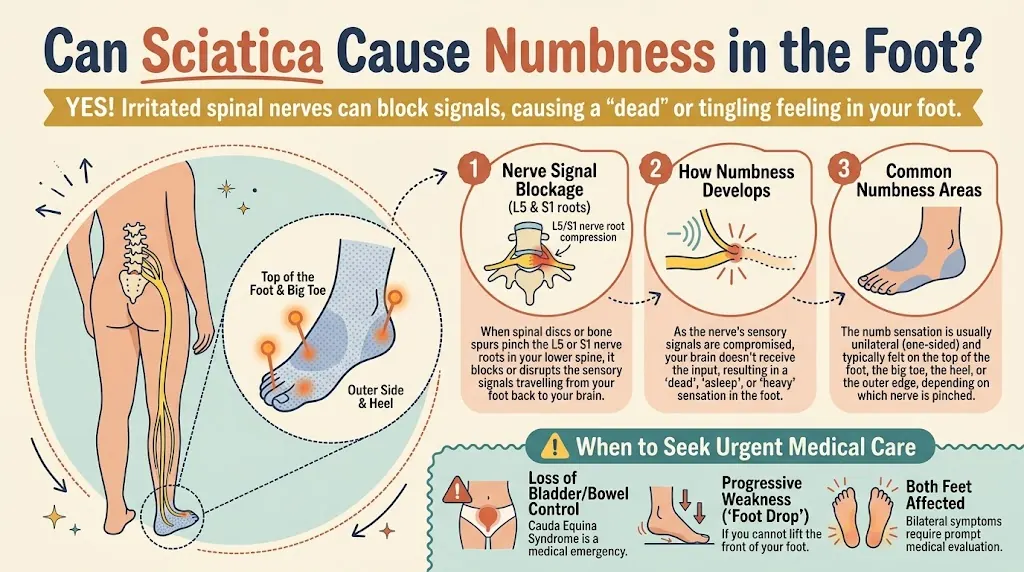
Yes, sciatica can cause numbness in the foot. Sciatica occurs when the sciatic nerve or its contributing nerve roots become irritated or compressed, often causing symptoms that travel from the lower back or buttock down the leg. However, foot numbness has other possible causes, and its location, duration, severity, and effect on muscle strength help determine whether medical evaluation is needed.
Understanding how sciatica-related numbness develops can help you choose appropriate self-care, recognize symptoms that should not be ignored, and know when to seek medical attention. This guide explains common causes, symptom patterns, treatment options, recovery expectations, and warning signs.
How Does Sciatica Cause Foot Numbness?
Sciatica can cause foot numbness when irritation or compression affects nerve roots in the lower spine that contribute to the sciatic nerve. These nerve pathways carry sensory information from parts of the leg and foot to the brain, so disrupted signaling may cause numbness, tingling, burning, or altered sensation.
A herniated disc is one possible cause. Other causes include age-related spinal changes and narrowing around the nerve roots. For a broader explanation of what causes sciatica and sciatic nerve pain, the underlying mechanism matters because different causes may require different treatments.
Not everyone with sciatica experiences numbness. Some people mainly have shooting pain, while others notice tingling, weakness, or a combination of symptoms. Sciatica can occur without significant lower back pain, and numbness may sometimes be more noticeable than pain.
Where in the Foot Can Sciatica Cause Numbness?
The location of numbness can offer clues about which nerves are affected, although symptoms alone cannot reliably identify the exact source.
| Area of the foot | Possible sensation |
|---|---|
| Top of the foot | Tingling, reduced sensation, or difficulty lifting the foot |
| Outer edge of the foot | Numbness or pins and needles |
| Sole of the foot | Altered sensation when standing or walking |
| Toes | Tingling, reduced feeling, or a burning sensation |
| Multiple areas of one foot | Symptoms involving a nerve root or a peripheral nerve |
These patterns overlap. For example, sciatica-related foot pain may accompany numbness, but neither symptom confirms sciatica.
Some people also experience tingling traveling down the leg before noticing changes in foot sensation. Others develop leg weakness associated with sciatica, which deserves prompt assessment if it is new or worsening.
What Else Can Cause Foot Numbness?
Sciatica is not the only explanation. Other conditions can affect nerves in the foot or leg, and the pattern of symptoms can help a clinician narrow down the possibilities.
| Possible cause | Clues that may help distinguish it |
|---|---|
| Sciatica or lumbar nerve-root irritation | Symptoms may travel from the back or buttock down one leg |
| Peripheral neuropathy | Numbness often affects both feet, although patterns vary |
| Peroneal nerve compression | Numbness over the top of the foot may occur with difficulty lifting the foot |
| Temporary pressure on a nerve | Sensation may return after changing position |
| Diabetes-related nerve damage | Persistent tingling or reduced sensation may develop gradually |
A herniated disc causing leg pain without back pain is one reason nerve-related symptoms can occur even when the back itself feels relatively normal. Diabetes, nerve injuries, and other medical conditions can also cause numbness.
Persistent, recurrent, unexplained, or spreading numbness should be evaluated rather than automatically attributed to sciatica.
How Can You Relieve Sciatica-Related Foot Numbness?
Home care may ease discomfort, but it cannot guarantee that numbness will resolve or correct significant nerve compression.
-
Keep moving gently. Short walks and regular position changes may help you maintain mobility. Stop activities that noticeably worsen symptoms.
-
Avoid prolonged sitting. Take comfortable movement breaks, especially if sitting increases leg symptoms.
-
Try comfortable heat or cold. A wrapped cold pack or warm pack may relieve discomfort. Protect your skin and avoid applying either directly to numb areas, where temperature injuries may go unnoticed.
-
Choose gentle exercises. Appropriate exercises for lower back pain may support recovery, but stop if movements increase numbness, pain, or weakness.
-
Review medication options safely. Ask a clinician or pharmacist whether an over-the-counter medicine is appropriate for you, particularly if you have kidney disease, ulcers, take blood thinners, or have other medical conditions.
For additional practical guidance, see how to relieve back pain at home and whether heat or ice is better for back pain. These approaches can help manage discomfort, but persistent numbness requires attention to its underlying cause.
How Long Does Foot Numbness From Sciatica Last?
Sciatica often improves within a few weeks to about 12 weeks, but numbness may take longer to resolve and can sometimes persist. Recovery depends on the cause, the degree of nerve irritation, and whether weakness or other neurological symptoms are present.
| Symptom pattern | Recommended next step |
|---|---|
| Brief tingling after pressure on the foot | Change position and monitor whether sensation returns |
| Persistent or recurring numbness | Arrange a medical evaluation |
| Numbness with new or worsening weakness | Seek prompt medical assessment |
| Numbness with bladder changes or groin numbness | Seek emergency care immediately |
Do not assume that prolonged numbness is harmless simply because the pain is improving.
When Should You See a Doctor for Foot Numbness?
A clinician can review your symptoms, test sensation and muscle strength, assess your walking, and determine whether further testing is appropriate. An MRI is not routinely needed for every case of sciatica; it may be considered when symptoms are severe, persistent, worsening, or suggest a serious underlying problem.
Seek emergency care if you develop:
-
New difficulty urinating or loss of bladder or bowel control.
-
Numbness around the groin, genitals, or buttocks.
-
Severe or rapidly worsening weakness, particularly in both legs.
-
Sudden major changes in walking or the ability to lift your foot.
These symptoms can indicate serious nerve compression, including cauda equina syndrome. Do not wait for them to improve at home. For additional guidance, review when back pain is an emergency and when to seek medical care for lower back pain.
Frequently Asked Questions
1. Can sciatica cause numbness in just one foot?
Yes. Sciatica commonly affects one side, and symptoms may extend into one foot. However, numbness affecting only one foot can also come from a local nerve problem.
2. Can sciatica cause numb toes?
Yes. Irritation of lower spinal nerve roots can alter sensation in particular toes or several toes. The pattern alone cannot identify the exact affected nerve.
3. Can foot numbness occur without back pain?
Yes. Sciatic nerve symptoms may be more noticeable in the leg or foot than in the back. Other causes of numbness should still be considered.
4. Does foot numbness mean permanent nerve damage?
No. Temporary nerve irritation can cause numbness that improves as the underlying problem settles. Persistent or worsening sensory loss needs medical assessment.
5. Can sciatica make it difficult to lift the foot?
Yes. Significant nerve involvement can weaken the muscles that lift the front of the foot, sometimes causing foot drop. New difficulty lifting your foot warrants prompt medical evaluation.
6. Is walking good for sciatica-related numbness?
Gentle walking may help maintain mobility if it does not worsen symptoms. Stop and seek advice if numbness spreads, weakness develops, or walking becomes difficult.
7. Should I stretch when my foot feels numb?
Only use gentle movements that do not worsen your symptoms. Avoid forceful stretching or exercises that increase tingling, numbness, or weakness.
8. Can sitting make foot numbness worse?
Yes. Prolonged sitting can aggravate symptoms in some people with sciatica. Changing positions regularly may help, but persistent numbness should not be attributed to sitting alone.
9. Do I need an MRI for sciatica-related foot numbness?
Not necessarily. A clinician usually starts with your medical history and physical and neurological examinations, then considers imaging when the findings could change treatment.
10. What should I do if my foot numbness is getting worse?
Arrange prompt medical evaluation, especially if the numbness is spreading or accompanied by weakness. If you also develop groin numbness or bladder or bowel dysfunction, seek emergency care.
Conclusion
Sciatica can cause foot numbness, tingling, and sometimes weakness, but other nerve conditions can produce similar symptoms. Gentle movement and appropriate self-care may help, while persistent or worsening numbness deserves medical assessment. Seek emergency care for bladder or bowel changes, groin numbness, or severe progressive weakness.
Disclaimer: This article is provided for educational and informational purposes only.