Back pain at night can make it difficult to fall asleep, wake you repeatedly, or leave you feeling stiff and sore in the morning. You may feel fine during the day but notice aching, pressure, or a dull pain once you lie down and become still. For some people, nighttime back pain is mainly an aggravation of an existing problem; for others, the timing or accompanying symptoms provide important clues about what may be contributing.
Nighttime pain does not automatically mean something serious is wrong. Sleep position, prolonged inactivity, an uncomfortable mattress, muscle or joint irritation, and the natural course of back pain can all influence symptoms. However, pain that is severe, steadily worsening, associated with neurological symptoms, or accompanied by other concerning symptoms should not simply be blamed on sleeping.
This guide explains the common reasons for back pain at night, why lying down can sometimes make symptoms more noticeable, how to improve your sleep setup, what you can safely try at home, and when nighttime back pain deserves medical evaluation.
Why does my back hurt more at night?
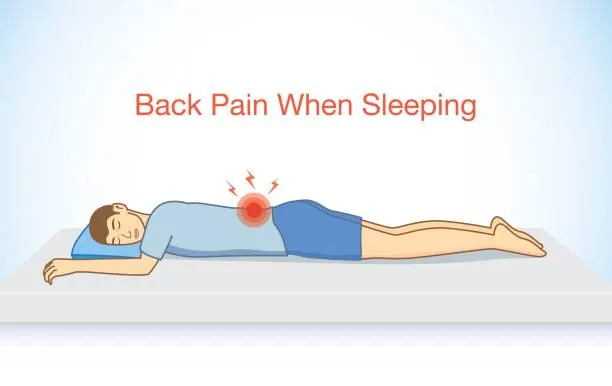
Back pain may feel worse at night because several factors change when you go to bed. You stop moving, spend several hours in one position, and become more aware of discomfort without the distractions of daytime activity.
Your sleeping surface and position can also affect how pressure is distributed across the spine, hips, and surrounding muscles. If your symptoms improve after getting up and moving, prolonged positioning may be contributing.
However, nighttime pain does not have one universal cause. Understanding what causes back pain can help put nighttime symptoms into context.
Common reasons back pain may worsen at night
| Possible contributor | Why symptoms may become noticeable at night | What may help |
|---|---|---|
| Prolonged stillness | Staying in one position can increase stiffness | Gentle movement when comfortable |
| Sleeping position | May place pressure on sensitive areas | Adjust your sleep position |
| Mattress or bedding | Uneven support or excessive pressure can affect comfort | Assess mattress and pillow support |
| Existing muscle or joint irritation | Symptoms may become more noticeable when activity stops | Appropriate daytime movement |
| Chronic pain | Pain and poor sleep can reinforce each other | Address both pain and sleep quality |
| Other medical causes | Some conditions cause persistent or unusual nighttime symptoms | Medical evaluation when indicated |
A 2024 systematic review of prospective studies found that sleep problems are common in people with low back pain and that sleep characteristics can be relevant to future pain and disability. This does not mean poor sleep causes every case of back pain, but it reinforces the importance of treating sleep as part of the overall problem rather than ignoring it.
What are the most common causes of back pain at night?
The most common explanation is often an existing musculoskeletal problem becoming more noticeable during prolonged rest. Muscle strain, joint irritation, changes in activity, and nonspecific low back pain can all produce symptoms that fluctuate throughout the day.
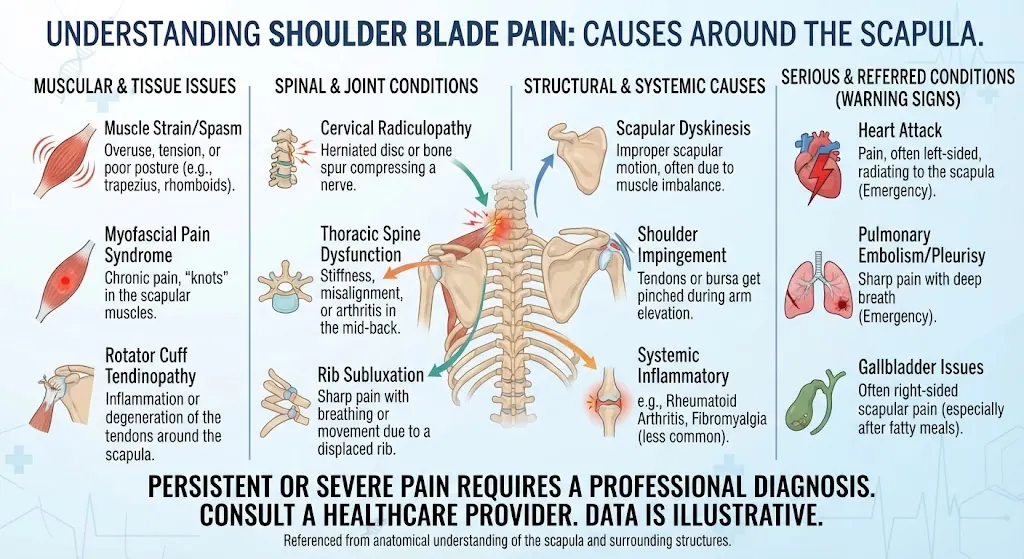
Your symptoms may also be influenced by the exact location of the pain. For example, lower back pain causes are not necessarily the same as causes of upper or mid-back discomfort.
Sleeping position and prolonged inactivity
Staying in one position for several hours can make an irritated area feel stiff. This is particularly noticeable when you move after being still for a long time.
There is no single sleeping position that is medically correct for everyone. Comfort, spinal support, pressure distribution, and your existing symptoms all matter. If you regularly wake because your position becomes uncomfortable, reviewing the best sleeping positions for lower back pain may give you practical options to test.
An unsuitable mattress
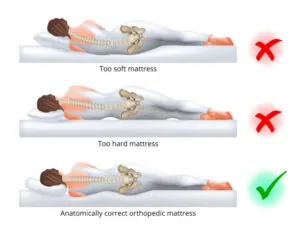
A mattress that is too soft, too firm, or noticeably sagging can affect comfort during several hours of sleep.
Research generally does not support the idea that the hardest mattress is automatically best for back pain. Medium-firm surfaces have performed better than very firm surfaces in several studies, although individual differences mean there is no universally perfect mattress.
For detailed buying guidance, see how to choose a back-friendly mattress.
Existing lower back pain
If you already have back pain during the day, it may naturally continue into the night. The 2024 clinical-course systematic review included 95 studies involving 17,974 participants and found substantial average improvements in acute and subacute low back pain during the first six weeks, followed by slower improvement.
That means nighttime symptoms do not necessarily indicate that your condition is worsening. The overall pattern matters: whether symptoms are gradually improving, staying the same, or becoming progressively more severe.
Why does lying down sometimes make back pain worse?
Lying down changes the way your body distributes pressure and removes much of the movement that occurs during the day. If a particular position stresses a sensitive area, you may notice symptoms more clearly after several minutes or hours in bed.
Some people also experience discomfort when they first lie down but feel better after changing position. Others feel increasingly uncomfortable as the night progresses.
The pattern is more informative than the simple fact that pain occurs at night.
Nighttime back pain versus pain that wakes you from sleep
These are not always the same.
Nighttime back pain may simply mean that your back hurts while you are trying to sleep.
Pain that repeatedly wakes you from sleep, especially when it is severe or unrelated to your position, deserves more attention. It does not automatically indicate a serious condition, but persistent sleep-disrupting pain should be discussed with a healthcare professional when it does not improve.
Can sleeping on the wrong side cause back pain?
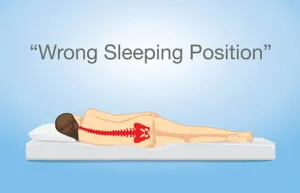
A sleeping position can contribute to discomfort if it repeatedly places your spine, pelvis, or surrounding tissues in a position that feels strained.
Side sleeping is common and can be comfortable when the body is adequately supported. Some people benefit from keeping the spine relatively neutral and using pillows to reduce excessive twisting.
If you consistently develop pain on one side, however, do not assume that your sleeping position is the only explanation. For example, right-sided lower back pain can have several possible causes, while lower left back pain in women may sometimes require consideration of factors beyond the spine.
What can I do tonight to reduce back pain?
If your symptoms are mild and there are no warning signs, start with simple measures rather than trying to force your spine into a particular position.
1. Change position gradually
If one position increases pain, try another rather than remaining still and hoping the discomfort disappears. Small changes may be more comfortable than repeatedly making large movements.
2. Use pillows strategically
A pillow can sometimes reduce pressure or unwanted twisting. The exact arrangement depends on whether you sleep on your back, side, or stomach.
The goal is comfort rather than achieving a theoretically perfect position.
3. Try gentle movement before bed
If movement usually makes your symptoms feel better, a short period of comfortable walking or gentle mobility may help you transition into sleep.
Avoid aggressive stretching or exercises that significantly increase your pain.
4. Consider heat or cold
Heat may provide temporary comfort for some types of back pain, while cold can sometimes be useful after certain acute injuries or when inflammation and soreness are prominent.
If you are unsure whether to use heat or ice for back pain, consider which approach feels better and is appropriate for your situation rather than assuming one is always superior.
Heat should also be used carefully. If you notice that heat makes your back pain worse, stop using it.
5. Keep the bedroom comfortable
Temperature, noise, light, and an uncomfortable sleep environment can make it harder to stay asleep. When pain is already interfering with sleep, reducing avoidable disturbances can be worthwhile.
Should you exercise when back pain is keeping you awake?
For many people with uncomplicated low back pain, appropriate movement is preferable to prolonged bed rest. Exercise should be matched to the person’s symptoms and ability rather than treated as a test of how much pain they can tolerate.
A large body of research supports exercise as one component of managing chronic low back pain, although different forms and doses produce different results.
If you want to introduce movement gradually, see exercises for lower back pain.
Do not force an exercise that causes sharp, progressively worsening, or clearly radiating symptoms. If you develop new weakness, significant numbness, or other neurological symptoms, stop and seek appropriate medical advice.
Does poor sleep make back pain worse?
Poor sleep and back pain can influence each other. Pain may interrupt sleep, while inadequate or disrupted sleep can make it harder to cope with pain and may be associated with worse pain outcomes.
A 2024 systematic review examining sleep as a prognostic factor in low back pain found evidence that sleep characteristics are relevant to later pain, disability, and recovery. The relationship is complex, however, and the research does not establish that improving sleep alone will resolve the underlying back problem.
Another systematic review of 19 studies involving 1,348 adults with chronic low back pain found that non-drug interventions produced small improvements in sleep and sleep disturbance, although the certainty of evidence varied.
This is why improving sleep should be considered part of a broader strategy rather than a replacement for evaluating persistent pain.
Can digestive problems cause back pain at night?
Sometimes symptoms outside the spine can be felt in or around the back.
For example, digestive symptoms may occur alongside discomfort from conditions affecting the gastrointestinal system. If constipation is occurring at the same time, information about the connection between constipation and back pain may help explain why abdominal and back symptoms can overlap.
Back pain accompanied by digestive symptoms should not automatically be assumed to come from the mattress or sleeping position.
Similarly, whether a hernia can cause back pain depends on the type and location of the hernia and the symptoms occurring with it.
What if the pain is around the ribs or upper back?
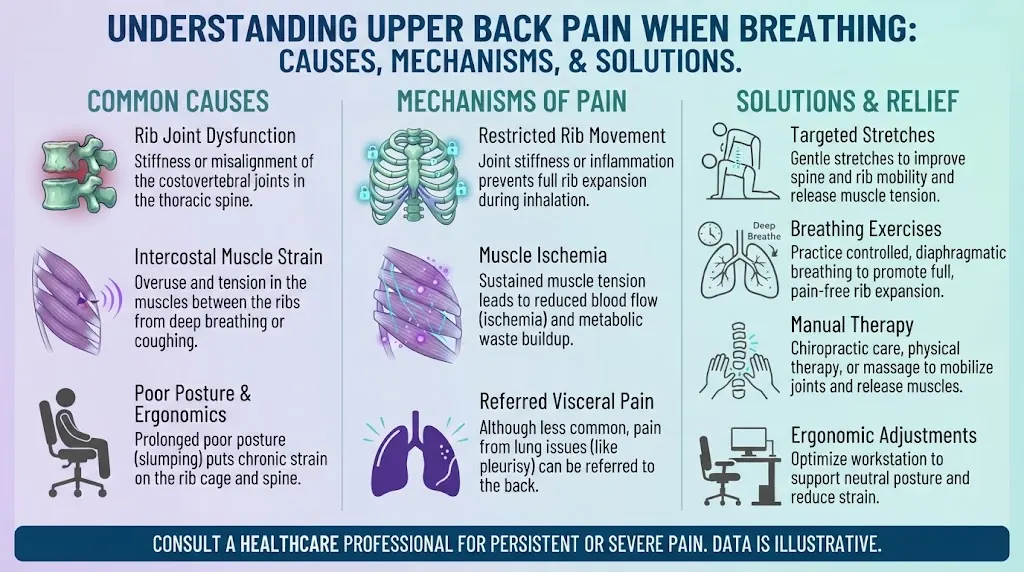
Nighttime pain is not limited to the lower back. Discomfort around the thoracic spine, ribs, or upper back can become more noticeable when you lie down.
If your symptoms are located around the ribs, you can review information about pain around the ribs and back and back rib pain.
Pain that occurs with breathing deserves particular attention. Back pain when breathing can have several possible explanations, and the accompanying symptoms matter.
Likewise, chest discomfort should not automatically be assumed to originate in the spine. Information about chest pain caused by back problems may help explain musculoskeletal possibilities, but new or unexplained chest pain can require urgent medical evaluation.
Could weather changes make nighttime back pain worse?
Some people report that weather changes seem to coincide with increased pain. Research, however, has not established a simple cause-and-effect relationship between air pressure changes and back pain for everyone.
If you notice a consistent pattern, you can track symptoms alongside weather conditions without assuming that the weather is necessarily responsible. More information about whether changes in air pressure cause back pain can help put these observations into perspective.
What should you avoid when back pain is worse at night?
Avoid making repeated changes that increase symptoms simply because you are frustrated about not sleeping.
Common mistakes include:
- Staying in bed all day because nighttime pain is present.
- Forcing stretches that sharply increase symptoms.
- Sleeping on an uncomfortable surface because you believe a harder mattress is always better.
- Applying heat for prolonged periods without checking your skin.
- Ignoring neurological symptoms because you assume the mattress caused them.
- Taking medication specifically to remain asleep without discussing persistent symptoms with a clinician.
If symptoms are mild, gradual movement during the day is often more useful than prolonged inactivity. For additional practical strategies, see how to relieve back pain at home.
When should nighttime back pain be checked by a clinician?
Consider medical evaluation when nighttime pain is persistent, repeatedly interrupts sleep, is getting worse rather than better, or is accompanied by symptoms that do not fit a straightforward musculoskeletal pattern.
The timing of the pain is only one piece of information. A clinician may also consider its location, duration, severity, triggers, associated symptoms, medical history, and whether there was an injury.
Warning signs: when back pain at night may be serious
Some symptoms require more urgent attention.
| Symptom pattern | What to do |
|---|---|
| Mild pain that improves with movement and has no concerning symptoms | Monitor and use reasonable self-care |
| Persistent pain that repeatedly disrupts sleep or is worsening | Arrange medical evaluation |
| New weakness, significant numbness, or progressive neurological symptoms | Seek prompt medical attention |
| New loss of bladder or bowel control or numbness around the groin/saddle area | Seek emergency care |
| Severe back pain after significant trauma | Seek urgent evaluation |
| Back pain with serious systemic or chest symptoms | Seek urgent or emergency care depending on severity |
Nighttime pain alone is not proof of a dangerous condition. The concern increases when it is severe, progressive, unexplained, or accompanied by other warning signs.
For a more detailed guide to when back pain is an emergency, focus on the associated symptoms rather than the time of day alone.
How long does back pain at night usually last?
The duration depends heavily on the underlying cause.
For acute nonspecific low back pain, symptoms often improve substantially during the first several weeks. In the 2024 systematic review of 95 studies, the average pain score in the acute group fell from 56 at baseline to 26 at six weeks, although individual recovery varied considerably.
| Pattern | What it may mean | Reasonable next step |
|---|---|---|
| Improves gradually over days to weeks | Often consistent with recovery from an acute episode | Continue appropriate activity and monitor |
| Remains unchanged for several weeks | Recovery may be slower than expected | Consider clinical evaluation |
| Repeatedly returns at night | May reflect an ongoing contributor | Review sleep setup and broader causes |
| Progressively worsens | Less consistent with simple recovery | Arrange medical assessment |
| Occurs with neurological or systemic warning signs | May require urgent evaluation | Seek appropriate medical care |
There is no fixed deadline at which every person should be pain-free. Recovery should be judged by the overall trend and the presence or absence of concerning symptoms.
A practical nighttime back-pain routine
If there are no warning signs, a simple routine may be more useful than constantly changing your sleeping setup.
Before bed: Use a comfortable sleep position, avoid activities that clearly aggravate your symptoms, and consider gentle movement if it normally helps.
During the night: If pain develops, make a gradual position change rather than staying rigidly in one position. Use pillows only if they improve comfort.
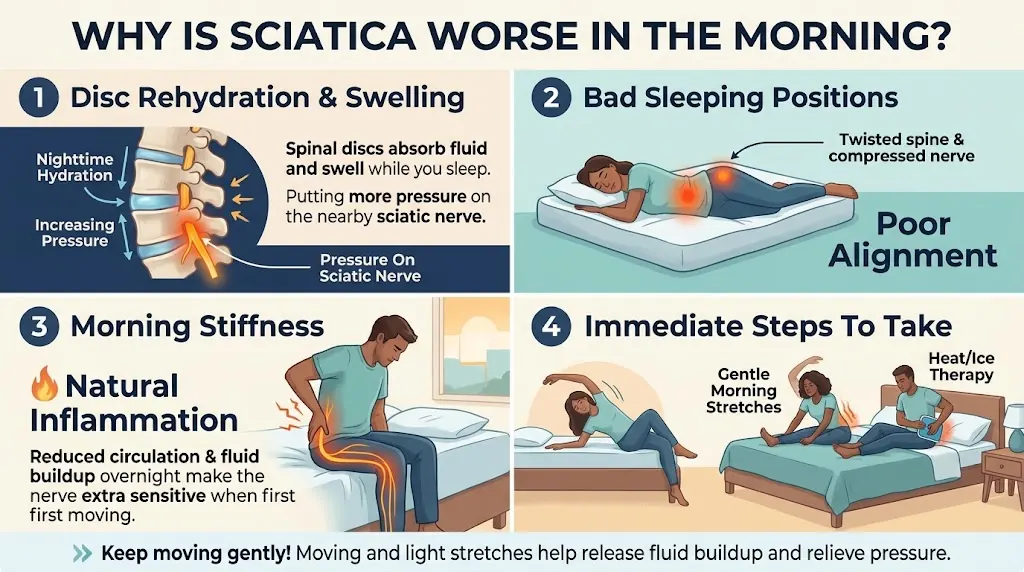
In the morning: Notice whether symptoms improve after getting up and moving. A pattern of severe or progressively worsening morning pain should not automatically be attributed to the mattress.
During the day: Avoid prolonged bed rest. Maintain appropriate activity and gradually return to normal movements as tolerated.
Frequently Asked Questions
1. Why does my back hurt only at night?
Pain may become noticeable at night because you remain still for longer and have fewer distractions. Sleeping position, mattress support, an existing back problem, and other medical causes can also contribute.
2. Why is my lower back pain worse when I lie down?
Lying down changes pressure and positioning around the spine and pelvis. If a particular position irritates a sensitive area, symptoms may become stronger after you remain there for some time.
3. Should I sleep on my back if I have nighttime back pain?
Not necessarily. Back, side, and other positions can be comfortable depending on the individual. The best position is generally one that allows you to sleep without significantly increasing symptoms.
4. Can a bad mattress cause back pain at night?
An unsuitable or sagging mattress can contribute to discomfort for some people. However, a mattress is only one possible factor, so persistent pain should not automatically be blamed on the bed.
5. Is nighttime back pain always serious?
No. Many people experience nighttime symptoms from common musculoskeletal problems, prolonged positioning, or sleep-related factors. Persistent, severe, progressive, or unexplained pain deserves greater attention, particularly when other warning signs are present.
6. Should I get out of bed if my back hurts during the night?
If gentle movement normally improves your symptoms and there are no warning signs, changing position or briefly moving may be reasonable. Avoid forcing movements that sharply increase pain.
7. Can sleeping poorly make back pain worse?
Poor sleep and back pain can reinforce each other. Pain can interrupt sleep, while inadequate or disrupted sleep may be associated with worse pain and disability.
8. When should I worry about back pain that wakes me up?
Pain that repeatedly wakes you, especially if it is severe, progressively worsening, unrelated to position, or accompanied by neurological or systemic symptoms, should be medically evaluated. The fact that pain occurs at night alone does not establish a serious cause.
9. How can I reduce back pain before going to sleep?
Try a comfortable sleeping position, gentle movement if appropriate, a supportive sleep surface, and a consistent bedtime routine. Heat or cold may provide temporary relief for some people, but neither should be used to mask concerning symptoms.
10. What if my back pain at night does not improve?
If nighttime pain persists despite reasonable changes to your sleep setup and activity, consider medical evaluation. Persistent symptoms may require identifying the underlying cause rather than repeatedly changing mattresses, pillows, or sleeping positions.
Conclusion
Back pain at night can result from ordinary musculoskeletal problems, prolonged positioning, sleep-surface issues, or other causes that have little to do with your mattress. Improving your sleep position, supporting comfortable movement, reviewing your mattress, and maintaining appropriate daytime activity may help when symptoms are uncomplicated.
The most important step is to look at the overall pattern. Pain that gradually improves is different from pain that steadily worsens, repeatedly disrupts sleep, or occurs with neurological or other concerning symptoms. When warning signs are present, medical evaluation matters more than changing your sleeping setup.
Disclaimer: This article is provided for educational and informational purposes only. It is not a substitute for professional medical advice, diagnosis, or treatment.