Back pain and constipation may seem like two unrelated problems, but they can occur at the same time. When your back hurts, you may walk less, spend more time sitting or resting, change your usual routine, or take medication for pain. Each of these changes can affect your bowel habits.
So, can back pain make you constipated? It can contribute to constipation, but usually indirectly. Ordinary back pain does not typically stop the intestines from working on its own. Instead, reduced physical activity, changes in eating or drinking habits, and certain pain medications—especially opioids—can make constipation more likely.
Research also suggests that constipation and pain can occur together, particularly in people with chronic pain. However, an association does not prove that back pain itself directly causes constipation. Understanding the possible connection can help you identify what may be contributing to your symptoms and when medical evaluation is appropriate.
Can Back Pain Cause Constipation?
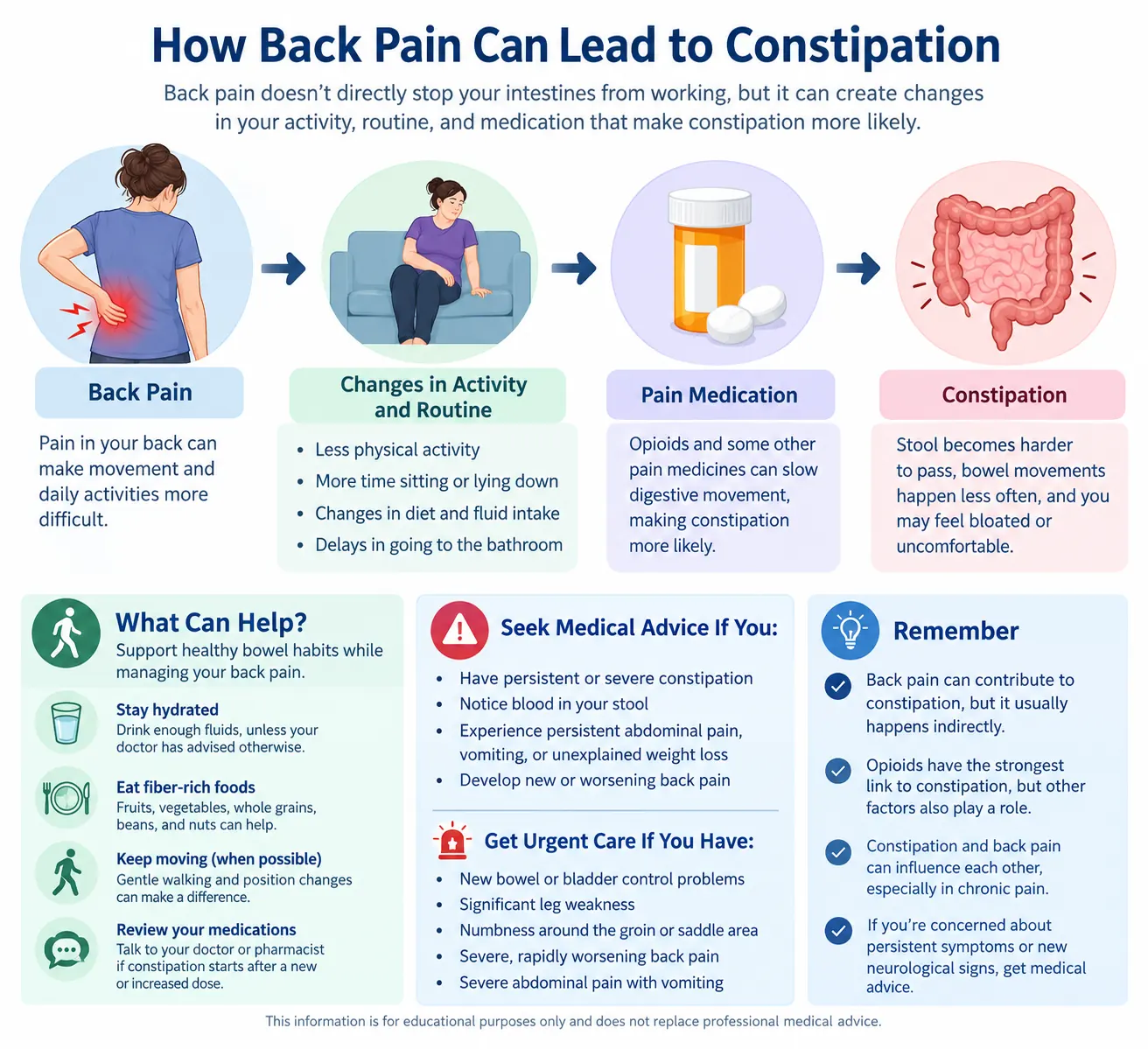
Back pain can contribute to constipation, but usually indirectly.
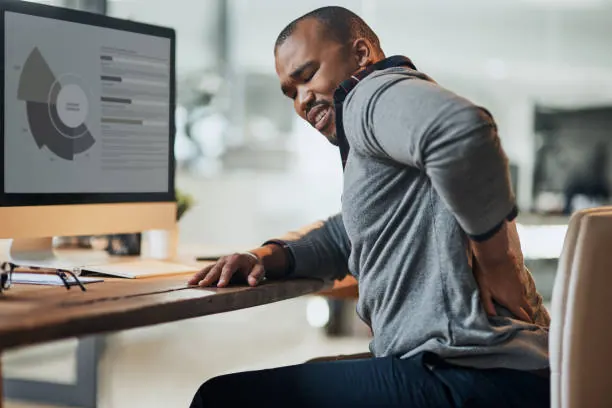
Pain can make normal movement uncomfortable. You may avoid walking, exercise less, sit for longer periods, or spend more time lying down. A significant reduction in your usual physical activity can affect regular bowel habits.
Medication can also be an important factor. Some pain medicines, particularly opioid medications, can slow movement through the digestive tract and cause constipation.
This is why someone may develop constipation while experiencing back pain without the painful area of the spine directly blocking the bowel.
If you are also trying to understand the broader reasons people develop back discomfort, reviewing the common causes of back pain can help distinguish ordinary musculoskeletal pain from symptoms that may need further evaluation.
How Are Back Pain and Constipation Connected?
| Back Pain-Related Change | How It May Affect Bowel Habits |
|---|---|
| Reduced physical activity | Walking and movement may decrease, which can contribute to less regular bowel movements. |
| More time sitting or lying down | Prolonged inactivity can change normal bowel habits. |
| Pain medications | Opioids can slow gastrointestinal movement and are a well-established cause of constipation. |
| Reduced fluid intake | Drinking less than usual may contribute to harder stools. |
| Changes in diet | Eating fewer fiber-rich foods can make constipation more likely. |
| Delaying bathroom visits | Avoiding the bathroom because movement is painful can interfere with regular bowel habits. |
| Changes in daily routine | Disrupted meals, exercise, sleep, and bathroom routines may collectively contribute to constipation. |
Do Painkillers Cause Constipation?
Some painkillers can cause constipation, and opioids are the most important example.
Opioids can slow gastrointestinal movement, which can make stool more difficult to pass. If constipation began shortly after starting an opioid or increasing its dose, the medication may be an important contributing factor.
Research has also examined constipation in people receiving opioids for low back pain. In the OPAL randomized trial involving opioid treatment for acute low back and neck pain, constipation was reported more frequently among participants receiving opioids than among those receiving placebo.
This does not mean opioids are never appropriate. They have legitimate medical uses in certain situations. Rather, the potential benefits, risks, duration of treatment, and constipation prevention strategy should be considered with a healthcare professional.
What About Non-Opioid Painkillers?
Not every pain medicine affects the bowel in the same way.
The likelihood of constipation can depend on:
- The specific medication
- The dose
- How long you take it
- Whether you take other medications at the same time
- Your individual health and bowel habits
If constipation started after beginning or changing a medication, speak with your doctor or pharmacist before making changes.
Do not stop a prescribed medication on your own.
What Does Research Say About Back Pain and Constipation?
Research suggests that the relationship between pain and constipation is more complicated than simply saying “back pain causes constipation.”
Studies of people with chronic pain have found an association between constipation severity and pain severity, including among people experiencing low back and/or lower-limb pain.
However, an association does not establish cause and effect.
People with chronic pain may simultaneously experience several factors that influence both bowel function and pain, including:
- Reduced physical activity
- Medication use
- Changes in diet
- Changes in fluid intake
- Sleep disruption
- Other medical conditions
Therefore, it is more accurate to say that back pain can contribute to constipation through changes in activity, routine, and medication use, rather than claiming that back pain directly stops normal bowel function.
Can Chronic Back Pain Make Constipation More Likely?
It can, particularly when persistent pain changes your lifestyle.
For example, imagine someone who normally walks every morning but develops chronic lower back pain. Walking becomes uncomfortable, so they stop exercising and spend more time sitting. They then begin taking an opioid pain medicine.
Several weeks later, their bowel movements become less frequent.
In this situation, the back pain may have started the chain of events, but reduced activity and medication may be more direct contributors to the constipation.
This distinction matters because treating constipation effectively requires identifying the factors actually affecting bowel function.
Can Being Inactive From Back Pain Cause Constipation?
Reduced physical activity can contribute to constipation.
If movement is safe for your particular back condition, try to avoid unnecessary prolonged inactivity.
You might consider:
- Taking several short walks instead of one long walk
- Changing positions regularly
- Getting up periodically if you have been sitting
- Following exercises recommended by your healthcare professional
- Avoiding movements that significantly increase your back pain
If your back symptoms are severe or you have been advised to restrict activity, follow the guidance given by your healthcare professional.
For people whose main problem is lower back discomfort, understanding lower back pain symptoms and causes can also help put activity limitations into context.
What Can You Do If Back Pain Is Making You Constipated?
The best approach is to address both problems without making either one worse.
Keep Moving Within Your Limits
If movement is appropriate for your condition, avoid complete inactivity.
Gentle walking, changing positions, and following an appropriate exercise program may be more realistic than strenuous exercise while your back is painful.
Do not force movement through severe or rapidly worsening pain.
Maintain Adequate Fluid Intake
Adequate fluid intake can support normal stool consistency.
However, individual fluid requirements vary. If a healthcare professional has instructed you to restrict fluids because of another medical condition, follow that advice instead of increasing your fluid intake independently.
Eat Enough Dietary Fiber
Dietary fiber can help support regular bowel movements.
Good sources include:
- Fruits
- Vegetables
- Whole grains
- Beans and lentils
- Nuts and seeds
If your current fiber intake is low, increase it gradually. A sudden large increase can cause gas, bloating, or abdominal discomfort.
Review Your Medications
If constipation started after beginning or increasing a pain medication, ask a doctor or pharmacist whether the medicine could be contributing.
This is especially important when taking an opioid.
Do not discontinue prescription pain medication abruptly unless your healthcare professional tells you to do so.
What If You Take Opioids for Back Pain?
Opioid-related constipation deserves particular attention because it is a recognized adverse effect of these medicines.
If opioids are prescribed, your healthcare professional may discuss bowel habits and whether preventive measures are appropriate, particularly when treatment continues beyond a short period.
The OPAL trial involving acute nonspecific low back or neck pain found no significant improvement in pain severity with opioid treatment compared with placebo, while constipation and other adverse effects occurred more often in the opioid group.
The findings should not be interpreted as meaning that opioids are never useful. Treatment decisions depend on the cause and severity of pain, the patient’s circumstances, other available treatments, and the expected benefits and risks.
If you are taking an opioid and developing constipation, ask your healthcare professional about an appropriate constipation-management plan rather than simply stopping the medication.
Can Constipation Make Back Pain Worse?
The relationship can also work in the opposite direction.
Constipation may cause abdominal fullness, bloating, cramping, and general discomfort. Some people may experience this discomfort around the lower abdomen, pelvis, or lower back.
Research has found an association between constipation severity and pain severity in people with chronic pain, including people with low back and/or lower-limb pain.
However, this does not prove that constipation directly causes back pain.
In some cases, the two problems may simply share contributing factors. In others, discomfort from constipation may make existing back pain feel more noticeable.
If constipation is accompanied by significant lower back discomfort, it may be useful to understand how constipation can cause lower back pain because the possible mechanism is different from constipation developing as a result of back-pain-related inactivity or medication.
Back Pain, Constipation, and Nerve Problems
There is an important difference between ordinary constipation and bowel changes occurring alongside neurological symptoms.
Certain serious spinal conditions can affect nerves involved in bowel and bladder function. These conditions are uncommon, but they require urgent assessment when characteristic warning signs appear.
Seek urgent medical evaluation if new constipation or bowel changes occur together with:
- New or significant leg weakness
- Numbness around the groin, genitals, buttocks, or inner thighs
- New difficulty controlling bowel movements
- New loss of bladder control
- Difficulty starting or maintaining urination
- Severe or rapidly worsening back pain
Do not assume these symptoms are simply caused by inactivity or pain medication.
How Can You Tell What May Be Causing Your Constipation?
Consider what changed around the time your bowel symptoms began.
Ask yourself:
- Did my back pain suddenly reduce my normal activity?
- Am I spending much more time sitting or lying down?
- Did I recently start a new pain medication?
- Did my opioid dose increase?
- Am I drinking less than usual?
- Has my diet become lower in fiber?
- Am I delaying bowel movements because moving hurts?
- Did constipation begin before my back pain?
The timing can provide useful clues.
For example, constipation that began shortly after starting an opioid has a different potential explanation from constipation that developed after several weeks of inactivity.
If your back pain itself is persistent, worsening, or interfering with normal activities, learning more about when back pain may require medical evaluation can help you recognize symptoms that should not simply be managed at home.
When Should You See a Doctor?
Arrange a medical evaluation if constipation is persistent, repeatedly returns, or develops after a significant medication change.
You should also seek medical advice if constipation occurs with:
- Persistent or severe abdominal pain
- Vomiting
- Blood in the stool
- Unexplained weight loss
- Significant abdominal swelling
- Inability to pass gas
- Persistent or worsening back pain
These symptoms should not automatically be attributed to reduced activity.
If your pain is specifically located on one side of the lower back, other causes may also need to be considered. For example, right-sided lower back pain can have different possible explanations depending on the accompanying symptoms.
When Can Back Pain and Constipation Be an Emergency?
| Situation | What You Can Do | When to Get Medical Help |
|---|---|---|
| Mild constipation with reduced activity | Stay gently active if your back condition allows it and change positions regularly. | See a healthcare professional if constipation persists or repeatedly returns. |
| Constipation after starting pain medication | Ask your doctor or pharmacist whether the medication could be contributing. | Get medical advice before changing or stopping prescribed medication. |
| Constipation with low fiber intake | Gradually add fruits, vegetables, whole grains, beans, nuts, and seeds. | Seek advice if dietary changes do not improve symptoms. |
| Constipation with reduced fluid intake | Maintain adequate fluid intake unless you have been told to restrict fluids. | Seek medical advice for persistent symptoms or significant abdominal discomfort. |
| Abdominal pain, vomiting, or blood in stool | Do not assume these symptoms are simply caused by back pain or constipation. | Seek prompt medical evaluation. |
| Constipation with leg weakness or saddle numbness | Do not attempt to manage these symptoms as ordinary constipation. | Seek urgent medical care. |
| New bowel or bladder control problems | Treat this as a potential neurological warning sign. | Seek urgent medical evaluation immediately. |
Conclusion
Can back pain make you constipated? Yes, it can contribute, but usually indirectly.
The most likely connections are reduced physical activity, prolonged inactivity, changes in daily routines, and medications used to manage pain. Opioid medicines have a particularly well-established association with constipation because they can slow gastrointestinal movement.
Research also shows an association between constipation severity and pain severity among people with chronic pain, including those with low back pain. However, an association does not prove that back pain itself directly causes constipation.
If back pain has reduced your activity, try to maintain safe movement when appropriate, drink adequate fluids, and consume enough dietary fiber. If constipation began after a medication change, discuss the medication with your healthcare professional rather than stopping it yourself.
Most importantly, constipation accompanied by new neurological symptoms, saddle numbness, significant leg weakness, or loss of bowel or bladder control requires urgent medical evaluation.
Frequently Asked Questions
1. Can back pain cause constipation?
Back pain can contribute to constipation indirectly, particularly when it reduces physical activity or changes your normal routine. Pain medications can also contribute.
2. Can lower back pain make you constipated?
Yes, potentially. Lower back pain may reduce walking and other physical activity, while some medications used for pain can affect bowel function.
3. Do painkillers cause constipation?
Some do. Opioid pain medicines are particularly well known for causing constipation because they can slow gastrointestinal movement.
4. Can opioids for back pain cause constipation?
Yes. Constipation is a recognized adverse effect of opioid medicines. People receiving opioids for back pain may therefore need to discuss constipation prevention and treatment with their healthcare professional.
5. Can being inactive because of back pain cause constipation?
Reduced physical activity can contribute to constipation. If your back condition allows it, gentle movement may help maintain more regular bowel habits.
6. Can constipation make back pain worse?
Constipation can cause abdominal discomfort, bloating, and cramping, which may make existing back discomfort feel worse. Research has also found an association between constipation severity and pain severity in people with chronic pain.
7. How can I prevent constipation while recovering from back pain?
When appropriate for your condition, maintain gentle physical activity, drink adequate fluids, consume enough dietary fiber, and discuss medication-related constipation with your healthcare professional.
8. Should I stop my pain medicine if it causes constipation?
No. Do not stop a prescribed medication without medical advice. A doctor or pharmacist can help determine whether the medicine is contributing and whether another approach to managing constipation is appropriate.
9. Can back pain and constipation be a sign of a nerve problem?
Rarely, bowel or bladder changes can occur with serious spinal nerve problems. Constipation accompanied by new leg weakness, saddle numbness, or loss of bowel or bladder control requires urgent medical evaluation.
10. When should I see a doctor for back pain and constipation?
Seek medical advice for persistent or severe symptoms, significant abdominal pain, vomiting, blood in the stool, unexplained weight loss, or constipation that does not improve. Seek urgent care if bowel or bladder control problems, saddle numbness, or significant leg weakness develop.
Disclaimer: This article is intended for educational purposes only and should not be considered personalized medical advice.