Desk-related discomfort is common, but it should not automatically be blamed on poor posture. Staying in one position for too long, an awkward workstation, muscle fatigue, stress, and other medical conditions can contribute. Severe pain or symptoms such as chest pressure or difficulty breathing need a different response.
Understanding why your upper back hurts after working at a desk can help you adjust your workspace, choose safe ways to ease discomfort, and recognize when medical evaluation is appropriate. Here’s how to identify common patterns and decide what to do next.
What Causes Upper Back Pain After Desk Work?
The upper back, or thoracic spine, connects with the ribs and supports the upper body. During desk work, muscles around the shoulder blades, neck, and spine help maintain your position. Holding one posture for a long time can fatigue these muscles, particularly when your screen, chair, or keyboard encourages you to lean forward.
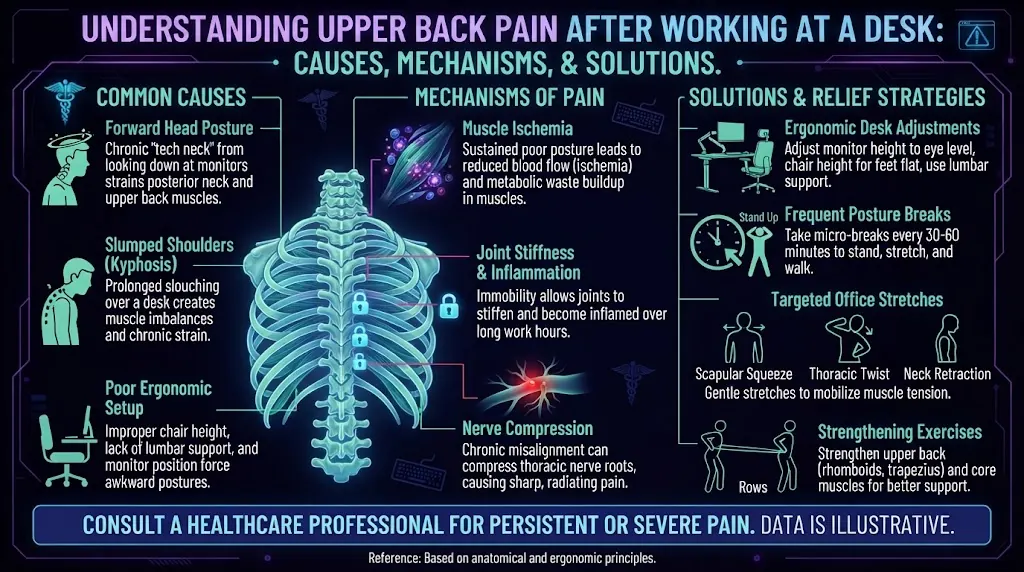
Common contributors include:
-
Prolonged sitting: Staying in one position limits movement and can increase muscle fatigue.
-
Forward-head posture: Reaching your head toward a screen may increase the workload on the neck and upper-back muscles.
-
Rounded shoulders: Repeatedly reaching for a keyboard or mouse can leave the muscles around the shoulder blades feeling strained.
-
Poor workstation fit: A monitor that is too low, a chair without adequate support, or a mouse positioned too far away may encourage awkward positions.
-
Stress and muscle tension: Stress can make some people clench their shoulders or hold tension throughout the workday.
These factors may contribute to upper back pain when sitting or discomfort that develops between the shoulder blades. For a broader overview, see what causes back pain.
How Can You Tell Whether Desk Setup Is Contributing?
Notice when your symptoms start, which movements affect them, and whether they improve after changing position. The pattern can offer clues, although it cannot confirm a diagnosis.
| What you notice | Possible explanation | What to try |
|---|---|---|
| Aching builds through the workday | Muscle fatigue or prolonged positioning | Take movement breaks |
| Tightness around the shoulder blades | Sustained reaching or shoulder tension | Bring the keyboard and mouse closer |
| Neck and upper-back discomfort together | Screen height or head position may contribute | Raise the screen toward eye level |
| Pain with twisting or reaching | Muscle or joint irritation may be involved | Reduce painful movements and move gently |
Persistent pain, pain that occurs without a clear connection to desk work, or symptoms that keep returning may have causes beyond workstation ergonomics. Explore common causes of upper back pain if the discomfort is not limited to work hours.
How Should You Adjust Your Desk to Reduce Upper Back Pain?
A comfortable workstation lets you work without constantly reaching, twisting, or leaning forward. There is no single perfect posture; changing positions regularly is usually more practical than trying to hold a rigid position all day.
| Workstation feature | Practical adjustment | Why it may help |
|---|---|---|
| Monitor | Place the screen directly in front of you, with the top near eye level | Reduces the need to repeatedly bend your neck |
| Chair | Support your back and keep your feet resting on the floor or a footrest | Makes a comfortable sitting position easier to maintain |
| Keyboard and mouse | Keep them close, with shoulders relaxed and elbows near your sides | Reduces repeated reaching |
| Laptop | Use a separate keyboard and mouse if possible, with the laptop raised | Helps avoid looking down for long periods |
| Work routine | Alternate sitting, standing, and short walks | Breaks up sustained positions |
A poor chair can be one contributor, but replacing it is not always necessary. Learn whether a bad office chair can cause back pain and use this ergonomic desk setup guide to identify adjustments that fit your workspace.
If you work remotely, the same principles apply at home. This guide to how working from home may contribute to back pain can help you spot habits that make discomfort more likely.
What Can You Do During the Workday?
Start with small, comfortable changes rather than forceful stretches or prolonged rest. Try standing up regularly, walking briefly, rolling your shoulders gently, and changing your sitting position. If a movement increases pain, stop or make it smaller.
Consider these options:
-
Take short movement breaks. Stand, walk, or change position before discomfort becomes intense.
-
Relax your shoulders. Let them settle naturally instead of holding them stiffly back.
-
Move gently. Slow shoulder rolls and comfortable upper-back movements may help ease stiffness.
-
Vary your position. A standing desk may be useful for some people, but standing still for hours can also cause discomfort.
-
Check your routine. If symptoms build during computer work, alternate tasks that allow different positions.
Try these desk exercises for back pain or review ways to relieve back pain at home. Gentle activity is usually preferable to staying in bed for long periods, but do not push through sharp or worsening pain.
Should You Use Heat or Ice?
Heat may relax tight muscles, while a wrapped cold pack may help with soreness after a recent strain. Choose whichever feels more comfortable, protect your skin, and avoid applying either directly or for prolonged periods. For more guidance, see whether heat or ice is better for back pain.
How Long Should Desk-Related Upper Back Pain Last?
Mild discomfort linked to prolonged sitting may improve after you change positions, adjust your workstation, and move more often. Recovery varies depending on the cause, severity, and whether an underlying condition is present. There is no fixed timeline that applies to everyone.
| Symptom pattern | Sensible next step |
|---|---|
| Mild discomfort that improves with movement | Adjust your routine and monitor symptoms |
| Pain that persists, recurs, or interferes with daily tasks | Arrange a medical evaluation |
| New weakness, numbness, fever, or unexplained worsening pain | Seek prompt medical advice |
| Chest pressure, difficulty breathing, or sudden severe chest or back pain | Seek emergency care |
Pain between the shoulder blades can sometimes involve more than muscles. Learn about pain between the shoulder blades and upper back pain with movement if those patterns match your symptoms.
When Should You Seek Medical Care?
Desk-related muscle discomfort often improves with movement and workstation changes, but not every upper-back symptom is caused by sitting.
-
Usually reasonable to monitor: Mild soreness or stiffness that improves when you move and has no other concerning symptoms.
-
Arrange a medical appointment: Pain that persists, repeatedly returns, disrupts sleep, or comes with fever, unexplained weight loss, or new tingling or weakness.
-
Seek emergency care: Upper-back pain with chest pressure, shortness of breath, fainting, or sudden severe pain. Do not assume these symptoms are posture-related. Review when back pain is an emergency.
Pain that worsens with breathing may need medical assessment, especially if it is new or accompanied by shortness of breath. See why back pain can occur when breathing for more context.
Frequently Asked Questions
1. Can sitting at a desk all day cause upper back pain?
Yes. Prolonged positioning, muscle fatigue, and repeated reaching can contribute to discomfort around the upper spine and shoulder blades.
2. Can poor posture cause upper back pain?
It can contribute, particularly when you maintain an uncomfortable position for long periods. Learn more about poor posture and upper back pain.
3. Why does my upper back feel tight after computer work?
Muscles may become fatigued when you hold your shoulders in one position or lean toward the screen. Regular movement breaks may help.
4. Should I keep working if my upper back hurts?
If discomfort is mild, changing position and taking breaks may help. Stop activities that sharply worsen pain, and seek medical advice if symptoms persist or intensify.
5. Can stress make upper back pain worse?
Stress may increase muscle tension and make discomfort feel more noticeable. Relaxation and movement can help some people, but persistent pain still deserves assessment.
6. Can upper back pain come from something other than muscles?
Yes. Causes can include spinal or rib-joint problems and, less commonly, conditions involving organs in the chest. Chest pain caused by back problems is different from chest symptoms that may signal an emergency.
7. Is a standing desk better for upper back pain?
Not automatically. Alternating between sitting, standing, and walking is often more practical than remaining in one position throughout the day.
8. Should I stretch my upper back?
Gentle, comfortable movement may ease stiffness, but forceful stretching can aggravate symptoms. Stop if a stretch causes sharp pain, tingling, or weakness.
9. Why does my upper back hurt even after I leave work?
Muscle irritation may continue after you stop sitting, and other causes may not be related to desk work. Persistent or worsening symptoms should be evaluated.
10. When should I see a doctor for upper back pain?
Arrange an appointment for persistent, recurring, or activity-limiting pain, or symptoms accompanied by numbness or weakness. Seek emergency care for chest pressure, breathing difficulty, fainting, or sudden severe pain.
The Bottom Line
Upper back pain after desk work may be related to muscle fatigue, sustained positions, or workstation setup. Adjust your screen and keyboard, take regular movement breaks, and use gentle activity rather than forcing stretches. If symptoms persist, worsen, or occur with warning signs, seek appropriate medical care.
Disclaimer: This article is provided for educational and informational purposes only.