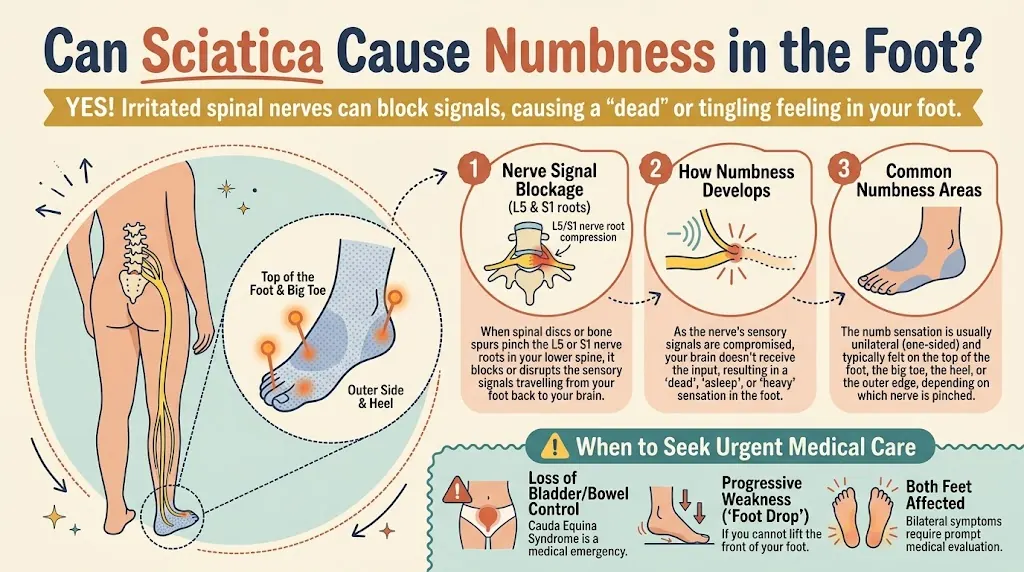
Spinal stenosis and a herniated disc can both cause back pain, leg discomfort, numbness, or weakness, making them difficult to distinguish without a medical evaluation. You might notice pain after walking, tingling that travels down one leg, or stiffness that makes everyday activities uncomfortable. However, the pattern of symptoms can provide useful clues about what is happening in the spine.
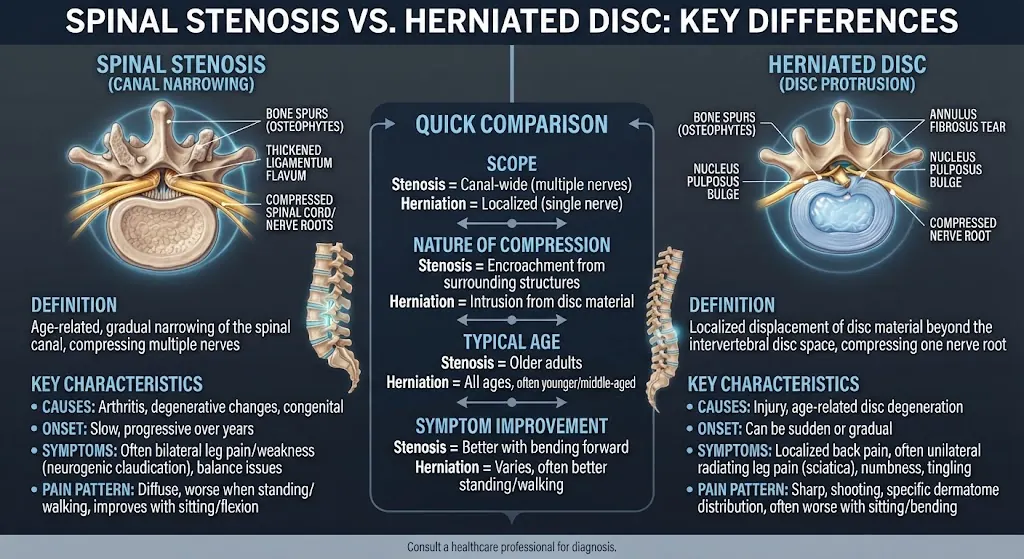
Although these conditions can produce similar symptoms, they are not the same. Spinal stenosis involves narrowing of the spaces within the spine, while a herniated disc occurs when material from an intervertebral disc pushes through its outer layer. Either condition may irritate or compress nerves, but neither automatically means that surgery is necessary.
Understanding spinal stenosis vs. herniated disc can help you recognize possible causes of your symptoms, understand how clinicians evaluate these conditions, and learn which treatments may help. This guide explains their key differences, common symptoms, diagnostic approaches, treatment options, and warning signs that require medical attention.
What Is the Difference Between Spinal Stenosis and a Herniated Disc?
The main difference is that spinal stenosis describes narrowing of the spinal canal or nerve openings, whereas a herniated disc describes a problem with the disc itself. A herniated disc can sometimes contribute to spinal stenosis, so the conditions can occur together.
| Feature | Spinal stenosis | Herniated disc |
|---|---|---|
| What happens | Space around spinal nerves narrows | Disc material protrudes through its outer layer |
| Common causes | Age-related changes, arthritis, thickened ligaments, bone spurs | Disc wear, injury, or disc material displacement |
| Typical symptom pattern | Leg pain, heaviness, or numbness that may worsen with standing or walking | Back pain or radiating pain, tingling, or numbness from nerve irritation |
| Common aggravating factors | Prolonged standing or walking, particularly with lumbar stenosis | Bending, lifting, coughing, sneezing, or certain positions |
| Can symptoms occur without back pain? | Yes | Yes |
| Usual initial treatment | Activity adjustments, appropriate exercise, physical therapy, and symptom management | Activity adjustments, appropriate exercise, physical therapy, and symptom management |
These are common patterns, not definitive rules. Symptoms overlap, and the location of the problem—neck, upper back, or lower back—also affects how it feels.
What Does Spinal Stenosis Feel Like?
Spinal stenosis may cause back or neck discomfort, numbness, tingling, weakness, or pain that spreads into the arms or legs. With lumbar spinal stenosis, symptoms often become more noticeable when standing or walking and may ease when sitting or leaning forward. This pattern is sometimes called neurogenic claudication.
People may also experience heavy or tired-feeling legs, reduced walking distance, or difficulty remaining upright for long periods. Learn more about what spinal stenosis symptoms feel like and why spinal stenosis can cause leg pain when walking.
Spinal stenosis often develops gradually as structures in the spine change with age. However, the severity of narrowing on an imaging scan does not always match symptom severity. Some people have narrowing without noticeable symptoms.
What Does a Herniated Disc Feel Like?
A herniated disc may cause localized back or neck pain, but symptoms can also develop when the displaced disc material irritates a nearby nerve. Depending on the disc’s location, pain may travel into the buttock, leg, shoulder, or arm.
Lumbar disc herniation can cause sharp, burning, or electric-like pain down a leg, sometimes accompanied by tingling, numbness, or muscle weakness. Symptoms may worsen with bending, lifting, coughing, or sneezing, although these patterns vary. Read about what a herniated disc feels like and where herniated disc pain can travel.
A herniated disc does not always cause symptoms. Disc changes are also found on scans of people without back pain, so imaging results must be interpreted alongside symptoms and physical examination findings.
How Do the Symptoms Compare?
| Symptom or trigger | More suggestive of spinal stenosis | More suggestive of a herniated disc |
|---|---|---|
| Leg symptoms after walking or standing | Common with lumbar stenosis | Possible, but less characteristic |
| Symptoms improve when sitting or bending forward | A common pattern | May occur, depending on the disc and nerve involved |
| Sudden pain after lifting | Possible | Can occur |
| Pain worsens with coughing or sneezing | Possible | Can occur, particularly with nerve irritation |
| Numbness or muscle weakness | Possible | Possible |
| No back pain despite leg symptoms | Possible | Possible |
Neither column confirms a diagnosis. For example, pain that travels down the leg may reflect nerve irritation from a herniated disc, spinal stenosis, or another cause. The causes of sciatica and sciatic nerve pain can help explain why similar symptoms arise from different spinal problems.
How Are Spinal Stenosis and Herniated Discs Diagnosed?
A clinician usually begins by reviewing your symptoms, medical history, and physical examination. They may check walking, flexibility, reflexes, sensation, muscle strength, and whether particular movements reproduce symptoms.
An MRI may be recommended when symptoms suggest nerve compression, neurological findings need investigation, or imaging could change treatment decisions. MRI can show discs, spinal nerves, and the spaces around them. X-rays may help identify alignment changes or bone abnormalities, but they do not show disc herniation as clearly as MRI.
| Evaluation method | What it can help identify | Important limitation |
|---|---|---|
| Medical history and examination | Symptom patterns, nerve function, and possible causes | May not identify the exact structural problem alone |
| MRI | Disc herniation, narrowing, and nerve compression | Abnormal findings may not be the cause of symptoms |
| X-ray | Bone alignment, some degenerative changes, and fractures | Does not directly show nerves or disc material |
| CT or other tests | Selected bone details or alternative causes | Used when clinically appropriate |
A scan should not be interpreted in isolation. The key question is whether the findings fit your symptoms and examination.
What Treatment Helps Each Condition?
Most people do not need immediate surgery solely because imaging shows spinal stenosis or a herniated disc. Treatment depends on pain severity, functional limitations, neurological findings, overall health, and whether symptoms are improving.
Nonsurgical treatment
Initial care may include staying gently active, temporarily modifying painful activities, and following a physical therapy plan tailored to your symptoms. Prolonged bed rest is generally not recommended for uncomplicated back pain, although activities that sharply increase pain or neurological symptoms should be modified.
For spinal stenosis, a clinician or physical therapist may recommend exercises that improve strength, balance, mobility, and tolerance for walking. Information about treatment options that may help spinal stenosis pain can help you prepare for a discussion about suitable care.
For a herniated disc, treatment may focus on maintaining comfortable movement, gradually rebuilding strength, and managing nerve-related pain. See how long a herniated disc may take to heal for more about recovery variability.
Medication may sometimes help, but the right option depends on your health history and other medicines. Anti-inflammatory drugs can cause stomach, kidney, cardiovascular, or bleeding complications in some people. Ask a clinician or pharmacist which options are appropriate for you.
When is surgery considered?
Surgery may be considered when symptoms remain disabling despite appropriate nonsurgical treatment, or when significant or progressive neurological problems require intervention. Procedures differ: spinal stenosis surgery often aims to create more space for nerves, while disc surgery may remove the portion of disc material pressing on a nerve.
The decision depends on the exact problem and expected benefits and risks. Imaging findings alone are not a reason to assume surgery is necessary.
When Should You Seek Medical Care?
Arrange a medical evaluation if back or neck pain persists, repeatedly limits walking or daily activities, or comes with ongoing numbness or weakness. Prompt assessment is especially important if symptoms are worsening or affecting balance.
Seek emergency care immediately for new loss of bladder or bowel control, difficulty starting urination or inability to urinate, numbness around the groin or saddle area, or rapidly worsening or severe weakness in the legs. These symptoms can indicate serious nerve compression and should not wait for a routine appointment.
For additional guidance, review warning signs that spinal stenosis may be an emergency and when back pain requires emergency care.
Frequently Asked Questions
1. Is spinal stenosis worse than a herniated disc?
Neither condition is always worse. The impact depends on how much nerves are affected, the symptoms involved, and whether weakness or other neurological problems develop.
2. Can a herniated disc cause spinal stenosis?
Yes. A herniated disc can reduce the space available for nearby nerves and contribute to narrowing, although spinal stenosis also has other causes.
3. Which condition causes more leg pain?
Both can cause leg pain. Lumbar stenosis often causes symptoms during standing or walking, while a herniated disc may cause pain that radiates along a nerve pathway.
4. Can spinal stenosis or a herniated disc occur without back pain?
Yes. Either condition may cause numbness, tingling, weakness, or limb pain without prominent back pain.
5. Does a herniated disc always require surgery?
No. Many cases improve with time and nonsurgical care. Surgery may be considered for persistent disabling symptoms or serious neurological problems.
6. Can spinal stenosis improve without surgery?
Symptoms may improve with activity modification, physical therapy, and other nonsurgical treatments. However, treatment cannot guarantee that the underlying narrowing will disappear.
7. Is walking good for spinal stenosis?
Walking may help some people, but prolonged upright walking can worsen symptoms in lumbar stenosis. Shorter walks, rest breaks, or clinician-guided alternatives may be more comfortable.
8. Can exercise make a herniated disc worse?
Some movements can aggravate symptoms, particularly if they increase radiating pain, numbness, or weakness. A tailored exercise plan is safer than pushing through worsening neurological symptoms.
9. Do I need an MRI to tell the difference?
Not always. A clinician may diagnose or initially manage symptoms based on history and examination, but MRI may be useful when symptoms persist, neurological findings are concerning, or results would affect treatment.
10. When should I worry about numbness or weakness?
New, persistent, or worsening numbness or weakness deserves prompt medical assessment. Sudden severe weakness, saddle-area numbness, or new bladder or bowel dysfunction requires emergency care.
Conclusion
Spinal stenosis is narrowing around the spinal nerves, while a herniated disc involves disc material protruding through its outer layer. Both can cause pain, numbness, tingling, or weakness, and they can occur together. The most useful next step is a clinical evaluation that connects your symptoms and examination findings with any necessary imaging so treatment can be matched to your needs.
Disclaimer: This article is provided for educational and informational purposes only.