Nighttime sciatic nerve pain does not automatically mean your condition is getting worse. However, persistent pain, increasing numbness, or new muscle weakness should not be ignored. The best sleeping position depends on what triggers your symptoms, your mobility, and whether another condition is contributing to the pain.
This guide explains how to sleep with sciatica, which positions and pillows may help, what to do when pain interrupts your sleep, and when nighttime symptoms require medical attention. It also covers common sleeping mistakes and practical ways to make getting into and out of bed more comfortable.
What Is the Best Sleeping Position for Sciatica?
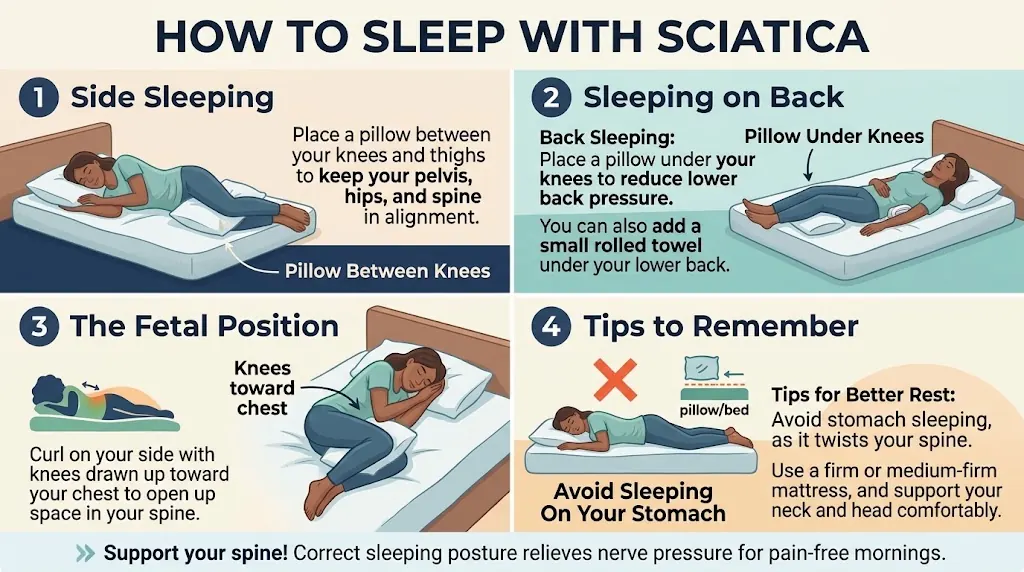
The best sleeping position for sciatica is one that keeps your spine comfortable, supports your hips, and reduces the pain traveling down your leg. For many people, sleeping on the side with a pillow between the knees or on the back with a pillow under the knees is a reasonable starting point.
No single position works for everyone. Try one position at a time and assess whether your leg pain, tingling, and morning stiffness improve.
The following comparison summarizes common positions to try. Comfort and symptom response matter more than maintaining a supposedly perfect posture.
| Sleeping position | How to set it up | What to watch for |
|---|---|---|
| Side sleeping | Bend your knees slightly and place a pillow between them | Avoid curling tightly or twisting your hips |
| Back sleeping | Place a pillow beneath both knees | Adjust the pillow if your lower back feels strained |
| Supported side sleeping | Use a full-length body pillow to support your upper leg and arms | Keep your shoulders and pelvis comfortably aligned |
| Stomach sleeping | If this is your only comfortable position, use a thin head pillow and experiment with a small pillow under the pelvis | This position can increase lower-back arching or neck rotation |
Start with side or back sleeping because these positions are relatively easy to modify with pillows. If a position increases the pain traveling down your leg, change it rather than forcing yourself to remain there.
How Do You Sleep With Sciatica Without Making the Pain Worse?
Use pillows to support your body, avoid positions that reproduce your symptoms, and change positions when discomfort builds. Sciatica may be related to irritation or compression of a nerve root in the lower spine, and the underlying cause can affect which movements or positions feel comfortable. Understanding the common causes of sciatica may help you recognize why certain positions trigger symptoms.
1. Sleep on your side with a pillow between your knees
Lie on whichever side feels more comfortable. Bend your knees slightly, place a pillow between them, and keep your hips stacked rather than rolling your upper leg forward.
A pillow can reduce twisting through the pelvis and help you maintain a comfortable position. You do not necessarily need to sleep on the side opposite your pain; choose the side that produces fewer symptoms.
2. Sleep on your back with a pillow under your knees
Lie on your back and place a pillow or bolster beneath both knees. This slightly bends your hips and knees and may reduce tension in the lower back for some people.
If lying flat increases your leg pain, try a thicker pillow under your knees or switch to side sleeping. People experiencing the first signs of sciatica may notice that symptoms vary depending on posture and activity.
3. Use a body pillow for extra support
A body pillow can support your upper leg, prevent your hips from twisting, and make side sleeping more comfortable. This may be especially useful if you tend to roll onto your stomach or wake up with your knees pressed together.
Keep your knees slightly bent rather than pulling them tightly toward your chest. Deeply curling your body can aggravate symptoms in some people.
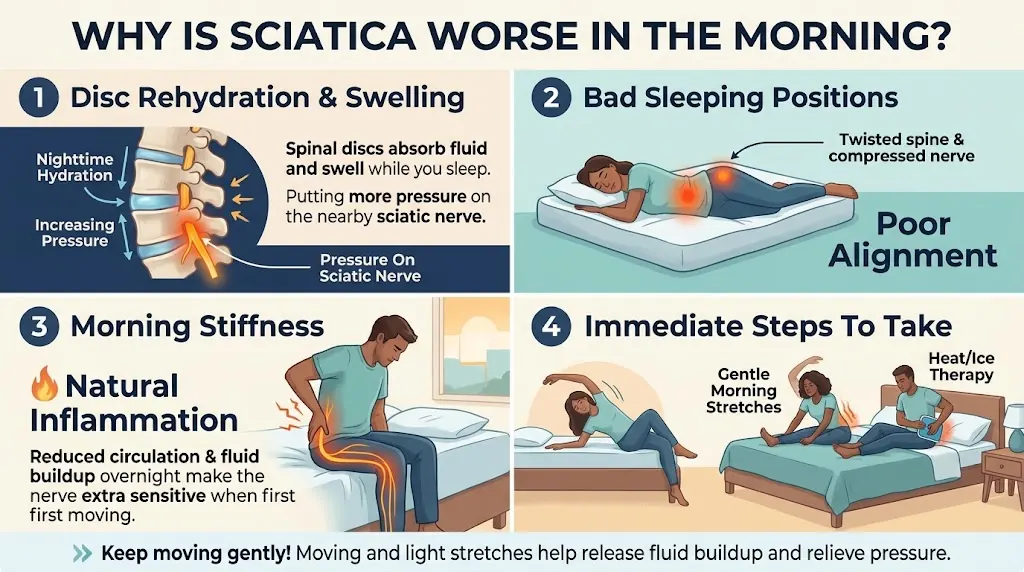
Why Is Sciatica Worse at Night?
Sciatica can feel worse at night because of sustained positioning, pressure on sensitive tissues, reduced movement, or difficulty finding a comfortable posture. Nighttime pain does not necessarily indicate nerve damage, but a persistent or progressively worsening pattern deserves attention.
Several factors may contribute:
-
Prolonged positioning: Staying in one position can aggravate symptoms that respond poorly to sustained pressure or spinal positioning.
-
Mattress support: A mattress that feels too soft or too firm for your body may make it harder to find a comfortable position.
-
Underlying nerve irritation: A herniated disc or another spinal condition may contribute to pain that persists while resting. Understanding what a herniated disc feels like can help you prepare useful questions for a clinician, although symptoms alone cannot confirm the cause.
-
Sleep disruption: Repeated awakenings can make pain more difficult to manage and leave you feeling less rested.
If you regularly wake with worsening symptoms, review the reasons sciatica may be worse at night. If the pain is primarily in your lower back rather than your leg, nighttime back pain may have additional explanations.
Which Pillows and Mattress Help With Sciatica?
A pillow that keeps your body supported without forcing your spine into an uncomfortable position is often more useful than an expensive specialty product.
| Support option | Potential benefit | Practical tip |
|---|---|---|
| Knee pillow | Helps keep the hips aligned during side sleeping | Choose a height that prevents your upper knee from dropping forward |
| Pillow under the knees | Supports a slightly bent-knee position while lying on your back | Adjust the height until your lower back feels comfortable |
| Body pillow | Supports the upper leg and helps limit twisting | Choose one that is easy to reposition |
| Supportive mattress | May make comfortable positioning easier | Consider your comfort and support needs rather than a particular firmness label |
There is no universally best mattress for sciatica. If your current bed leaves you uncomfortable regardless of your position, these considerations for choosing the best mattress for back pain may help you evaluate alternatives.
What Should You Do Before Bed to Relieve Sciatica?
A few simple changes may help reduce discomfort before you lie down.
-
Move gently during the evening. A short, comfortable walk may help you avoid stiffness from prolonged sitting. Stop if it noticeably increases pain, numbness, or weakness.
-
Try comfortable temperature therapy. A wrapped cold pack or comfortably warm compress may provide temporary relief. Avoid placing ice or intense heat directly on your skin, and do not fall asleep with a heating pad or ice pack in place. Guidance on using heat or ice for back pain can help you choose an appropriate approach.
-
Avoid aggressive stretching. Forceful hamstring stretches, deep forward bends, or exercises that send pain farther down the leg may aggravate symptoms. Gentle movement is preferable to pushing through pain. See these exercises for lower back pain for general movement ideas, but seek individualized advice if nerve symptoms worsen.
-
Change positions regularly. If you have been sitting for a long time, stand up and move gently before bed rather than immediately settling into another prolonged position.
For more options, review these practical approaches to relieving back pain at home. If sitting reliably aggravates your symptoms, learning about sciatica pain when sitting may also help you adjust your evening routine.
What Sleeping Mistakes Should You Avoid With Sciatica?
The goal is not to keep your spine rigid throughout the night. It is to avoid positions and activities that consistently aggravate your symptoms.
Try to avoid:
-
Staying in a position that causes increasing shooting pain or tingling.
-
Twisting your trunk while your pelvis remains fixed.
-
Pulling your knees tightly toward your chest if this worsens your symptoms.
-
Getting out of bed with a sudden twisting motion.
-
Following an exercise routine that causes progressively more pain down your leg.
Symptoms may travel from the buttock into the thigh, calf, or foot. For example, sciatica-related hip pain and calf pain from sciatica may occur alongside lower-back discomfort, depending on the affected nerves.
If you are uncertain which activities are aggravating your symptoms, review what to avoid doing with sciatica.
Warning Signs: When Should You Seek Medical Care?
Use your symptoms, not your sleeping position alone, to decide when to seek help.
| Symptom pattern | Recommended response |
|---|---|
| Mild, stable discomfort that improves when you change positions | Monitor symptoms and use comfortable self-care |
| Persistent nighttime pain, worsening numbness, or symptoms that interfere with daily activities | Arrange a medical evaluation |
| New or progressive leg weakness, including difficulty lifting the foot | Seek prompt medical assessment |
| New loss of bladder or bowel control, inability to urinate, numbness around the groin or saddle area, or rapidly worsening weakness | Seek emergency care immediately |
Numbness affecting the foot, such as the symptoms described in sciatica-related foot numbness, should be assessed if it is new, persistent, or worsening. New leg weakness is particularly important because it can indicate significant nerve dysfunction.
Do not wait until morning if you develop emergency warning signs. For other persistent symptoms, a clinician can evaluate possible causes and decide whether examination, imaging, medication, or physical therapy is appropriate. These recommendations about when back pain is an emergency provide additional context.
Frequently Asked Questions
1. Should I sleep on the painful side with sciatica?
You can try sleeping on the painful side if it feels comfortable and does not worsen your symptoms. If pressure increases your pain, switch sides or try lying on your back with a pillow under your knees.
2. Is it better to sleep with straight or bent legs?
Slightly bending your knees may make side or back sleeping more comfortable. There is no requirement to keep your legs bent all night; use whichever position allows you to rest without increasing symptoms.
3. Why does my sciatica hurt when I lie down?
Lying down may place your spine, hips, or irritated nerve tissues in a position that aggravates pain. Persistent pain when lying down, especially when progressive or accompanied by other warning signs, should be evaluated.
4. How can I get out of bed with sciatica?
Roll onto your side, move your legs toward the edge of the bed, and use your arms to push your upper body upright. Move slowly and avoid twisting suddenly through your lower back.
5. Can sleeping on the floor help sciatica?
There is no strong reason to assume that sleeping on the floor is better than sleeping on a supportive mattress. A hard surface may increase discomfort, so prioritize comfort and adequate support.
6. How long does nighttime sciatica last?
Duration depends on the underlying cause, severity, and individual recovery. Some episodes improve over several weeks, while persistent symptoms may last longer and need further assessment.
7. Can a mattress make sciatica worse?
A mattress that prevents you from finding a comfortable position may aggravate pain or disrupt sleep. However, mattress firmness alone does not establish the cause of sciatica or guarantee relief.
8. Should I stretch before sleeping with sciatica?
Gentle movement may help if it feels comfortable, but aggressive stretching can aggravate nerve symptoms. Stop any stretch that increases shooting pain, numbness, or tingling down your leg.
9. Is foot numbness during sleep a sign of sciatica?
It can occur with nerve irritation, but other conditions can also cause foot numbness. Seek medical assessment for persistent or worsening numbness, and seek urgent care for new weakness or emergency warning signs.
10. When should I see a doctor for sciatica that affects sleep?
Arrange an evaluation if pain repeatedly interrupts sleep, does not improve, worsens, or interferes with daily activities. Seek emergency care for new bladder or bowel dysfunction, saddle-area numbness, or rapidly worsening weakness.
Conclusion
The best way to sleep with sciatica is to find a comfortable position, support your knees and hips with pillows when helpful, and avoid positions that intensify leg pain. Gentle movement and practical bedtime adjustments may improve comfort, but persistent or worsening symptoms deserve medical evaluation. If you are unsure what is causing your pain, start by discussing your symptoms, their duration, and any numbness or weakness with a healthcare professional.
Disclaimer: This article is provided for educational and informational purposes only.