You may recognize the familiar burning of heartburn but still be confused when discomfort seems to spread into your chest, upper back, or between your shoulder blades. If you notice back pain after eating, when lying down, or during a reflux flare, it is natural to wonder whether GERD is responsible or whether something else is causing the pain.
GERD can be associated with chest discomfort and, in some people, pain that is perceived in the back, but back pain is not one of its defining symptoms. GERD most commonly causes heartburn and regurgitation. Back pain may occur at the same time for another reason, or discomfort from the esophagus may be perceived beyond the chest.
This article explains what GERD-related discomfort may feel like, whether acid reflux can cause back pain, why the symptoms may occur together, what can make them worse, what you can safely try at home, and when back or chest pain needs medical attention.
Can GERD cause back pain?
GERD may be associated with back discomfort, but isolated back pain is not a typical GERD symptom. GERD occurs when stomach contents repeatedly flow back into the esophagus and cause bothersome symptoms or complications. Its classic symptoms are heartburn and regurgitation, although chest pain, nausea, swallowing problems, cough, and hoarseness can also occur.
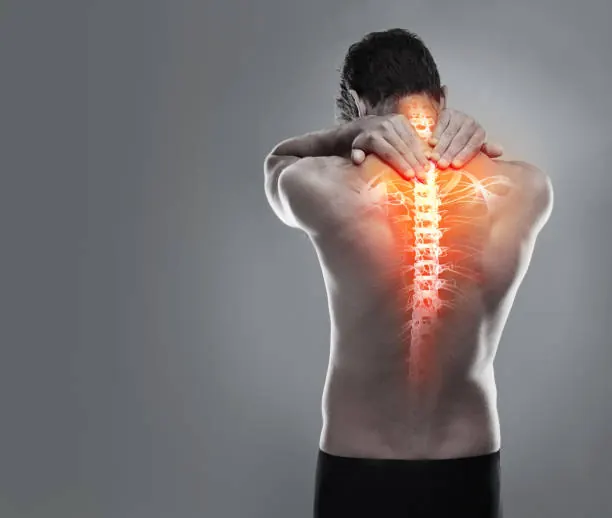
The esophagus is located behind the breastbone, so reflux-related discomfort is usually experienced in the chest or upper abdomen. Pain that seems to travel toward the upper back may reflect referred discomfort, muscle tension associated with chest discomfort, or a separate condition.
This makes the pattern of the pain important. If your back hurts only occasionally during severe reflux symptoms, a connection is possible. If you have persistent lower-back pain with little or no heartburn, GERD becomes a less convincing explanation.
How common is GERD?
GERD is common in the United States. NIDDK estimates that about 20% of people in the United States have GERD.
| Symptom or pattern | How strongly it points toward GERD |
|---|---|
| Burning behind the breastbone | Strongly compatible with GERD |
| Sour or acidic material coming into the throat | Strongly compatible with GERD |
| Symptoms after meals | Compatible with GERD |
| Symptoms when lying down | Compatible with GERD |
| Chest discomfort | Can occur with GERD |
| Upper-back discomfort during reflux | Possible, but not a defining symptom |
| Isolated lower-back pain | Less typical of GERD |
The table is a guide rather than a diagnostic test. Symptoms can overlap between digestive, musculoskeletal, and heart-related conditions.
What does GERD-related pain feel like?
GERD commonly causes a burning sensation behind the breastbone that can move upward toward the throat. You may also notice sour-tasting fluid or food coming back into the mouth. Some people experience chest discomfort without classic heartburn.
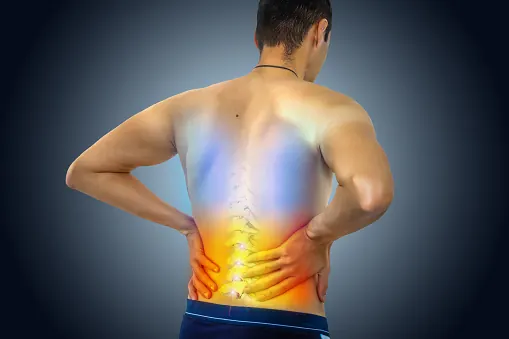
If back discomfort occurs at the same time, it may be felt in the upper or middle back, rather than as the typical aching pain of a lower-back strain. However, there is no specific type of back pain that proves GERD is responsible.
Pay attention to timing. A pattern such as burning chest discomfort and upper-back discomfort that repeatedly develops after meals or when lying down may be more suggestive of a digestive connection than back pain that appears after lifting, prolonged sitting, or exercise.
If your pain is mainly around the ribs and upper back, other possibilities should also be considered, including pain around the ribs and back.
Why can GERD and back pain happen together?
Several explanations are possible.
Referred discomfort
The nervous system does not always localize discomfort from internal organs as precisely as it does pain from the skin or muscles. As a result, irritation in the esophagus can sometimes be perceived beyond the exact location of the underlying problem.
That does not mean every episode of back pain occurring with heartburn is caused by GERD. The association has to be considered alongside the rest of the symptom pattern.
Muscle tension
Chest or upper-abdominal discomfort can cause you to change your posture, tense your upper-body muscles, or move differently. Those changes may contribute to secondary muscle discomfort.
In contrast, pain that changes substantially with bending, twisting, lifting, or certain positions may have a musculoskeletal component. General information about what causes back pain can help put that pattern into context.
Two conditions can occur at the same time
GERD is common enough that it can coexist with ordinary back pain. Sitting for long periods, physical activity, muscle strain, poor sleep positioning, and spinal problems can all produce back symptoms independently.
Therefore, improving reflux does not necessarily mean that unrelated back pain will disappear.
Can GERD cause upper-back pain?
It is possible for reflux-related discomfort to be perceived toward the upper back, but upper-back pain has many other possible causes.
Upper-back symptoms deserve particular attention when they occur with chest pressure, shortness of breath, sweating, dizziness, or pain involving the jaw or arm. Those symptoms should not automatically be attributed to acid reflux.
If the discomfort is concentrated around the ribs or thoracic area, back rib pain has a broader range of possible causes that may need consideration.
Can GERD cause lower-back pain?
GERD is not a common explanation for isolated lower-back pain.
If your main symptom is pain in the lumbar region, particularly pain that changes with posture or movement, it is reasonable to consider more typical causes of lower back pain.
Pain on one side can also have causes unrelated to reflux. For example, persistent lower back pain on the right side may require a different evaluation from reflux-associated chest discomfort.
This distinction can prevent a common mistake: assuming that any back pain occurring during a digestive problem must be coming from the digestive tract.
What makes GERD symptoms worse?
GERD symptoms can be affected by meals, body position, weight, smoking, and individual food triggers. NIDDK notes that foods and drinks commonly associated with worsening symptoms include acidic foods, alcohol, chocolate, coffee and other caffeine sources, high-fat foods, mint, and spicy foods. However, triggers vary from person to person.
Lying down soon after eating can also make nighttime reflux more troublesome. Eating meals at least 3 hours before lying down or going to bed may improve nighttime symptoms.
| Situation | What may happen |
|---|---|
| Large meal | May increase reflux symptoms in some people |
| Lying down soon after eating | Can make nighttime reflux more likely |
| Individual trigger foods | May worsen symptoms depending on the person |
| Excess body weight | Can increase the likelihood of GERD |
| Smoking | Can contribute to GERD risk |
| Eating at least 3 hours before bed | May improve nighttime symptoms |
You do not necessarily need to eliminate every food on a standard “GERD diet.” A more practical approach is to identify foods that consistently trigger your symptoms.
Can GERD cause back pain at night?
GERD symptoms can become more noticeable when lying down, and nighttime reflux may disturb sleep. If you repeatedly wake with burning chest discomfort, sour fluid in your throat, or upper-body discomfort, reflux may be contributing.
Raising the head of the sleeping area can help some people with nighttime GERD. NIDDK describes elevating the head and upper body by about 6 to 8 inches as one possible lifestyle measure.
However, nighttime back pain has many possible causes. If your main problem is back pain that repeatedly wakes you, review other possibilities rather than assuming reflux is responsible. Information about back pain at night can help you understand that distinction.
What can you do at home?
If your symptoms are mild and you do not have warning signs, several measures may help reduce reflux:
- Avoid lying down for at least 3 hours after eating.
- Identify and reduce foods or drinks that reliably trigger your symptoms.
- If you have overweight or obesity, discuss healthy weight management with a healthcare professional.
- Avoid smoking or secondhand smoke exposure where possible.
- Consider elevating your upper body during sleep if nighttime reflux is a problem.
- Use over-the-counter medicines according to their labels and seek medical advice if you need them frequently.
NIDDK notes that antacids can help mild symptoms, while H2 blockers and proton pump inhibitors reduce stomach acid and can be used in appropriate circumstances. People whose symptoms do not improve with over-the-counter treatment should discuss them with a clinician.
For unrelated or coexisting back discomfort, general measures described in how to relieve back pain at home may be useful when there are no warning signs.
Should you use heat or ice for back pain with GERD?
Heat and ice address musculoskeletal pain rather than the underlying reflux. If your back discomfort behaves like a muscle-related problem, either may be appropriate depending on the situation.
If you are considering these options, learn more about heat or ice for back pain rather than assuming that treating the back will treat GERD.
If heat consistently makes your symptoms worse, stop using it. Guidance on when heat can make back pain worse may also be relevant.
Can exercise help if you have GERD and back pain?
Regular physical activity can be part of an overall healthy lifestyle, but the best approach depends on the type of back pain and how exercise affects your reflux.
Avoid exercising immediately after a large meal if it reliably triggers reflux. If you are dealing with persistent back pain, the appropriate activity should be based on its cause rather than assuming it is reflux-related.
For uncomplicated mechanical lower-back symptoms, you can review exercises for lower back pain, but stop exercises that cause significant or worsening pain.
How is GERD diagnosed?
Doctors often begin by reviewing symptoms and medical history. When the symptom pattern is typical, testing may not always be necessary initially. If symptoms do not respond to treatment, are unclear, or raise concern about complications, further testing may be considered.
Testing can include upper endoscopy or other forms of reflux evaluation depending on the situation. The goal is not simply to prove that acid is present, but to determine whether GERD explains the symptoms and whether complications are present.
Back pain that persists independently of reflux may need a separate evaluation.
How is GERD treated?
Treatment depends on symptom severity and the individual’s circumstances. Lifestyle measures may be combined with medicines that reduce or neutralize stomach acid. Proton pump inhibitors are more effective than H2 blockers for healing the esophageal lining in GERD, according to NIDDK.
Some people with persistent symptoms despite medication may need additional evaluation. In selected cases, procedures or surgery may be considered. These treatments are not appropriate for everyone, so persistent symptoms should be discussed with a healthcare professional rather than managed indefinitely with self-treatment.
What other conditions can cause chest or back discomfort?
Not all pain occurring during reflux is caused by reflux.
Possible explanations include:
- Musculoskeletal strain or spinal problems
- Esophageal inflammation
- Peptic ulcer disease
- Gallbladder or pancreatic disorders
- Respiratory conditions
- Heart-related conditions
This is particularly important because heart-related chest pain can sometimes be mistaken for indigestion or reflux. If chest discomfort is new, severe, exertional, or associated with concerning symptoms, do not assume that it is GERD.
For a broader overview, see back pain and its different possible causes.
Warning signs: when should you seek medical care?
Symptoms that can usually be monitored
Mild, occasional reflux symptoms may be monitored when they are clearly related to meals or lying down and improve with appropriate lifestyle measures.
However, recurring symptoms should not simply be ignored. GERD can cause complications over time, including inflammation and narrowing of the esophagus.
Symptoms that need medical evaluation
Arrange medical care if you have:
- Frequent or persistent heartburn
- Symptoms that do not improve with lifestyle changes or appropriate over-the-counter treatment
- Difficulty or pain when swallowing
- Persistent vomiting
- Unexplained weight loss
- Loss of appetite
- Recurrent chest discomfort
- Symptoms that interfere with sleep or daily activities
These symptoms can occur with GERD complications or with conditions that require a different diagnosis.
Symptoms requiring urgent or emergency care
Seek urgent medical attention for:
- Severe or new chest pain
- Chest pain with shortness of breath, sweating, dizziness, or fainting
- Pain spreading to the arm, jaw, neck, or other areas
- Vomiting blood or material resembling coffee grounds
- Black, tarry stools
- Severe or rapidly worsening abdominal or chest pain
Gastrointestinal bleeding can cause black or tarry stool, bloody vomit, dizziness, weakness, and shortness of breath and may require immediate treatment.
If you are specifically concerned about whether your back symptoms could represent something more serious, review when back pain is an emergency.
Frequently Asked Questions
Can GERD cause pain between the shoulder blades?
GERD most commonly causes heartburn, regurgitation, and chest discomfort rather than isolated pain between the shoulder blades. Upper-back discomfort can occur alongside reflux, but other causes should be considered if the back pain is persistent or is your main symptom.
Can acid reflux cause upper-back pain after eating?
It is possible for upper-body discomfort to occur with reflux, particularly when symptoms consistently follow meals. However, upper-back pain after eating can have digestive, muscular, or other causes, so the timing alone cannot establish GERD as the cause.
Can GERD cause lower-back pain?
GERD is not a typical cause of isolated lower-back pain. If your symptoms are concentrated in the lumbar region, consider common reasons for lower back pain as well as non-spinal causes when appropriate.
Does GERD cause back pain when breathing?
Back pain that specifically occurs when taking a deep breath is not a classic GERD symptom. Pain with breathing can have several causes, so persistent or significant back pain when breathing deserves appropriate evaluation.
Why does my back hurt when I have heartburn?
The two symptoms may occur together because discomfort from the esophagus can sometimes be perceived beyond its immediate location, or because muscle tension and posture change during painful reflux episodes. They may also simply be separate problems occurring at the same time.
Can GERD cause nighttime back pain?
GERD commonly becomes more troublesome when lying down, but nighttime back pain has many possible causes. If reflux symptoms and upper-body discomfort consistently occur after lying down, treating nighttime reflux may help clarify whether the two symptoms are connected.
Can GERD cause chest and back pain at the same time?
It can occur alongside chest discomfort, but chest and back pain should not automatically be attributed to GERD. New or unexplained chest pain, particularly with shortness of breath, sweating, dizziness, or pain in the jaw or arm, requires urgent assessment.
Does treating GERD make back pain go away?
Only if reflux is contributing to the discomfort. If the back pain has a separate muscular, spinal, or other cause, treating GERD may improve heartburn without resolving the back problem.
Can constipation and GERD cause back pain together?
Constipation can cause abdominal symptoms and may occur alongside back discomfort, while GERD causes reflux symptoms. If both are present, understanding whether constipation can cause back pain may help distinguish overlapping symptoms.
When should I see a doctor for GERD and back pain?
See a healthcare professional when symptoms are persistent, recurrent, worsening, or not responding to appropriate measures. Seek urgent care for severe chest pain, difficulty breathing, gastrointestinal bleeding, fainting, or other serious warning signs.
Conclusion
GERD can cause significant chest and upper-body discomfort, and back pain may sometimes occur alongside reflux, but isolated back pain is not a defining symptom of GERD. The timing, location, triggers, and accompanying symptoms are more useful than the presence of back pain alone.
If reflux repeatedly occurs after meals or when lying down, lifestyle measures and appropriate treatment may reduce symptoms. If the back pain persists independently, especially in the lower back, it should be considered separately rather than automatically blamed on acid reflux.
Disclaimer: This article is provided for educational and informational purposes only. It is not a substitute for professional medical advice, diagnosis, or treatment