Muscle strain and irritation around the ribs are possible causes, but pain that worsens with breathing can sometimes come from the lungs, the lining around the lungs, or other internal organs. The location and severity of the pain matter, but symptoms alone cannot reliably identify the cause.
Understanding why your upper back hurts when you breathe can help you decide what to do next. This guide explains common causes, associated symptoms, safe self-care, and warning signs that mean you should seek medical attention.
What Causes Upper Back Pain When Breathing?
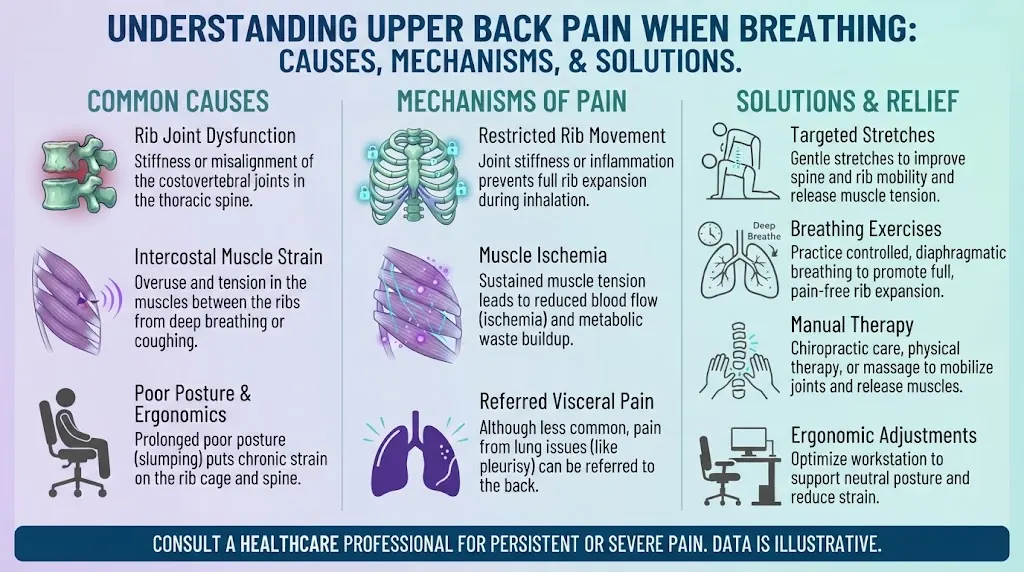
Upper back pain during breathing can come from muscles, joints, ribs, nerves, or structures inside the chest. Because breathing moves the rib cage and chest wall, pain from several different conditions may feel similar.
Common musculoskeletal causes
Muscle strain is one possible explanation, particularly after lifting something heavy, exercising, prolonged desk work, or sleeping in an awkward position. The pain may increase when you twist, reach, bend, cough, or press the sore area.
Irritation in the joints connecting the ribs to the spine can also cause discomfort around the shoulder blades or along the ribs. If the pain is concentrated near the ribs, see these explanations of pain between the ribs and spine and pain around the ribs and back.
| Possible cause | What it may feel like | Clues that may help |
|---|---|---|
| Muscle strain | Aching, tightness, or sharp pain with movement | Recent lifting, exercise, coughing, or awkward posture |
| Rib or chest-wall irritation | Localized pain with deep breaths or twisting | Tenderness around a rib or the back of the chest |
| Thoracic spine or joint problem | Pain near the spine or shoulder blades | Discomfort that changes with posture or movement |
| Lung or pleural condition | Sharp pain with inhalation or coughing | May occur with cough, fever, or shortness of breath |
| Other internal cause | Pain that may be poorly localized or accompanied by other symptoms | Depends on the underlying condition |
These patterns are clues, not a way to diagnose the cause at home.
Lung and chest-related causes
Pain that gets worse with a deep breath can occur when the lining around the lungs becomes inflamed, a condition called pleurisy. Pneumonia and other chest infections may also cause pain with coughing or breathing, often alongside fever, fatigue, or a cough. These symptoms deserve medical assessment rather than assuming the problem is muscular.
Less commonly, sudden pain with breathing can be associated with a collapsed lung or a blood clot in the lung. Heart-related conditions can also cause pain that spreads to the back. For more context, see how back problems can cause chest pain.
Why Does It Hurt More When I Take a Deep Breath?
A deep breath expands the rib cage and moves the muscles, joints, and tissues around the chest. If one of these structures is irritated, the movement may trigger pain. This can happen with a strain or rib irritation, but pain during inhalation can also arise from the lungs or their lining.
The pattern matters, but it is not conclusive. Pain that changes when you twist or press a tender muscle may suggest a chest-wall cause; however, being able to reproduce pain by pressing the area does not rule out a serious condition.
The broader causes of back pain while breathing and upper back pain without an obvious injury can overlap, so consider any accompanying symptoms as well.
| Symptom pattern | What it may suggest | Recommended response |
|---|---|---|
| Pain after lifting or exercise, worse with twisting | Possible muscle or joint strain | Gentle self-care may help if symptoms are mild and no warning signs are present |
| Pain with breathing plus fever or cough | Possible respiratory infection or lung inflammation | Seek prompt medical assessment |
| Sudden pain with shortness of breath, faintness, or coughing blood | Possible serious heart or lung condition | Call 911 or your local emergency number |
| Persistent pain between the shoulder blades | Several possible causes, including spine, muscle, or internal conditions | Arrange a clinical evaluation, especially if unexplained or worsening |
What Can I Do at Home for Upper Back Pain When Breathing?
Home care is appropriate only when the pain is mild, there is a plausible muscle-related trigger, and you have no concerning symptoms. If the pain is new, unexplained, or clearly linked to breathing, contact a healthcare professional for advice.
For mild discomfort that seems muscular:
-
Modify painful activities. Temporarily avoid heavy lifting, forceful twisting, and movements that clearly worsen the pain.
-
Keep moving gently. Take comfortable walks and change positions regularly rather than staying in bed for long periods.
-
Try wrapped heat or cold. Apply a covered heat pack or cold pack for short periods, stopping if your skin becomes irritated. Guidance on choosing heat or ice for back pain may help.
-
Review posture and work habits. Long periods hunched over a desk may contribute to muscle tension. Learn about how poor posture may affect upper back pain.
-
Avoid forceful stretching or deep massage if these increase pain, especially when the cause is uncertain.
For additional ideas, see ways to relieve back pain at home. Do not use home treatment to delay care for severe pain, breathing difficulty, or other warning signs.
When Should I Seek Medical Care?
Pain in the upper back that is new or unexplained—particularly pain triggered by breathing—deserves attention if it persists, worsens, or comes with other symptoms. A clinician may ask when it began, whether movement affects it, and whether you have had an injury, recent illness, or other health risks.
Depending on the symptoms and examination, evaluation may include listening to your lungs, checking vital signs, examining your back and chest, or ordering tests. Imaging is not necessary for every muscular back problem, but chest or other tests may be needed when an internal cause is suspected.
Use this guide to decide what to do:
| Level of concern | Examples | What to do |
|---|---|---|
| Monitor cautiously | Mild pain after activity that improves and has no other symptoms | Try gentle self-care and watch for changes |
| Arrange prompt medical care | Persistent or worsening pain, fever, cough, or pain without a clear cause | Contact a healthcare professional |
| Emergency | Trouble breathing, sudden severe chest or upper back pain, fainting, blue or gray lips, or coughing up blood | Call 911 or your local emergency number |
For more detail, review when back pain needs emergency care and when to see a doctor for persistent back pain. If symptoms begin after a collision or fall, do not assume they are a simple strain; back pain after a car accident may require assessment.
Frequently Asked Questions
1. Can a pulled muscle cause upper back pain when breathing?
Yes. A strained muscle may hurt when the rib cage moves during a deep breath, cough, or twist. However, breathing-related pain is not always muscular, so new or unexplained symptoms should be assessed.
2. Why does my upper back hurt when I take a deep breath but not a normal breath?
A deeper breath expands the chest more and may place additional movement or stretch on irritated muscles, ribs, or tissues around the lungs. This pattern alone cannot identify the cause.
3. Can lung problems cause pain in the upper back?
Yes. Lung infections, inflammation around the lungs, and other lung conditions can cause pain that is felt in the chest or upper back. Shortness of breath, fever, or coughing blood increases the need for prompt evaluation.
4. Should I worry if my upper back hurts when I cough?
Coughing can aggravate strained muscles, but pain with coughing can also occur with respiratory infections or lung-related conditions. Seek medical advice if it is persistent or accompanied by fever, shortness of breath, or worsening symptoms.
5. Can poor posture make upper back pain worse when breathing?
Poor posture can contribute to muscle tension around the upper back and shoulder blades. It may make discomfort more noticeable with movement, but posture should not be assumed to explain unexplained pain during breathing.
6. How long does upper back pain from a muscle strain last?
A mild strain may start improving over several days and continue settling over the following weeks. Severe, worsening, or non-improving pain—or pain without a clear muscular trigger—should be evaluated rather than left untreated.
7. Is upper back pain when breathing a sign of pneumonia?
It can be, particularly when pain occurs with a cough, fever, chills, or fatigue. These symptoms can have other causes too, so a clinician needs to assess them.
8. Can stress cause upper back pain when breathing?
Stress can contribute to muscle tension and changes in breathing patterns, which may worsen discomfort. Do not attribute new pain with breathing to stress until potentially serious causes have been considered.
9. Should I stretch if my upper back hurts when I breathe?
Avoid forceful stretches or exercises that make the pain sharper. Gentle movement may be reasonable for mild, clearly muscular discomfort, but unexplained breathing-related pain should be assessed before beginning an exercise routine.
10. When is upper back pain with breathing an emergency?
Call 911 for severe or sudden upper back or chest pain with difficulty breathing, fainting, coughing blood, or other signs of a serious heart or lung problem. Do not drive yourself if you may be experiencing a medical emergency.
Conclusion
Upper back pain when breathing may come from muscle strain or rib irritation, but lung and heart conditions can cause similar symptoms. Pay attention to how the pain began and whether other symptoms appear. Use home care only for mild, likely muscular discomfort without warning signs, and seek medical help for unexplained, persistent, or worsening pain.
Disclaimer: This article is provided for educational and informational purposes only.