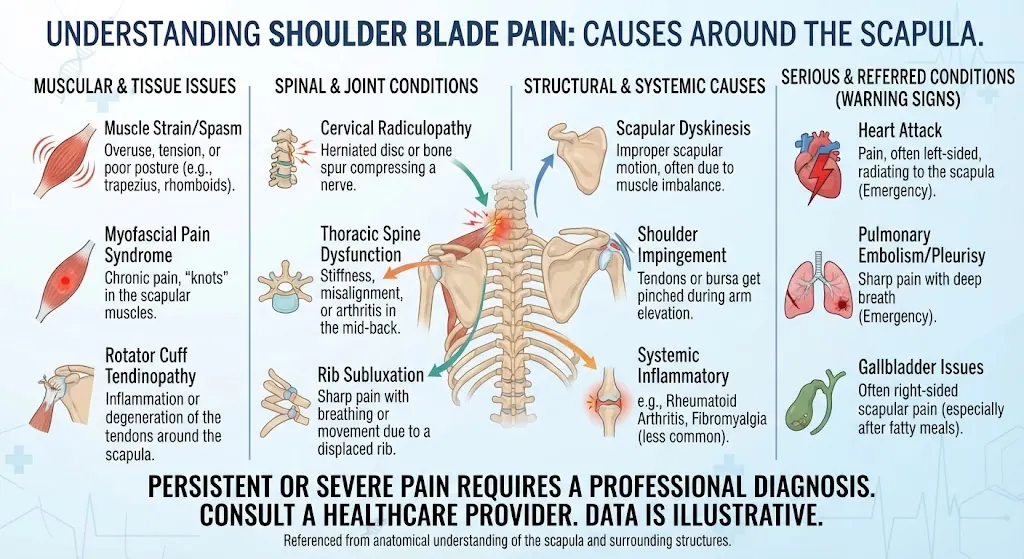
Pain around the shoulder blade is often related to muscle strain, prolonged posture, or irritation in the joints of the upper back or shoulder. However, the location alone cannot identify the cause, and pain in this area can occasionally come from the heart, lungs, or other internal organs.
This guide explains common reasons your shoulder blade may hurt, how symptoms can differ, what you can safely try at home, and which warning signs mean you should seek medical attention.
What Causes Pain Around the Shoulder Blade?
The shoulder blades, also called the scapulae, are flat bones on the upper back. Muscles connect them to the spine, ribs, neck, and shoulders, helping you lift, rotate, and stabilize your arms. Problems involving these muscles or nearby structures can cause pain that feels as though it is coming directly from the shoulder blade.
Common causes include:
-
Muscle strain or tension: Repeated lifting, exercise, carrying a heavy bag, or sleeping awkwardly can irritate muscles around the shoulder blade.
-
Posture-related discomfort: Staying hunched over a phone or computer may increase strain on the upper-back and neck muscles. See how poor posture can contribute to upper-back pain.
-
Neck problems or nerve irritation: A neck joint or irritated nerve can cause pain that travels into the shoulder blade, sometimes with tingling, numbness, or arm weakness.
-
Shoulder joint conditions: Rotator cuff irritation, bursitis, or other shoulder problems may cause pain that spreads toward the shoulder blade, especially with arm movement.
-
Thoracic spine or rib problems: Irritation in the middle-back joints, muscles, or ribs may cause pain near or between the shoulder blades. Pain around the ribs and back may become more noticeable when twisting or moving.
Pain can also occur without a clear injury. If it keeps returning or does not improve, an assessment can help distinguish a muscle problem from a condition involving the neck, shoulder, spine, or another body system.
How Can You Tell What May Be Causing It?
The pattern of pain offers clues, but it cannot confirm a diagnosis on its own.
| Symptom pattern | Possible explanation | What to notice |
|---|---|---|
| Aching after desk work or lifting | Muscle strain or tension | Whether movement, rest, or changing position affects it |
| Pain with reaching or lifting an arm | Shoulder or surrounding muscle problem | Whether shoulder movement reproduces the pain |
| Pain spreading from the neck to the shoulder blade | Neck-related joint or nerve irritation | Tingling, numbness, or symptoms traveling down the arm |
| Pain between the shoulder blades with twisting | Upper-back muscle, joint, or rib irritation | Whether turning or bending triggers symptoms |
| Pain with deep breathing or coughing | Muscle or rib irritation, but sometimes a lung or chest condition | Shortness of breath, fever, chest pain, or sudden onset |
Pain on the left side is not automatically heart-related, and pain on the right side is not automatically muscular. The location and side of the pain alone are not reliable ways to rule serious causes in or out.
Can Shoulder Blade Pain Come From the Neck, Ribs, or Internal Organs?
Yes. Shoulder blade pain does not always start in the shoulder itself. Pain from the neck, thoracic spine, ribs, or internal organs can be felt in this area, a phenomenon called referred pain.
For example, upper-back pain between the shoulder blades may come from muscle tension or spinal joints. Pain that appears with breathing can involve the chest wall, but upper-back pain when breathing can also occur with lung or other chest conditions that need medical evaluation.
The pattern matters:
-
Pain that changes with posture or movement may be musculoskeletal, particularly after prolonged sitting or physical activity. Upper-back pain from sitting is one example.
-
Burning pain, tingling, or numbness may suggest nerve irritation. A burning sensation in the upper back deserves assessment if it persists, spreads, or comes with weakness.
-
Pain with coughing or deep breathing should not automatically be blamed on a pulled muscle. Back pain during deep breathing with fever, breathlessness, or chest pain needs prompt attention.
-
Pain with chest pressure, sweating, nausea, or shortness of breath may signal a medical emergency. Chest discomfort related to back problems is one possible explanation for some symptoms, but heart and lung emergencies must be considered first.
What Can You Do at Home for Shoulder Blade Pain?
If the pain is mild, began after ordinary activity, and you have no warning signs, a few simple changes may help. The goal is to reduce irritation without keeping your shoulder and upper back completely still.
| Self-care option | How to try it | Important caution |
|---|---|---|
| Gentle movement | Take short walks and move your shoulder within a comfortable range | Stop movements that cause sharp or worsening pain |
| Adjust your posture | Change position regularly and bring screens closer to eye level | No single posture prevents all pain; avoid staying fixed for hours |
| Heat or ice | Try a wrapped cold pack or gentle warmth for 15–20 minutes | Protect your skin; avoid extreme temperatures or sleeping on a heating pad |
| Reduce aggravating activity | Temporarily scale back heavy lifting and repeated overhead reaching | Avoid prolonged bed rest or complete immobilization |
For general guidance, see how to relieve back pain at home and how to choose between heat and ice for back pain. If the pain seems linked to tight muscles, upper-back tightness may provide useful context, but stretching should not force the painful area.
If symptoms started after a fall, collision, or direct blow, do not assume they are a simple strain. Back pain after a car accident may need assessment, especially if pain is severe or movement is limited.
When Should You Seek Medical Care?
The urgency depends on associated symptoms, how the pain began, and whether it is getting worse.
| Level of concern | Symptoms or circumstances | What to do |
|---|---|---|
| Usually reasonable to monitor briefly | Mild soreness after activity that improves with gentle movement and rest | Try self-care and watch for changes |
| Arrange medical evaluation | Persistent or worsening pain, repeated episodes, limited arm movement, fever, unexplained weight loss, or ongoing numbness | Contact a healthcare professional |
| Emergency | Shoulder blade or upper-back pain with chest pressure, trouble breathing, fainting, cold sweats, or sudden severe pain; new major weakness; or serious injury | Call 911 or your local emergency number |
Seek prompt care for sharp pain in the middle of the back that is sudden, severe, or unexplained. If you are unsure whether symptoms require emergency treatment, warning signs that make back pain an emergency can help you recognize concerning patterns—but do not delay emergency help to read online information.
A clinician may ask when the pain began, what movements trigger it, whether it travels, and whether you have other symptoms. Examination may include neck and shoulder movement, muscle strength, sensation, and breathing or chest assessment when indicated. Imaging is not necessary for every case; it depends on the suspected cause and examination findings.
Frequently Asked Questions
1. Why does my shoulder blade hurt without an injury?
Muscle tension, prolonged sitting, sleeping position, or neck-related irritation can cause pain without a clear injury. If the pain persists, worsens, or comes with other symptoms, arrange a medical evaluation.
2. Why does my shoulder blade hurt when I move?
Movement-related pain may come from irritated muscles, shoulder tendons, ribs, or joints in the upper back. Upper-back pain when moving can offer additional context, but severe pain or major movement restriction needs assessment.
3. Can sleeping position cause shoulder blade pain?
Yes. An awkward position or inadequate support may leave the muscles around the shoulder blade sore after waking. If the pain regularly follows sleep, upper-back pain after sleeping may help you consider possible contributing factors.
4. Can a pulled muscle cause pain around the shoulder blade?
Yes. Overuse or sudden loading can strain the muscles that stabilize the shoulder blade. Pain often changes with movement or pressure, but these features alone cannot rule out other causes.
5. Why does the pain spread around my ribs?
Muscles, joints, and nerves connect the upper back with the rib cage, so irritation in one area may be felt in another. Back rib pain may help explain some patterns, but pain with breathing or chest symptoms should be assessed carefully.
6. Can shoulder blade pain come from the spine?
Yes. The thoracic spine, neck, and surrounding joints can refer pain toward the shoulder blade. Thoracic back pain and its possible causes provides more information about the middle-back region.
7. Is shoulder blade pain related to muscle strain?
It can be. Repetitive activity or lifting may irritate the muscles around the shoulder blade; muscle strain in the middle back is one related cause of upper-back discomfort.
8. Can shoulder blade pain be worse at night?
It may become more noticeable when you lie on the affected side or remain in one position. Pain that repeatedly disrupts sleep, is worsening, or occurs with unexplained symptoms should be discussed with a clinician.
9. Should I stretch if my shoulder blade hurts?
Gentle movement may help if the cause is muscular, but stop if stretching causes sharp pain, tingling, or worsening symptoms. A physical therapist can recommend suitable movements after assessing the likely cause.
10. How long does shoulder blade pain last?
Minor muscle-related discomfort may improve over several days, although recovery varies with the cause and severity. Seek medical advice if it is not improving, keeps returning, interferes with daily activities, or develops alongside warning signs.
The Bottom Line
Shoulder blade pain often comes from muscle strain, posture, shoulder problems, or irritation in the neck, spine, or ribs. Gentle movement and temporary activity adjustments may help mild symptoms, but persistent, unexplained, or worsening pain deserves medical evaluation. Seek emergency care for pain accompanied by chest pressure, breathing difficulty, fainting, or other serious warning signs.
Disclaimer: This article is provided for educational and informational purposes only.