If your sciatica is worse in the morning, it does not automatically mean your condition is getting worse. Overnight positioning, reduced movement, and irritation of a spinal nerve can contribute to morning symptoms. However, persistent or increasing pain, especially with weakness or numbness, deserves attention rather than being dismissed as ordinary stiffness.
Sciatica describes pain or other symptoms associated with irritation or compression of the sciatic nerve or its nerve roots. Understanding why symptoms may be worse after sleeping can help you adjust your sleeping position, move more comfortably after waking, and recognize when medical evaluation is necessary.
Why Is Sciatica Worse in the Morning?
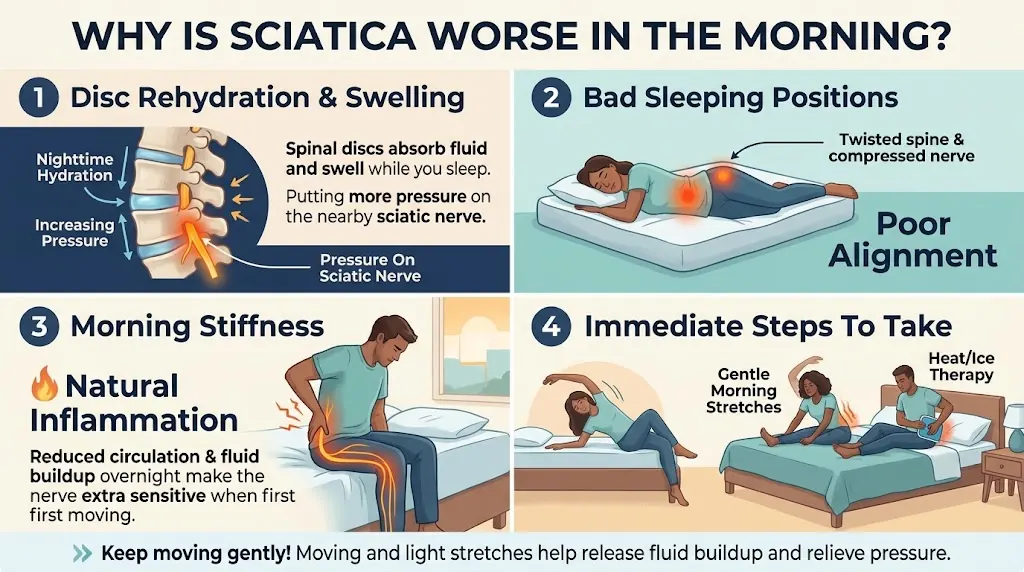
Sciatica may feel worse in the morning because your back and legs have remained in one position for hours, potentially aggravating an already irritated nerve. Sleeping posture, an uncomfortable mattress, and the underlying cause of nerve irritation can all influence how you feel when you wake up.
Common explanations include:
-
Prolonged inactivity: Staying in one position may increase stiffness and make the first movements of the day uncomfortable.
-
Sleep position: Twisting your lower back or placing your hips in an uncomfortable position may aggravate symptoms.
-
Irritated spinal nerves: A herniated disc or narrowing around a nerve root can contribute to pain, tingling, or numbness.
-
Muscle tightness: Muscles around the lower back and hips may feel stiff after several hours of limited movement.
-
An underlying spinal condition: Disc degeneration, spinal stenosis, or other back problems may contribute to recurring morning symptoms.
The pattern matters. Pain that gradually improves with gentle movement may behave differently from pain that becomes progressively worse, persists at rest, or repeatedly interrupts sleep.
What Can Make Morning Sciatica Pain Worse?
Several factors can affect how severe sciatica feels when you wake up. The underlying cause is important because a position that helps one person may aggravate another person’s symptoms.
| Possible cause | How it may affect morning symptoms |
|---|---|
| Herniated disc | A disc pressing on a nerve root may cause shooting leg pain, tingling, or numbness. |
| Spinal stenosis | Narrowing around spinal nerves may cause leg pain or heaviness, particularly with standing or walking. |
| Prolonged sleeping position | Staying twisted or in an uncomfortable position may aggravate back or leg symptoms. |
| Muscle stiffness | Reduced movement overnight may make the lower back feel tight when you first stand. |
| Unsupportive sleep setup | An uncomfortable mattress or poorly positioned pillows may make it harder to find a tolerable position. |
A herniated disc and its possible symptoms can help explain some episodes of sciatica, but not every case involves a disc problem. Similarly, what spinal stenosis feels like can be different from symptoms caused by a herniated disc.
Pain patterns can provide clues, but they cannot establish the cause by themselves.
How Can You Relieve Sciatica Pain After Waking Up?
The goal is to reduce discomfort while gradually returning to normal movement. You do not need to force your back straight or perform intense stretches immediately after waking.
1. Get out of bed gradually
If bending forward to sit up triggers pain, try rolling onto your side first. Move your legs toward the edge of the bed while using your arms to help push your upper body upright.
Pause before standing, especially if you feel unsteady. This approach may make the transition easier if you also experience lower back pain when getting out of bed.
2. Start with gentle movement
Walk slowly around your room or home for a few minutes if you can do so safely. Gentle movement may reduce stiffness after prolonged inactivity.
Avoid forcing deep forward bends, twisting sharply, or stretching through shooting leg pain. If walking consistently aggravates your symptoms, shorten the distance and discuss the pattern with a healthcare professional. You can also explore whether walking helps lower back pain for guidance on adjusting activity.
3. Try comfortable heat or cold
A warm shower or heating pad wrapped in a protective layer may help relax tight muscles. Cold packs may help some people with acute pain, particularly after a recent strain.
| Option | When it may help | Safety considerations |
|---|---|---|
| Gentle heat | Morning stiffness and muscle tightness | Avoid excessive heat and prolonged direct skin contact. |
| Cold pack | Recent irritation or soreness | Wrap it in cloth; never apply ice directly to skin. |
| Neither helps | Pain persists or worsens regardless | Stop ineffective treatments and seek appropriate advice. |
For more guidance, see whether heat or ice is better for back pain. Neither treatment removes pressure on a spinal nerve, and relief varies by person.
4. Adjust your daily routine
Long periods of sitting can aggravate sciatica in some people. Change positions regularly, take short movement breaks, and avoid suddenly returning to strenuous lifting or exercise after a painful morning.
A tailored home-care plan for back pain may help you manage discomfort while maintaining tolerable daily activities. If symptoms repeatedly interfere with walking, work, or sleep, a physical therapist can help identify suitable movements and build a gradual exercise plan.
What Is the Best Sleeping Position for Morning Sciatica?
There is no single sleeping position that works for everyone with sciatica. The most useful position is one that keeps your spine comfortable and does not increase pain, tingling, or numbness in your leg.

Sleeping on your back
Place a pillow beneath your knees to reduce excessive arching in your lower back. Adjust the pillow height until your neck and back feel comfortable.

Sleeping on your side
Bend your knees slightly and place a pillow between them to support your hips. You can try either side and keep the position that feels more comfortable.

Sleeping with slight elevation
Raising your upper body and supporting your knees may help some people, particularly when a slightly bent-forward posture reduces symptoms. This position is not suitable for everyone.
For more detailed positioning advice, see how to sleep with sciatica and the best sleeping positions for lower back pain.
A new mattress is not automatically necessary. Before spending money, try adjusting your pillows and sleep position. If your current mattress is uncomfortable or visibly sagging, comparing options using a guide to the best mattress for back pain may help you make a more informed decision.
Which Exercises Are Safe for Morning Sciatica?
Gentle activity may help, but the right exercises depend on the cause of your symptoms and how your body responds.
Potential starting points include short, comfortable walks, gentle changes between sitting and standing, and movements recommended by a physical therapist. Some people benefit from specific nerve-mobility exercises or spinal movements, while others experience increased leg pain with the same exercises.
Stop a movement if it increases shooting pain, spreads symptoms farther down your leg, or causes new numbness or weakness. Avoid trying to force the nerve to stretch.
A structured guide to exercises for lower back pain can introduce general movement options, but a clinician or physical therapist can help determine which are appropriate for your symptoms.
It is also worth reviewing what to avoid doing with sciatica, especially if certain stretches, heavy lifting, or prolonged positions consistently make your symptoms worse.
How Long Does Morning Sciatica Last?
Morning discomfort may improve after you begin moving, but improvement during the day does not necessarily mean the underlying problem has resolved. Some episodes settle over several weeks, while others persist for months or recur.
The following patterns can help you decide what to monitor:
| Symptom pattern | What it may mean | Sensible next step |
|---|---|---|
| Mild stiffness that improves with movement | Temporary stiffness may contribute | Monitor symptoms and continue comfortable activity. |
| Repeated morning pain with leg tingling | Ongoing nerve irritation is possible | Arrange a clinical assessment if it persists or affects daily life. |
| Pain that increasingly limits walking or sleep | The condition may need reassessment | Seek medical evaluation promptly. |
| New or progressive leg weakness | Possible worsening nerve dysfunction | Obtain urgent medical assessment. |
There is no exact number of days that applies to everyone. If symptoms are not improving over a few weeks, are getting worse, or prevent normal activities, seek medical advice. You can also review how long lower back pain can last before it needs evaluation.
A clinician may assess your strength, sensation, reflexes, movement, and medical history. Imaging is not always needed immediately, but an MRI or other testing may be considered when symptoms or examination findings suggest a more serious problem or when the results would change treatment.
When Should You Worry About Morning Sciatica?
Morning sciatica is not automatically an emergency, but certain symptoms require prompt medical attention. The timing of pain alone is less important than its severity, progression, and associated neurological symptoms.
Symptoms you can usually monitor
If discomfort is mild, improves with gentle movement, and is not accompanied by new weakness or other warning signs, you may be able to monitor it while using conservative self-care. Keep track of how long symptoms last after waking and whether they affect walking, sleep, or everyday activities.
Symptoms that need medical evaluation
Arrange an appointment if pain keeps returning, persists for several weeks, worsens, or interferes with daily activities. New numbness, persistent tingling, or pain that travels farther down the leg also warrants assessment.
If you notice numbness in your foot associated with sciatica, discuss it with a healthcare professional, especially if it is new or worsening. Do not assume that every change in sensation is harmless.
Symptoms requiring urgent or emergency care
Seek emergency care immediately if you develop:
-
New difficulty starting urination, inability to urinate, or loss of bladder control.
-
Loss of bowel control or new numbness around the genitals, inner thighs, or buttocks.
-
Severe or rapidly worsening weakness in one or both legs.
-
Sudden, severe neurological symptoms or sciatica affecting both legs alongside concerning neurological changes.
These can indicate serious nerve compression, including cauda equina syndrome, which requires urgent assessment. New or progressive leg weakness associated with lower back pain should never be ignored.
If symptoms follow a significant accident or injury, or occur with fever or other signs of serious illness, seek prompt medical evaluation. For a more complete guide, see when back pain is an emergency.
Frequently Asked Questions
1. Why is sciatica worse when I first wake up?
Several hours in one position may contribute to stiffness and aggravate an already irritated nerve. Sleep posture and the underlying spinal condition can also affect morning symptoms.
2. Why does my sciatica improve after I walk around?
Gentle movement can reduce stiffness and make it easier to resume normal activities. However, improvement with walking does not identify the cause, and walking should be adjusted if it increases pain or neurological symptoms.
3. Can sleeping on the wrong side make sciatica worse?
It can, particularly if the position twists your back or makes your hips uncomfortable. Try a supported side-lying position or lying on your back with a pillow beneath your knees, and choose the position that reduces symptoms.
4. Is morning sciatica a sign of a herniated disc?
A herniated disc can irritate a nerve root and cause sciatica, but morning pain alone cannot confirm a disc problem. Other spinal conditions and musculoskeletal issues may produce similar symptoms.
5. Should I stretch immediately after waking up?
Gentle movement may help, but aggressive stretching is not necessary and can worsen symptoms in some people. Start slowly and stop if pain travels farther down the leg or new numbness or weakness develops.
6. Is heat or ice better for morning sciatica?
Either may provide temporary relief, depending on your symptoms and preferences. Heat may feel soothing for stiffness, while cold may help some people with recent soreness; neither treats every underlying cause.
7. Can a mattress cause sciatica?
An uncomfortable or sagging mattress may contribute to poor sleep positioning and discomfort, but it does not necessarily cause the nerve problem itself. Try simple adjustments before assuming you need a new mattress.
8. When should I see a doctor for morning sciatica?
Arrange an appointment if pain persists, worsens, repeatedly disrupts sleep, or limits daily activities. Seek urgent care for new weakness or concerning sensory changes, and emergency care for bladder or bowel dysfunction or numbness around the groin.
9. Can morning sciatica last for months?
Yes. Some episodes improve within weeks, while others last longer or recur, depending on the cause and individual circumstances. Persistent symptoms deserve reassessment rather than indefinite reliance on home treatment.
10. Can physical therapy help morning sciatica?
Physical therapy may help improve movement, strength, and tolerance for daily activities through an individualized program. A therapist can select exercises based on your symptoms and modify them if a movement aggravates your leg pain.
Conclusion
Sciatica that feels worse in the morning may be related to prolonged inactivity, sleeping position, or irritation of a nerve in the lower spine. Gentle movement, comfortable sleep positioning, and appropriate activity adjustments may help reduce discomfort, although the best approach depends on the underlying cause.
If your symptoms persist, consider an assessment to determine whether treatment or physical therapy would help. For symptoms that continue for six months, guidance on persistent sciatica and when to seek reassessment may be useful. Seek emergency care for bladder or bowel changes, numbness around the groin, or severe or rapidly worsening weakness.
Disclaimer: This article is provided for educational and informational purposes only.