Spinal stenosis pain can make walking, standing, sleeping, and everyday activities difficult. You may notice aching in your lower back, heaviness in your legs, or tingling that gets worse after walking and eases when you sit down. These symptoms can vary depending on where the spine is narrowed and whether nearby nerves are affected.
Although spinal stenosis can be a long-term condition, pain and mobility limitations may improve with the right combination of activity changes, physical therapy, and medical treatment. Relief is not the same for everyone, and exercises or medications that help one person may not suit another. New or worsening weakness and changes in bladder or bowel function should never be treated as routine pain.
If you are wondering what helps spinal stenosis pain, this guide covers practical home strategies, exercises, treatment options, activities to modify, and signs that mean you should seek medical care. The goal is to help you manage symptoms safely while understanding when professional evaluation is important.
What Helps Spinal Stenosis Pain Most?
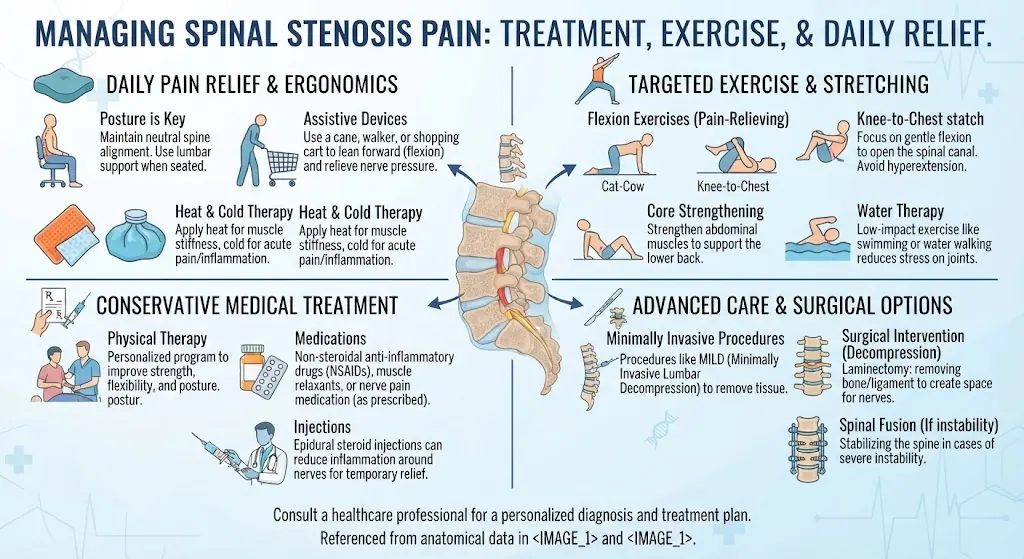
Spinal stenosis pain is often managed with individualized exercise, physical therapy, activity modification, and appropriate pain relief. Treatment depends on the location and severity of narrowing, the symptoms it causes, your overall health, and whether nerve function is changing.
Lumbar spinal stenosis affects the lower back and may cause leg pain or heaviness during standing and walking. Some people feel more comfortable sitting or leaning slightly forward. Cervical stenosis affects the neck and can cause symptoms in the arms, hands, legs, or balance, making medical assessment particularly important when coordination or walking changes.
| Treatment approach | How it may help | Important consideration |
|---|---|---|
| Physical therapy | Builds strength, balance, mobility, and activity tolerance | Exercises should match your symptoms and abilities |
| Activity modification | Reduces repeated triggers without stopping all movement | Avoid prolonged bed rest and unnecessary inactivity |
| Medication | May reduce pain or inflammation in selected cases | Benefits and risks depend on the medicine and your health |
| Heat or cold | May temporarily ease muscle discomfort | Protect skin and avoid excessive temperatures |
| Injections or surgery | May be considered for selected persistent or severe symptoms | Require individualized assessment of benefits and risks |
No single treatment works for everyone, and symptom relief does not necessarily mean the spinal narrowing has disappeared.
Which Exercises Can Help Spinal Stenosis?
Gentle, tailored exercise may improve function and make daily activities easier. For lumbar stenosis, some people tolerate movements that involve slight forward bending better than prolonged back extension. However, the best approach depends on the location of stenosis and whether you have nerve symptoms.
Walking with adjustments
If walking brings on leg pain or heaviness, try shorter, comfortable intervals rather than pushing through worsening symptoms. Rest when needed, choose level surfaces, and consider whether a stationary bike or another supported activity is more tolerable. Stop and seek guidance if exercise causes new weakness, significant numbness, or worsening balance.
Learn more about why spinal stenosis can cause leg pain when walking.
Strengthening and mobility exercises
A physical therapist may recommend exercises for abdominal and hip strength, balance, and comfortable spinal mobility. Depending on your condition, a program might include supported cycling, gentle pelvic movements, or controlled strengthening exercises. Do not force a stretch or continue a movement that sends pain farther down an arm or leg.
General exercises for lower back pain may not all be appropriate for spinal stenosis. A tailored plan is safer than following a routine designed for a different cause of back pain.
How Can You Reduce Spinal Stenosis Pain at Home?
Small changes to how you move, rest, and organize daily tasks may reduce symptom flare-ups. The aim is to stay as active as you safely can while avoiding movements or positions that consistently worsen symptoms.
- Break up standing and walking. Alternate activity with brief seated rests rather than waiting until pain becomes severe. If standing triggers symptoms, review why your lower back hurts after standing for a long time.
- Change positions regularly. Avoid remaining in one position for long periods. Gentle movement breaks may help maintain comfort and function.
- Use heat or cold carefully. A wrapped cold pack may ease soreness, while gentle heat may relax tight muscles. Protect your skin and stop if either worsens discomfort. See guidance on whether heat or ice is better for back pain.
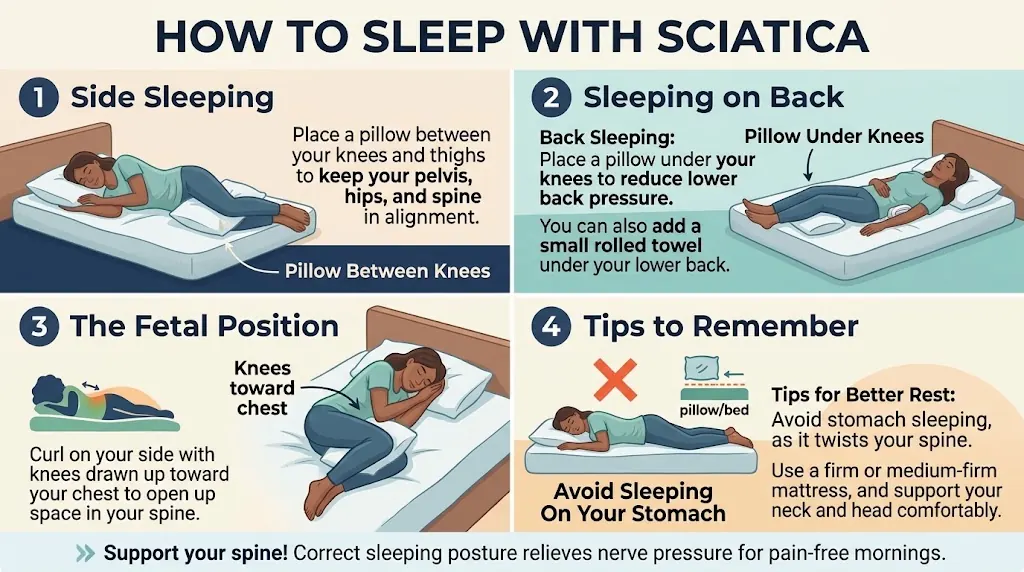
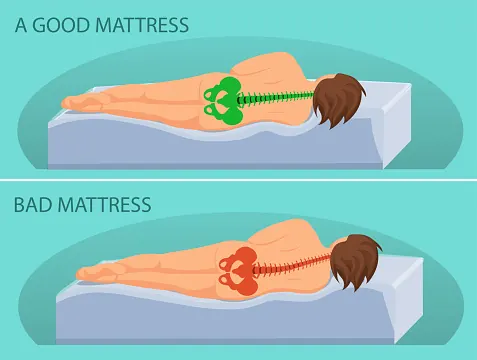
- Adjust sleep positions. Try a comfortable side-lying position with a pillow between your knees, or lie on your back with a pillow under your knees if that feels better. Explore sleeping positions that may ease lower back pain.
- Avoid prolonged bed rest. Rest briefly when symptoms flare, but return to tolerable movement as symptoms allow. Guidance on whether to rest or keep moving with lower back pain can help you discuss an appropriate activity level with a clinician.
For additional home strategies, see how to relieve back pain at home. These measures may reduce discomfort, but they do not reverse the underlying narrowing.
Which Activities Should You Modify?
You do not necessarily need to stop doing the activities you enjoy. Instead, identify the positions and tasks that reliably trigger symptoms, then adapt the duration, intensity, or technique.
| Activity | Practical adjustment | When to stop or seek advice |
|---|---|---|
| Walking or shopping | Use shorter trips, take seated breaks, and consider a supportive cart if appropriate | Stop if leg weakness, numbness, or balance problems increase |
| Housework or gardening | Break tasks into shorter sessions and avoid prolonged awkward positions | Seek advice if symptoms persist or repeatedly flare |
| Exercise or stretching | Begin gently and progress under guidance | Stop movements that worsen radiating pain or neurological symptoms |
| Standing for chores | Sit for selected tasks and change positions often | Get evaluated if standing tolerance is progressively declining |
People with spinal stenosis may find that bending forward slightly is more comfortable, but repeatedly forcing the spine into a bent position is not necessary. A clinician or physical therapist can help identify safe modifications for your particular condition.
What Medical Treatments Are Available?
If home care is not enough, a clinician may recommend physical therapy, medication, or selected procedures. Physical therapy can help improve strength and function even when it does not change the degree of narrowing. Learn about how physical therapy may help lower back pain.
Medication choices require care. Nonsteroidal anti-inflammatory drugs (NSAIDs), such as ibuprofen or naproxen, may be unsuitable for some people because of stomach bleeding, kidney problems, cardiovascular risks, interactions, or other medical conditions. Do not start or combine medicines without checking whether they are appropriate for you.
Injections may provide temporary relief for some people, but results vary and risks should be discussed beforehand. Surgery may be considered when symptoms remain severely limiting despite nonsurgical treatment, or when significant neurological problems develop. The decision depends on the exact location of stenosis, symptom severity, examination findings, and overall health.
When Should You Seek Medical Care?
Arrange a medical appointment if pain is persistent, walking becomes increasingly difficult, symptoms interfere with daily life, or numbness or weakness develops. An evaluation may include a physical and neurological examination; an MRI may be considered when the findings could affect treatment decisions. Read about when lower back pain needs a doctor’s evaluation and what an MRI can show about lower back pain.
Seek emergency care immediately for new loss of bladder or bowel control, difficulty urinating, numbness around the groin or saddle area, or sudden or rapidly worsening leg weakness. These can be signs of serious nerve compression. Review spinal stenosis symptoms that may be an emergency for more warning signs.
Frequently Asked Questions
1. Can spinal stenosis pain improve without surgery?
Yes. Many people manage symptoms with physical therapy, activity adjustments, and appropriate pain management. Surgery is considered when symptoms or neurological problems warrant it, not simply because a scan shows narrowing.
2. Can spinal stenosis get worse over time?
It can, although the course varies. If pain, walking difficulty, numbness, or weakness is progressively worsening, arrange a medical evaluation. More about whether spinal stenosis can worsen over time.
3. What does spinal stenosis pain feel like?
It may cause back or neck discomfort, leg heaviness, tingling, numbness, or weakness. With lumbar stenosis, symptoms may become more noticeable during standing or walking and ease with sitting. See what spinal stenosis can feel like.
4. Is walking good for spinal stenosis?
Walking can help maintain activity, but long periods of walking may trigger symptoms in some people with lumbar stenosis. Shorter intervals, rest breaks, or a stationary bike may be better tolerated. General advice about walking with lower back pain may help you plan activity with professional guidance.
5. What pain relief can I try without medication?
Position changes, pacing, gentle movement, and carefully applied heat or cold may offer temporary relief. They do not treat the narrowing itself, and persistent symptoms deserve assessment. More options are explained in ways to ease lower back pain without medicine.
6. Which exercises should I avoid?
Avoid exercises that consistently worsen radiating pain, numbness, weakness, or balance. The right restrictions depend on your symptoms, so a physical therapist can help you identify safer alternatives. You can also review how to strengthen your lower back safely.
7. How long can spinal stenosis pain last?
Symptoms may persist or fluctuate over months or longer because spinal stenosis can be a chronic condition. The duration depends on the cause, nerve involvement, and response to treatment. Seek evaluation if symptoms are not improving or are limiting daily activities; see how long is too long to have lower back pain.
8. Can sitting relieve spinal stenosis pain?
Some people with lumbar stenosis feel better sitting or leaning forward because the position may reduce pressure around affected nerves. However, prolonged sitting can cause stiffness, so change positions as tolerated.
9. Does spinal stenosis always cause leg numbness?
No. Some people have pain or heaviness without numbness, while others have tingling, sensory changes, or weakness. New or worsening neurological symptoms should be assessed rather than assumed to be a normal part of aging.
10. When is back pain an emergency?
Back pain with new bladder or bowel dysfunction, numbness around the groin, or sudden or progressive severe weakness requires emergency assessment. Severe pain with other concerning symptoms should also be evaluated urgently; review when back pain is an emergency.
Conclusion
Spinal stenosis pain may become more manageable with tailored exercise, activity adjustments, comfortable positioning, and appropriate medical care. Start with movements you can tolerate, avoid pushing through worsening nerve symptoms, and seek professional guidance when pain limits daily life. New bladder or bowel problems, saddle-area numbness, or rapidly worsening weakness require emergency care.
Disclaimer: This article is provided for educational and informational purposes only. It is not a substitute for professional medical advice, diagnosis, or treatment.