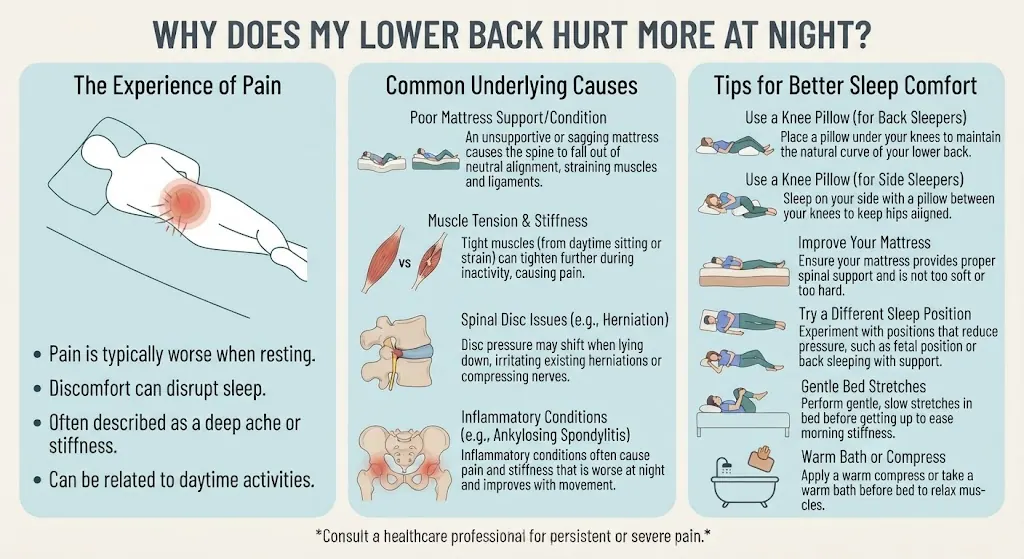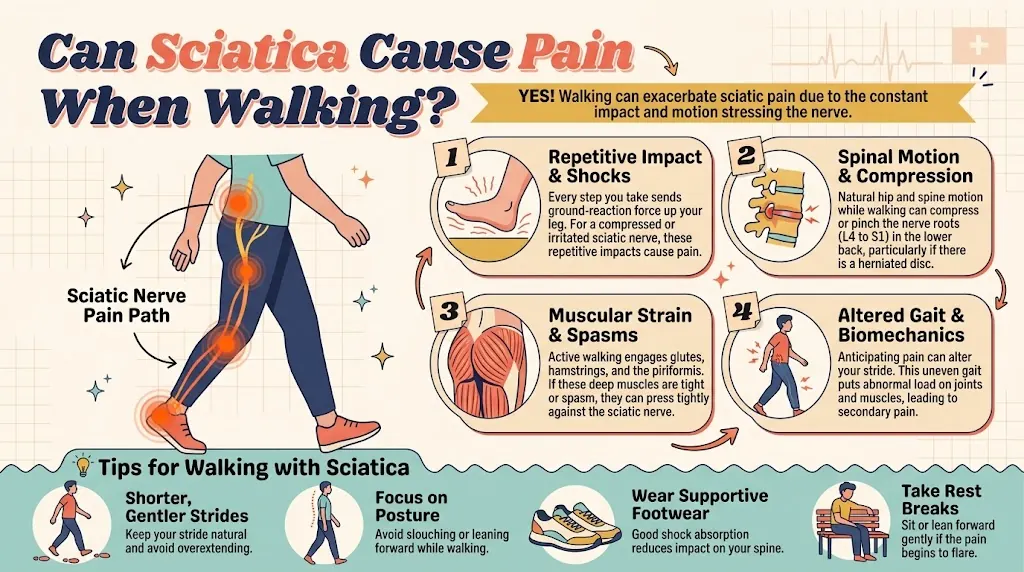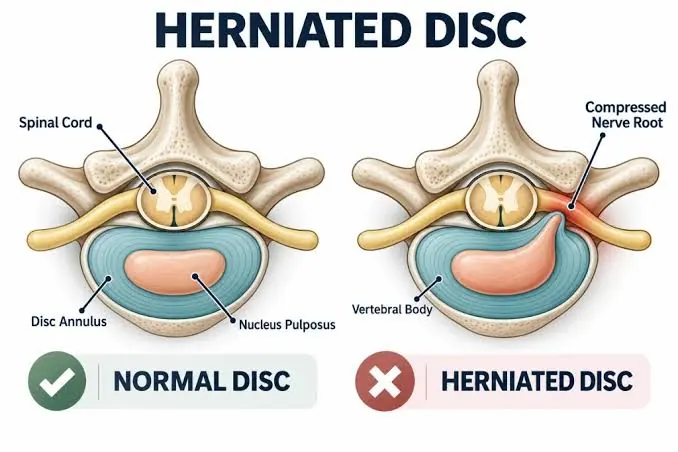
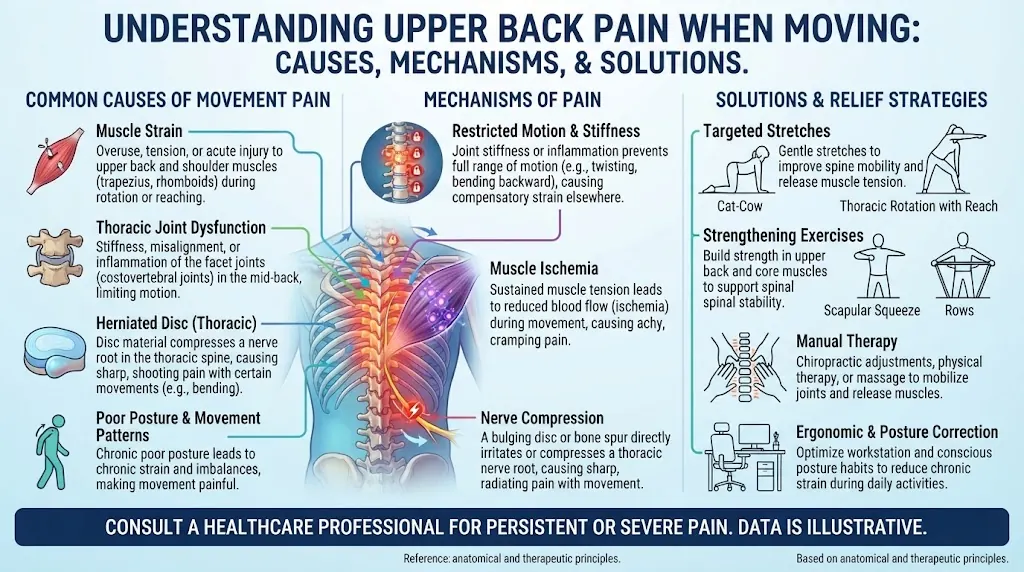
Movement-related pain often comes from muscle strain, joint irritation, or prolonged posture, but the pattern alone cannot identify the cause. Pain that is severe, follows an injury, or occurs with chest discomfort, breathing difficulty, fever, or new weakness should not automatically be blamed on tight muscles.
Understanding why your upper back hurts when you move can help you choose sensible self-care, recognize what may aggravate the pain, and know when to seek medical attention. The location, type of movement that triggers it, and any other symptoms can help guide the next step.
What Causes Upper Back Pain When Moving?
The upper back, also called the thoracic spine, extends from the base of the neck to the bottom of the rib cage. It includes vertebrae, muscles, joints, ligaments, and nerves that work together when you bend, twist, reach, and breathe.
Common causes include:
-
Muscle strain: Lifting, pulling, sudden twisting, exercise, or repetitive reaching can overstretch or irritate muscles. Pain may worsen when you turn, bend, or use the affected muscles.
-
Poor posture or prolonged sitting: Slouching over a phone or computer may increase muscle fatigue and stiffness. Upper back pain from sitting at a desk may improve when you change position and take regular movement breaks.
-
Joint irritation: Small joints in the thoracic spine or where the ribs connect to the spine can become painful during rotation or extension.
-
Rib or shoulder blade problems: Discomfort may be felt near the ribs or between the shoulder blades, particularly when twisting, reaching, or taking a deep breath. See the possible causes of pain between the ribs and spine.
-
Nerve irritation or spinal conditions: These are less common explanations for movement-related upper back pain but may need evaluation, especially when pain is persistent or accompanied by tingling, numbness, or weakness.
Other health conditions can sometimes cause upper back discomfort. For a broader overview, explore what causes back pain.
What Does Movement-Related Upper Back Pain Feel Like?
The type of movement that triggers pain can offer clues, although it cannot confirm a diagnosis.
| Pain pattern | Possible explanation | What to notice |
|---|---|---|
| Pain when twisting or reaching | Muscle strain or joint irritation | Whether one direction hurts more |
| Stiffness after sitting | Muscle fatigue or posture-related discomfort | Whether changing position helps |
| Pain when lifting an arm | Muscle, shoulder blade, or shoulder-related issue | Whether the shoulder itself also hurts |
| Pain with deep breathing or coughing | Rib or chest-wall irritation, among other causes | Whether breathing feels difficult or chest symptoms occur |
| Burning pain, tingling, or numbness | Possible nerve irritation | Where symptoms travel and whether weakness develops |
Pain between the shoulder blades during movement may have several causes. If that is your main symptom, see why your back hurts between the shoulder blades when you move.
Why Does It Hurt More When I Twist, Bend, or Reach?
Twisting and reaching require the upper-back muscles and joints to coordinate while the rib cage moves. If a muscle is strained or a joint is irritated, these movements may reproduce pain. Bending forward can also stretch sensitive tissues, while arching backward may place pressure on irritated joints.
Pain that changes with posture can be musculoskeletal, but movement-related pain is not proof that the cause is harmless. For example, pain with a deep breath can involve the ribs or chest wall, but it may also occur with lung or other chest conditions. Read about upper back pain when breathing if breathing changes your symptoms.
The timing can be useful, too. Pain that begins after unusual lifting or exercise may fit a strain, while recurring discomfort after sleep may relate to position or stiffness. Upper back pain after sleeping has different possible triggers from pain that develops during desk work.
What Can Make Upper Back Pain Worse?
Common aggravating factors include repeated twisting, heavy lifting, reaching overhead, remaining in one position for too long, and returning to strenuous exercise before symptoms settle. Poorly supported sitting may contribute to stiffness, but posture is only one possible factor—not a diagnosis.
| Trigger | Practical adjustment |
|---|---|
| Twisting or reaching | Turn your whole body instead of forcing a painful twist |
| Heavy lifting | Reduce the load and keep objects close to your body |
| Long periods at a desk | Change position regularly and take short movement breaks |
| Exercise that reproduces sharp pain | Pause or modify the movement rather than pushing through |
| Sleeping in a position that aggravates pain | Try a comfortable, supported position and adjust as needed |
You do not usually need complete bed rest for uncomplicated muscle-related pain. Gentle movement within a tolerable range can help maintain mobility. For guidance on choosing between activity and rest, see whether you should rest or keep moving with back pain.
How Can You Relieve Upper Back Pain at Home?
If the pain is mild, began after ordinary activity, and there are no warning signs, try these measures:
-
Keep moving gently. Take short walks and change position regularly. Avoid movements that cause sharp, escalating pain.
-
Try heat or ice. A wrapped cold pack may help after a recent strain; gentle heat may ease stiffness. Apply for around 15–20 minutes at a time, protect your skin, and stop if discomfort increases. Compare heat or ice for back pain.
-
Adjust your workstation. Keep your screen near eye level, support your arms, and avoid holding your neck or shoulders in one position for long periods. Poor posture and upper back pain may be relevant if symptoms build during desk work.
-
Avoid aggressive stretching. Do not force twisting, deep backbends, or stretches that reproduce sharp pain. If you try gentle mobility exercises, stop if symptoms spread or worsen.
-
Consider nonprescription medication cautiously. Some people use over-the-counter pain relievers, but these are not suitable for everyone. Follow the label and ask a pharmacist or clinician if you have other medical conditions, take other medicines, or are unsure what is safe.
For more general self-care strategies, review how to relieve back pain at home.
When Might You Need Professional Treatment?
Arrange a medical evaluation if the pain is severe, keeps returning, interferes with normal activities, or is not improving over several days to a couple of weeks. Seek advice sooner if it began after a fall, crash, or other significant injury, or if you have osteoporosis, a history of cancer, fever, or unexplained weight loss.
A clinician may ask which movements trigger the pain, examine your spine and shoulders, and check strength, sensation, and breathing-related symptoms. Imaging is not always needed for uncomplicated pain; it depends on the history and examination. If symptoms persist, what type of doctor to see for back pain can help you understand your options.
Warning Signs: When Is Upper Back Pain Serious?
| Symptom pattern | What to do |
|---|---|
| Mild pain after activity that gradually improves | Monitor symptoms and use gentle self-care |
| Pain that persists, recurs, or limits movement | Arrange a medical evaluation |
| Upper back pain with fever, unexplained weight loss, or significant injury | Seek prompt medical assessment |
| Sudden or severe chest or upper-back pain, trouble breathing, fainting, or cold sweats | Call 911 or seek emergency care |
| New weakness, difficulty walking, or rapidly worsening numbness | Seek urgent medical care |
Do not assume upper back pain is muscular if it occurs with chest pressure or breathing difficulty. Some heart and lung emergencies can cause pain in the back. Review when back pain is an emergency and seek emergency care for concerning symptoms.
Frequently Asked Questions
1. Why does my upper back hurt when I move but not when I rest?
Muscle strain or joint irritation may hurt mainly during movement because the affected tissues are being loaded. Persistent or worsening pain still deserves evaluation.
2. Why does my upper back hurt when I turn my body?
Turning activates muscles and joints around the thoracic spine and ribs. Pain during rotation may reflect irritation in these structures, but the cause cannot be confirmed from this symptom alone.
3. Can tight muscles cause upper back pain?
Yes. Tight or strained muscles can cause soreness, stiffness, and discomfort with reaching or twisting. Upper back tightness may also have other causes if it persists.
4. Why does my upper back hurt between my shoulder blades?
Muscle strain, posture-related fatigue, and joint irritation are possible causes. Pain between the shoulder blades that is severe or accompanied by chest symptoms needs medical attention.
5. Can rib problems cause upper back pain when moving?
Yes. The ribs connect with the thoracic spine, so irritation around these joints or the surrounding muscles can hurt during twisting or deep breathing. Pain around the ribs and back can have other causes, too.
6. Can stress make upper back pain worse?
Stress may increase muscle tension and affect how strongly pain is felt. It should not be assumed to be the cause of new, severe, or unexplained pain.
7. Should I stretch when my upper back hurts?
Gentle movement may help, but avoid forcing a stretch or continuing through sharp pain. Stop if the pain worsens, spreads, or causes tingling or weakness.
8. Can upper back pain come from the spine?
Yes. Joints, discs, nerves, and other structures in the thoracic spine can contribute to pain. Learn more about thoracic back pain causes and treatment.
9. Can back problems cause chest pain?
Some spinal or chest-wall conditions can cause discomfort around the chest, but chest pain can also signal a serious medical problem. Read about chest pain caused by back problems, and call 911 for sudden chest pain with breathing difficulty, fainting, or cold sweats.
10. When should I see a doctor for upper back pain?
Seek care if the pain is severe, worsening, recurrent, or interfering with daily activities, or if it follows a significant injury. Get urgent help for new neurological symptoms or pain with serious chest or breathing symptoms.
The Bottom Line
Upper back pain that worsens with movement often involves muscles, joints, ribs, or posture, but symptoms alone cannot establish the cause. Modify painful activities, keep movement gentle, and use heat or ice if helpful. Seek medical evaluation for persistent or worsening pain, and emergency care for severe chest symptoms, breathing difficulty, or other warning signs.
Disclaimer: This article is provided for educational and informational purposes only.