It is understandable to worry that spinal stenosis will inevitably lead to disability or surgery. However, worsening is not guaranteed, and the severity of symptoms does not always match the amount of narrowing seen on an MRI. New weakness, changes in bladder or bowel control, or numbness around the groin require particular attention.
Understanding how spinal stenosis progresses can help you recognize changes, make informed decisions about daily activity, and know when to seek medical care. This guide explains common progression patterns, factors that may aggravate symptoms, treatment options, and warning signs that should not be ignored.
Does Spinal Stenosis Usually Get Worse With Age?
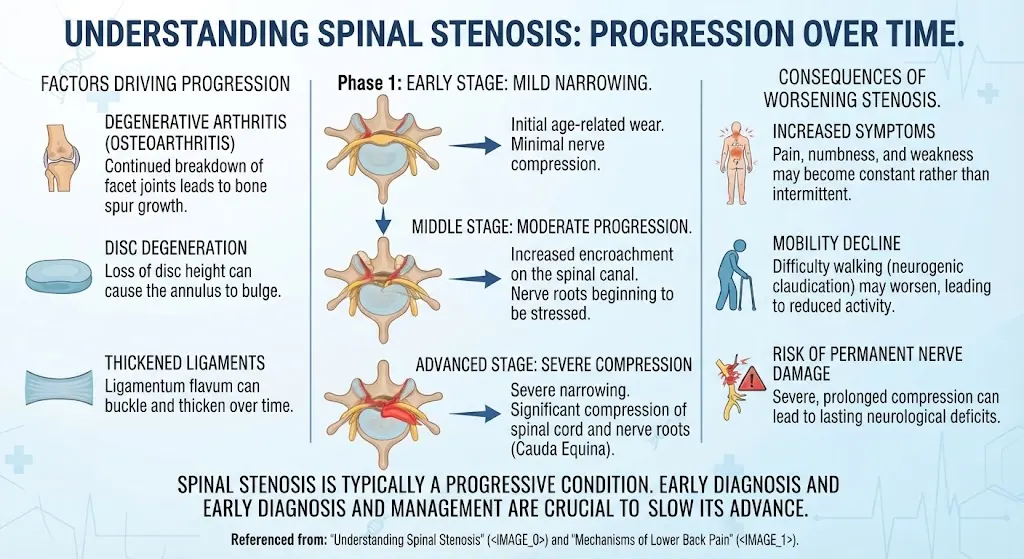
Spinal stenosis often develops through age-related changes in the spine, including disc degeneration, thickened ligaments, and arthritis affecting the small spinal joints. These changes can gradually reduce the space available for the spinal cord or nearby nerves.
However, anatomical narrowing and worsening symptoms are not the same thing. Some people have substantial narrowing but few symptoms, while others experience significant nerve-related pain with less obvious changes on imaging. The location of the narrowing, nerve involvement, general health, and activity demands all influence how the condition affects daily life.
For a clearer picture of typical symptoms, see what spinal stenosis feels like.
What Are the Signs That Spinal Stenosis Is Getting Worse?
Progression may show up as changes in function rather than a constant increase in back pain. Symptoms worth monitoring include:
-
Leg pain, tingling, or numbness that occurs more frequently.
-
Needing to stop and rest after walking shorter distances.
-
Increasing heaviness or weakness in one or both legs.
-
Greater difficulty standing upright for everyday tasks.
-
Reduced balance or more frequent trips and falls.
-
Symptoms that interfere increasingly with sleep, work, or personal care.
Lumbar spinal stenosis can cause nerve-related symptoms that become more noticeable during standing or walking and improve when sitting or bending forward. This pattern is sometimes called neurogenic claudication. Learn more about why spinal stenosis causes leg pain when walking.
These symptoms do not automatically mean the spinal canal has narrowed further. A clinician may need to assess nerve function and consider other possible causes.
How Quickly Can Spinal Stenosis Progress?
There is no reliable timeline for everyone. Symptoms may remain stable for years, gradually become more limiting, or vary from week to week. Research suggests that many people with mild to moderate lumbar spinal stenosis do not experience rapid neurological decline.
A 2017 observational study followed 146 people with lumbar spinal stenosis who were not initially advised to have surgery. After a median follow-up of 3.3 years, leg pain had worsened in 13% and back pain in 10%; more participants reported improvement or no meaningful change. These results apply to that particular group and should not be used to predict an individual outcome.
| Possible course | What it may look like |
|---|---|
| Stable symptoms | Pain and walking ability remain relatively similar |
| Gradual progression | Walking tolerance decreases or numbness becomes more frequent |
| Fluctuating symptoms | Better and worse days depending on activity and other factors |
| Improvement | Pain or daily function improves with time or treatment |
The key takeaway is that spinal stenosis can progress, but deterioration is not inevitable. The research on whether spinal stenosis gets worse over time should be interpreted alongside symptoms, physical function, and clinical findings.
What Can Make Spinal Stenosis Symptoms Worse?
Age-related changes can gradually reduce the space around spinal nerves, but symptoms can also worsen temporarily without a major structural change.
| Factor | Why it may matter |
|---|---|
| Prolonged standing or walking | May increase nerve-related leg pain or heaviness |
| Leaning backward | Can further reduce available space in some areas of the lumbar spine |
| Reduced physical activity | May contribute to weakness and lower exercise tolerance |
| Arthritis or disc changes | Can contribute to narrowing and nerve irritation |
| Other health conditions | Hip problems, circulation disorders, or peripheral nerve conditions can create similar symptoms |
For some people, sitting or leaning slightly forward provides relief. Others may find that specific movements or prolonged positions aggravate discomfort. If symptoms appear mainly when standing, understanding why lower back pain develops after standing for a long time may help you identify activity patterns worth discussing with a clinician.
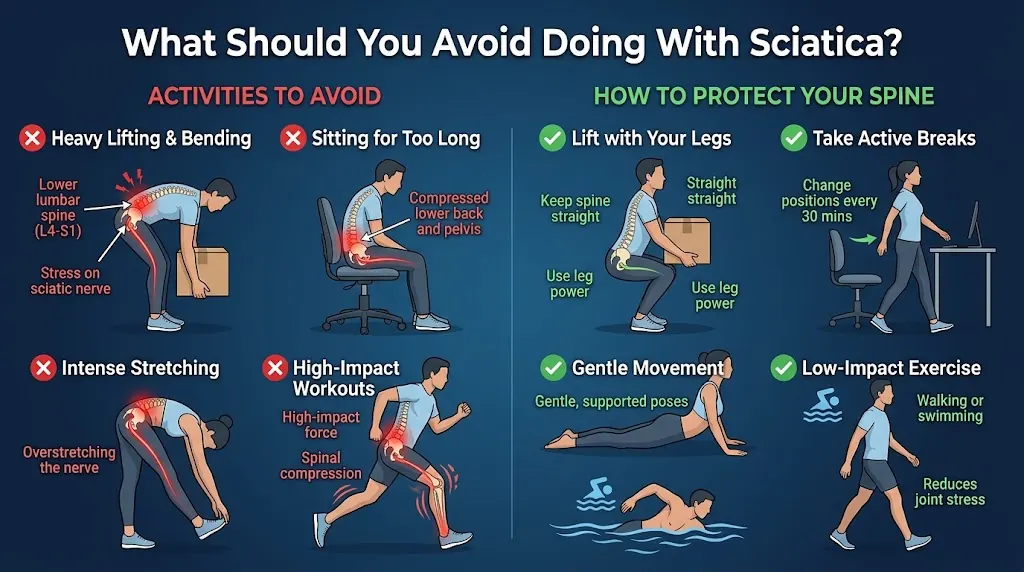
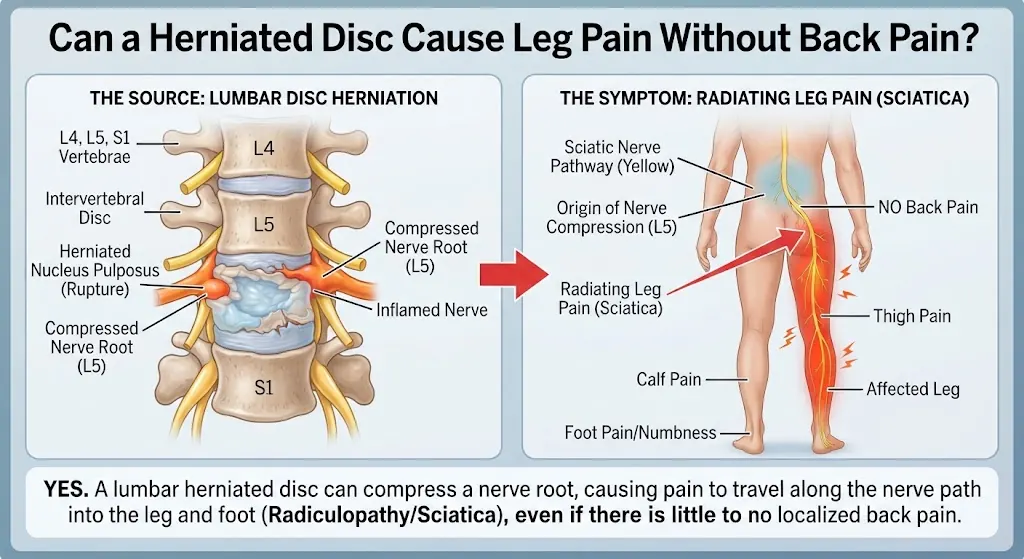
Spinal stenosis can also overlap with sciatica, although the conditions are not identical. The guide to spinal stenosis versus sciatica explains how their symptoms may differ.
How Can You Manage Spinal Stenosis and Reduce Flare-Ups?
Treatment aims to ease symptoms, maintain mobility, and protect nerve function. It cannot always reverse the narrowing itself.
Stay active within your limits
Shorter walks, regular position changes, and low-impact activities may be more manageable than pushing through prolonged standing or walking. If walking triggers symptoms, try shorter intervals with seated breaks rather than forcing yourself to continue.
A physical therapist can tailor movement and strengthening to your symptoms. Explore exercises for lower back pain and how physical therapy may help lower back pain. Stop an exercise that causes new weakness, increasing numbness, or severe pain.
Use home measures carefully
Some people find temporary relief with a comfortably warm heating pad, supported sleeping positions, or activity adjustments. Learn about choosing heat or ice for back pain and sleeping positions that may ease lower back pain.
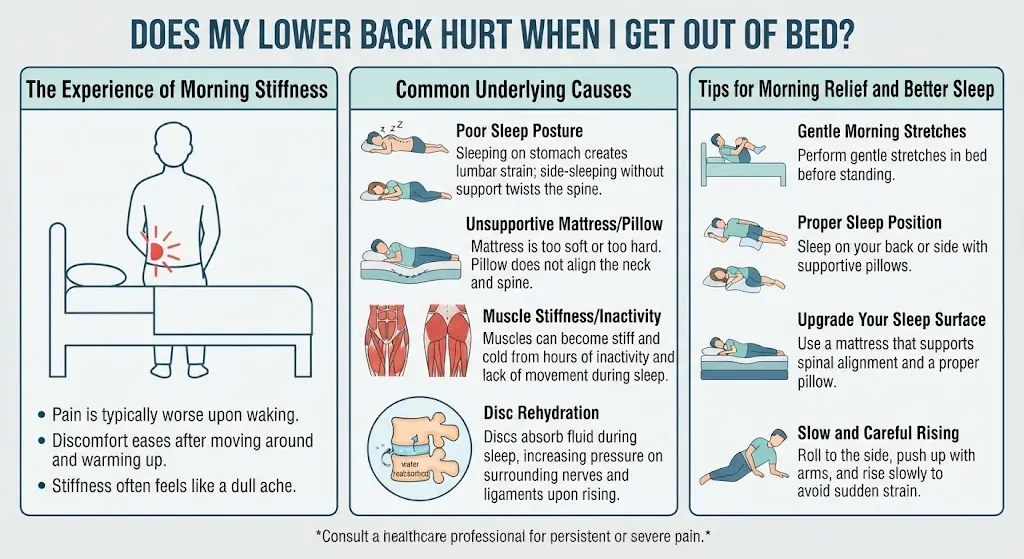
Avoid assuming that complete bed rest will help. Gentle movement is generally preferable when tolerated, but activities should be adjusted if they consistently worsen leg symptoms. Practical options include ways to relieve back pain at home and whether to rest or keep moving with lower back pain.
Discuss medical treatment when symptoms persist
A clinician may recommend physical therapy, medication based on your medical history, or selected injections for symptom relief. These options have limitations and do not guarantee that stenosis will stop progressing. Surgery may be considered when pain or walking limitations remain substantial despite nonsurgical care, or when neurological problems require decompression.
How Is Worsening Spinal Stenosis Evaluated?
Evaluation typically includes a review of symptoms, walking tolerance, strength, sensation, reflexes, and balance. An MRI may help identify narrowing and nerve compression when imaging is clinically appropriate. However, scan findings alone cannot establish how severely someone is affected.
| Assessment | What it helps clarify |
|---|---|
| Symptom history | Whether pain, numbness, or walking limitations are changing |
| Neurological examination | Whether there are changes in strength, sensation, or reflexes |
| MRI or other imaging | Where narrowing or nerve compression may be present |
| Review of other conditions | Whether another problem could explain the symptoms |
Read about what an MRI can show about lower back pain and when to see a doctor for lower back pain. Seek reassessment if you notice steadily declining walking ability, new weakness, or symptoms that increasingly interfere with daily activities.
Warning Signs: When Is Spinal Stenosis Serious?
Symptoms that can usually be monitored: Familiar, mild symptoms that settle with rest and have not changed significantly may be tracked while following an agreed care plan.
Symptoms needing prompt medical evaluation: Increasing numbness, new or worsening leg weakness, repeated falls, or a noticeable decline in walking ability should be assessed promptly.
Symptoms requiring emergency care: New loss of bladder or bowel control, difficulty starting urination or inability to empty the bladder, numbness around the groin or inner thighs, or rapidly progressing weakness can indicate serious nerve compression. Seek emergency care rather than waiting for a routine appointment. Review when spinal stenosis is an emergency and warning signs that make back pain an emergency.
Frequently Asked Questions
1. Can spinal stenosis get worse suddenly?
Symptoms can flare suddenly, but that does not always mean the narrowing has rapidly progressed. Sudden weakness, bladder or bowel changes, or groin numbness require emergency evaluation.
2. Can spinal stenosis improve without surgery?
Yes. Some people with mild to moderate symptoms improve or remain stable with nonsurgical care. Improvement in symptoms does not necessarily mean the spinal canal has widened.
3. Does everyone with spinal stenosis eventually need surgery?
No. Surgery is not inevitable, and many people manage symptoms without an operation. The decision depends on function, symptom severity, examination findings, and response to treatment.
4. Can walking make spinal stenosis worse?
Walking may trigger leg pain, tingling, or heaviness, particularly with lumbar stenosis. Shorter distances, rest breaks, or a comfortable forward-leaning position may help some people.
5. Does spinal stenosis always cause back pain?
No. Some people mainly experience leg symptoms, numbness, or reduced walking tolerance. Others have back pain alongside nerve-related symptoms.
6. Can exercise stop spinal stenosis from progressing?
Exercise has not been shown to reliably reverse spinal narrowing or stop all structural changes. Appropriate activity can help maintain strength, mobility, and daily function.
7. When should I get another MRI?
Repeat imaging is not automatically needed at set intervals. A clinician may recommend it if symptoms change significantly, new neurological findings develop, or imaging would influence treatment decisions.
8. Is numbness a sign that spinal stenosis is getting worse?
New or increasing numbness can indicate nerve involvement, but it does not prove that the narrowing has progressed. Persistent or worsening numbness deserves medical assessment, especially if accompanied by weakness.
9. Can spinal stenosis cause permanent nerve damage?
Severe or prolonged nerve compression can sometimes cause lasting neurological problems. This is not inevitable, but new bladder or bowel dysfunction, groin numbness, or rapidly worsening weakness needs emergency care.
10. How do I know whether my spinal stenosis treatment is working?
Look for meaningful changes in walking distance, pain, sleep, balance, and ability to complete daily tasks. Discuss ongoing limitations or worsening symptoms with your clinician, even if treatment initially helped.
Conclusion
Spinal stenosis can worsen over time, but many people experience stable or fluctuating symptoms rather than inevitable decline. Monitor changes in walking ability, strength, and sensation; stay active within comfortable limits; and seek medical guidance when symptoms persist or progress. Emergency neurological warning signs should never be ignored.
Disclaimer: This article is provided for educational and informational purposes only.