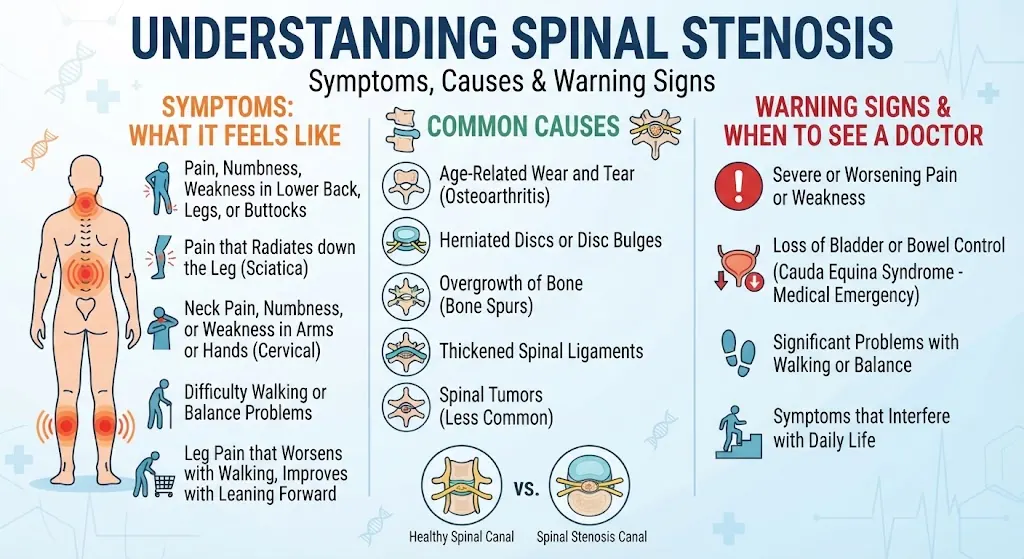
Spinal stenosis occurs when spaces within the spine narrow and may put pressure on the spinal cord or nearby nerves. Symptoms can include back pain, leg pain, tingling, numbness, or difficulty walking. Many people manage these symptoms without emergency treatment, but certain changes—especially new bladder problems or rapidly worsening weakness—can signal serious nerve compression.
It can be difficult to know whether worsening pain is part of an existing condition or a medical emergency. Pain intensity alone does not reliably indicate how serious the problem is. New neurological symptoms, changes in walking ability, and problems controlling bladder or bowel function are particularly important to recognize.
This guide explains when spinal stenosis needs emergency care, which symptoms warrant prompt medical evaluation, and what to expect during assessment. If you currently have new loss of bladder or bowel control, numbness around the groin, or rapidly progressing leg weakness, seek emergency medical care now rather than waiting to finish reading.
When Is Spinal Stenosis a Medical Emergency?
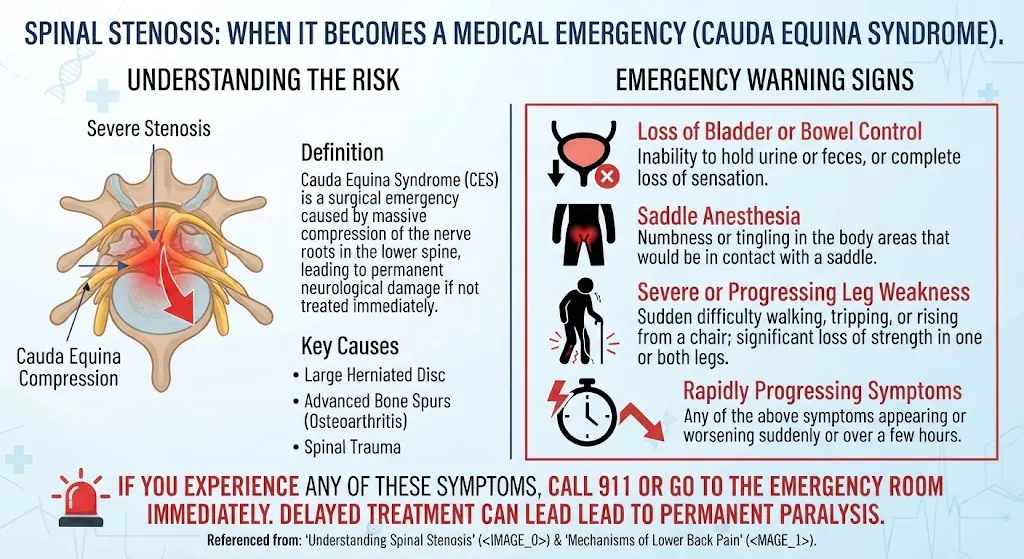
Spinal stenosis is an emergency when it causes signs of serious nerve or spinal cord compression. These may include new bladder or bowel dysfunction, numbness in the saddle area, or rapidly worsening weakness. Prompt treatment may be necessary to reduce the risk of lasting neurological damage.
Lumbar spinal stenosis affects the lower back and may cause pain, heaviness, or numbness in the legs, particularly while standing or walking. Cervical stenosis affects the neck and can put pressure on the spinal cord, potentially affecting hand coordination, balance, and walking.
The usual symptoms of stenosis are not automatically emergencies. However, a sudden change from your usual pattern deserves careful attention. Learn about what spinal stenosis feels like and how symptoms may differ from sciatica versus spinal stenosis.
Seven Warning Signs You Should Never Ignore
Seek emergency medical care if you develop any of the following symptoms, particularly if they are new or worsening:
- New loss of bladder control: You cannot control urination or experience unexpected leakage alongside neurological symptoms.
- Difficulty urinating: You cannot start urinating, cannot empty your bladder, or notice a new loss of bladder sensation.
- Loss of bowel control: You develop new bowel incontinence or lose sensation when passing stool.
- Numbness around the groin or buttocks: This includes the inner thighs and the area that would contact a saddle.
- Rapidly worsening leg weakness: Your legs give way, your foot begins dragging, or standing becomes suddenly difficult.
- Sudden major changes in walking or balance: You become unable to walk safely or experience a marked loss of coordination.
- New neurological symptoms after an injury: Significant neck or back pain with weakness, numbness, or difficulty walking after a fall or collision needs urgent assessment.
These symptoms can indicate severe nerve compression or another serious condition. One important cause is cauda equina syndrome, in which nerves at the bottom of the spinal canal become compressed. It requires emergency evaluation because delayed treatment can lead to lasting bladder, bowel, sexual, or leg-function problems.
Not every symptom has the same cause, and these signs do not prove that spinal stenosis is responsible. The important point is to seek urgent assessment rather than trying to diagnose the cause at home. For additional guidance, see when back pain is an emergency.
Emergency Symptoms vs. Symptoms That Need a Doctor Soon
| Symptom pattern | Recommended response |
|---|---|
| Familiar, mild leg discomfort that settles with rest | Monitor and follow your existing care plan |
| Gradually worsening walking tolerance or recurring numbness | Arrange a prompt medical appointment |
| New or progressive weakness, repeated falls, or worsening balance | Seek urgent medical assessment; use emergency care if sudden or severe |
| New bladder or bowel dysfunction, saddle numbness, or rapidly progressing weakness | Go to an emergency department immediately |
| Neck symptoms with sudden coordination loss or major walking difficulty | Seek emergency assessment |
Do not wait for every warning sign to appear. For example, cauda equina syndrome may begin with changes in bladder sensation or difficulty urinating before complete loss of control develops.
If you are uncertain where to go, understand the difference between urgent care, the ER, and a doctor’s office for back pain. Suspected serious nerve compression should be assessed in an emergency department.
Can Spinal Stenosis Get Worse Suddenly?
Spinal stenosis often develops gradually as discs, joints, and ligaments change with age. Symptoms may fluctuate with standing, walking, or other activities. However, sudden neurological deterioration can occur and should not be dismissed as an ordinary flare-up.
| Change | What it may mean |
|---|---|
| Leg discomfort after walking that improves with sitting | A common pattern in lumbar stenosis |
| Shorter walking distances over weeks or months | Possible worsening function that warrants reassessment |
| New weakness or rapidly increasing numbness | Possible significant nerve involvement |
| New bladder or bowel dysfunction or saddle numbness | Possible emergency nerve compression |
Symptoms alone cannot confirm whether the spinal canal has narrowed further. Read about whether spinal stenosis can get worse over time. Any sudden loss of function should be assessed according to its severity, regardless of what an earlier scan showed.
What Should You Do If You Suspect an Emergency?
If you notice emergency warning signs:
- Seek emergency care immediately. Call 911 in the United States if you cannot travel safely or have severe, rapidly progressing symptoms.
- Do not drive yourself if leg weakness, numbness, or loss of coordination makes driving unsafe.
- Avoid strenuous exercise, forceful stretching, or spinal manipulation while awaiting assessment.
- Tell the medical team when symptoms began, how quickly they changed, and whether bladder, bowel, groin sensation, or walking ability has changed.
- Bring a medication list and previous imaging reports if readily available, but do not delay care to collect them.
Do not rely on pain medicine, rest, or home remedies to see whether new neurological symptoms disappear. If symptoms are not an emergency but keep interfering with daily life, a clinician can assess whether treatment needs to change. Options may include treatment approaches for spinal stenosis pain.
How Do Doctors Evaluate Possible Severe Spinal Stenosis?
Evaluation usually starts with questions about symptom onset and changes in bladder function, bowel control, sensation, strength, and walking. A neurological examination may assess muscle strength, reflexes, sensation, and coordination.
When serious compression is suspected, urgent MRI imaging may be needed to identify the affected area and guide treatment. Imaging is interpreted alongside symptoms and examination findings because narrowing on a scan does not always explain every symptom. Depending on the cause and severity, treatment may involve urgent specialist assessment and, in some cases, surgery to relieve pressure on nerves.
Frequently Asked Questions
1. Can spinal stenosis cause paralysis?
Severe spinal cord or nerve compression can cause major weakness and, in some circumstances, lasting disability. Paralysis is not an inevitable outcome of spinal stenosis, but sudden or progressive weakness requires urgent assessment.
2. Is leg numbness from spinal stenosis always an emergency?
No. Stable numbness may occur with nerve compression and should be discussed with a clinician. New, rapidly worsening, or widespread numbness—especially with weakness or bladder and bowel changes—requires urgent evaluation.
3. Can spinal stenosis cause bladder problems?
Severe compression of nerves controlling the bladder can cause difficulty urinating, loss of bladder sensation, or incontinence. New bladder dysfunction with back or leg symptoms should be treated as an emergency.
4. What does saddle numbness feel like?
Saddle numbness is reduced sensation around the groin, genitals, inner thighs, or buttocks. It may feel like the area is numb when wiping or sitting and requires emergency assessment if new.
5. Should I go to the ER for worsening back pain?
Severe pain alone does not always mean an emergency, but sudden severe pain with new weakness, numbness around the groin, bladder or bowel changes, or major walking difficulty does. Seek urgent medical care when these warning signs occur.
6. Can spinal stenosis become an emergency without severe pain?
Yes. Serious nerve compression may cause changes in bladder function, sensation, strength, or coordination without extreme pain. Neurological changes should not be judged by pain intensity alone.
7. Does everyone with severe spinal stenosis need surgery?
No. Treatment depends on symptoms, neurological findings, imaging, overall health, and response to other care. Emergency compression may require urgent surgical evaluation, while many non-emergency cases are managed without surgery.
8. Can an MRI show whether spinal stenosis is dangerous?
MRI can show narrowing and possible nerve or spinal cord compression, but it cannot determine urgency by itself. Symptoms and examination findings help clinicians decide how quickly treatment is needed.
9. Should I keep exercising if my spinal stenosis symptoms worsen?
Do not push through new weakness, significant numbness, loss of balance, or other neurological changes. Stop the activity and seek appropriate medical assessment; emergency symptoms require immediate care.
10. When should I contact my doctor about spinal stenosis?
Contact your clinician if walking becomes more difficult, numbness increases, pain increasingly limits daily activities, or your usual treatment stops helping. New bladder or bowel dysfunction, saddle numbness, or rapidly worsening weakness requires emergency care instead of a routine appointment.
Conclusion
Spinal stenosis does not always require emergency treatment, but new neurological symptoms can signal serious nerve compression. Bladder or bowel dysfunction, saddle numbness, and rapidly worsening weakness are key warning signs. Seek emergency care for these symptoms, and arrange medical reassessment for gradually worsening pain, numbness, balance, or walking ability.
Disclaimer: This article is provided for educational and informational purposes only.