Not everyone with spinal stenosis has symptoms, and back or leg pain does not automatically mean the spine is narrowed. Similar symptoms can occur with a herniated disc, arthritis, or other nerve-related conditions. However, new weakness, worsening balance, or changes in bladder or bowel control should never be dismissed as ordinary back pain.
Spinal stenosis is a narrowing of the spaces within the spine that can put pressure on the spinal cord or nerve roots. This guide explains what spinal stenosis may feel like, why symptoms occur, what can make them worse, which treatments may help, and when medical attention is necessary.
What Does Spinal Stenosis Feel Like?
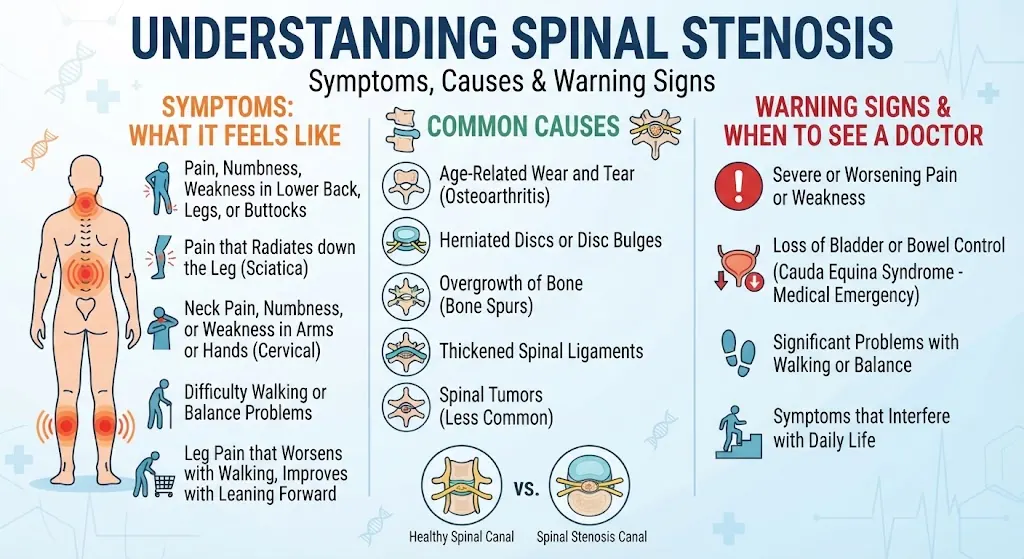
The most common symptoms depend on whether narrowing affects the lower back (lumbar spine) or neck (cervical spine). Lumbar stenosis often affects the buttocks and legs, while cervical stenosis may cause neck discomfort, hand symptoms, or problems with walking and coordination.
| Symptom | What it may feel like | Possible pattern |
|---|---|---|
| Lower back pain | Aching, stiffness, or pressure | May worsen with prolonged standing |
| Leg pain or heaviness | Tired, aching, cramping, or burning legs | May develop while walking |
| Tingling or numbness | Pins and needles or reduced sensation | May affect legs, feet, hands, or arms, depending on location |
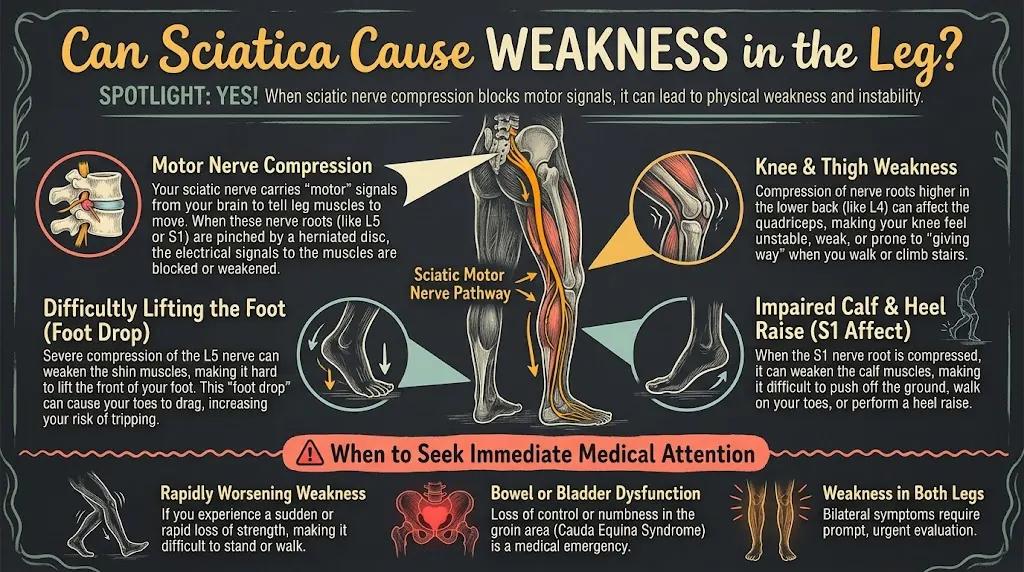
| Weakness or balance changes | Legs feel unreliable or walking becomes difficult | May indicate nerve involvement requiring evaluation |
These symptoms are not unique to spinal stenosis. For example, lower back pain and leg numbness can also occur with other causes of nerve compression. Similarly, lower back pain and leg weakness may signal a problem that needs prompt medical assessment.
What Causes Spinal Stenosis Symptoms?
Spinal stenosis commonly develops as age-related changes affect the spine. Arthritis can enlarge joints, ligaments can thicken, and discs can bulge, reducing the space available for nerves. Less commonly, stenosis may be associated with a naturally narrow spinal canal, an injury, or another spinal condition.
The narrowing itself does not always cause pain. Symptoms are more likely when nerves become compressed or irritated. This helps explain why two people with similar imaging findings may experience very different levels of discomfort.
A herniated disc and its symptoms can overlap with spinal stenosis. Spinal arthritis causing lower back pain is another possible source of discomfort, although symptoms alone cannot identify the cause.
Why Does Spinal Stenosis Hurt More When Walking or Standing?
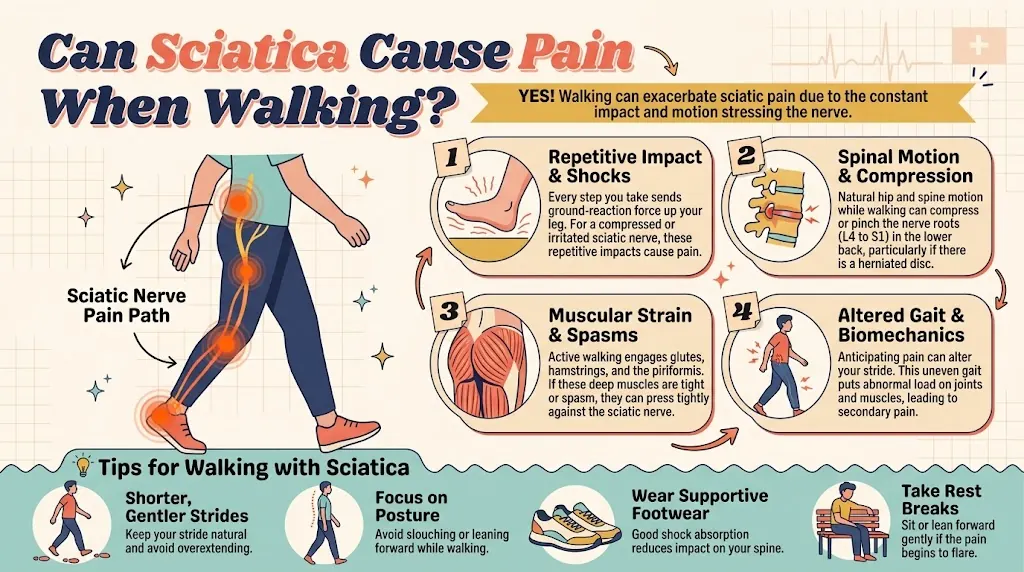
Lumbar spinal stenosis can cause a pattern called neurogenic claudication: pain, tingling, numbness, or weakness in the buttocks and legs during standing or walking. Sitting or bending forward may ease symptoms because this position can increase available space around the nerves. This pattern is suggestive, but it does not confirm a diagnosis.
| Situation | What may happen | What to consider |
|---|---|---|
| Standing for a long time | Back discomfort or leg heaviness increases | Lumbar stenosis is one possible cause |
| Walking | Leg pain, cramping, tingling, or weakness develops | Note how far you can walk before symptoms begin |
| Sitting or leaning forward | Symptoms may ease | A position-related pattern can help guide evaluation |
| Neck movement or hand tasks | Hand numbness, clumsiness, or balance difficulty may occur | Cervical stenosis needs assessment if nerve or spinal cord symptoms are suspected |
Leg pain while walking can also result from circulation problems or other nerve conditions. If back pain and leg pain develop when walking, especially if symptoms are new or limit activity, arrange a medical evaluation rather than assuming spinal stenosis is responsible.
Symptoms can also overlap with common causes of sciatica. The distinction matters because treatment depends on the underlying cause.
How Is Spinal Stenosis Diagnosed?
A clinician will ask where symptoms occur, what triggers them, whether sitting helps, and whether you have noticed weakness, numbness, or balance changes. A physical and neurological examination may assess walking, strength, reflexes, sensation, and coordination.
An MRI may show narrowing, disc changes, or pressure on nerves; CT or X-rays may be useful in selected cases. Imaging findings must be interpreted alongside symptoms because narrowing can appear on a scan without causing the person’s current problems.
If you are wondering whether lower back pain needs an MRI, the decision usually depends on your examination, symptom duration, and whether serious conditions or significant nerve compression are suspected. Understanding what an MRI can show about lower back pain can also help you discuss the results with your clinician.
What Helps Relieve Spinal Stenosis Symptoms?
Treatment depends on symptom severity, the location of narrowing, overall health, and how much daily life is affected. Many people start with nonsurgical care, including guided physical therapy, activity adjustments, and clinician-recommended medication.
-
Modify activity: Try shorter walks, rest breaks, or a supported position that eases symptoms. Do not push through worsening weakness or numbness.
-
Stay safely active: A physical therapist can tailor exercises to improve strength, mobility, and balance without aggravating symptoms.
-
Use pain relief carefully: Over-the-counter medicines may not be safe for everyone, particularly people with kidney disease, ulcers, heart conditions, or medication interactions.
-
Discuss further treatment: Injections may help some people, but benefits vary. Surgery may be considered when symptoms are severe, persist despite appropriate care, or involve significant nerve compression.
For practical guidance, explore what helps spinal stenosis pain, exercises for lower back pain, and how to relieve back pain at home. Exercise should be adapted to your symptoms; stop and seek advice if it causes increasing pain, new numbness, or weakness.
| Treatment approach | Potential role | Important limitation |
|---|---|---|
| Activity modification | Reduces aggravating positions and helps pace daily tasks | Does not reverse spinal narrowing |
| Physical therapy | May improve strength, mobility, and balance | Exercises need individual adjustment |
| Medication | May reduce pain in some people | Side effects and interactions vary |
| Injections | May offer temporary relief for selected symptoms | Results vary and repeated treatment has limits |
| Surgery | Creates more room for affected nerves or the spinal cord | Recovery and results vary; risks must be discussed |
Spinal stenosis symptoms may get worse over time, although the course differs from person to person. Treatment decisions should be based on symptoms, examination findings, and individual needs rather than scan results alone.
Spinal Stenosis Warning Signs: When to Seek Medical Care
Seek emergency care immediately if you develop new loss of bladder or bowel control, difficulty urinating, numbness around the groin or inner thighs, or sudden or rapidly worsening leg weakness. These symptoms can indicate serious nerve compression that requires urgent assessment.
Arrange prompt medical evaluation for worsening numbness, new balance problems, repeated falls, hand clumsiness, or weakness that affects walking. Persistent symptoms that limit everyday activities also deserve assessment. Review when back pain is an emergency so you know which warning signs should not wait.
Frequently Asked Questions
1. Can spinal stenosis cause pain without back pain?
Yes. Some people mainly experience leg pain, tingling, numbness, or heaviness, particularly when standing or walking. The absence of back pain does not rule out spinal stenosis.
2. Does spinal stenosis cause burning or tingling in the legs?
It can. Pressure or irritation affecting nerves may cause burning, pins and needles, or reduced sensation. Similar symptoms can occur with sciatica or other nerve conditions.
3. Why do my legs feel weak when I walk?
Spinal stenosis may affect the nerves involved in leg movement, but weakness can have other causes. New or worsening weakness needs prompt medical assessment, especially if walking becomes difficult.
4. Is spinal stenosis worse when sitting or standing?
Lumbar stenosis symptoms often worsen during standing or walking and improve when sitting or leaning forward. However, patterns vary, and persistent pain in any position should be discussed with a clinician.
5. Can spinal stenosis get worse over time?
Symptoms may gradually worsen, remain stable, or fluctuate. Seek reassessment if walking distance decreases, numbness spreads, or weakness develops.
6. Can spinal stenosis cause numb feet?
Yes, nerve compression may cause numbness or tingling in the feet. New, persistent, or worsening numbness should be evaluated, particularly if it occurs with weakness or balance problems.
7. Do you always need surgery for spinal stenosis?
No. Treatment often begins with activity changes, physical therapy, and suitable pain management. Surgery may be considered when symptoms are severe or persistent, or when nerve compression causes significant problems.
8. Can exercise make spinal stenosis worse?
Some movements may aggravate symptoms, especially if they increase nerve compression or provoke pain. A physical therapist can help adapt activity and identify exercises appropriate for your condition.
9. How is spinal stenosis different from sciatica?
Spinal stenosis describes narrowing within the spine, while sciatica describes symptoms caused by irritation or compression affecting the sciatic nerve or its roots. They can overlap because stenosis may contribute to sciatic-type leg pain. See spinal stenosis vs. sciatica for a more detailed comparison.
10. When should I see a doctor for suspected spinal stenosis?
Arrange an appointment if back or leg symptoms repeatedly limit walking, standing, sleep, or daily activities. Seek emergency care for new bladder or bowel dysfunction, numbness around the groin, or rapidly worsening weakness.
Conclusion
Spinal stenosis may cause back discomfort, leg pain, tingling, numbness, weakness, or walking difficulties, but these symptoms can have several causes. Track what triggers your symptoms and what eases them, arrange an evaluation if they persist or worsen, and seek emergency care for serious neurological warning signs.
Disclaimer: This article is provided for educational and informational purposes only.