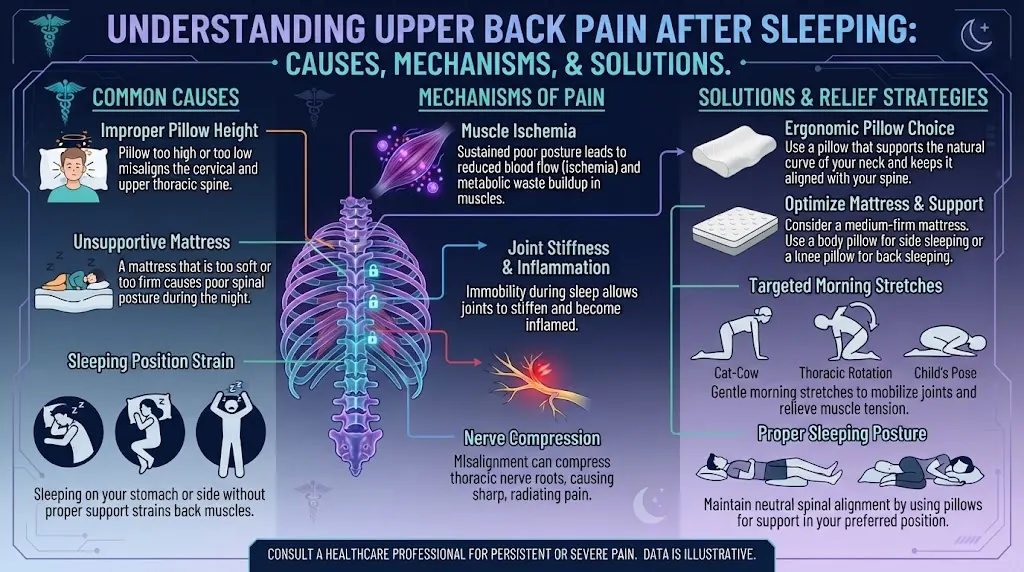
Upper back pain after sleeping is often related to sleep position, muscle stiffness, or inadequate support, but the cause is not always the mattress or pillow. Pain that is severe, persistent, or accompanied by chest symptoms, breathing difficulty, fever, or new weakness needs more careful attention.
Understanding why your upper back hurts after sleeping can help you identify possible triggers, adjust your sleep setup, and decide when to seek medical care. The pattern of pain, how long it lasts after waking, and any other symptoms can offer useful clues without confirming a diagnosis on their own.
What Causes Upper Back Pain After Sleeping?
Common causes include staying in one position for hours, sleeping with your neck or upper spine twisted, and muscle tension that builds during the night. A pillow that raises your head too high or lets it drop too low may also strain the neck and muscles around the shoulder blades.
| Possible cause | What you may notice | What may help |
|---|---|---|
| Awkward sleep position | Stiffness or aching after waking | Keep your neck and spine comfortably aligned |
| Muscle tension or strain | Tenderness that changes with movement | Gentle movement and a short period of heat |
| Unsuitable pillow or mattress | Discomfort that recurs in bed | Adjust pillow height and assess mattress support |
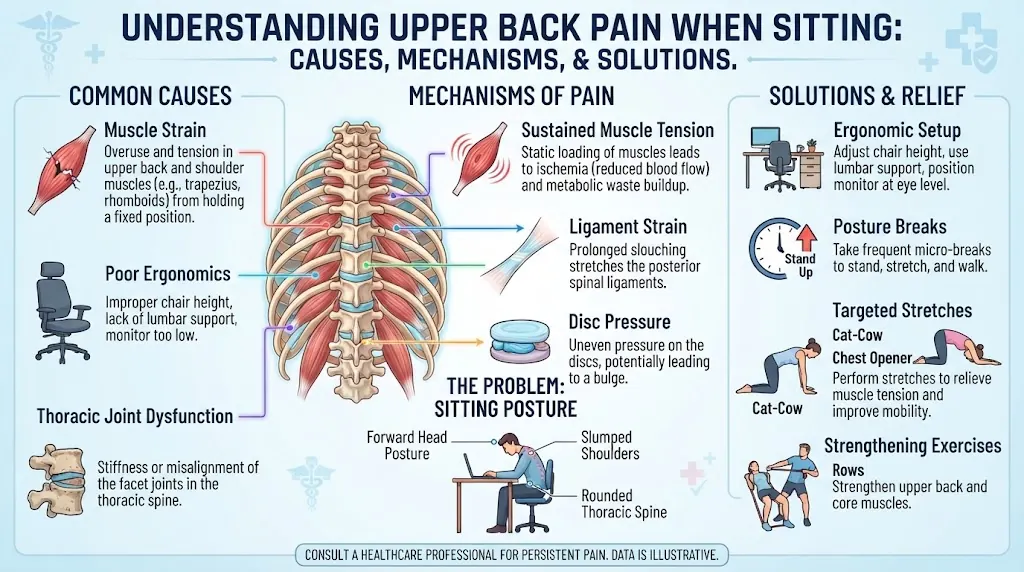
| Long periods of daytime sitting | Tightness around the shoulders and upper back | Take movement breaks and vary your posture |
| Other medical conditions | Persistent pain or symptoms beyond ordinary stiffness | Seek medical assessment when indicated |
Sometimes, upper back pain between the shoulder blades is related to muscle or joint irritation. Pain can also come from the neck, ribs, or other structures, so location alone cannot establish the cause.
How Can Your Sleeping Position Cause Upper Back Pain?
Your sleeping position can keep the neck, shoulders, and upper spine under strain for several hours. Sleeping on your stomach often requires turning your head to one side, while a pillow that is too thick can push your neck forward when you sleep on your back.
Side sleeping may also contribute to discomfort if your head tilts downward or upward instead of staying aligned with your spine. If pain is worse after a particular position, consider changing one part of your sleep setup at a time.
For more context, see how sleeping position may contribute to back pain and which sleeping positions may ease back discomfort.
Could Your Mattress or Pillow Be the Problem?
Yes. A mattress that sags or feels excessively firm may make it harder to find a comfortable position, while a poorly fitted pillow can place extra stress on your neck and upper back. However, a new mattress is not automatically necessary: symptoms may also reflect muscle strain, daytime posture, or another condition.
| Sleep setup | What to check | Practical adjustment |
|---|---|---|
| Pillow | Does your head tilt noticeably up or down? | Try a height that keeps your neck neutral |
| Mattress | Does it sag or leave you feeling unsupported? | Test a more supportive surface if possible |
| Side sleeping | Is your upper shoulder compressed or your head tilted? | Adjust pillow height and arm position |
| Stomach sleeping | Is your neck turned for long periods? | Try side or back sleeping if comfortable |
If you are considering replacing your mattress, review how to choose a mattress for back pain. You can also explore why poor posture may cause upper back pain if you spend much of the day at a desk.
What Can You Do to Relieve Upper Back Pain After Sleeping?
If the pain is mild and feels like ordinary stiffness, gentle movement may help it settle. Try walking around, rolling your shoulders slowly, and moving your neck within a comfortable range. Avoid forcing stretches or continuing movements that cause sharp or worsening pain.
Other options include:
-
Apply gentle heat: A warm shower or wrapped heating pad may relax tight muscles. Avoid falling asleep on a heating pad because prolonged heat can burn your skin.
-
Change positions regularly: Avoid remaining in bed or sitting in one position for extended periods if movement feels comfortable.
-
Review daytime habits: Take regular breaks from computer work and avoid holding your shoulders tense for long periods.
-
Adjust your sleep setup: Make one change at a time so you can tell whether it helps.
For additional guidance, see how to relieve back pain at home, whether heat or ice is better for back pain, and exercises that may help lower back pain. Lower-back exercises are not necessarily appropriate for every upper-back problem, so choose gentle movements and stop if symptoms worsen.
Research on musculoskeletal pain supports staying active as tolerated rather than relying on prolonged bed rest. However, no single sleep position, pillow, or exercise is proven to resolve every cause of upper back pain.
How Long Should Morning Upper Back Pain Last?
Mild stiffness caused by sleeping awkwardly may improve within minutes to a few hours after getting up and moving. Pain that repeatedly returns, lasts for several days without improvement, disrupts sleep, or interferes with normal activities deserves medical evaluation.
| Symptom pattern | Sensible next step |
|---|---|
| Mild stiffness that improves with movement | Monitor symptoms and adjust sleep habits |
| Pain that persists, recurs, or limits daily activities | Arrange a healthcare appointment |
| Pain with fever, unexplained weight loss, or significant injury | Seek prompt medical evaluation |
| Pain with chest pressure or difficulty breathing | Seek emergency care |
Persistent pain may involve more than sleep posture. For broader context, review common causes of upper back pain, upper back pain when sitting, or upper back pain when moving.
When Is Upper Back Pain a Warning Sign?
Seek emergency medical care if upper back pain occurs with chest pressure, shortness of breath, fainting, sudden severe pain, or sweating and nausea. These symptoms can sometimes indicate a heart or lung emergency rather than a muscle problem.
Get prompt medical advice for pain following a significant fall or accident, fever with worsening pain, unexplained weight loss, new numbness or weakness, or pain that is persistent and unexplained. Pain that becomes worse with deep breaths also warrants attention, particularly if breathing is difficult; see when back pain with breathing needs evaluation.
Do not assume pain is harmless just because it begins after sleeping. If you are unsure how urgently to act, use this guide to when back pain is an emergency.
Frequently Asked Questions
1. Why does my upper back hurt every morning?
Repeated morning pain may relate to sleep position, pillow height, mattress support, or muscle tension. If it happens regularly despite adjustments, arrange an evaluation to check for other causes.
2. Is upper back pain after sleeping normal?
Occasional mild stiffness can happen after staying in one position for hours. Severe, persistent, or worsening pain should not automatically be considered normal.
3. Can sleeping on my side cause upper back pain?
It can if your pillow leaves your neck tilted or your shoulder is compressed uncomfortably. Adjust your pillow and arm position to keep your upper body relaxed.
4. Can a bad pillow cause pain between my shoulder blades?
An unsuitable pillow can strain your neck and surrounding muscles, potentially contributing to upper back discomfort. Pain between the shoulder blades can have other causes, too.
5. Should I sleep on my back or side?
Neither position is best for everyone. Choose the position that feels comfortable and keeps your neck and spine reasonably aligned.
6. Should I stretch when my upper back hurts after sleeping?
Gentle movements may ease mild stiffness, but avoid forceful stretching or movements that increase pain. Seek guidance if pain is severe or accompanied by other symptoms.
7. Is heat or ice better for morning upper back pain?
Gentle heat may help muscle stiffness, while wrapped ice may help after a recent strain. Protect your skin and stop either treatment if it causes discomfort.
8. When should I see a doctor for upper back pain?
Seek an appointment if pain persists, keeps returning, limits activity, or has no clear explanation. New weakness, fever, or pain after significant trauma calls for more prompt assessment.
9. Can upper back pain after sleeping come from something other than muscles?
Yes. Pain may involve the spine, ribs, nerves, or organs in the chest. Symptoms such as breathing difficulty or chest pressure require urgent assessment.
10. How can I prevent upper back pain while sleeping?
Try a comfortable pillow height, a supportive mattress, and a position that does not twist your neck. Regular daytime movement may also help reduce muscle tension.
The Bottom Line
Upper back pain after sleeping often improves with comfortable positioning, gentle movement, and adjustments to your pillow or mattress. If pain persists, worsens, or comes with warning signs, seek medical advice instead of assuming your sleep setup is the cause.
Disclaimer: This article is provided for educational and informational purposes only.