Spinal stenosis is not the only cause of lower back pain. A herniated disc, arthritis, muscle strain, and other conditions can produce similar symptoms, so pain alone cannot confirm the cause. Changes in leg strength, sensation, balance, or bladder and bowel function are particularly important to recognize.
Understanding how spinal stenosis can cause lower back pain can help you identify patterns, know which treatments may help, and decide when to seek medical care. The right approach depends on your symptoms, examination findings, and whether nerves are affected.
How Does Spinal Stenosis Cause Lower Back Pain?
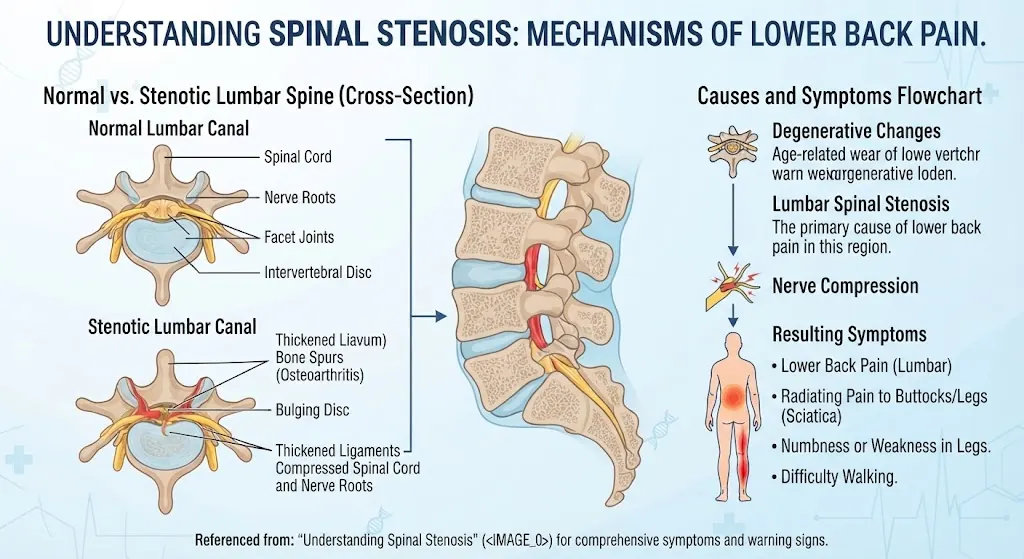
Spinal stenosis develops when the spaces around the spinal cord or nerve roots narrow. Age-related changes are a common contributor: joints affected by arthritis may enlarge, ligaments may thicken, and spinal discs may bulge. These changes can reduce the room available for nerves.
Narrowing does not always cause pain. When nerve roots become irritated or compressed, symptoms may include lower back discomfort, buttock pain, leg tingling, numbness, or weakness. Some people mainly experience symptoms in their legs rather than their backs.
Other conditions can cause similar discomfort, including common causes of lower back pain and arthritis-related back pain. A clinician considers the full symptom pattern rather than relying on one symptom alone.
What Does Lower Back Pain From Spinal Stenosis Feel Like?
The pain varies from person to person. It may be mild or persistent, and it can occur with leg symptoms or without them.
| Symptom | How it may feel | Possible pattern |
|---|---|---|
| Lower back aching | Dull pain, pressure, or stiffness | May become more noticeable after standing |
| Buttock or leg discomfort | Aching, burning, or cramping | May develop during walking |
| Tingling or numbness | Pins and needles or reduced sensation | May affect parts of the legs or feet |
| Leg weakness | Reduced strength or a feeling that the legs may give way | Needs medical assessment, especially if new or worsening |
Lumbar spinal stenosis can also cause neurogenic claudication, a pattern of leg pain, heaviness, tingling, or weakness brought on by standing or walking. Sitting or leaning forward may ease symptoms because bending forward can increase space around affected nerves.
If your symptoms include lower back pain with leg numbness or lower back pain with foot tingling, mention exactly where the sensations occur and what triggers them during your medical assessment.
Why Does Spinal Stenosis Pain Get Worse When Standing or Walking?
Standing upright and walking may aggravate lumbar spinal stenosis because the spinal canal can become narrower in an extended position. Sitting or leaning forward may relieve pressure on the nerves for some people. This pattern is common in lumbar stenosis, but it can also overlap with other conditions.
Learn more about why spinal stenosis causes leg pain when walking. The difference between spinal stenosis and sciatica is also useful to understand because the conditions can cause overlapping symptoms.
How Is Spinal Stenosis Diagnosed?
A healthcare professional will review your symptoms, medical history, walking tolerance, strength, reflexes, and sensation. An MRI may be recommended when symptoms or examination findings suggest nerve compression or when imaging would affect treatment decisions.
| Evaluation method | What it helps assess | Important limitation |
|---|---|---|
| Medical history and examination | Symptom patterns and nerve function | Cannot always identify the exact cause alone |
| MRI | Narrowing, discs, and soft tissues around nerves | Imaging changes may not explain every symptom |
| X-ray or CT | Bone changes and spinal structure | Not all nerve or soft-tissue problems are visible equally well |
A herniated disc versus spinal stenosis comparison may help explain the differences, while when lower back pain needs an MRI explains why imaging is not necessary for every episode of back pain.
What Helps Relieve Lower Back Pain From Spinal Stenosis?
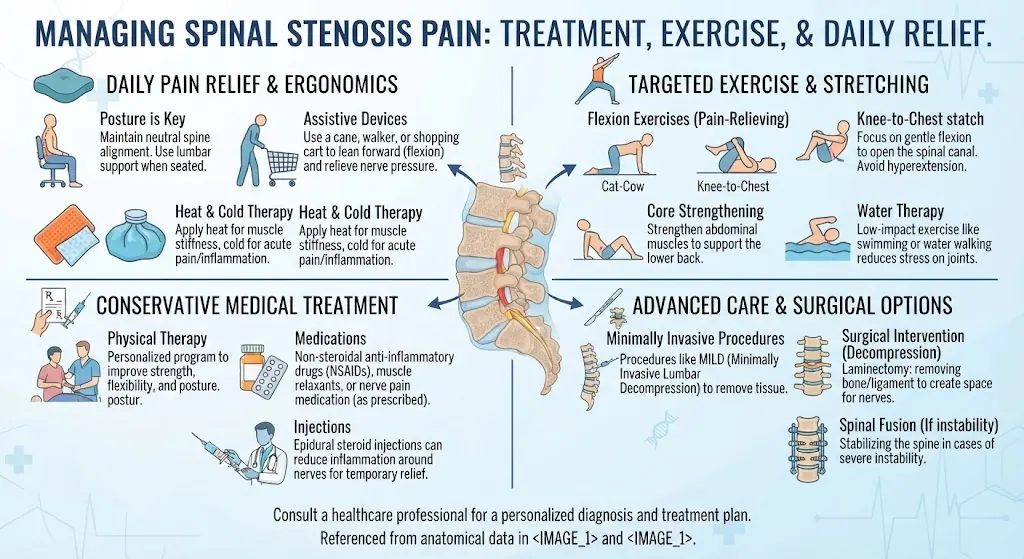
Treatment depends on symptom severity and whether nerve function is affected. Options may include modifying aggravating activities, physical therapy, and appropriate pain medication. For selected people with persistent or severe symptoms, a specialist may discuss injections or surgery.
-
Adjust activities: Break up long periods of standing and walking, and use positions that ease symptoms.
-
Consider physical therapy: A tailored plan may help maintain mobility, strength, and balance. See whether physical therapy can help lower back pain.
-
Choose exercise carefully: Appropriate exercises for lower back pain may support function, but stop if activity causes new weakness, numbness, or worsening symptoms.
-
Discuss pain medicines with a clinician or pharmacist: Anti-inflammatory medicines can cause side effects and may not be appropriate for everyone.
-
Review further treatment if symptoms persist: Guidance on what helps spinal stenosis pain can help you prepare questions for your clinician.
Staying gently active is often preferable to prolonged bed rest, but activities should be adapted to your symptoms. Read about whether to rest or keep moving with lower back pain and how to relieve back pain at home.
When Is Spinal Stenosis-Related Back Pain Serious?
Seek emergency care if you develop new loss of bladder or bowel control, difficulty urinating, numbness around the groin or inner thighs, or sudden or rapidly worsening leg weakness. These can indicate serious nerve compression.
Arrange prompt medical assessment for increasing numbness, worsening balance, repeated falls, or lower back pain with leg weakness. You should also seek an evaluation if symptoms persist, worsen, or interfere with normal activities. See when to see a doctor for lower back pain. Symptoms that are consistently worse at night also deserve discussion with a clinician, particularly if accompanied by other concerning changes; see back pain at night.
For more on progression and urgent symptoms, review whether spinal stenosis can worsen over time and when spinal stenosis is an emergency.
Frequently Asked Questions
1. Can spinal stenosis cause lower back pain?
Yes. Spinal stenosis may cause aching, stiffness, or pressure in the lower back, sometimes alongside leg symptoms.
2. Can spinal stenosis cause back pain without leg pain?
Yes. Some people experience back discomfort without obvious leg symptoms, while others have leg symptoms with little back pain.
3. Why does my lower back hurt more when I stand?
Standing may aggravate symptoms in lumbar stenosis, but muscle, joint, and other spinal conditions can also cause pain with prolonged standing.
4. Does spinal stenosis pain improve when sitting?
It often does in lumbar stenosis because bending forward may create more room around affected nerves. Not everyone experiences this pattern.
5. Can spinal stenosis cause numbness in the feet?
Yes. Nerve compression may cause foot numbness or tingling. New or worsening symptoms need medical assessment.
6. Can exercise make spinal stenosis worse?
Some activities may aggravate symptoms. A physical therapist can help select suitable movements and adjust exercise to your tolerance.
7. Does spinal stenosis always require surgery?
No. Many people begin with nonsurgical treatment. Surgery may be considered for persistent, severe, or progressive symptoms.
8. Can spinal stenosis get worse over time?
Symptoms may worsen, fluctuate, or remain stable. Changes in strength, balance, or walking ability should be reassessed.
9. How do doctors confirm spinal stenosis?
Diagnosis combines symptoms, physical and neurological examination, and imaging when appropriate. MRI findings need to match the clinical picture.
10. When is lower back pain an emergency?
New bladder or bowel dysfunction, numbness around the groin, or rapidly worsening leg weakness requires emergency assessment.
Conclusion
Spinal stenosis can cause lower back pain, particularly when narrowing affects nearby nerves, but other conditions can produce similar symptoms. Track your symptoms, discuss persistent or worsening pain with a healthcare professional, and seek emergency care for serious neurological warning signs.
Disclaimer: This article is provided for educational and informational purposes only.