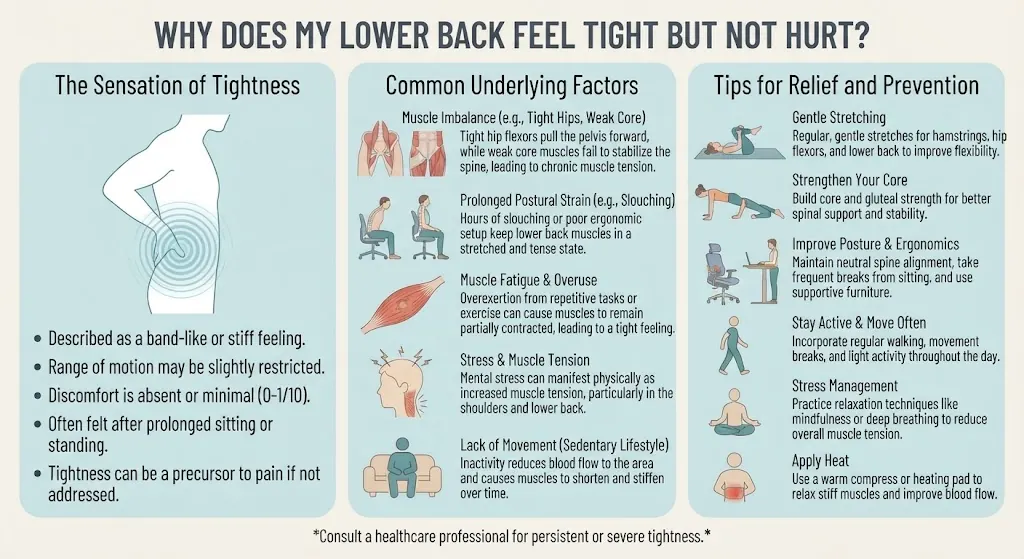
A tight lower back can feel stiff, tense, or restricted even when there is no actual pain. You might notice it when getting out of bed, standing after sitting for a long time, bending forward, or trying to touch your toes. The sensation may disappear after moving around or return after hours at a desk.
Lower back tightness without pain is often related to muscle tension, reduced movement, or temporary stiffness. It does not automatically mean that your spine is damaged or that you have a medical condition. However, persistent stiffness accompanied by weakness, numbness, fever, or other unusual symptoms deserves medical attention.
Understanding why your lower back feels tight but does not hurt can help you decide whether gentle movement, stretching, changes to your daily routine, or professional evaluation may be appropriate. The key is to notice when the tightness occurs, how long it lasts, and whether anything else changes.
What Causes Lower Back Tightness Without Pain?
Several factors can contribute to a stiff or tight lower back. Common possibilities include prolonged sitting, muscle fatigue, limited movement, and morning stiffness. Other causes may require clinical assessment.
| Possible cause | What you might notice | What may help |
|---|---|---|
| Prolonged sitting | Tightness when standing up | Take regular movement breaks |
| Muscle tension | A pulling or restricted feeling | Gentle movement and comfortable mobility exercises |
| Morning stiffness | Tightness after waking that eases with movement | Gradual movement after getting out of bed |
| Recent exercise | Tight muscles after lifting or activity | Adjust training and allow recovery |
| Joint or spinal conditions | Recurrent or persistent stiffness | Medical assessment if symptoms continue |
1. Sitting or staying in one position too long
Remaining in the same position for extended periods can make your lower back feel stiff when you finally move. This can happen after working at a computer, driving, or relaxing on a sofa. The sensation often improves when you change positions or walk briefly.
If tightness is linked to prolonged sitting, try standing and moving regularly instead of maintaining one posture for hours. For broader context, see what causes different types of back pain.
2. Tight or fatigued muscles
Your lower back muscles help support your trunk during everyday activities. Exercise, repetitive bending, lifting, or an unfamiliar activity can leave them feeling tense even when they are not painful.
Sometimes, muscle spasms can also cause a feeling of tightness. More intense spasms may produce pain, so persistent tightening or restricted movement should not automatically be attributed to ordinary muscle fatigue. Learn more about how back muscle spasms can affect movement.
3. Morning stiffness
Your back may feel tight after sleeping because you have spent several hours in relatively few positions. If the stiffness eases fairly quickly after gentle movement, temporary stiffness may be contributing.
However, stiffness that lasts a long time every morning, repeatedly wakes you, or occurs with other joint symptoms deserves evaluation. Persistent morning stiffness can sometimes be associated with inflammatory conditions. Compare your symptoms with morning lower back stiffness that improves during the day.
4. Reduced flexibility or another back condition
Limited mobility around the hips and trunk may make bending or straightening feel restricted. Age-related spinal changes, arthritis, and other musculoskeletal conditions can also contribute to stiffness, although tightness alone cannot identify the cause.
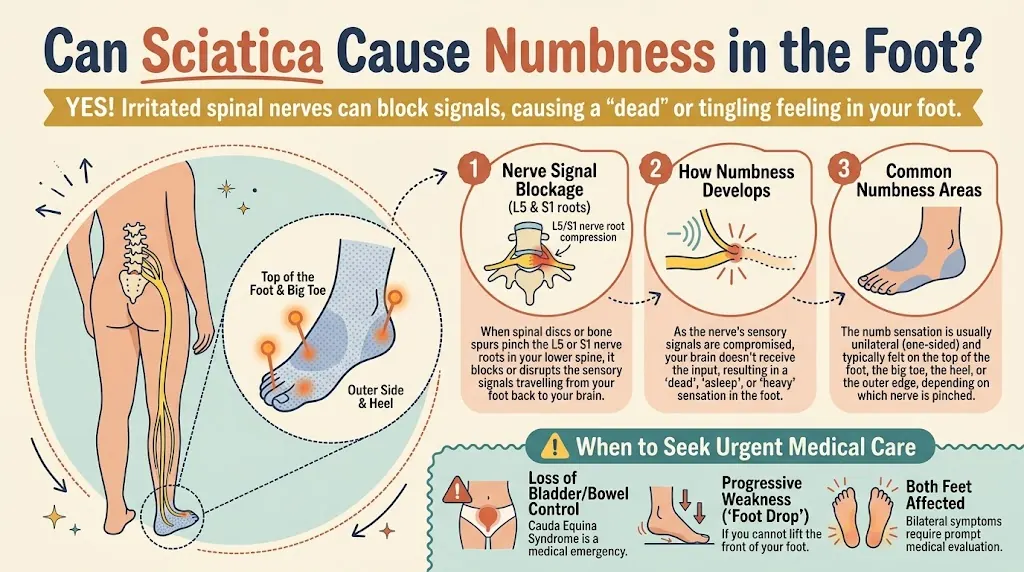
For general information, explore common lower back pain causes and symptoms. If the tightness repeatedly occurs with leg tingling, numbness, or weakness, a nerve-related cause may need assessment; possible causes of sciatica explain some of these symptoms.
Is Lower Back Tightness Without Pain Normal?
Occasional tightness that improves with movement and does not interfere with daily activities is often not an emergency. Still, the absence of pain does not rule out every underlying condition.
| Pattern | How to interpret it |
|---|---|
| Brief stiffness after sitting | May reflect temporary position-related stiffness |
| Tightness after exercise | May reflect muscle fatigue or increased activity |
| Stiffness that repeatedly returns | Review activity patterns and consider an evaluation |
| Tightness with numbness or weakness | Needs medical assessment |
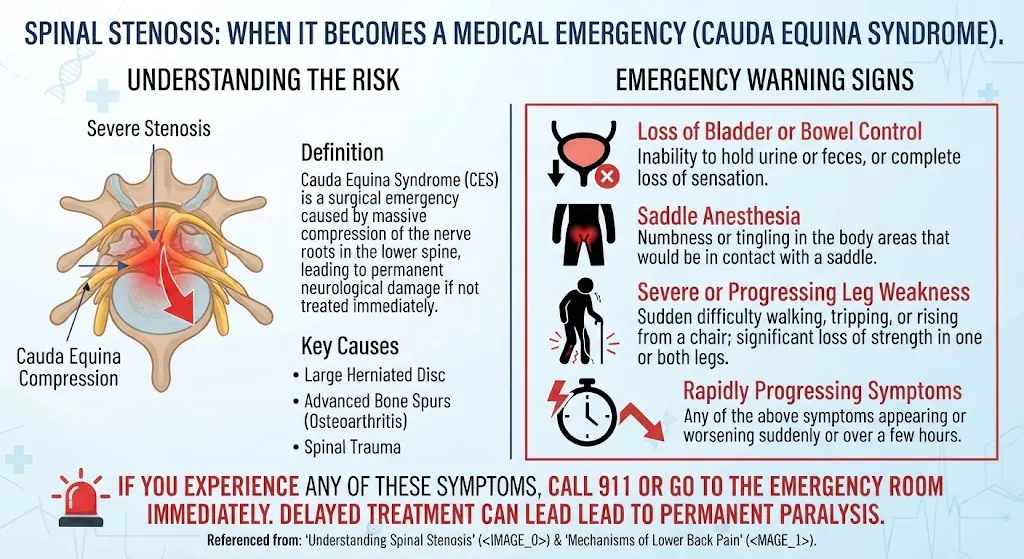
| Tightness with bladder or bowel changes or groin numbness | Requires emergency evaluation |
These patterns are guides, not diagnostic rules. The duration, severity, medical history, and associated symptoms all matter.
How Can You Relieve a Tight Lower Back at Home?
If the tightness is mild and you have no warning signs, start with gentle, comfortable movement rather than forcing your back to stretch.
-
Change positions regularly. Take short movement breaks throughout the day.
-
Walk at an easy pace. Reduce the duration if walking makes the tightness worse. See whether walking can help lower back symptoms.
-
Try gentle mobility. Comfortable pelvic tilts or slow, controlled movements may help you explore your range of motion.
-
Use heat if it feels soothing. Apply a warm pack with a protective layer and avoid excessive temperatures.
-
Avoid forcing a stretch. Stop movements that cause pain, tingling, or worsening symptoms.
For additional options, review how to loosen a stiff lower back, stretches for tight lower back muscles, and whether stretching is appropriate for lower back symptoms.
You can also use the suggestions in how to relieve back pain at home, although pain-relief advice may not be necessary when tightness is your only symptom.
What Should You Avoid?
Avoid aggressive stretching, sudden heavy lifting, or trying to force your back to crack. You do not need to stop all activity automatically, but modify movements that consistently worsen your symptoms. Guidance on whether to rest or keep moving with lower back symptoms can help you make that decision.
If stiffness follows exercise, return to activity gradually. Once movement feels comfortable, lower back exercises, safe lower back strengthening techniques, and core exercises that support the lower back may be useful options, depending on your needs.
When Should You Seek Medical Care?
Arrange a medical appointment if tightness persists, frequently returns, progressively limits movement, or does not improve after reasonable changes to your routine. An evaluation may help determine whether the issue involves muscles, joints, nerves, or another cause. See when to seek medical care for lower back symptoms and how long lower back symptoms can last before evaluation is advisable.
Seek emergency care if you develop new loss of bladder or bowel control, difficulty urinating, numbness around the groin or anus, or severe or rapidly worsening leg weakness. These symptoms can signal serious nerve compression. Review warning signs that make back symptoms an emergency.
Frequently Asked Questions
1. Why is my lower back tight but not painful?
Muscle tension, prolonged sitting, and temporary stiffness are common possibilities. The sensation alone cannot establish a diagnosis.
2. Can dehydration cause lower back tightness?
Dehydration may contribute to muscle cramps or general muscle discomfort, particularly after sweating or exercise. However, isolated lower back tightness is not a reliable sign of dehydration.
3. Why does my lower back feel tight after sitting?
Staying in one position for a long time can make movement feel restricted. Changing positions and taking regular movement breaks may help.
4. Is lower back tightness a sign of a herniated disc?
Not necessarily. Tightness alone is not enough to identify a disc problem; symptoms such as radiating leg pain, tingling, or weakness may require further assessment.
5. Should I stretch a tight lower back every day?
Gentle mobility exercises may help if they feel comfortable, but not everyone needs a daily stretching routine. Avoid forcing movements or continuing through worsening symptoms.
6. Why is my lower back stiff when I wake up?
Remaining in one position during sleep may contribute to temporary morning stiffness. Persistent or prolonged morning stiffness, especially with other symptoms, should be discussed with a clinician.
7. Can stress cause lower back tightness?
Stress may increase muscle tension and influence how physical sensations are experienced. It should not automatically be assumed to be the cause of persistent stiffness.
8. Can exercise make my lower back feel tight?
Yes. Unfamiliar movements, muscle fatigue, and changes in training intensity can contribute. Reduce the activity if symptoms worsen and build back gradually.
9. How long should lower back tightness last?
Brief, position-related stiffness may settle after moving, while exercise-related tightness can last longer. Persistent, worsening, or recurrent symptoms warrant medical advice.
10. When is lower back tightness serious?
Seek medical evaluation for persistent stiffness or symptoms accompanied by numbness or weakness. New bladder or bowel dysfunction, groin numbness, or severe progressive weakness requires emergency care.
Conclusion
Lower back tightness without pain is often associated with muscle tension, prolonged positions, or temporary stiffness, but it does not reveal the cause by itself. Try gentle movement, regular position changes, and comfortable mobility rather than aggressive stretching. If the tightness persists, worsens, or comes with warning signs, seek appropriate medical care.
Disclaimer: This article is provided for educational and informational purposes only.