Buttock pain without leg pain does not automatically mean you have sciatica. Muscles, the hip joint, the sacroiliac (SI) joint, and other structures can produce similar symptoms. Recognizing the differences can help you understand what might be causing the discomfort without assuming that every painful sensation comes from a nerve.
This guide explains whether sciatica can cause buttock pain without leg pain, which symptoms may point toward nerve irritation, how sciatica differs from other causes of buttock pain, and what you can safely do at home. It also covers recovery expectations and warning signs that require medical attention.
Can Sciatica Cause Buttock Pain Without Leg Pain?
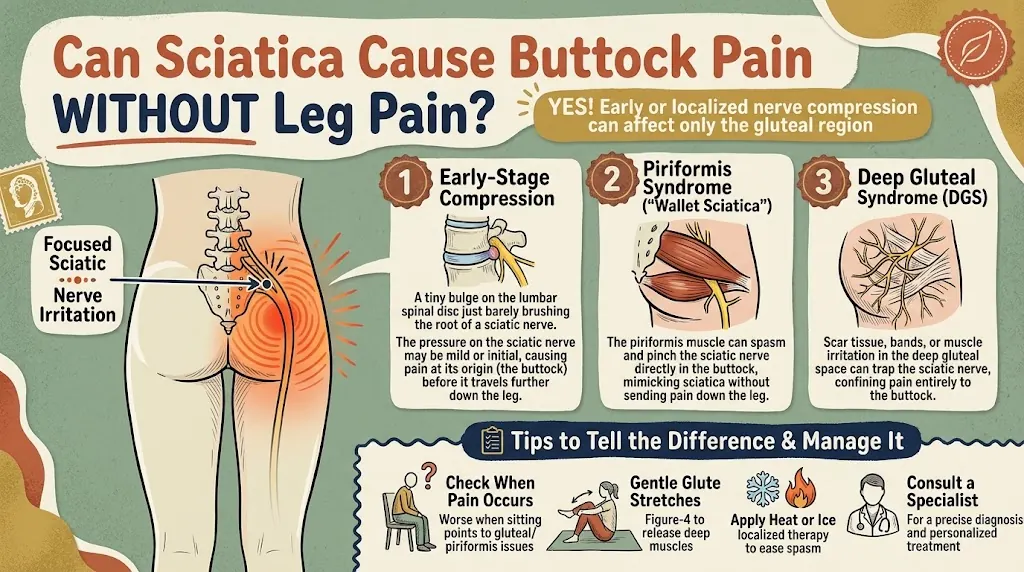
Yes, sciatica can sometimes cause buttock pain without noticeable leg pain. Irritation or compression involving the lumbosacral nerve roots can produce pain around the lower back and buttock, although classic sciatica usually includes symptoms extending into the leg.
Sciatica describes symptoms associated with irritation of the sciatic nerve or the nerve roots that contribute to it. The pain may feel sharp, electric, burning, or deep and aching. Some people also experience tingling, numbness, or weakness, while others mainly notice pain.
However, isolated buttock pain is not enough to establish that the sciatic nerve is involved. A clinical evaluation can help distinguish nerve-related pain from muscular, joint-related, and other conditions.
What Does Sciatic Buttock Pain Feel Like?
The sensation varies depending on the underlying cause and the structures involved.
| Symptom | What you may notice | What it may suggest |
|---|---|---|
| Deep buttock ache | Persistent soreness on one side | Muscle or joint irritation; sometimes nerve-related pain |
| Burning or electric pain | A sharp, hot, or shooting sensation | Possible nerve irritation |
| Pain after sitting | Discomfort that increases in a chair or car | Possible nerve sensitivity or deep buttock muscle irritation |
| Pain when standing up | A sharp pull or ache during the transition | Muscle, joint, or lower-back involvement |
| Tingling or numbness | Pins and needles or reduced sensation | Possible nerve involvement |
| Leg weakness | Difficulty lifting the foot or controlling the leg | Possible neurological involvement requiring prompt assessment |
These patterns can overlap. Symptoms alone cannot reliably identify the exact structure responsible for the pain.
If the discomfort extends from your lower back into the buttock, understanding the relationship between lower back and buttock pain may help you recognize why these areas can hurt together.
What Causes Buttock Pain Without Leg Pain?
Several conditions can cause pain in the buttock without the discomfort traveling down the leg. Some involve nerves, while others affect muscles, tendons, joints, or the hip.
1. Lumbar disc irritation or a pinched nerve
A bulging or herniated disc in the lower spine can irritate nearby nerve roots. This may cause buttock discomfort, although typical sciatica more often radiates into the leg. Learn more about what a herniated disc feels like and how a pinched nerve can cause lower back pain.
2. Piriformis and other deep buttock muscles
The piriformis is a small muscle deep in the buttock near the sciatic nerve. Irritation or tightness in this region can cause localized pain, particularly during prolonged sitting or certain hip movements. Similar symptoms may occur with other deep gluteal conditions, so buttock pain alone does not confirm piriformis syndrome.
3. Sacroiliac joint irritation
The sacroiliac joints connect the base of the spine to the pelvis. Irritation in these joints can produce one-sided buttock pain that becomes more noticeable when climbing stairs, standing on one leg, or changing positions.
4. Hip or gluteal tendon problems
Hip joint conditions and irritation of the tendons around the buttock can cause pain during walking, standing, or lying on the affected side. Pain closer to the outer hip may suggest a different cause from pain deep in the buttock.
5. Other lower-back conditions
Muscle strain, arthritis, and spinal narrowing can also contribute to buttock discomfort. The location and pattern of pain may overlap with common causes of lower back pain, making an examination more useful than trying to identify the cause from symptoms alone.
How Can You Tell Sciatica From Other Causes of Buttock Pain?
No single symptom reliably distinguishes sciatica from muscular or joint-related pain. However, certain patterns can help guide the next steps.
| Feature | Possible nerve-related pain | Possible muscle or joint pain |
|---|---|---|
| Pain quality | Burning, shooting, electric, or aching | Sore, tender, stiff, or deep aching |
| Pain location | Buttock, sometimes extending down the leg | Often concentrated around the buttock or hip |
| Tingling or numbness | May occur | Less typical, though possible for other reasons |
| Effect of movement | May worsen with bending, coughing, or sitting | May worsen with specific hip movements or pressure |
| Weakness | Can occur with nerve involvement | Usually not neurological weakness |
These are general patterns, not diagnostic rules. For example, a person with sciatica-related hip pain may have symptoms that overlap with a hip joint problem.
Pain location can also vary. Discomfort on the right side of the lower back or the left side of the lower back in women may coexist with buttock pain, but the affected side alone cannot identify the cause.
What Can You Do at Home for Buttock Pain?
If the pain is mild, started recently, and you have no warning signs, conservative self-care may help.
-
Keep moving gently. Short walks and regular changes of position may prevent stiffness. Avoid prolonged bed rest.
-
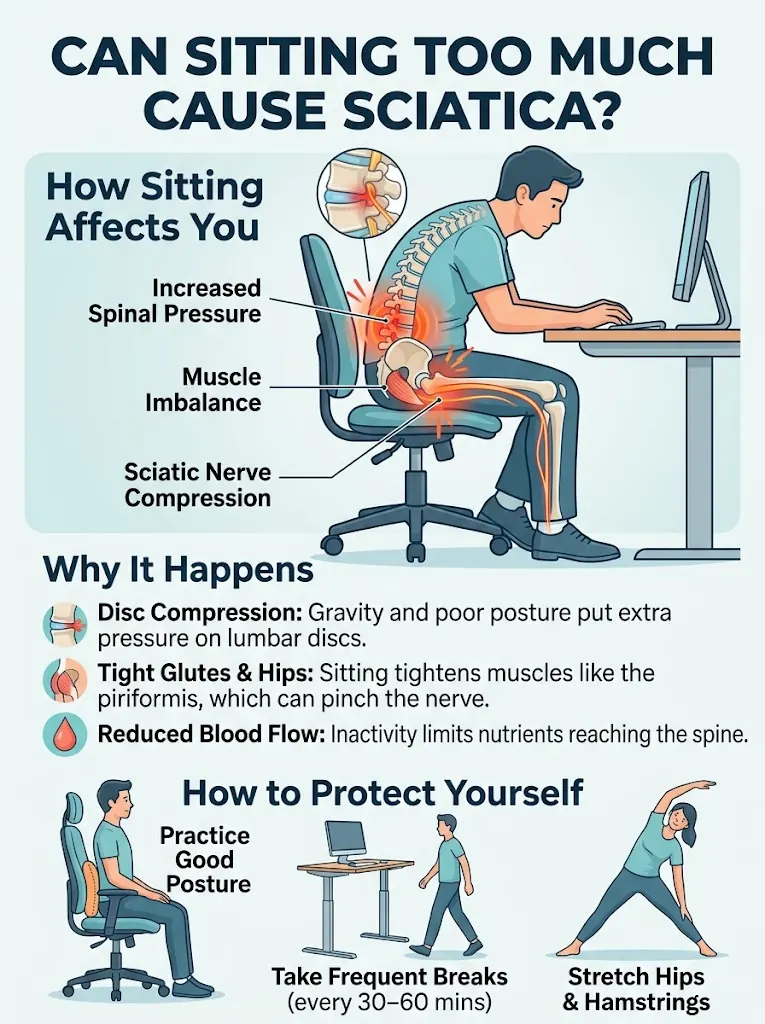
Break up sitting time. Stand, walk, or change positions regularly, particularly if driving or desk work aggravates symptoms.
-
Try heat or ice. Apply a wrapped cold pack or comfortably warm pack for about 15–20 minutes. Avoid direct skin contact and stop if irritation occurs. Choose whichever feels more comfortable; neither is guaranteed to treat the underlying cause.
-
Avoid painful stretches. Gentle mobility may help, but stop movements that increase sharp pain, tingling, numbness, or pain spreading down the leg.
-
Consider suitable pain relief. Ask a pharmacist or clinician whether an over-the-counter medicine is appropriate, particularly if you have kidney disease, ulcers, take blood thinners, or are pregnant.
For practical guidance, see how to relieve back pain at home, whether heat or ice is better for back pain, and exercises for lower back pain.
If sitting is a trigger, how to sit to avoid lower back pain offers additional positioning guidance. People whose symptoms disrupt sleep may also benefit from exploring the best sleeping positions for lower back pain.
How Long Does Sciatic Buttock Pain Last?
Recovery depends on the cause, severity, and whether a nerve is involved. Mild muscle irritation may improve over days to a few weeks, while sciatica can take several weeks to a few months to settle. Some cases last longer or recur.
| Pattern | Reasonable next step |
|---|---|
| Mild pain that is gradually improving | Continue gentle activity and monitor symptoms |
| Pain that persists for several weeks | Arrange a clinical assessment |
| Pain that worsens or limits everyday activities | Seek medical evaluation sooner |
| New or progressive neurological symptoms | Obtain prompt medical care |
These are general guidelines rather than guaranteed recovery timelines. Persistent symptoms may need a tailored treatment plan, including physical therapy. An MRI is not automatically necessary; clinicians generally decide whether imaging is useful based on the examination, symptom duration, and warning signs.
For more information, review how long lower back pain can last and when to see a doctor for lower back pain.
When Is Buttock Pain a Warning Sign?
Symptoms that may be monitored
Mild discomfort that improves with movement changes and does not involve neurological symptoms may be monitored briefly, provided it continues to improve.
Symptoms that need medical evaluation
Arrange an appointment for persistent, recurrent, unexplained, or worsening pain. Seek earlier evaluation if you develop fever, unexplained weight loss, pain following an injury, or new numbness or weakness.
Symptoms requiring emergency care
Seek emergency care for new loss of bladder or bowel control, difficulty starting urination, numbness around the genitals or anus, or severe or progressive weakness, especially when symptoms affect both legs. These can indicate serious nerve compression that requires urgent treatment. See when back pain is an emergency.
Frequently Asked Questions
1. Can you have sciatica with only buttock pain?
Buttock pain can occur with nerve irritation, but pain limited to the buttock is less typical of classic sciatica. Muscular and joint conditions should also be considered.
2. Does sciatica always travel down the leg?
No. Symptoms vary, although pain radiating down one leg is a defining feature of typical sciatica. Pain that never extends beyond the buttock deserves consideration of other causes.
3. Can sitting cause sciatic buttock pain?
Yes. Prolonged sitting can aggravate nerve-related symptoms or put pressure on sensitive muscles and tissues. Changing positions regularly may help.
4. Can piriformis syndrome feel like sciatica?
Yes. Piriformis-related or other deep gluteal conditions can cause buttock pain and sometimes radiating symptoms. A clinical assessment helps distinguish these possibilities.
5. Can sciatica cause buttock pain on one side?
Yes. Sciatica commonly affects one side of the body. However, one-sided buttock pain is also common with hip, muscle, and sacroiliac joint problems.
6. Is walking good for buttock pain?
Gentle walking may help maintain mobility when symptoms are mild. Reduce the duration or stop if walking significantly worsens pain, and seek evaluation if symptoms persist.
7. Should I stretch buttock pain away?
Not necessarily. Gentle stretching may help some muscular conditions, but forceful stretches can aggravate sensitive nerves or other structures. Stop if symptoms intensify or spread.
8. Can sciatica cause numbness without leg pain?
Nerve irritation can cause sensory changes, but numbness without typical radiating pain has several possible explanations. New or progressive numbness warrants medical assessment.
9. When should I see a doctor for buttock pain?
Arrange an appointment if pain persists, worsens, repeatedly returns, or interferes with daily activities. Seek emergency care for bladder or bowel changes, saddle-area numbness, or severe or progressive weakness.
10. Can buttock pain go away on its own?
Yes, some episodes improve with time and appropriate activity adjustments. Recovery depends on the cause, so persistent or worsening symptoms should not be ignored.
Conclusion
Sciatica can sometimes cause buttock pain without obvious leg pain, but this pattern alone does not establish a nerve problem. Muscle irritation, hip conditions, and sacroiliac joint problems can produce similar symptoms. Gentle movement, reduced prolonged sitting, and appropriate heat or ice may help mild discomfort. If pain persists, worsens, or comes with neurological changes, arrange medical evaluation; seek emergency care for bladder or bowel dysfunction, saddle-area numbness, or severe or progressive weakness.
Disclaimer: This article is provided for educational and informational purposes only.