However, not all hip pain comes from the sciatic nerve. Hip joint problems, muscle strain, and other lower back conditions can produce similar symptoms. The location of the pain, whether it travels down the leg, and which movements aggravate it can offer helpful clues, but they cannot confirm the cause on their own.
Understanding how sciatica affects the hip can help you recognize possible nerve-related symptoms, choose appropriate self-care measures, and decide when to seek medical attention. This guide explains the common patterns, potential causes, treatment options, and warning signs to watch for.
How Can Sciatica Cause Hip Pain?
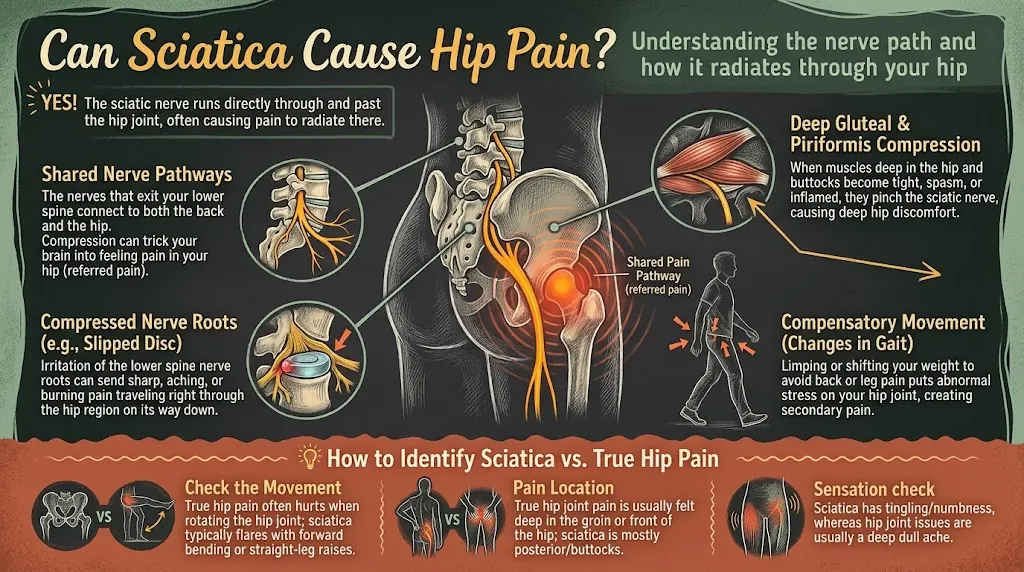
Yes, sciatica can cause hip-area pain when the sciatic nerve or its contributing nerve roots become irritated or compressed. The sciatic nerve begins in the lower spine, passes through the buttock, and travels down each leg. Problems involving these nerves can produce pain around the buttock and outer hip, sometimes extending into the thigh, calf, or foot.
Sciatica is a symptom pattern rather than a diagnosis by itself. A herniated disc or narrowing around spinal nerves can contribute to symptoms, although hip pain alone does not necessarily indicate sciatica.
Common signs of possible sciatica include:
-
Pain beginning in the lower back or buttock and extending toward the hip or leg.
-
Burning, shooting, or electric-like discomfort.
-
Tingling or numbness in the leg or foot.
-
Symptoms that worsen after prolonged sitting or certain movements.
-
Occasionally, muscle weakness in the affected leg.
For a clearer overview of what causes sciatica and sciatic nerve pain, consider how spinal nerve irritation can affect areas far from the lower back.
What Does Sciatica Hip Pain Feel Like?
Sciatica-related hip pain often feels different from pain originating inside the hip joint. It may be concentrated in one buttock, spread around the outer hip, or travel down the back of the thigh. Some people also experience sciatica-related buttock pain without leg pain, although pain confined to the hip or buttock has other possible causes.
| Symptom pattern | What it may suggest |
|---|---|
| Burning or shooting pain from buttock into leg | Possible nerve irritation |
| Deep groin pain during hip rotation | Possible hip joint problem |
| Outer hip tenderness when lying on that side | Possible tendon or bursa-related pain |
| Buttock pain after prolonged sitting | Possible sciatica or muscle-related pain |
| Tingling or numbness extending into the foot | Possible nerve involvement |
These patterns are clues, not a diagnosis. Hip joint conditions and spinal problems can occur together.
What Causes Sciatica-Related Hip Pain?
Sciatica can develop when a spinal nerve root becomes irritated or compressed. Common contributing conditions include:
-
Herniated disc: Disc material can irritate a nerve root, producing pain that travels into the buttock or leg. Learn what a herniated disc feels like.
-
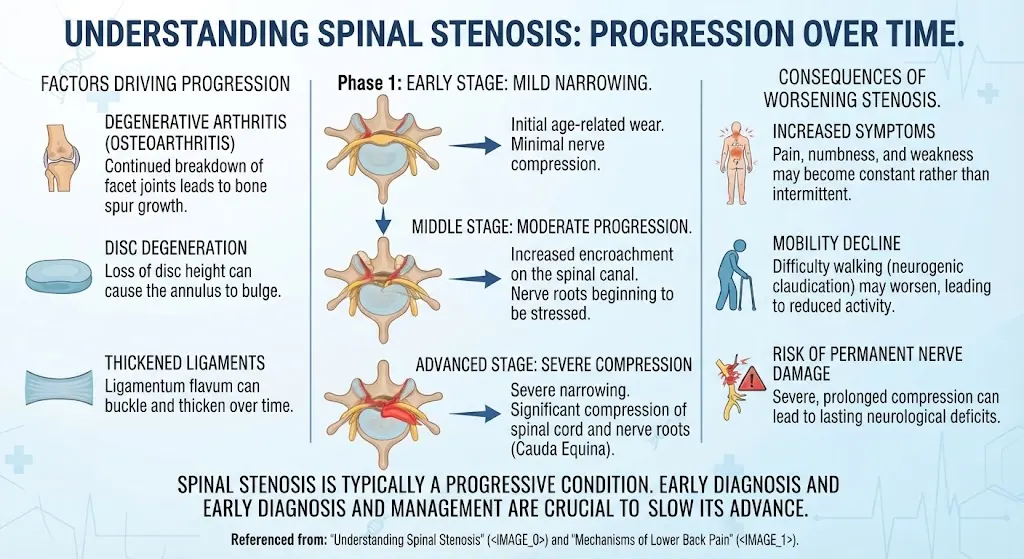
Spinal stenosis: Narrowing of spaces around spinal nerves may cause pain, numbness, or leg symptoms, particularly during walking.
-
Age-related spinal changes: Changes involving discs and joints can sometimes contribute to nerve irritation.
-
Muscle-related irritation: Tight or irritated muscles in the buttock may cause sciatica-like symptoms without proving that the sciatic nerve is compressed.
If you also have lower back pain spreading into the hip, the source may be the spine, the hip, or both. Pain on the right side of the lower back or left side of the lower back in women can have several possible explanations and should not automatically be attributed to sciatica.
How Is Sciatica Hip Pain Different From Hip Joint Pain?
The location of discomfort and its relationship to movement can help a clinician distinguish nerve-related pain from a hip joint problem.
| Feature | Possible sciatica | Possible hip joint problem |
|---|---|---|
| Common location | Buttock, back of thigh, sometimes foot | Groin, front of hip, or outer hip |
| Pain quality | Burning, shooting, electric | Aching, stiffness, or sharp joint pain |
| Numbness or tingling | Can occur | Less typical |
| Hip rotation | May aggravate symptoms indirectly | May directly provoke pain |
| Walking | May worsen or ease symptoms | May cause pain or stiffness |
This comparison is not definitive. For example, hip arthritis may cause groin pain, while outer hip tendon problems may cause pain when lying on one side. A clinician may need to examine both the hip and lower back.
How Can You Relieve Sciatica Hip Pain at Home?
For mild symptoms without warning signs, gentle movement and adjustments to daily activities may help.
-
Change positions regularly. Avoid remaining seated or lying down for prolonged periods. Take short, comfortable walks if tolerated.
-
Use heat or cold carefully. Try a wrapped cold pack or a comfortably warm pack for short periods. Avoid direct skin contact and use extra caution if sensation is reduced.
-
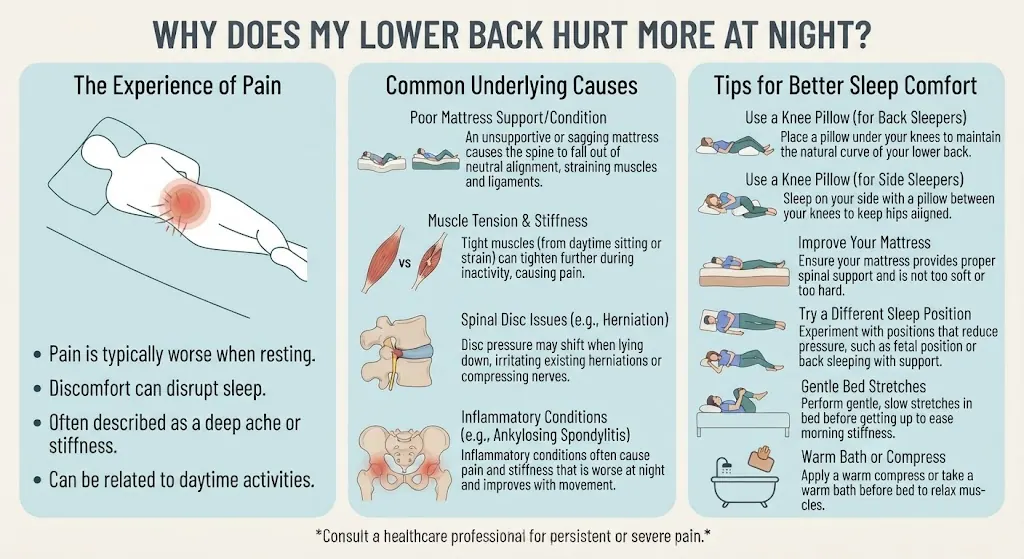
Adjust sleeping positions. Side sleeping with a pillow between your knees or lying on your back with pillows beneath your knees may improve comfort. See these sleeping positions for lower back pain.
-
Try gentle exercise only if tolerated. Appropriate exercises for lower back pain may help maintain movement, but stop if pain spreads farther down the leg, numbness increases, or weakness develops.
-
Review medication options with a professional. A pharmacist or clinician can help you weigh pain-relief options against risks such as stomach bleeding, kidney problems, medication interactions, and other health conditions.
For additional guidance, see how to relieve back pain at home and whether heat or ice is better for back pain. Avoid forceful stretching or exercises that consistently worsen your symptoms.
What Does Research Suggest About Recovery?
Clinical guidance indicates that many cases of sciatica improve over several weeks to a few months, although recovery varies according to the cause and severity. Conservative care generally emphasizes maintaining tolerable activity rather than prolonged bed rest. Persistent or worsening symptoms may require further assessment.
| Recovery period | Practical approach |
|---|---|
| First several days | Reduce aggravating activities while maintaining gentle movement |
| Following weeks | Gradually resume usual activities as symptoms allow |
| After several weeks without improvement | Arrange a clinical assessment |
| Any time symptoms worsen significantly | Seek earlier medical advice |
When Should You Seek Medical Care?
Symptoms that can usually be monitored
Mild, improving discomfort without numbness, weakness, fever, or other concerning symptoms can often be monitored briefly while you adjust your activities.
Symptoms needing medical evaluation
Arrange an appointment if hip or leg pain persists for several weeks, repeatedly returns, interferes with sleep, or limits walking and daily activities. Evaluation is also important for new or persistent numbness, unexplained weight loss, fever, or pain that is progressively worsening.
Symptoms requiring emergency care
Seek emergency assessment for new loss of bladder or bowel control, difficulty urinating, numbness around the genitals or anus, or severe or rapidly worsening weakness, particularly in both legs. These symptoms can indicate serious nerve compression. Sudden severe hip pain with inability to bear weight, especially after an injury, also requires urgent assessment. See when back pain is an emergency.
Frequently Asked Questions
1. Can sciatica cause hip pain without lower back pain?
Yes. Sciatica can cause buttock or leg pain even when lower back pain is mild or absent. However, hip pain alone is not enough to establish that sciatica is responsible.
2. Can sciatica cause pain on the outside of the hip?
It can cause pain around the outer hip or buttock. Outer hip tendon problems and other musculoskeletal conditions can feel similar, so persistent pain may need examination.
3. Can sciatica cause pain in both hips?
Sciatica can affect both sides, but bilateral symptoms deserve careful assessment, especially if accompanied by weakness or numbness. Seek emergency care if these symptoms occur with bladder or bowel changes or saddle-area numbness.
4. Does sciatica hip pain get worse when sitting?
It can. Prolonged sitting may aggravate symptoms in some people, although triggers vary. Changing positions regularly may help.
5. How long does sciatica-related hip pain last?
Many cases improve within several weeks to a few months, but some last longer or recur. Persistent or worsening pain should be evaluated rather than left untreated indefinitely.
6. Is walking good for sciatica hip pain?
Gentle walking may help maintain mobility when tolerated. Start with short distances and reduce the duration if symptoms become more intense or spread farther down the leg.
7. Should I stretch if sciatica causes hip pain?
Gentle, appropriate movements may help, but aggressive stretching can aggravate some symptoms. Stop movements that cause increasing radiating pain, numbness, or weakness.
8. Can sciatica cause hip pain at night?
Yes. Pain may become more noticeable at night because of sleeping positions or prolonged pressure. Persistent night pain, particularly with fever, unexplained weight loss, or a history of cancer, warrants medical evaluation.
9. How do doctors diagnose sciatica-related hip pain?
A clinician reviews your symptoms and medical history and examines your strength, sensation, movement, hip, and spine. Imaging is not always necessary initially but may be considered when findings suggest a serious cause or when results could change treatment.
10. When should I see a doctor for sciatica hip pain?
Seek an appointment if symptoms persist for several weeks, worsen, or interfere with normal activities. Seek emergency care immediately for new bladder or bowel dysfunction, saddle-area numbness, or severe or rapidly worsening neurological weakness.
Conclusion
Sciatica can cause hip-area pain, particularly around the buttock and outer hip, but several other conditions can produce similar discomfort. Pay attention to pain patterns, stay gently active when safe, and avoid movements that worsen symptoms. If pain persists or limits daily activities, arrange a clinical assessment; seek emergency care for serious neurological warning signs.
Disclaimer: This article is provided for educational and informational purposes only.