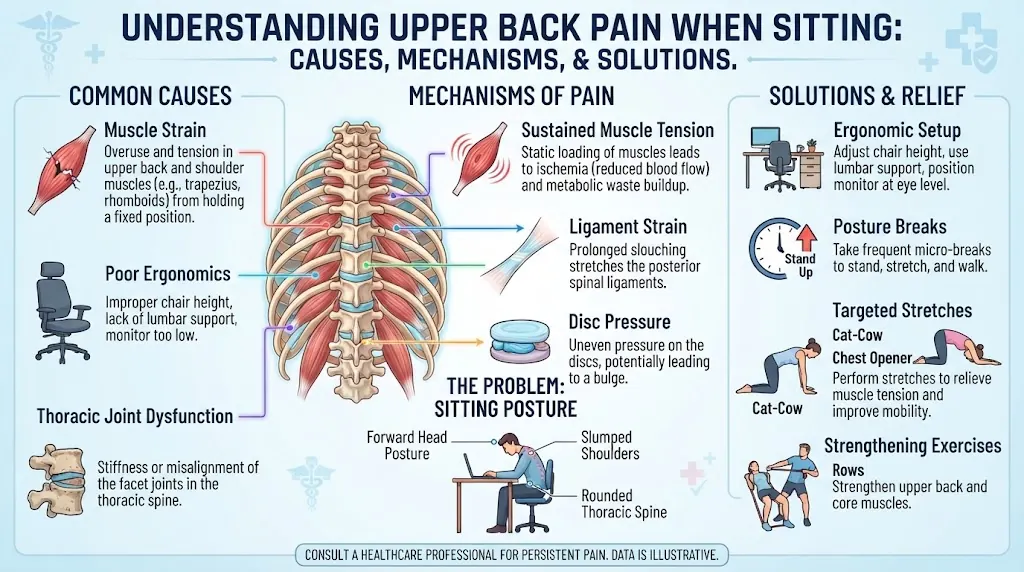
This pattern is often related to muscle fatigue, prolonged positioning, or an unsuitable workstation, but sitting-related pain is not always caused by posture alone. Pain that is severe, persistent, follows an injury, or occurs with chest or breathing symptoms deserves closer attention.
Understanding why your upper back hurts when you sit can help you identify common triggers, adjust your sitting habits, try safe ways to ease discomfort, and recognize when to seek medical care.
What Causes Upper Back Pain When Sitting?
The upper back, also called the thoracic spine, includes the vertebrae between the neck and lower back, along with muscles, joints, and ribs. Sitting for long periods can increase the demand on these tissues, especially when you stay in one position without breaks.
Common causes include:
-
Muscle fatigue or strain: Upper-back muscles may become sore after prolonged computer work, carrying a heavy bag, or repeated reaching.
-
Sustained posture: Leaning toward a screen, rounding your shoulders, or holding your head forward can increase muscular effort. Poor posture may contribute to pain, but no single sitting position is harmful for everyone.
-
Limited movement: Remaining still for long periods can make the back feel stiff or tight.
-
Workstation setup: A screen that is too low, unsupported forearms, or a chair that does not fit your body may encourage uncomfortable positions.
-
Joint or spinal conditions: Arthritis, disc problems, or other causes of thoracic spine pain can also produce discomfort while sitting.
For a broader overview, see what commonly causes back pain and why upper-back pain can develop.
What Does Sitting-Related Upper Back Pain Feel Like?
The location and quality of pain can offer clues, although symptoms alone cannot confirm the cause.
| Symptom pattern | Possible explanation |
|---|---|
| Aching or tired muscles after desk work | Muscle fatigue or sustained positioning |
| Tightness between the shoulder blades | Muscle tension or reduced movement |
| Pain that increases when twisting or reaching | Muscle or joint irritation |
| Burning, tingling, or unusual sensation | Possible nerve involvement |
| Pain with deep breathing or chest discomfort | Needs assessment for causes beyond simple muscle strain |
Pain between the shoulder blades may have several explanations. Learn about upper back pain between the shoulder blades and upper-back pain that changes with movement.
How Can You Relieve Upper Back Pain While Sitting?
Start by changing your position and reducing the time you spend sitting continuously. You do not need to maintain a rigid, perfectly upright posture all day; a comfortable position that you change regularly is usually more practical.
Adjust your chair and screen
| Workstation check | What to try |
|---|---|
| Screen height | Raise the screen so you can look ahead without leaning your head forward. |
| Chair support | Sit back comfortably and use the backrest if it helps you relax your shoulders. |
| Arms and elbows | Keep your elbows near your sides and support your forearms when possible. |
| Feet | Rest your feet on the floor or use a footrest. |
| Desk distance | Move the keyboard and mouse closer to avoid reaching forward. |
These changes can reduce unnecessary strain. For more specific guidance, see how to set up your desk to reduce back pain, how to sit more comfortably with back pain, and whether a poor office chair can contribute to back pain.
Take movement breaks
Try standing, walking briefly, or changing position every 30–60 minutes, sooner if discomfort starts. There is no single break schedule that works for everyone; use symptoms and work demands to guide you.
A 2025 review of 22 studies involving 7,814 people examined sitting habits and lower back pain in office workers. The findings suggested that static sitting and fewer breaks were associated with pain, although the review focused on the lower back, so it cannot establish the same relationship specifically for upper-back pain.
Helpful habits include:
-
Roll your shoulders gently and relax them rather than holding them pulled back.
-
Stand and walk during phone calls when practical.
-
Alternate tasks that require sitting with tasks you can do standing.
-
Try gentle movement rather than forcing a stretch that increases pain.
You may find desk exercises for sitting-related back pain helpful. If sitting also causes pain around the middle of your back, see why mid-back pain can occur while sitting.
Use heat or cold if it helps
A warm pack may ease muscle tightness, while a cold pack may feel soothing after a recent strain. Wrap either pack in a towel, use it for short periods, and avoid placing extreme temperatures directly on your skin. Stop if your symptoms worsen. For guidance, compare heat or ice for back pain and ways to relieve back pain at home.
When Is Upper Back Pain More Concerning?
Pain that mainly develops during prolonged sitting and improves when you move may be related to muscle or joint strain, but that pattern does not rule out other causes.
| Symptom | Recommended response |
|---|---|
| Mild discomfort that improves with movement | Adjust sitting habits and monitor symptoms. |
| Pain that persists, worsens, limits activity, or keeps returning | Arrange a medical assessment. |
| Pain with fever, unexplained weight loss, or pain during deep breathing | Seek prompt medical advice. |
| Sudden severe back pain with chest pressure, trouble breathing, fainting, or sweating | Call 911 or your local emergency number immediately. |
Do not assume that pain near the ribs is muscular. Read about back and rib pain and back pain that occurs when breathing for related symptoms. Chest discomfort may sometimes be associated with spinal or muscular problems, but it can also indicate a heart or lung emergency; chest pain associated with back problems should not be self-diagnosed.
Frequently Asked Questions
1. Why does my upper back hurt after sitting for 30 minutes?
Staying in one position can fatigue muscles and increase discomfort around the shoulder blades. Try changing positions sooner and check whether your screen or work surface makes you lean forward.
2. Can poor posture cause upper back pain?
It can contribute to muscle strain and discomfort, especially when you hold one position for a long time. However, posture is only one possible factor; other causes of upper back pain may need consideration.
3. Why does my upper back hurt between my shoulder blades when I work?
Muscle fatigue, reaching toward a keyboard, and leaning toward a screen can contribute to discomfort in this area. Pain that persists or occurs with other symptoms should be evaluated rather than automatically blamed on desk work.
4. Should I stop sitting if my upper back hurts?
Not necessarily. Alternate sitting with standing and walking, and avoid pushing through movements that clearly worsen your pain.
5. Can stress make upper back tightness worse?
Stress may increase muscle tension and make pain harder to manage. Gentle movement, relaxation, and regular breaks may help, but persistent pain still deserves assessment.
6. How long does sitting-related upper back pain last?
Mild muscle-related discomfort may improve over several days after you adjust your activities. Pain that is worsening, repeatedly returning, or not improving within about a week should be discussed with a healthcare professional.
7. Is it better to use heat or ice?
Either may provide temporary relief, depending on what feels comfortable and the cause of the pain. Protect your skin and stop if either makes symptoms worse.
8. Can upper back pain come from a spinal condition?
Yes. Joint changes, disc problems, or nerve irritation can sometimes cause upper-back symptoms. A clinician can decide whether an examination or further testing is needed.
9. When should I see a doctor for upper back pain?
Arrange an appointment if the pain persists, worsens, limits normal activities, or comes with fever, unexplained weight loss, or pain during breathing. Sudden severe pain with chest pressure or difficulty breathing requires emergency care.
10. How can I prevent upper back pain from returning while working?
Adjust your workstation, change positions regularly, and build movement into your day. If symptoms keep recurring despite these changes, ask a clinician or physical therapist about an individualized plan.
Conclusion
Upper back pain when sitting is often associated with muscle fatigue, prolonged positioning, or workstation setup, but it can have other causes. Adjust your desk, take regular movement breaks, and use gentle self-care if symptoms are mild. Seek medical advice for persistent or worsening pain, and get emergency help for severe pain with chest pressure or breathing difficulty.
Disclaimer: This article is provided for educational and informational purposes only.