Upper back pain can feel like a dull ache between your shoulder blades, tight muscles after sitting at a desk, or a sharp twinge when you twist or take a deep breath. It may make driving, sleeping, working, or reaching overhead uncomfortable, even when the pain seems mild at first.
Most upper back pain is related to muscles, joints, posture, or physical strain. However, pain in this area can sometimes come from the ribs, lungs, heart, or another medical condition, so the location alone cannot tell you what is causing it.
Understanding why your upper back hurts starts with noticing when the pain began, what makes it worse, and whether other symptoms occur. This guide explains common causes, safe ways to manage discomfort, expected recovery, and warning signs that need medical attention.
What Does Upper Back Pain Feel Like?
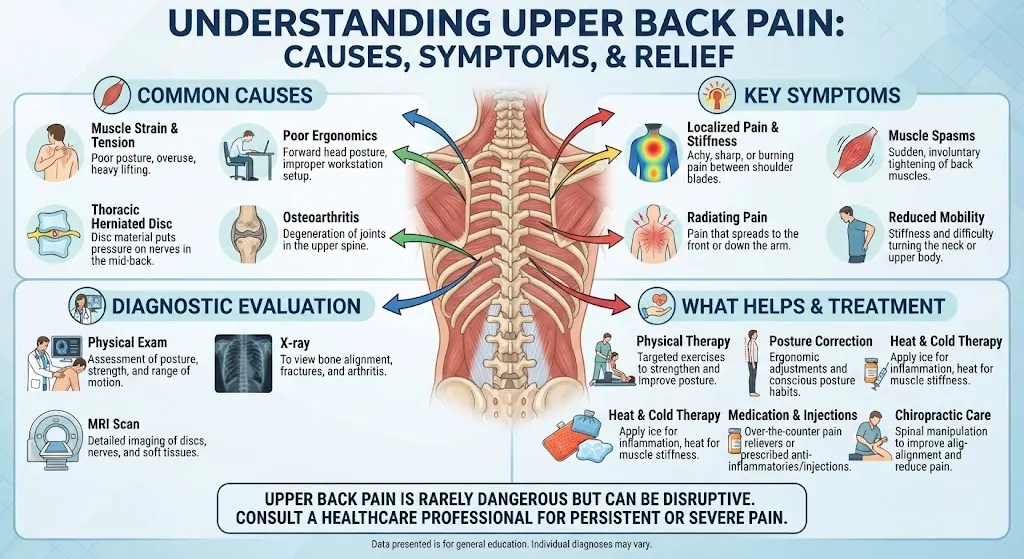
Upper back pain affects the thoracic spine, the section of your back between the base of your neck and the bottom of your rib cage. You might notice aching, stiffness, burning, muscle spasms, or pain around one or both shoulder blades.
Pain that changes with movement or pressure may be musculoskeletal, but this pattern does not rule out other causes. For more detail, see what upper back pain between the shoulder blades may mean.
What Causes Upper Back Pain?
The cause may be a muscle strain, prolonged positioning, a joint problem, or pain referred from somewhere else in the body.
| Possible cause | Common clues | What may help |
|---|---|---|
| Muscle strain or overuse | Pain after lifting, exercise, or repetitive movement | Relative rest and gentle movement |
| Prolonged sitting or posture-related strain | Tightness after desk work or driving | Position changes and movement breaks |
| Rib or thoracic joint irritation | Localized pain with twisting or certain movements | Avoiding painful motions and gradual mobility |
| Spinal or nerve conditions | Persistent pain, burning, tingling, or other neurological symptoms | Clinical assessment when symptoms persist or worsen |
| Referred pain from an internal organ | Pain with breathing or symptoms beyond the back | Prompt medical assessment, depending on symptoms |
1. Muscle strain and overuse
Muscles between the shoulder blades help support your shoulders and upper body. Lifting heavy objects, carrying a loaded bag, working overhead, or suddenly increasing exercise can irritate these muscles. Pain may feel tender, tight, or worse when you move your arms or rotate your torso.
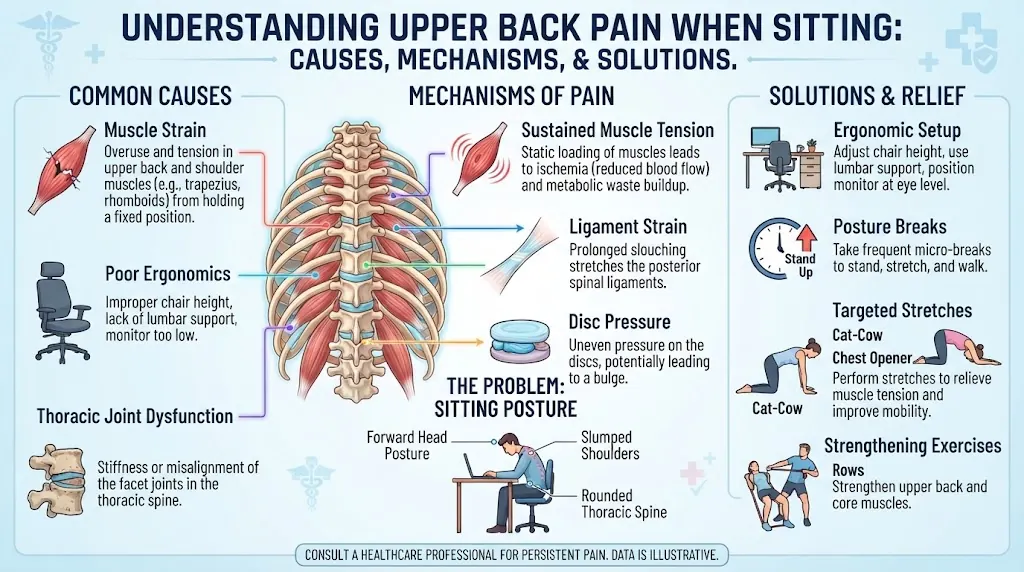
2. Sitting for long periods
Staying in one position can fatigue the muscles around your neck, shoulders, and upper back. If your symptoms build during computer work, review why upper back pain develops when sitting and how poor posture can contribute to upper back pain.
Posture is only one possible factor; there is no single perfect sitting position that prevents all pain. Changing positions regularly is often more useful than trying to hold a rigid posture all day.
3. Pain around the ribs or shoulder blades
Because the ribs connect to the thoracic spine, irritation in the muscles or joints around them can cause pain near the rib cage. Learn more about back and rib pain causes or pain around the ribs and back.
Pain around the shoulder blade can also come from nearby muscles or the shoulder itself. See common reasons a shoulder blade hurts for additional possibilities.
4. Spine and nerve conditions
Arthritis, disc problems, and other spinal conditions can sometimes contribute to upper back discomfort. Burning pain, tingling, numbness, or weakness deserves particular attention, especially if symptoms are new or progressing. Read about burning sensations in the upper back and thoracic back pain causes and treatment.
5. Pain from another part of the body
Not all upper back pain begins in the back. Lung conditions may cause pain with breathing, while heart problems can sometimes cause discomfort in the back along with chest pressure, sweating, nausea, or shortness of breath. Digestive conditions can also cause pain that spreads toward the back.
For example, back problems that cause chest discomfort are one possible explanation, but chest symptoms should never automatically be attributed to the spine.
Why Does My Upper Back Hurt When I Breathe?
Upper back pain with a deep breath can occur when an irritated rib joint or strained muscle moves with the chest. However, pain during breathing can also be associated with lung or heart conditions, including some that need urgent care.
If the pain is new, persistent, unexplained, or accompanied by a cough or fever, seek prompt medical evaluation. Read about possible causes of back pain when breathing, but do not use an online symptom guide to rule out a serious condition.
What Can You Do at Home to Relieve Upper Back Pain?
If the pain is mild, began after ordinary activity, and you have no warning signs, conservative care may help.
- Keep moving gently. Take short walks and change positions regularly rather than staying in bed for long periods.
- Adjust your workspace. Bring your screen closer to eye level, support your arms, and take brief movement breaks during desk work.
- Try heat or cold. A wrapped cold pack may help after a recent strain, while gentle heat may ease muscle tightness. Avoid placing either directly on skin or using it while asleep.
- Reduce aggravating activity temporarily. Avoid heavy lifting, forceful twisting, or stretches that increase the pain. Resume activity gradually as symptoms settle.
- Consider over-the-counter medication cautiously. Medicines such as ibuprofen may not be safe for everyone, including some people with kidney disease, ulcers, certain heart conditions, or those taking blood thinners. Ask a clinician or pharmacist if you are unsure.
For additional guidance, see how to relieve back pain at home and how to choose between heat and ice for back pain.
How Do Common Pain Patterns Compare?
| Pain pattern | Possible explanation | Important limitation |
|---|---|---|
| Worse after desk work | Muscle fatigue or sustained positioning | Does not prove posture is the cause |
| Worse with twisting or reaching | Muscle, rib, or joint irritation | Other causes remain possible |
| Worse with deep breathing | Chest-wall irritation or a lung-related cause | New or unexplained symptoms need assessment |
| Burning or accompanied by tingling | Possible nerve irritation | A clinician may need to assess neurological symptoms |
| Sudden pain with chest pressure or breathlessness | Possible heart or lung emergency | Call 911 immediately |
How Long Does Upper Back Pain Last?
Mild muscle-related pain may start improving over several days, although recovery can take longer depending on the strain and your daily activities. Pain that persists, repeatedly returns, or gets worse should not simply be assumed to be muscular.
There is no single recovery timeline for every cause. A clinician can assess your history and examination findings and decide whether tests or treatment are needed.
When Should You Seek Medical Care?
Monitor mild symptoms
You may be able to try home care briefly when pain is mild, follows familiar activity, and gradually improves without other concerning symptoms.
Arrange a medical appointment
Contact a healthcare professional if pain is severe, worsening, unexplained, interfering with normal activities, or not beginning to improve within about a week. Seek assessment sooner if you have fever, unexplained weight loss, a history of cancer, osteoporosis, recent injury, or new numbness or weakness.
A clinician may ask about the onset and pattern of pain, examine your movement and strength, and decide whether imaging or other tests are appropriate. Scans are not necessary for every episode of back pain.
Get emergency help
Call 911 for upper back pain accompanied by chest pressure or pain, difficulty breathing, fainting, cold sweats, or sudden severe pain with concerning symptoms. Emergency assessment is also needed for sudden or progressive weakness, difficulty walking, or new loss of bladder or bowel control.
Frequently Asked Questions
1. Can poor posture cause upper back pain?
Prolonged positions may contribute to muscle fatigue and discomfort, particularly during desk work. Regular movement and a comfortable workstation may help, but posture is not the only possible cause.
2. Why does my upper back hurt between my shoulder blades?
Possible causes include muscle strain, prolonged sitting, rib-joint irritation, and spinal conditions. Sudden or unexplained pain with chest symptoms or breathlessness needs urgent assessment.
3. Why does my upper back hurt after sleeping?
Sleeping position, an unsupportive pillow, or staying in one position may contribute to morning stiffness. Persistent or worsening pain should be assessed rather than blamed on sleep posture alone.
4. Can stress make upper back pain worse?
Stress can increase muscle tension and affect how the nervous system processes pain. Relaxation, adequate sleep, and regular movement may help alongside treatment for any underlying cause.
5. Is upper back pain from sitting serious?
Often, discomfort that builds during sitting is related to muscle fatigue or sustained positioning. Pain that is severe, persistent, unexplained, or accompanied by other symptoms needs medical evaluation.
6. Should I stretch when my upper back hurts?
Gentle movement may help if it does not increase your symptoms. Stop stretches that cause sharp pain, spreading symptoms, numbness, or weakness.
7. Can upper back pain be related to the lungs?
Yes. Some lung conditions can cause pain in the upper back, especially with breathing or coughing. New pain with shortness of breath or chest pain requires urgent evaluation.
8. Can upper back pain be a sign of a heart problem?
It can be, even when chest discomfort is not the main symptom. Call 911 if upper back pain occurs with chest pressure, breathlessness, sweating, nausea, or faintness.
9. Do I need an MRI for upper back pain?
Not usually for every episode. A clinician may recommend imaging when the history, examination, injury, or warning signs suggest that further investigation is necessary.
10. When should I see a doctor for upper back pain?
Seek care if the pain is worsening, limiting daily activities, not improving, or accompanied by fever, unexplained weight loss, numbness, or weakness. Call 911 for possible heart or lung emergencies or sudden serious neurological symptoms.
The Bottom Line
Upper back pain often relates to muscle strain, prolonged positioning, or irritation around the ribs and spine, but symptoms alone cannot confirm the cause. Try gentle movement and sensible activity changes for mild discomfort, and seek medical advice if pain persists or worsens. Treat chest symptoms, breathing difficulty, and sudden neurological changes as potential emergencies.
Disclaimer: This article is provided for educational and informational purposes only.