In many cases, this type of pain comes from muscle strain, irritation around the ribs, or stiffness in the joints of the upper back. However, pain triggered by movement does not automatically mean the cause is muscular. The timing, severity, recent activities, and presence of other symptoms all matter.
Understanding why your back hurts between your shoulder blades when you move can help you choose reasonable self-care and recognize when an examination is necessary. This guide covers common causes, movement-related symptoms, home relief, recovery, and warning signs that should not be ignored.
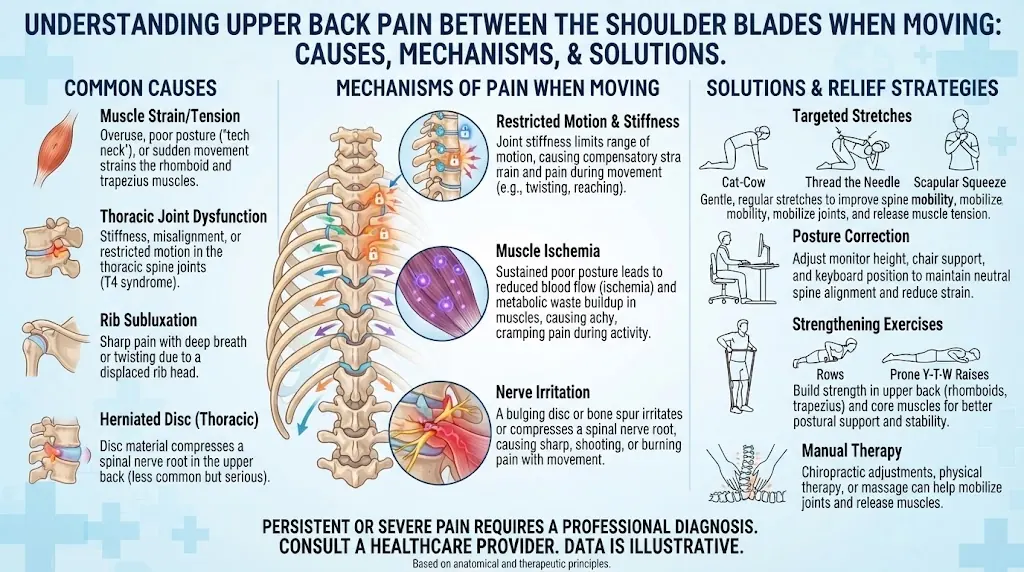
What Causes Pain Between the Shoulder Blades When Moving?
The area between the shoulder blades includes muscles, ribs, joints, nerves, and the thoracic spine. Pain can develop when one of these structures becomes irritated or overloaded.
1. Muscle strain or overuse
Muscles in the upper back help control shoulder movement and stabilize the spine. Lifting heavy objects, carrying bags, reaching overhead, exercising harder than usual, or repeatedly twisting can strain these muscles.
Pain may feel sore, tight, or sharp during a particular movement. The area may also be tender when touched. If symptoms began after physical activity, a muscle strain is one possibility, although an examination may be needed to distinguish it from other causes.
2. Rib or joint irritation
The ribs connect to the thoracic spine through small joints. Irritation around these joints or the surrounding muscles can cause pain when turning, reaching, coughing, or expanding the chest.
You may also notice discomfort along the sides of your back. Learn more about why pain can develop around the ribs and back and common causes of pain between the ribs and spine.
3. Prolonged sitting and muscle tension
Long periods at a computer, driving, or looking down at a device may contribute to upper back fatigue and stiffness. Pain may become more noticeable when you finally move after sitting still.
Posture can play a role, but it is rarely possible to identify posture as the sole cause based on symptoms alone. If discomfort builds during desk work, explore why upper back pain occurs when sitting and how poor posture may contribute to upper back pain.
4. Thoracic spine or nerve problems
Spinal joints, discs, and nearby nerves can also contribute to pain. Burning sensations, tingling, numbness, or pain that spreads around the chest may suggest nerve involvement, although these symptoms have other possible causes.
Persistent or recurring symptoms may warrant an assessment for thoracic back pain causes and treatment options. Pain that feels like burning in the upper back is discussed in more detail in this guide to possible causes of upper back burning.
Which Movements Can Trigger Shoulder-Blade Pain?
The movement that brings on pain can provide useful clues, but it cannot confirm a diagnosis.
| Movement or trigger | Possible explanation | What to notice |
|---|---|---|
| Twisting your torso | Muscle or rib-joint irritation | Whether pain is localized or spreads |
| Reaching overhead | Muscle strain or shoulder-related movement | Whether raising one or both arms triggers symptoms |
| Bending forward | Muscle tension or spinal irritation | Whether pain is new, severe, or persistent |
| Taking a deep breath | Chest-wall irritation or a lung-related condition | Whether breathlessness, fever, or chest pain occurs |
| Moving after prolonged sitting | Stiffness or muscle fatigue | Whether gentle movement gradually eases discomfort |
If the pain occurs mainly when twisting, see why mid-back pain may worsen when twisting. If it is centered around one shoulder blade, common causes of shoulder-blade pain may help you understand other possibilities.
What Can Help Relieve the Pain?
For mild pain that began after ordinary activity and has no warning signs, conservative care may help while the area recovers.
- Keep moving gently. Short walks and comfortable changes of position can help prevent stiffness. Avoid prolonged bed rest.
- Temporarily reduce painful activities. Limit heavy lifting, forceful twisting, and repeated overhead reaching if these movements aggravate symptoms.
- Try heat or cold. A wrapped cold pack may help after a recent strain; gentle heat may ease tight muscles. Protect your skin and avoid falling asleep with a heating pad.
- Adjust your workstation. Position your screen comfortably, support your arms, and take regular breaks from sitting.
- Return to activity gradually. Increase movement as symptoms improve rather than immediately resuming strenuous exercise.
For practical home-care options, read how to relieve back pain at home and when heat or ice may help back pain.
Over-the-counter pain medicines may help some people, but they are not suitable for everyone. Anti-inflammatory medicines such as ibuprofen can pose risks for people with kidney disease, stomach ulcers, certain cardiovascular conditions, or those taking blood thinners. Ask a clinician or pharmacist about safe options if you have medical conditions, take other medicines, or are unsure what to use.
Should You Stretch or Exercise?
Gentle movement may help if it does not increase the pain. Start with comfortable shoulder rolls, easy shoulder-blade movements, or short walks rather than forceful stretches.
Stop any movement that causes sharp or worsening pain, spreading symptoms, tingling, or weakness. If the pain followed a significant injury or you have neurological symptoms, seek medical advice before starting exercises. General guidance on exercises that may help back pain focuses on the lower back, so not every exercise listed there will be appropriate for pain between the shoulder blades.
How Long Does Pain Between the Shoulder Blades Last?
Mild muscle-related pain may begin improving within several days, but recovery varies with the severity of the strain and the activities that aggravate it. More persistent pain may need assessment and a treatment plan tailored to its cause.
| Symptom pattern | Reasonable next step |
|---|---|
| Mild pain after activity that is gradually improving | Gentle movement and monitoring |
| Pain that keeps returning or limits daily activities | Arrange a healthcare appointment |
| Pain that is worsening or unexplained | Seek medical evaluation promptly |
| Pain after a major fall, collision, or significant injury | Seek urgent medical assessment |
| Pain with chest pressure, breathing difficulty, or faintness | Call 911 |
There is no universal recovery timeline. If pain is not beginning to improve within about a week, keeps recurring, or interferes with sleep or normal activities, arrange an evaluation rather than repeatedly pushing through it.
When Is Pain Between the Shoulder Blades an Emergency?
Movement-related pain is often musculoskeletal, but certain accompanying symptoms require immediate attention.
Call 911 if upper back pain occurs with chest pressure or pain, severe shortness of breath, fainting, cold sweats, or sudden severe pain with other concerning symptoms. Heart and lung emergencies can sometimes cause pain in the back rather than obvious chest discomfort.
Seek emergency care for sudden or progressive weakness, difficulty walking, or new loss of bladder or bowel control. If pain started after a serious collision or fall, urgent assessment may also be necessary. Review warning signs that make back pain an emergency.
Arrange prompt medical evaluation for persistent unexplained pain, fever, unexplained weight loss, a history of cancer, or new numbness or tingling. Pain that worsens when breathing, particularly with cough, fever, or breathlessness, should not automatically be attributed to a strained muscle. See possible reasons back pain occurs when breathing.
Frequently Asked Questions
1. Why does my back hurt between my shoulder blades when I twist?
Twisting can load the muscles, ribs, and joints in the upper back. A strain or irritated joint is one possible explanation, but persistent or severe pain may require an examination.
2. Can a pulled muscle cause sharp pain between the shoulder blades?
Yes. A muscle strain may cause sharp pain with certain movements and tenderness when the area is pressed. Sharp pain alone, however, cannot establish that a muscle is the cause.
3. Why does my upper back hurt when I raise my arms?
Raising your arms changes the position and workload of the shoulder blades and surrounding muscles. Muscle strain or a shoulder-related problem may contribute, particularly if the pain began after lifting or repetitive reaching.
4. Should I stop moving if movement causes upper back pain?
Avoid movements that sharply increase pain, but complete bed rest is usually unnecessary for mild musculoskeletal discomfort. Try gentle activity within a comfortable range and seek advice if movement becomes increasingly difficult.
5. Can poor posture cause pain between the shoulder blades?
Prolonged sitting in one position may contribute to muscle fatigue and discomfort. Changing positions regularly and adjusting your workstation may help, although posture is not the only possible cause.
6. Why does the pain spread around my ribs?
Muscles, rib joints, and nerves in the thoracic region can produce pain that travels around the chest wall. Pain around the ribs can also have non-musculoskeletal causes, so new or unexplained symptoms deserve attention.
7. Can stress make shoulder-blade pain worse?
Stress may increase muscle tension and influence how strongly pain is experienced. Relaxation and movement breaks may help, but ongoing pain should not automatically be attributed to stress.
8. Is upper back pain when breathing serious?
It can result from chest-wall muscle or rib irritation, but lung and other medical conditions can also cause it. Seek urgent help for breathing difficulty, chest pressure, faintness, or sudden severe symptoms.
9. Do I need an X-ray or MRI for pain between my shoulder blades?
Not everyone with upper back pain needs imaging. A clinician will consider the duration, injury history, examination findings, and warning signs before deciding whether imaging or other tests are appropriate.
10. When should I see a doctor for pain between my shoulder blades?
Arrange an appointment if the pain persists, worsens, repeatedly returns, or limits normal activities. Seek emergency help for chest pressure, severe breathing difficulty, fainting, or sudden serious neurological symptoms.
The Bottom Line
Pain between the shoulder blades that worsens with movement may come from muscle strain, rib-joint irritation, prolonged sitting, or a spinal problem. Gentle movement, temporary activity adjustments, and careful use of heat or cold may help mild symptoms. Because movement-related pain does not rule out other medical conditions, seek assessment when symptoms persist or worsen, and treat chest pain, breathing difficulty, or sudden neurological changes as emergencies.
Disclaimer: This article is provided for educational and informational purposes only.