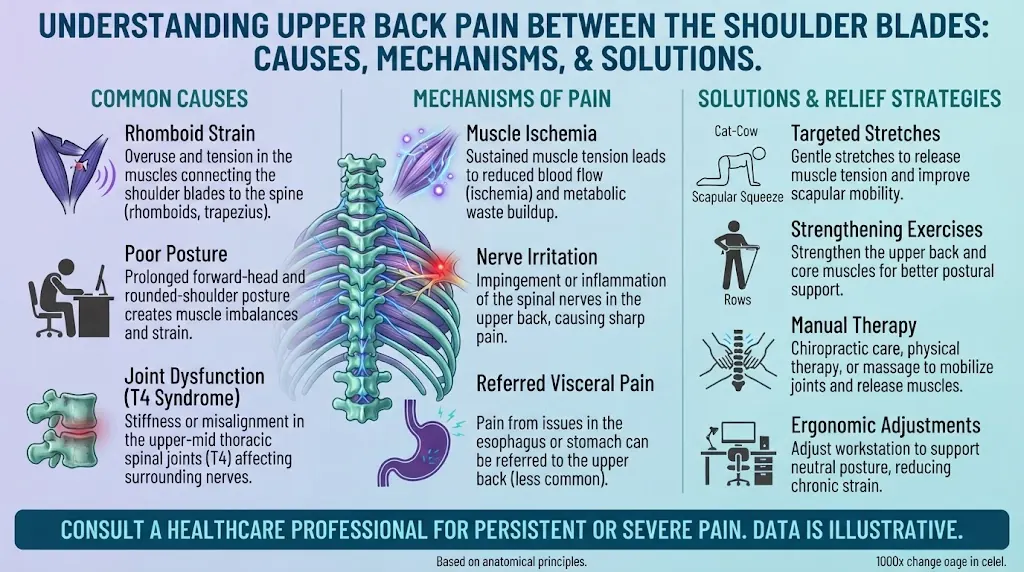
Pain in this area is often related to muscle tension, posture, or irritation of the joints in the thoracic spine, the middle portion of your back. However, pain between the shoulder blades does not always originate in the muscles or spine. Certain heart, lung, and other medical conditions can cause pain in this region, so accompanying symptoms and how the pain begins matter.
Understanding why your upper back hurts between your shoulder blades can help you choose reasonable self-care, recognize when professional evaluation is appropriate, and identify symptoms that need urgent attention. The following guide explains common causes, symptom patterns, treatment options, and warning signs without assuming that one explanation fits everyone.
What Causes Pain Between the Shoulder Blades?
The most common explanations include muscle strain, prolonged positioning, and irritation of structures in the upper or middle back. However, the location of the pain alone cannot establish its cause.
1. Muscle strain and muscle tension
The muscles around your shoulder blades help control your shoulders, neck, and upper back. Repeated reaching, heavy lifting, unfamiliar exercise, or holding one position for too long can overload these muscles.
Muscle-related pain may feel sore, tight, or tender when pressed. It often changes with movement or position and may improve gradually with gentle activity and appropriate rest.
Pain that develops after carrying heavy bags, working overhead, or exercising may be related to a muscle strain. You can also explore whether a muscle strain can cause mid-back pain to understand how this type of discomfort develops.
2. Poor posture and prolonged sitting
Working at a computer, looking down at a phone, or sitting without changing positions can increase discomfort around the shoulder blades. Slouching is not automatically harmful, but staying in one position for extended periods may contribute to muscle fatigue and stiffness.
If your pain builds during work and improves when you move around, your daily routine may be contributing. Learn more about how poor posture may contribute to upper back pain.
3. Thoracic spine joint or disc problems
The thoracic spine contains vertebrae, discs, joints, ligaments, and nerves. Irritation or degenerative changes in these structures can cause pain between the shoulder blades, particularly with certain movements.
Pain may feel deep, localized, or sharp when twisting or extending your back. Less commonly, nerve irritation can cause burning, tingling, or pain that travels around the chest.
For a broader explanation, see common causes and treatment options for thoracic back pain.
4. Neck or shoulder problems
Pain felt between the shoulder blades can sometimes originate in the neck or shoulder rather than the middle back itself. Neck joint irritation, muscle tension, or nerve problems may cause discomfort that spreads into the upper back.
If your pain changes when you turn your head, move your arm, or raise your shoulder, mention these patterns during a clinical assessment.
5. Rib irritation and pain with breathing
The joints and muscles around the ribs can cause upper back pain, particularly when twisting, coughing, or breathing deeply. However, pain that becomes worse with breathing can also arise from lung or chest conditions and should not automatically be attributed to a muscle problem.
Read about why back pain can occur when breathing deeply and pain around the ribs and back.
6. Other medical causes
Less commonly, pain between the shoulder blades may be associated with heart problems, lung conditions, or other internal medical issues. Sudden severe pain, chest pressure, shortness of breath, sweating, or faintness requires emergency assessment.
How Can You Tell What Type of Upper Back Pain You Have?
Symptoms can offer clues, but they cannot reliably identify the cause without considering your medical history and other findings.
| Symptom pattern | Possible explanation |
|---|---|
| Soreness after lifting or exercise | Muscle strain or overload |
| Tightness after desk work | Muscle fatigue or prolonged positioning |
| Pain when twisting or reaching | Muscle, rib, or spinal joint irritation |
| Burning pain with tingling | Possible nerve irritation |
| Pain with deep breathing | Chest wall or lung-related causes, among others |
| Sudden pain with chest pressure or breathlessness | Possible medical emergency |
Pain that changes with movement is often musculoskeletal, but this pattern does not rule out serious conditions.
How Can You Relieve Pain Between the Shoulder Blades at Home?
If the discomfort is mild, began after ordinary activity, and is not accompanied by warning signs, conservative measures may help.
-
Keep moving gently. Take short walks and change positions regularly instead of staying in bed for long periods.
-
Try comfortable heat or cold. Apply a wrapped heat pack or cold pack for 15–20 minutes, depending on which feels better. Avoid direct skin contact.
-
Adjust your workstation. Keep your screen near eye level, support your arms, and take regular movement breaks.
-
Avoid aggravating activities temporarily. Reduce heavy lifting, forceful twisting, and movements that increase pain.
-
Consider medication carefully. Ibuprofen and similar medicines can cause stomach bleeding and kidney complications. Ask a clinician or pharmacist whether they are appropriate for you.
Gentle shoulder movements may be helpful when tolerated, but stop if an exercise increases pain, causes numbness, or produces other new symptoms.
When Should You Seek Medical Care?
| Level of concern | Symptoms and next steps |
|---|---|
| Monitor briefly | Mild pain after activity that is gradually improving without other symptoms |
| Arrange a medical appointment | Persistent, recurring, worsening, unexplained pain or pain interfering with sleep and daily activities |
| Seek urgent or emergency care | Sudden severe pain, chest pressure, difficulty breathing, fainting, new neurological symptoms, or pain following a significant injury |
Call 911 in the United States for possible heart attack symptoms, severe breathing difficulty, or sudden severe chest or back pain. Do not delay emergency care to try home remedies.
A clinician may examine your neck, shoulders, ribs, and thoracic spine and decide whether imaging or other testing is appropriate. Tests depend on the suspected cause; an MRI is not routinely needed for every episode of upper back pain.
For additional guidance, see when back pain is an emergency.
Frequently Asked Questions
1. Why does my upper back hurt between my shoulder blades when I wake up?
Sleeping position, muscle stiffness, or an uncomfortable mattress may contribute. Persistent morning pain or pain accompanied by other symptoms deserves medical assessment.
2. Can stress cause pain between the shoulder blades?
Stress may increase muscle tension and make pain feel more noticeable. It should not be assumed to be the cause of unexplained or severe symptoms.
3. Why does my upper back hurt when I move?
Muscle strain, joint irritation, and rib-related problems can cause movement-related pain. Severe pain or symptoms following an injury need evaluation.
4. Can upper back pain be related to heart problems?
Yes. Heart-related pain can sometimes spread to the upper back, especially when accompanied by chest discomfort, breathlessness, nausea, or sweating. Seek emergency care for suspected heart attack symptoms.
5. Can a pinched nerve cause pain between the shoulder blades?
Nerve irritation in the neck or thoracic spine may cause burning pain, tingling, or discomfort that spreads beyond the back. Persistent numbness or weakness warrants medical evaluation.
6. Is walking good for upper back pain?
Gentle walking may help reduce stiffness and maintain activity. Adjust the duration and pace if symptoms worsen.
7. Should I use heat or ice for shoulder blade pain?
Either may help, depending on the cause and your preference. Use a protective towel and avoid prolonged application or extreme temperatures.
8. Why does my upper back hurt when I take a deep breath?
Rib or muscle irritation is one possibility, but lung and other chest conditions can also cause this symptom. New or unexplained breathing-related pain should be assessed promptly, especially with shortness of breath.
9. How long does pain between the shoulder blades last?
Mild muscle-related pain may improve over several days to a few weeks. Recovery depends on the cause, and persistent or worsening symptoms should be evaluated.
10. Can poor posture permanently damage my upper back?
Ordinary slouching does not automatically cause permanent damage. Varying positions, improving workstation comfort, and building strength may help reduce recurring discomfort.
Conclusion
Pain between the shoulder blades often relates to muscle strain, prolonged positioning, or irritation of the spine and ribs, but other medical conditions can produce similar symptoms. Gentle movement and sensible activity adjustments may help mild discomfort. Seek medical advice if pain persists or worsens, and obtain emergency care for sudden severe pain, chest symptoms, breathing difficulty, or new neurological problems.
Disclaimer: This article is provided for educational and informational purposes only.