However, not every herniated disc causes pain, and not every episode of lower back pain comes from a disc problem. Muscle strain, arthritis, and other spinal conditions can produce similar symptoms. Certain warning signs, particularly new bladder or bowel dysfunction or progressive leg weakness, require prompt medical attention.
Understanding how a herniated disc affects the lower back can help you recognize possible symptom patterns, choose appropriate self-care, and decide when to seek medical evaluation. This guide explains common symptoms, potential causes, treatment options, recovery expectations, and situations that should not be ignored.
How Can a Herniated Disc Cause Lower Back Pain?
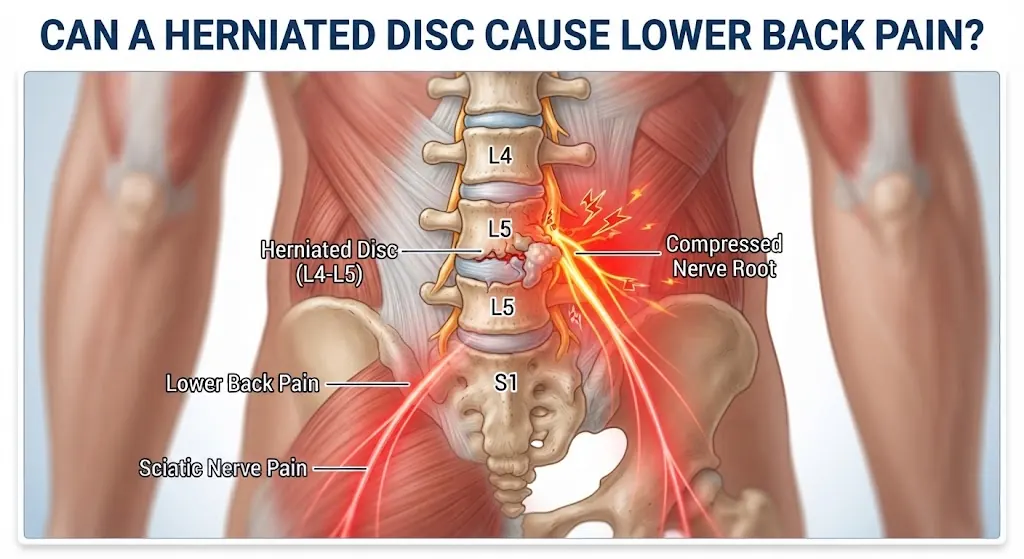
A spinal disc sits between two vertebrae and helps absorb pressure during movement. It has a tough outer layer and a softer, gel-like center. A herniated disc occurs when some of the inner material pushes through a weakened or damaged area of the outer layer.
A herniated disc may contribute to lower back pain through inflammation, irritation of surrounding tissues, or changes in how the spine tolerates movement. If the displaced material affects a nearby nerve root, symptoms may extend beyond the back into the buttock, thigh, calf, or foot.
The severity of pain does not always match the appearance of a disc on an MRI. Some people have disc changes without symptoms, while others experience substantial discomfort from relatively modest findings. Clinicians therefore consider symptoms, physical examination, and imaging findings together when necessary.
What Does Lower Back Pain From a Herniated Disc Feel Like?
Herniated disc symptoms vary, but common patterns include:
-
Localized lower back pain: Aching, sharp discomfort, or stiffness near the lower spine.
-
Pain with movement: Bending forward, lifting, twisting, coughing, or sneezing may aggravate symptoms.
-
Radiating pain: Pain may travel from the lower back into the buttock or leg when a nerve root is affected.
-
Tingling or numbness: Sensory changes may occur along part of the leg or foot.
-
Muscle weakness: Difficulty lifting the front of the foot or pushing off while walking can indicate nerve involvement.
Some people have a herniated disc that causes leg symptoms without much back pain. Others experience back pain without obvious nerve symptoms.
For a closer look at symptom patterns, see what a herniated disc feels like and where herniated disc pain travels.
What Causes a Herniated Disc in the Lower Back?
A herniated disc may develop gradually as spinal discs lose some of their flexibility with age, or it may occur after lifting, twisting, or another physical strain. Sometimes, an ordinary movement exposes a disc that has already weakened.
Common contributing factors include:
-
Age-related disc changes.
-
Repeated heavy lifting or lifting with awkward positioning.
-
A sudden injury or excessive spinal loading.
-
Smoking, which is associated with poorer disc health.
-
Higher body weight, which can increase mechanical demands on the lower back.
These factors can increase risk, but they do not prove that a disc herniation is causing your symptoms. Other conditions, including common causes of lower back pain, may produce similar discomfort.
How Can You Tell if a Herniated Disc Is Causing Your Pain?
Symptoms alone cannot reliably confirm a herniated disc. A clinician considers where the pain occurs, what movements aggravate it, whether nerve symptoms are present, and whether the physical examination supports a disc-related cause.
| Symptom pattern | What it may suggest |
|---|---|
| Localized lower back aching | Muscle strain, disc-related pain, or other spinal causes |
| Back pain extending into one leg | Possible nerve-root irritation, including sciatica |
| Tingling or numbness in the foot | Possible nerve involvement |
| Progressive leg weakness | Potentially significant nerve compression requiring prompt assessment |
| Back pain with fever or unexplained weight loss | A possible nonmechanical cause that needs medical evaluation |
These patterns are clues, not diagnostic rules. For example, a herniated disc causing leg pain without back pain is possible, and leg symptoms can also arise from other conditions.
Herniated disc vs. bulging disc vs. muscle strain
| Condition | Main difference | Typical symptom pattern |
|---|---|---|
| Herniated disc | Inner disc material pushes through the outer layer | Back pain, sometimes with radiating nerve pain |
| Bulging disc | Disc extends beyond its usual boundary over a broader area | May cause no symptoms or contribute to back or leg pain |
| Muscle strain | Muscle fibers or their attachments are injured | Localized soreness, tenderness, and pain with movement |
The terms are not interchangeable, although imaging may reveal overlapping changes. Learn more about the differences between a herniated disc, bulging disc, and muscle strain.
What Can You Do at Home for Herniated Disc Lower Back Pain?
For many people without emergency warning signs, initial treatment focuses on controlling symptoms and maintaining safe movement rather than immediately pursuing surgery.
1. Keep moving within your limits
Brief walks and gentle daily activities may help prevent stiffness. Avoid prolonged bed rest, but reduce movements that repeatedly trigger sharp pain or worsening symptoms. If you notice that lower back pain gets worse when standing for a long time, alternate positions and take short breaks rather than forcing yourself to remain upright.
2. Use heat or ice if it helps
Cold packs may soothe recent pain, while gentle heat may ease muscle tightness. Wrap either source in a towel and apply it for about 15–20 minutes at a time, checking your skin regularly. Avoid direct contact with the skin, especially if sensation is reduced.
You can compare the options in this guide to choosing heat or ice for back pain.
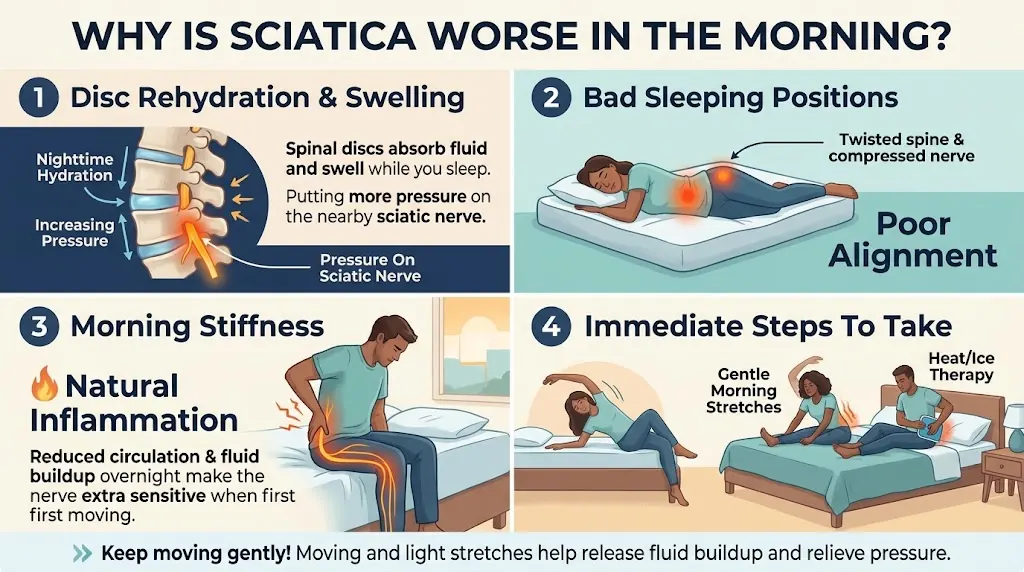
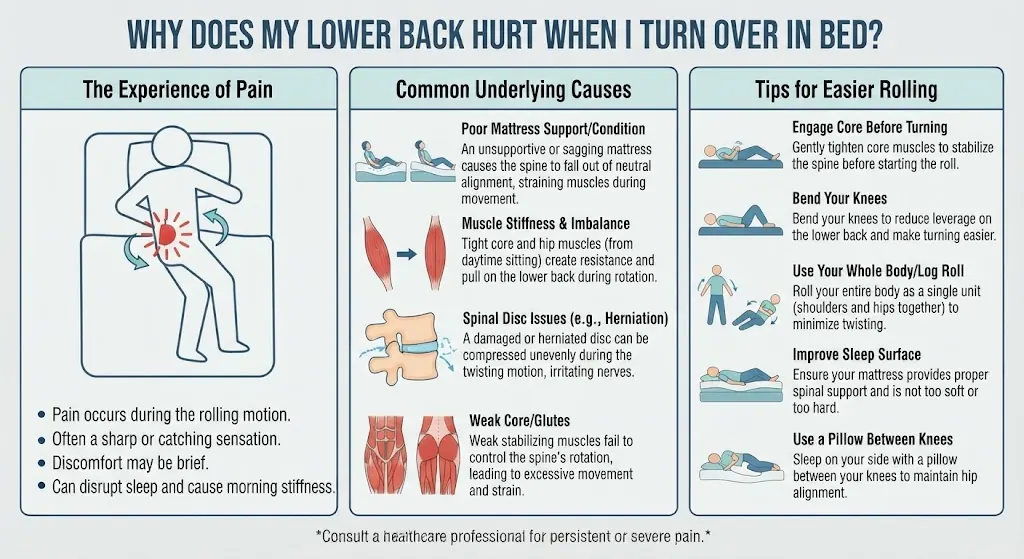
3. Adjust sleeping and sitting positions
Choose a comfortable sleeping position that does not increase leg pain. Side sleeping with a pillow between the knees or back sleeping with a pillow under the knees may help some people. If lower back pain worsens at night, consider whether your position or mattress contributes to discomfort, but do not assume that nighttime pain is always harmless.
When sitting, support your back, keep your feet supported, and change positions regularly. If getting out of a chair triggers lower back pain, try standing gradually while using your legs and armrests for support.
4. Be cautious with exercises and medication
Gentle movement may help, but aggressive stretching, heavy lifting, or exercises that worsen radiating pain should be avoided. A physical therapist can tailor movement to your symptoms; see exercises for lower back pain for general movement options.
Over-the-counter pain medicines may help some people, but they are not appropriate for everyone. Nonsteroidal anti-inflammatory drugs (NSAIDs), such as ibuprofen, can cause stomach bleeding, kidney problems, and other complications. Ask a clinician or pharmacist about suitability, especially if you take blood thinners, have kidney disease, have a history of ulcers, or are pregnant.
For additional practical strategies, explore how to relieve back pain at home and whether physical therapy can help lower back pain.
How Long Does Lower Back Pain From a Herniated Disc Last?
Recovery varies according to the severity of symptoms, whether a nerve is affected, and the person’s overall health. Many people improve over several weeks with conservative treatment, although numbness, weakness, or radiating pain can last longer.
| Recovery stage | What may happen |
|---|---|
| First several days | Pain may fluctuate, and some movements may be difficult |
| First few weeks | Pain and mobility may begin to improve |
| Several weeks to a few months | Many people experience continued improvement with appropriate care |
| Persistent or worsening symptoms | Further assessment may be needed to review the diagnosis and treatment plan |
This is a general guide, not a guaranteed timeline. The disc itself may remain abnormal on imaging even after symptoms improve. For a more detailed explanation, see how long a herniated disc takes to heal.
When Should You See a Doctor for Lower Back Pain?
Arrange a medical appointment if pain is severe, keeps returning, interferes with sleep or daily activities, or fails to improve with reasonable self-care. Seek earlier assessment if pain travels down a leg and is accompanied by persistent numbness or weakness.
A clinician may assess your walking, muscle strength, reflexes, sensation, and range of motion. An MRI is not automatically necessary for every episode of lower back pain. It may be appropriate when symptoms persist despite treatment, significant nerve problems are suspected, or the result would affect decisions about care. Learn more about when lower back pain needs an MRI.
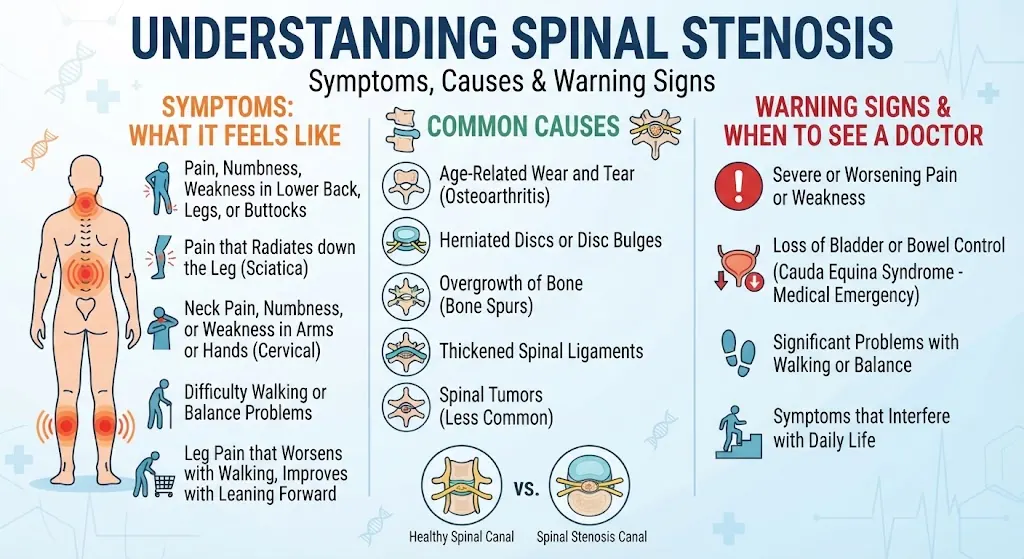
Warning signs that need urgent attention
Seek emergency care immediately
-
New difficulty urinating, inability to empty the bladder, or loss of bladder or bowel control.
-
Numbness around the groin, genitals, or inner thighs.
-
Sudden or rapidly worsening weakness in one or both legs.
These symptoms can indicate serious compression of the nerves supplying the lower body, including cauda equina syndrome.
Obtain prompt medical assessment
-
Back pain with fever or chills.
-
Severe pain after a significant fall or accident.
-
Unexplained weight loss or a history of cancer alongside new back pain.
-
Persistent or progressive leg numbness or weakness.
These features may require investigation for causes beyond an uncomplicated disc problem.
For more guidance, review when back pain is an emergency and when to see a doctor for lower back pain.
What Treatments Are Available if Home Care Is Not Enough?
Treatment depends on pain severity, nerve involvement, and how much symptoms affect daily life.
-
Physical therapy: Helps improve movement, strength, and activity tolerance through an individualized program.
-
Medication: A clinician may recommend appropriate pain relief after considering your medical history and medication risks.
-
Epidural steroid injections: May provide temporary relief for selected people with nerve-root pain, but do not repair the disc.
-
Surgery: Procedures such as discectomy may be considered when significant nerve compression causes persistent symptoms despite nonsurgical treatment, or when urgent neurological problems require intervention.
Surgery is not necessary for every herniated disc. If symptoms persist, ask about what happens if a herniated disc goes untreated and whether a herniated disc can get worse. The appropriate plan depends on your symptoms and examination, not imaging alone.
Frequently Asked Questions
1. Can a herniated disc cause lower back pain without sciatica?
Yes. A herniated disc can cause localized back pain without irritating a nerve root enough to produce leg symptoms. However, muscle and joint conditions can cause similar pain.
2. Is walking good for a herniated disc?
Gentle walking may help maintain mobility and reduce stiffness. Start with short distances and stop or modify the activity if pain, numbness, or weakness increases.
3. Should I rest if my herniated disc hurts?
Brief rest periods may help during painful episodes, but prolonged bed rest can increase stiffness and reduce conditioning. Resume gentle activities as tolerated unless a clinician advises otherwise.
4. Can a herniated disc heal on its own?
Symptoms often improve without surgery, and the body can gradually reduce or reabsorb some herniated disc material. Improvement varies, and persistent or worsening neurological symptoms need medical assessment.
5. Is a herniated disc the same as sciatica?
No. A herniated disc is a structural change in a spinal disc, whereas sciatica describes pain or other symptoms associated with irritation of the sciatic nerve or its contributing nerve roots. A disc herniation is one possible cause of sciatica. See herniated disc vs. sciatica.
6. Can a herniated disc cause permanent nerve damage?
Severe or prolonged nerve compression can sometimes cause lasting weakness, numbness, or other neurological problems. New bladder or bowel dysfunction, saddle numbness, or rapidly progressing weakness requires emergency evaluation.
7. Do I need an MRI to confirm a herniated disc?
Not always. Many cases can initially be assessed through symptoms and a physical examination, with MRI reserved for situations in which imaging is likely to change treatment or investigate concerning symptoms.
8. What helps herniated disc pain without medication?
Gentle movement, comfortable positioning, activity adjustments, and appropriately applied heat or ice may help. A physical therapist can recommend exercises suited to your symptoms. More options are covered in ways to relieve lower back pain without medicine.
9. Can sitting make a herniated disc hurt more?
Yes. Prolonged sitting can aggravate symptoms in some people, particularly when it increases pain radiating into the leg. Try changing positions regularly and taking brief movement breaks.
10. When might surgery be necessary?
Surgery may be considered for persistent, disabling symptoms that have not improved with appropriate nonsurgical treatment, especially when examination and imaging findings agree. Emergency surgery may be necessary for certain forms of severe nerve compression.
The Bottom Line
A herniated disc can cause lower back pain with or without radiating leg symptoms. Gentle movement, appropriate symptom management, and individualized treatment help many people improve without surgery. Seek medical evaluation for persistent or worsening symptoms, and get emergency care for new bladder or bowel dysfunction, saddle numbness, or rapidly progressing leg weakness.
Disclaimer: This article is provided for educational and informational purposes only.