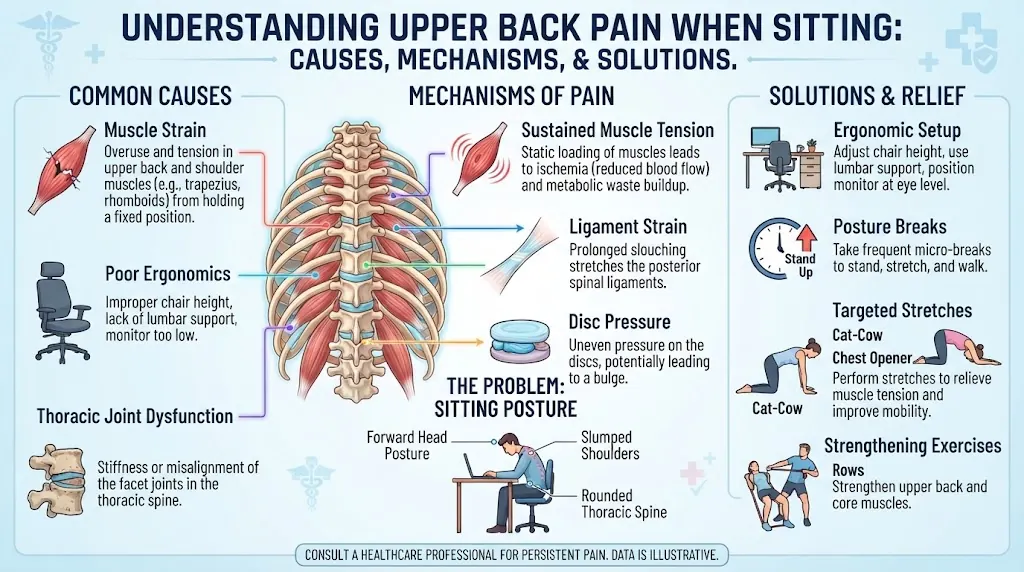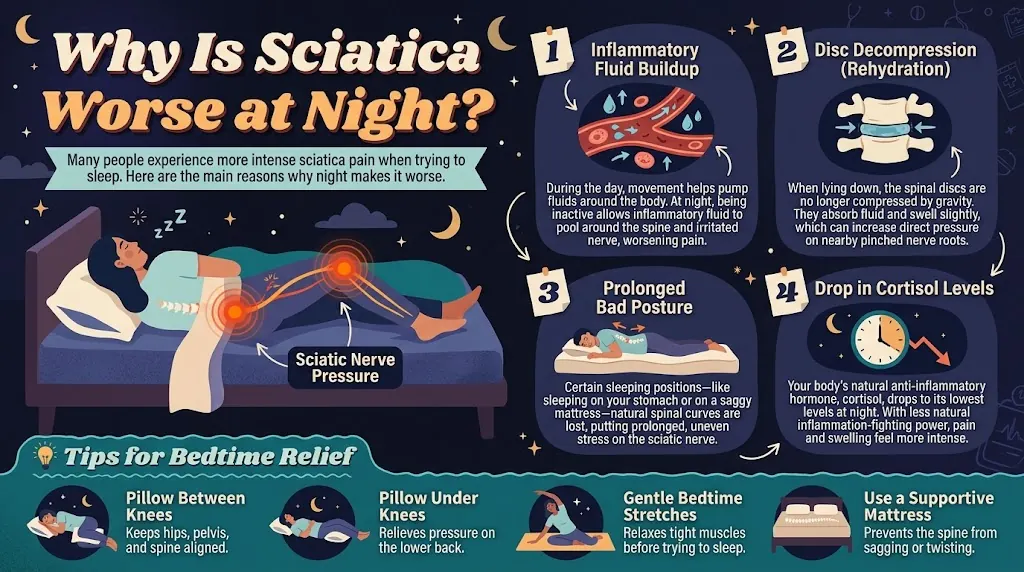
This pattern is relatively common and does not automatically mean you have a serious spinal problem. However, the timing of your symptoms, how long the stiffness lasts, your sleeping position, and whether you experience other symptoms can help distinguish ordinary muscle stiffness from a condition that needs medical evaluation.
Understanding why your lower back hurts in the morning but improves during the day can help you choose appropriate self-care, adjust your sleep and movement habits, and recognize when to seek medical advice. The cause is not always obvious, so pay attention to how your symptoms change over time rather than relying on morning pain alone to identify a condition.
What Causes Lower Back Pain in the Morning That Gets Better Later?
Lower back pain that improves with movement may be related to muscle stiffness, prolonged positioning during sleep, age-related spinal changes, or inflammatory conditions. The pattern provides useful information, but it cannot establish a diagnosis by itself.
Common explanations include:
1. Muscle stiffness after sleeping
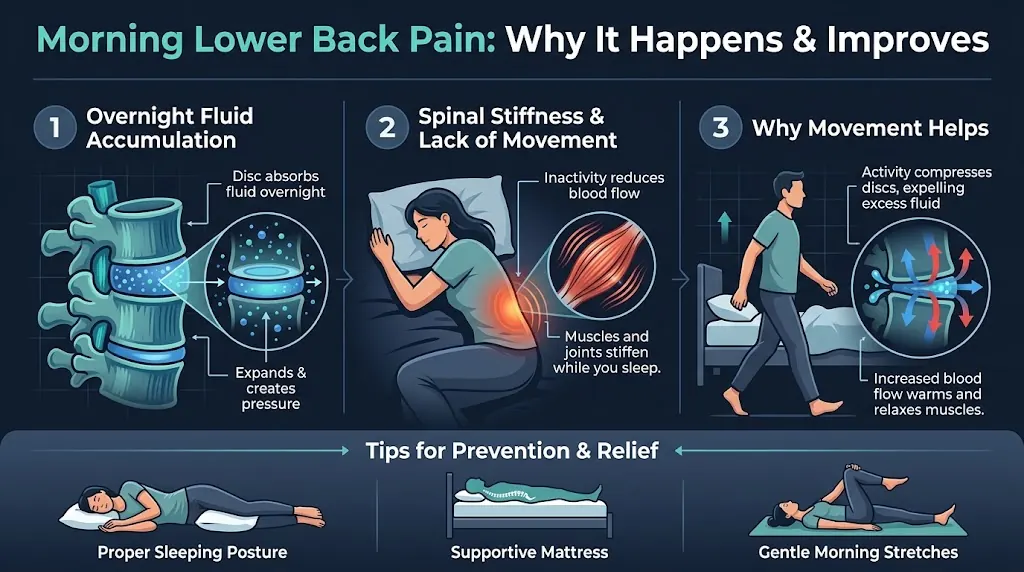
Your lower back muscles and surrounding tissues remain in relatively similar positions for hours while you sleep. If you have recently increased your physical activity, spent a long time sitting, or strained your back, those tissues may feel stiff when you first get up.
Gentle movement increases circulation and allows your muscles and joints to move through their normal range. This can explain why your discomfort gradually decreases after walking, showering, or completing your morning routine.
2. Sleeping position or mattress support
Sleeping with your spine in an uncomfortable position may aggravate existing back discomfort. A mattress that does not feel supportive to you can also make it harder to find a comfortable sleeping position, although no single mattress type is best for everyone.
If pain regularly appears after waking, consider whether you sleep on your stomach, twist your torso, or remain in one position for long periods. Guidance on the best sleeping positions for lower back pain may help you experiment with more comfortable positioning.
3. Degenerative changes in the spine
Age-related changes involving spinal discs and joints can contribute to lower back pain and stiffness. These changes are common as people get older, but imaging findings do not always correspond to symptoms.
Pain that eases after moving may occur with these conditions, but it is not specific to them. A clinician can assess whether your symptoms suggest a spinal problem or another explanation.
4. Inflammatory back conditions
Some inflammatory conditions cause stiffness after rest, particularly in the morning, that improves with movement. Stiffness lasting 30 minutes or longer, pain that repeatedly wakes you during the second half of the night, and symptoms that began at a younger age may warrant further assessment.
Morning stiffness alone does not mean you have inflammatory arthritis. The overall pattern, medical history, examination, and sometimes additional tests help determine whether inflammation may be involved.
Why Does Morning Back Pain Improve After Walking Around?
When pain is related to stiffness after rest, gentle movement may make the lower back feel more comfortable. Walking, changing positions, and performing ordinary daily activities can gradually reduce the feeling of tightness.
The pattern can also provide clues about what needs attention.
| Morning symptom | Possible explanation | What to consider |
|---|---|---|
| Mild stiffness that eases quickly | Stiffness after prolonged rest | Gentle movement and sleep-position adjustments |
| Pain after a strenuous day | Muscle irritation or strain | Temporarily reduce aggravating activities |
| Stiffness lasting more than 30 minutes | Several possible causes, including inflammation | Discuss persistent symptoms with a clinician |
| Pain traveling into the buttock or leg | Possible nerve irritation or another musculoskeletal cause | Seek assessment if persistent, worsening, or associated with numbness |
| Pain that repeatedly wakes you at night | Several possible causes, including inflammatory conditions | Arrange medical evaluation if it persists |
These patterns are clues, not diagnostic rules. For example, morning stiffness lasting more than 30 minutes is more meaningful when it occurs alongside persistent pain, night waking, or improvement with exercise.
How Can You Relieve Lower Back Pain in the Morning?
The goal is to ease into movement without forcing your back through painful positions. Start with small adjustments and notice whether they improve your symptoms over several mornings.
1. Get out of bed gradually
Instead of sitting straight up, roll onto your side, move your legs toward the edge of the bed, and use your arms to help push yourself upright. Sit briefly before standing if you feel stiff or unsteady.
If you experience pain specifically when rising, see guidance on why your lower back hurts when you get out of bed.
2. Try gentle morning movement
Start with a few minutes of easy walking around your home. If comfortable, try gentle pelvic tilts or slow knee movements while lying on your back.
Stop any movement that causes sharp pain, increases symptoms down your leg, or produces new numbness or weakness. Not every stretch is appropriate for every cause of back pain.
For more options, explore these exercises for lower back pain and stretches for tight lower back muscles.
3. Use heat if it helps
A warm shower or a heating pad used according to its instructions may ease muscle stiffness. Protect your skin, avoid excessive heat, and do not fall asleep on a heating pad unless the device is specifically designed for that use.
If cold therapy feels more comfortable, it may also help some types of back pain. Learn when to choose heat or ice for back pain.
4. Adjust your sleeping position
Side sleeping with a pillow between your knees or back sleeping with a pillow beneath your knees may feel more comfortable. These are options to try, not mandatory positions; comfort and your other health needs matter.
If your mattress is sagging or consistently uncomfortable, compare alternatives using this guide to the best mattress for back pain.
5. Stay active during the day
Prolonged bed rest can contribute to stiffness and delay a return to normal activities. Continue walking and performing manageable daily tasks, but temporarily modify heavy lifting, deep bending, or twisting if these movements aggravate your symptoms.
A practical starting point is to stay active or rest with lower back pain based on your tolerance, increasing activity gradually rather than pushing through worsening pain.
Research-based clinical guidance generally favors remaining active and avoiding routine imaging for uncomplicated lower back pain when there are no concerning signs. Imaging decisions depend on the examination and whether serious causes are suspected.
How Long Should Morning Lower Back Pain Last?
There is no single duration that applies to everyone. Brief stiffness that improves as you move is different from persistent pain that limits daily activities or repeatedly interrupts sleep.
| Symptom pattern | Reasonable next step |
|---|---|
| Mild discomfort that steadily improves | Monitor symptoms and continue comfortable activity |
| Pain that persists for several weeks or interferes with daily life | Arrange a medical evaluation |
| Morning stiffness lasting over 30 minutes with recurring pain | Discuss possible inflammatory causes with a clinician |
| Progressive pain, new neurological symptoms, or concerning accompanying symptoms | Seek prompt or emergency assessment, depending on severity |
Many episodes of uncomplicated lower back pain improve within a few weeks, although some take longer or recur.
If your symptoms keep returning, consider tracking when they start, how long they last, and what makes them better or worse.Useful related information includes how long lower back pain can last and why back pain keeps coming back.
When Should You See a Doctor for Morning Back Pain?
Morning back pain that improves with movement is not automatically serious, but persistent or unusual symptoms deserve attention. A clinician may ask when the pain began, how long morning stiffness lasts, whether movement helps, and whether you have other symptoms.
An examination may assess spinal movement, muscle tenderness, leg strength, sensation, and reflexes. Depending on your history and findings, further tests may be appropriate. An MRI is not routinely necessary for uncomplicated back pain; it is considered when results are likely to change management or when specific warning signs are present
If your pain travels down your leg, you can also review what sciatica feels like and its early signs. Pain that radiates into the leg does not automatically mean sciatica, so persistent symptoms should be assessed rather than self-diagnosed.
Warning signs: When to seek medical care
| Level of concern | Symptoms | What to do |
|---|---|---|
| Monitor if mild and improving | Temporary stiffness without other symptoms that improves with gentle movement | Continue comfortable activity and monitor the pattern |
| Arrange a medical appointment | Pain lasting several weeks, recurring morning stiffness, unexplained weight loss, or pain that regularly disrupts sleep | Contact a healthcare professional |
| Seek urgent medical assessment | Severe or rapidly worsening pain, fever with back pain, or feeling seriously unwell | Seek same-day urgent care |
| Seek emergency care | New difficulty urinating, loss of bladder or bowel control, numbness around the groin or anus, or rapidly worsening leg weakness | Go to an emergency department immediately |
These symptoms do not all indicate the same condition, but certain combinations require prompt assessment. New bladder or bowel dysfunction, saddle-area numbness, or significant neurological changes can signal a serious problem involving spinal nerves.
Frequently Asked Questions
1. Is it normal for my lower back to hurt when I wake up?
Occasional morning stiffness can happen after prolonged rest, physical exertion, or sleeping in an uncomfortable position. Frequent, persistent, or worsening pain should not automatically be dismissed as normal.
2. Why does my lower back hurt for 10–30 minutes after waking?
Your muscles and joints may need time to adjust after several hours of limited movement. If the pain repeatedly lasts longer, becomes more severe, or affects daily activities, consider a medical assessment.
3. Can a bad mattress cause morning lower back pain?
An uncomfortable or sagging mattress may contribute to symptoms, particularly if you consistently feel worse after sleeping on it. However, changing mattresses will not address every underlying cause of back pain.
4. Can morning back pain be a sign of arthritis?
Yes, some forms of spinal arthritis can cause stiffness after rest. Inflammatory arthritis is more concerning when morning stiffness is prolonged and accompanied by persistent pain that improves with activity, but these symptoms alone cannot confirm arthritis.
5. Should I stretch before getting out of bed?
Gentle movement may help, but you do not need to perform a full stretching routine before standing. Start slowly and stop if a movement causes sharp pain, worsening leg symptoms, or new weakness.
6. Is walking good for morning lower back pain?
Easy walking may help reduce stiffness and maintain normal activity when tolerated. Start with a comfortable duration and shorten your walk if pain steadily increases or neurological symptoms develop.
7. Why does my back hurt in the morning but not at night?
Symptoms can change with sleeping position, the amount of movement during the day, and the underlying cause. If morning pain is persistent or increasingly severe, the fact that you feel better at night does not rule out a condition that needs evaluation.
8. Can sleeping on my stomach cause lower back pain?
For some people, stomach sleeping increases discomfort because of the position of the lower spine. Try side or back sleeping if comfortable, but choose a position that supports restful sleep and does not worsen your symptoms.
9. When should I worry about morning back stiffness?
Arrange an appointment if stiffness is persistent, lasts more than 30 minutes repeatedly, or occurs alongside pain that wakes you at night. Seek emergency care for new bladder or bowel dysfunction, numbness around the groin, or rapidly worsening weakness.
10. Can morning lower back pain go away on its own?
Yes, many episodes of uncomplicated lower back pain improve over days to weeks. Gentle activity and comfortable sleep positioning may help, but persistent, recurrent, or worsening symptoms warrant medical advice.
What Should You Do Next?
If your lower back hurts in the morning but improves during the day, start by noting how long the stiffness lasts, whether gentle movement helps, and whether symptoms are becoming more frequent. You can also compare your symptoms with information about common causes of back pain, lower back pain symptoms, and how to loosen a stiff lower back.
If walking seems helpful, review whether walking is good for lower back pain. If symptoms disturb your sleep, consider why back pain gets worse at night. Persistent stiffness may also warrant discussion of whether arthritis can cause back pain.
If symptoms do not improve, ask your clinician whether a lower back MRI is necessary and which type of doctor treats back pain. These decisions depend on your symptoms, examination, and medical history.
The main takeaway is that morning lower back pain often improves with gentle movement, but the pattern alone cannot identify its cause. Adjust your routine, stay comfortably active, and seek medical evaluation when symptoms persist or warning signs appear.
Disclaimer: This article is provided for educational and informational purposes only.