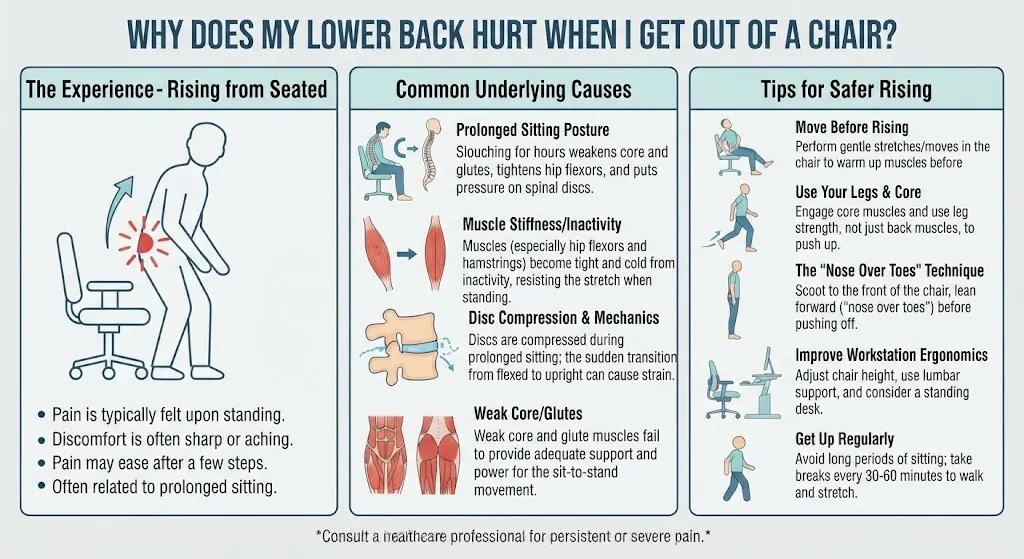
Lower back pain when standing up from a seated position is often related to muscle stiffness, strain, or sensitivity in the joints and tissues supporting your spine. However, pain during this movement does not automatically mean you have a herniated disc or another serious condition. The location of the pain, how long it lasts, and whether it spreads into your legs can help guide the next steps.
Understanding why your lower back hurts when you get out of a chair can help you adjust how you sit, stand, and move. This guide explains common causes, practical ways to reduce discomfort, expected recovery, and symptoms that need medical attention.
What Causes Lower Back Pain When Getting Out of a Chair?
Standing up requires your hips, legs, abdominal muscles, and back to work together. After sitting for a long time, your muscles and joints may feel stiff, and moving from a seated position can temporarily aggravate sensitive tissues.
Common possibilities include the following.
1. Muscle stiffness or strain
Staying in one position for an extended period can make your lower back feel tight or uncomfortable. A recent increase in activity, lifting something heavy, or an awkward movement may also strain the muscles supporting your spine.
Pain related to muscle strain often feels sore, tight, or sharp during the transition from sitting to standing. It may improve as you move gently, although symptoms vary.
2. Prolonged sitting and posture
Slouching, sitting without adequate support, or remaining in a fixed position for hours may contribute to discomfort. There is no single perfect sitting posture, but regularly changing positions can help prevent sustained pressure and muscle fatigue.
If symptoms mainly develop after desk work, review how to sit to avoid lower back pain and consider whether your chair and workstation encourage comfortable movement.
3. Irritation of spinal joints or discs
The small joints in the spine and the discs between vertebrae can contribute to lower back pain. Some people experience discomfort when moving from sitting to standing because the transition changes how forces are distributed through the lower back.
A herniated disc may cause back pain, sometimes with pain traveling into the buttock or leg. However, many people have disc changes on imaging without symptoms, so the movement that triggers pain cannot establish a diagnosis.
4. Sciatica or spinal stenosis
If pain travels down one leg or occurs with tingling, numbness, or weakness, nerve irritation may be involved. Early signs of sciatica can include shooting or burning pain that extends from the lower back or buttock into the leg.
Spinal stenosis, which involves narrowing around the spinal nerves, can also cause back or leg symptoms, particularly during standing or walking. These conditions need consideration when symptoms extend beyond localized back discomfort.
Why Does My Back Hurt More When I Stand Up After Sitting?
The transition from sitting to standing requires you to lean forward, shift your weight, and straighten your hips and knees. If your back is sensitive or stiff, this movement can temporarily increase discomfort.
The pattern can provide useful clues:
| What you notice | Possible explanation |
|---|---|
| Stiffness after sitting that eases with movement | Muscle or joint stiffness |
| Pain when bending forward to stand | Sensitivity to bending or mechanical strain |
| Pain spreading into the buttock or leg | Possible nerve irritation |
| Pain with standing and walking that improves when sitting | Possible spinal stenosis or another condition affected by posture |
These patterns are not diagnostic. For a broader overview, see what causes lower back pain.
How Can You Get Out of a Chair Without Hurting Your Back?
A few simple adjustments may make standing more comfortable.
-
Move toward the front of the chair. Keep your feet flat on the floor and approximately hip-width apart.
-
Lean forward from your hips. Keep your back in a comfortable, natural position rather than suddenly twisting.
-
Push through your feet. Use your legs to help you stand, and use the armrests if needed.
-
Straighten gradually. Avoid forcing your back into an exaggerated arch.
-
Take a few gentle steps. If walking feels comfortable, brief movement may help ease stiffness.
If sitting for long periods triggers symptoms, try changing positions regularly rather than waiting until you feel pain. These movement breaks to prevent back pain can be incorporated into your workday.
What Else Can Help at Home?
For mild pain without warning signs, consider gentle walking, comfortable movements, and temporary modification of activities that aggravate symptoms. A warm pack may ease stiffness, while a wrapped cold pack may help after a recent strain. Avoid applying either directly to your skin.
You can also explore ways to relieve back pain at home, heat or ice for back pain, and gentle exercises for lower back pain. Stop any movement that substantially increases pain or causes new symptoms in your leg.
How Long Should This Pain Last?
Mild discomfort caused by temporary stiffness or muscle strain may improve over several days, although recovery can take a few weeks. Pain that persists, worsens, or repeatedly returns when you stand up deserves further assessment.
| Symptom course | What to do |
|---|---|
| Mild pain that steadily improves | Continue gentle activity as tolerated |
| Pain that keeps returning after sitting | Review your habits and consider a clinical assessment |
| Pain that persists for several weeks | Arrange a medical appointment |
| Severe pain, new weakness, or other warning signs | Seek prompt or emergency care, depending on symptoms |
A clinician may assess your movement, strength, sensation, and medical history. Imaging is not routinely needed for uncomplicated lower back pain, but it may be appropriate when examination findings suggest a serious condition or when results would change treatment. Guidance on when to see a doctor for lower back pain can help you decide on the next step.
When Is Lower Back Pain a Warning Sign?
Seek emergency care if back pain occurs with new loss of bladder or bowel control, difficulty urinating, numbness around the groin or buttocks, or rapidly worsening leg weakness. These can be signs of serious nerve compression.
Arrange prompt medical assessment if you have fever with significant back pain, unexplained weight loss, a history of cancer, or pain following a substantial injury. Persistent pain that disrupts sleep or daily activities also deserves evaluation. Learn more about warning signs that make back pain an emergency.
Frequently Asked Questions
1. Why does my lower back hurt when I stand up after sitting for an hour?
Remaining in one position can contribute to stiffness and discomfort. Try changing positions more frequently and notice whether gentle movement eases your symptoms.
2. Why is my first step painful but walking becomes easier?
The transition from sitting to standing may aggravate stiff or sensitive tissues. Improvement with movement is common, but persistent or worsening pain should be assessed.
3. Can a weak core cause pain when getting out of a chair?
Reduced trunk strength may make some movements more demanding, but it is not the only possible cause. A tailored strengthening plan may help if weakness contributes to your symptoms.
4. Should I stretch before standing up?
Gentle movement while seated may help you feel less stiff. Avoid forceful stretches, especially if they cause sharp pain or symptoms that travel down your leg.
5. Can my office chair cause lower back pain?
A chair that encourages an uncomfortable position or limits movement may contribute to symptoms. Consider whether a poor office chair causes lower back pain and adjust your workstation for comfort.
6. Is lower back pain when standing up a sign of sciatica?
Not necessarily. Sciatica more commonly involves pain traveling into the buttock or leg, sometimes with tingling, numbness, or weakness.
7. Should I rest until the pain goes away?
Prolonged bed rest is generally not recommended for uncomplicated back pain. Continue comfortable daily activities as tolerated and temporarily modify movements that worsen symptoms.
8. Can arthritis make it painful to stand up?
Yes. Spinal arthritis can contribute to stiffness and pain during movement, particularly in some older adults. A clinical assessment can help determine whether arthritis or another cause is involved.
9. Why does my lower back hurt when I get out of bed, too?
Morning stiffness may have several causes, including prolonged immobility overnight and spinal or muscular conditions. If stiffness is persistent or accompanied by other symptoms, discuss it with a healthcare professional.
10. What if my lower back pain keeps coming back every time I stand?
Repeated pain may reflect ongoing mechanical strain or another underlying condition. Consider an assessment if it affects daily activities, persists, or progressively worsens; back pain that keeps coming back may need a more individualized treatment plan.
Conclusion
Lower back pain when getting out of a chair often relates to stiffness, muscle strain, or sensitivity in the structures supporting the spine. Changing positions regularly, standing up gradually, and staying gently active may help. If symptoms persist, worsen, or interfere with everyday activities, seek professional assessment, and do not ignore emergency warning signs.
Disclaimer: This article is provided for educational and informational purposes only.