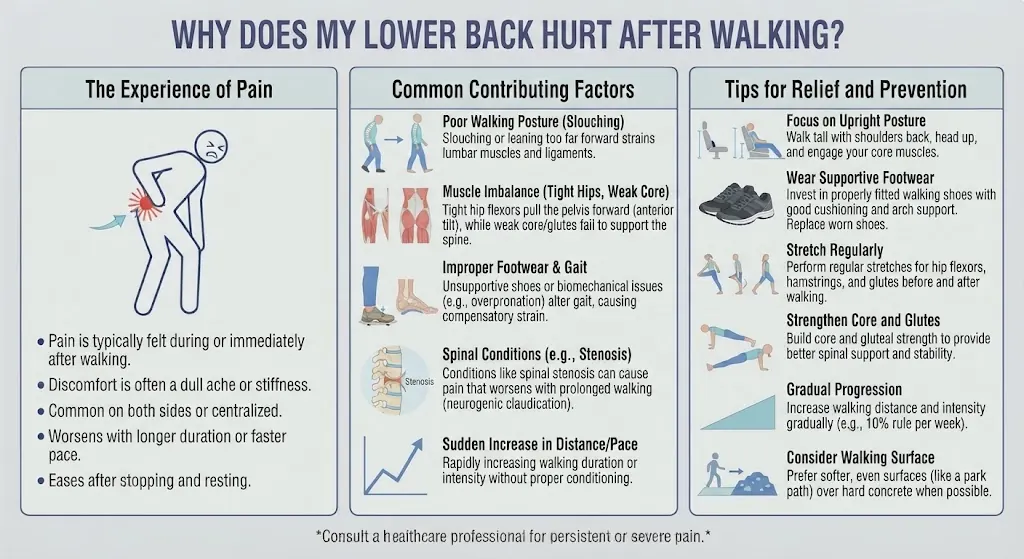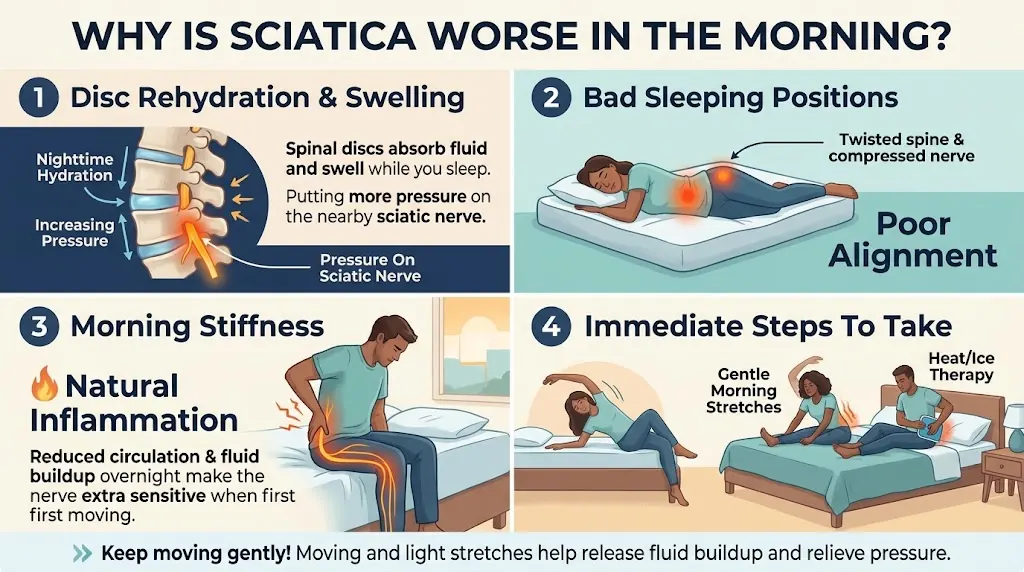
Not every ache means you have injured your spine. Mild muscle soreness can occur after unfamiliar or strenuous activity, but sharp pain, worsening discomfort, or symptoms that travel into your leg may indicate something other than ordinary post-workout soreness. The timing, intensity, and type of exercise can help you understand what might be happening.
This guide explains why your lower back hurts after exercise, how to distinguish expected muscle soreness from a possible injury, what you can safely do for relief, and when to seek medical care. It also covers how to adjust your workouts and return to exercise without unnecessarily aggravating your symptoms.
What Causes Lower Back Pain After Exercise?
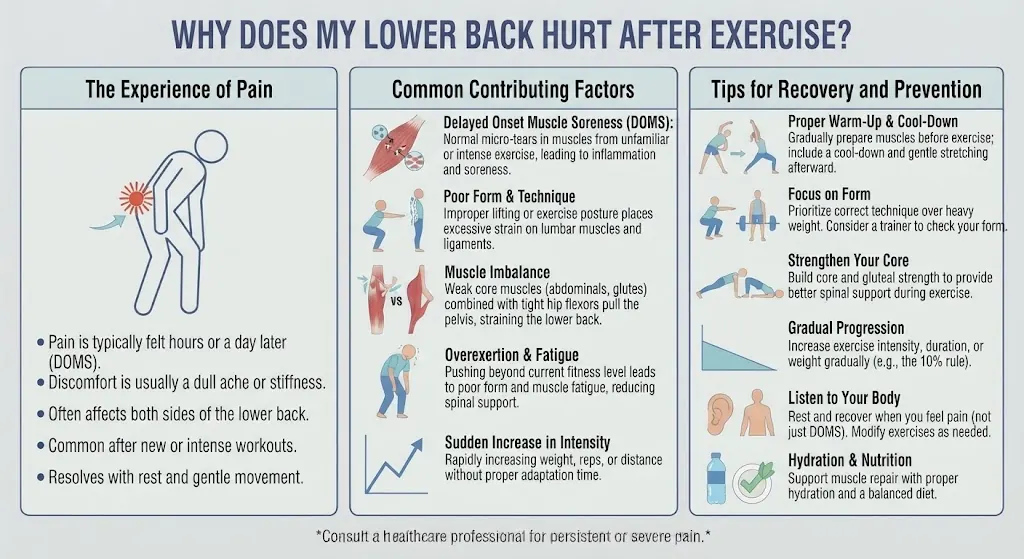
The most common explanations include muscle fatigue, a strain, increased training demands, or irritation of structures around the lumbar spine. The cause depends on the exercise, your technique, the intensity of your workout, and whether you have other symptoms.
1. Delayed-onset muscle soreness
Delayed-onset muscle soreness (DOMS) develops after unfamiliar or demanding physical activity, particularly exercises that emphasize the lowering phase of a movement. It typically begins about 12–24 hours after exercise, may peak over the next 24–72 hours, and gradually improves.
The discomfort usually feels like tenderness, stiffness, or aching in the muscles you worked. It may affect both sides of the lower back or nearby muscles, although soreness patterns vary. DOMS should gradually settle rather than continue getting worse.
2. Lower back muscle strain
A muscle strain occurs when muscle fibers are overstretched or overloaded. It can happen during deadlifts, squats, rowing, sudden twisting, or lifting a weight beyond your current capacity.
Unlike ordinary soreness, a strain may cause a distinct sharp pain during a repetition, localized tenderness, muscle spasms, or difficulty bending and straightening. Symptoms can begin during the workout or shortly afterward.
3. Too much exercise too soon
Increasing your weights, running distance, workout duration, or training frequency too quickly can exceed your body’s current tolerance. Fatigue can also make it harder to maintain consistent technique late in a workout.
If your back repeatedly hurts after increasing training volume, reduce the load or duration temporarily and allow recovery between demanding sessions.
4. Exercise technique or movement choices
Rounding or excessively arching your lower back under load, rushing repetitions, or twisting while lifting can increase stress on the area. However, there is no single perfect posture for every exercise, and back discomfort does not automatically mean your technique is wrong.
Exercises such as squats that trigger lower back pain or deadlifts that cause back pain may need adjustments to the load, range of motion, setup, or movement pattern.
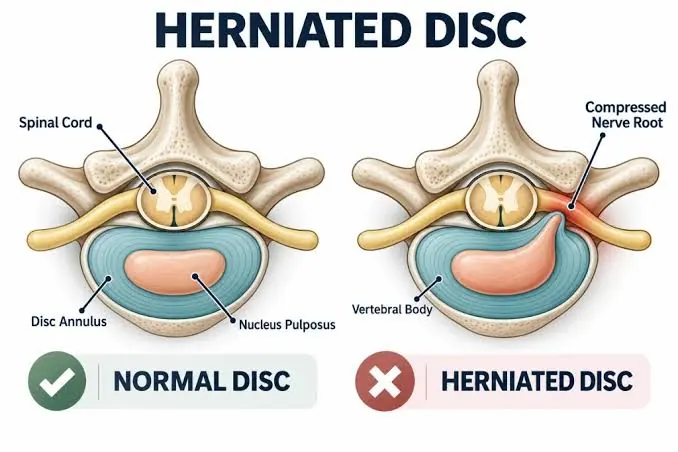
5. Nerve or spinal disc irritation
Some workouts can aggravate an already sensitive spinal nerve or disc. You may notice pain extending into one buttock or leg, burning, tingling, or numbness rather than soreness limited to the muscles you exercised.
A herniated disc that causes lower back pain is one possible explanation, but radiating pain can have other causes. Do not assume that every painful workout has damaged a disc.
Is It Normal to Have Back Pain After Exercise?
Mild soreness after an unfamiliar workout can be normal, but sharp pain during a repetition or symptoms that keep worsening deserve more attention.
| Feature | Typical muscle soreness | Possible injury |
|---|---|---|
| Onset | Develops hours after exercise | May begin suddenly during a movement |
| Sensation | Aching, stiffness, tenderness | Sharp, persistent, or movement-limiting pain |
| Duration | Usually improves within several days | May persist or worsen |
| Leg symptoms | Usually absent | Tingling, numbness, or radiating pain may occur |
This comparison is a guide, not a diagnostic test. Muscle strains can also develop gradually, and some injuries initially feel like ordinary soreness.
Research on delayed-onset muscle soreness supports the usual one-to-three-day onset pattern. Clinical guidance for low back pain also recommends remaining active as tolerated and choosing exercise according to individual needs rather than automatically stopping all movement.
How Can You Relieve Lower Back Pain After a Workout?
If symptoms are mild and no warning signs are present, try the following:
-
Reduce the workload: Temporarily stop heavy lifting and movements that reproduce your pain.
-
Keep moving comfortably: Short walks and gentle daily activities can help prevent stiffness.
-
Try heat or cold: Use a wrapped cold pack for short periods if it feels soothing, or gentle heat for stiffness. Protect your skin.
-
Avoid aggressive stretching: Stretching should not produce sharp pain or worsening symptoms.
-
Prioritize recovery: Get adequate sleep, eat regularly, and drink enough fluids.
For additional guidance, see how to relieve back pain at home and whether heat or ice is better for a pulled back muscle.
Over-the-counter anti-inflammatory medicines are not suitable for everyone, particularly people with certain kidney conditions, stomach ulcers, cardiovascular risks, or medication interactions. Ask a pharmacist or clinician if you are unsure what is safe for you.
How Can You Prevent Back Pain During Future Workouts?
Gradually increase training demands instead of suddenly adding heavy weights, extra sets, or longer sessions. A 2026 American College of Sports Medicine evidence review synthesized 137 systematic reviews involving more than 30,000 participants. Its broad findings emphasize that consistent resistance training can improve strength and function; they do not establish a single progression schedule that prevents back pain for everyone.
Practical steps include:
-
Warm up with easy movement before demanding exercise.
-
Choose weights that allow controlled, comfortable repetitions.
-
Increase one training variable at a time when possible.
-
Allow recovery between demanding sessions.
-
Ask a qualified trainer or physical therapist to review movements that repeatedly trigger symptoms.
When symptoms settle, safe lower back strengthening exercises and core exercises for lower back support may help you rebuild capacity. If pain keeps returning, physical therapy for lower back pain can help tailor your activity and recovery plan.
When Should You Seek Medical Care?
Seek emergency care if back pain occurs with new loss of bladder or bowel control, difficulty urinating, numbness around the groin or anus, or severe or rapidly worsening weakness, particularly in both legs. Severe muscle pain with marked swelling, profound weakness, or dark, tea-colored urine after strenuous exercise also requires urgent assessment because it can indicate serious muscle breakdown.
Arrange prompt medical evaluation for severe or rapidly worsening pain, fever, pain following significant trauma, or new leg numbness or weakness. Make an appointment if symptoms repeatedly return, limit normal activities, or fail to improve over the following weeks. See when lower back pain is an emergency for additional warning signs.
Frequently Asked Questions
1. Why does my lower back hurt the day after working out?
Delayed-onset muscle soreness can develop 12–24 hours after unfamiliar or intense exercise. Pain that is sharp, severe, or worsening may have another cause.
2. Should I work out if my lower back is sore?
Light activity may be reasonable for mild soreness, but avoid strenuous exercises that aggravate it. Rest from the painful activity until symptoms improve.
3. Why does my back hurt after lifting weights?
Heavy loads, fatigue, an abrupt increase in training, or a muscle strain can contribute. Repeated pain during deadlifts warrants reviewing your load and technique.
4. Can running cause lower back pain?
Yes. Increased mileage, fatigue, or an underlying back problem may contribute. Reduce intensity if running worsens symptoms, and seek assessment for persistent pain.
5. Should I stretch a sore lower back?
Gentle stretching may help some people, but it is not necessary for every type of soreness. Stop if stretching increases pain or causes symptoms to travel down your leg.
6. How long should lower back pain after exercise last?
Ordinary muscle soreness generally improves within a few days. Pain lasting a week, worsening, or repeatedly returning deserves medical assessment.
7. Can exercise cause sciatica?
Exercise may aggravate existing nerve irritation, although it does not necessarily cause sciatica. Pain traveling into the leg with tingling or numbness should be evaluated if persistent or worsening.
8. Is heat or ice better after a workout?
Either may provide temporary relief, depending on your symptoms and preference. Use a protective cloth and avoid applying extreme temperatures directly to your skin.
9. When can I return to my normal workout?
Resume gradually when daily movement is comfortable and symptoms are improving. Start with lighter loads and shorter sessions, increasing activity only as tolerated.
10. Does back pain after exercise mean my spine is damaged?
No. Many episodes are related to temporary muscle soreness or mechanical irritation, but pain alone cannot determine the cause. Persistent symptoms or warning signs need appropriate evaluation.
Conclusion
Lower back pain after exercise may reflect normal muscle soreness, a strain, excessive training demands, or irritation involving a spinal nerve. Modify painful movements, stay gently active when comfortable, and return to training gradually. Seek medical care for persistent or worsening symptoms, and treat emergency warning signs seriously.
Disclaimer: This article is provided for educational and informational purposes only. It is not a substitute for professional medical advice, diagnosis, or treatment.