This type of discomfort is often related to muscle strain, joint irritation, or stiffness, particularly after physical activity or prolonged sitting. However, pain during nighttime movement does not automatically identify the cause, and persistent pain or symptoms such as leg weakness should not be dismissed as ordinary stiffness.
Understanding why your lower back hurts when you turn over in bed can help you choose safer sleeping positions, adjust how you move, and recognize when medical evaluation is appropriate. The following guide explains common causes, practical ways to reduce discomfort, recovery expectations, and warning signs that need attention.
What Causes Lower Back Pain When Turning Over in Bed?
Turning over requires coordinated movement of the spine, pelvis, hips, and surrounding muscles. When these tissues are sensitive or irritated, rolling can temporarily increase discomfort even if lying still feels relatively comfortable.
Common explanations include muscle strain, age-related changes in spinal joints or discs, and irritation of structures around the pelvis. The location, intensity, duration, and accompanying symptoms can help a clinician narrow down the possibilities, but pain during one particular movement cannot establish a diagnosis.
| Possible cause | What it may feel like | Clues to notice |
|---|---|---|
| Muscle strain or spasm | Pulling, aching, or sudden tightness | Recent lifting, bending, exercise, or awkward movement |
| Facet joint irritation or arthritis | Localized pain with certain twisting movements | Discomfort when rotating or arching the back |
| Disc irritation or herniation | Back pain that may extend into the buttock or leg | Tingling, numbness, or pain traveling down a leg |
| Sacroiliac joint irritation | Pain near one side of the lower back or buttock | Discomfort when rolling, climbing stairs, or changing positions |
| Inflammatory or other medical conditions | Persistent stiffness or pain that may occur at rest | Symptoms that continue despite position changes or occur with other health concerns |
These patterns overlap considerably. For example, a person with lower back pain and buttock pain may have a muscle-related problem, irritation around the sacroiliac joint, or nerve-related pain. A medical assessment is needed when symptoms persist, worsen, or do not fit a straightforward pattern.
Why Does Turning Over Make Back Pain Worse at Night?
Rolling over combines rotation with a shift in body weight. If your back muscles are tight or a joint is irritated, this movement may hurt more than lying still. Remaining in one position for hours can also increase stiffness, making the first few movements uncomfortable.
Pain that occurs mainly during movement is different from pain that remains severe regardless of position. However, lower back pain that gets worse at night or repeatedly interrupts sleep deserves medical attention, especially if it is progressive or accompanied by unexplained weight loss or fever.
Other factors may contribute, including an unsuitable sleeping surface, prolonged daytime sitting, or lower back pain after getting out of bed.
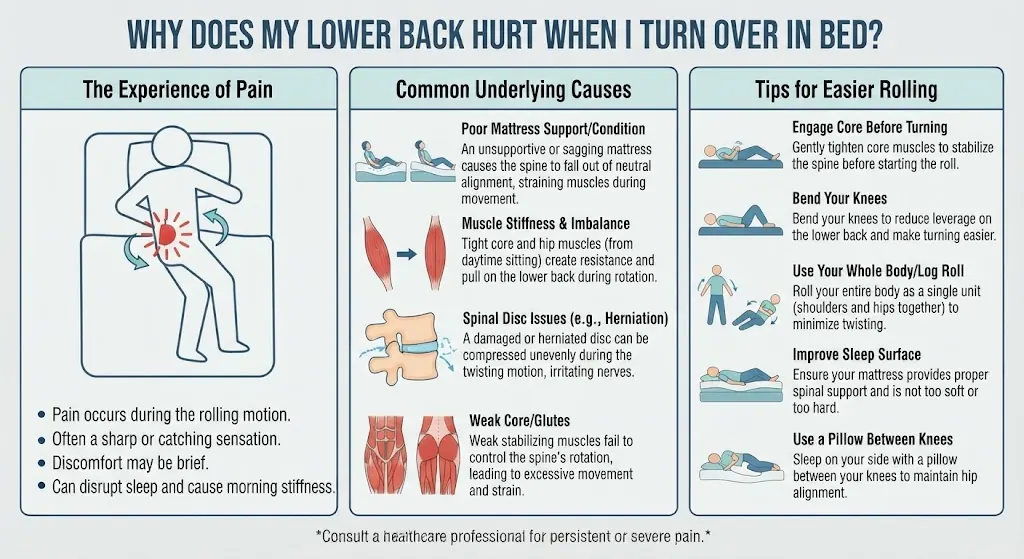
How Can You Turn Over in Bed Without Hurting Your Back?
Moving slowly and keeping your shoulders and hips aligned may reduce twisting. You do not need to keep your spine perfectly rigid; the goal is to avoid sudden movements that sharply increase your pain.
Try these adjustments:
-
Bend your knees slightly: This can make rolling easier and reduce unnecessary tension.
-
Move your shoulders and hips together: Roll your body as one unit instead of twisting your upper body while your pelvis stays still.
-
Use your arms for support: Press gently into the mattress to help change position.
-
Adjust your sleeping posture: Side sleeping with a pillow between your knees or back sleeping with a pillow under your knees may feel more comfortable. See these sleeping positions for lower back pain.
-
Avoid forcing a painful movement: If a position causes sharp or spreading pain, stop and try a more comfortable alternative.
| Situation | What to try | What to avoid |
|---|---|---|
| Rolling onto your side | Bend your knees and roll shoulders and hips together | Sudden twisting |
| Getting out of bed | Roll onto your side, lower your legs, and push up with your arms | Sitting straight up with a forceful abdominal movement |
| Stiffness after lying still | Change position gradually and walk gently if comfortable | Staying in bed all day |
| Pain after activity | Temporarily reduce aggravating movements | Heavy lifting or forceful stretching through pain |
What Helps Relieve Lower Back Pain at Home?
For uncomplicated back pain, gentle activity and symptom management are generally preferable to prolonged bed rest. Many episodes improve within days to several weeks, although recovery depends on the underlying cause. General ways to relieve back pain at home can help you manage discomfort while monitoring your symptoms.
Consider the following measures:
-
Apply gentle heat: A wrapped heating pad may ease muscle tightness or stiffness. Avoid falling asleep on a heating pad because prolonged exposure can cause burns.
-
Try ice if the area feels acutely irritated: Wrap an ice pack in a towel and apply it briefly. Never place ice directly on your skin. Guidance on choosing heat or ice for back pain can help you decide what feels appropriate.
-
Keep moving within your tolerance: Short walks and comfortable daily activities may prevent stiffness from increasing. Walking for lower back pain may be a reasonable starting point.
-
Avoid aggressive stretching: Gentle exercises for lower back pain may help, but stop any movement that increases pain or produces new symptoms.
-
Review your mattress and pillows: Comfort matters more than choosing an expensive or unusually firm mattress. These tips for choosing a mattress for back pain may help you identify practical adjustments.
If you are considering medication, ask a pharmacist or clinician what is safe for you. Anti-inflammatory medicines such as ibuprofen are unsuitable for some people, including those with certain kidney problems, stomach ulcers, or medication interactions.
How Long Does Lower Back Pain When Turning in Bed Last?
Minor muscle-related pain may begin improving within several days and often settles over a few weeks. Pain that persists, returns frequently, or progressively limits movement may require further assessment.
| Symptom pattern | Reasonable next step |
|---|---|
| Mild pain that is gradually improving | Continue comfortable movement and monitor symptoms |
| Pain that persists for several weeks or disrupts sleep repeatedly | Arrange a medical evaluation |
| Pain that worsens quickly or occurs with fever or feeling unwell | Seek urgent medical advice |
| Back pain with new bladder or bowel dysfunction or numbness around the groin | Seek emergency care |
A clinician may examine your movement, strength, sensation, and medical history. Imaging is not routinely necessary for uncomplicated lower back pain, but it may be appropriate when symptoms or examination findings suggest a serious cause. For persistent symptoms, see when to seek care for lower back pain.
Warning Signs: When Should You Worry?
Symptoms you can usually monitor
Mild stiffness or localized discomfort that occurs during rolling and gradually improves may be monitored at home if no warning signs are present. Keep track of whether the pain is improving and whether it begins spreading into your legs.
Symptoms that need medical evaluation
Arrange an appointment if pain continues for several weeks, repeatedly prevents sleep, worsens despite self-care, or occurs with unexplained weight loss, a history of cancer, or persistent leg numbness. Your clinician may also assess back pain that does not improve with rest.
Symptoms requiring emergency care
Seek emergency care immediately for new difficulty urinating, loss of bladder or bowel control, numbness around the genitals or anus, or rapidly worsening weakness in one or both legs. These symptoms can indicate serious nerve compression. Severe pain following a major accident also needs emergency assessment. Review emergency warning signs of back pain.
Frequently Asked Questions
1. Why does my lower back hurt only when I roll over?
Rolling combines rotation and pressure changes that may irritate sensitive muscles, joints, or discs. Pain limited to one movement does not identify the exact cause.
2. Can a pulled muscle hurt when turning in bed?
Yes. A muscle strain can cause localized aching, pulling, or spasms during rotation, especially after lifting or unusual activity.
3. Is lower back pain when turning over a sign of a herniated disc?
It can occur with disc irritation, but many other conditions cause similar pain. A herniated disc becomes more concerning when accompanied by radiating leg pain, numbness, or weakness.
4. Should I sleep on my side or back?
Choose the position that feels most comfortable. A pillow between your knees when side sleeping or under your knees when lying on your back may reduce discomfort.
5. Can my mattress cause back pain when rolling over?
An uncomfortable mattress may contribute to poor sleep and difficulty changing positions. However, mattress discomfort alone cannot establish the cause of back pain.
6. Should I stop exercising if my back hurts at night?
Not necessarily. Gentle activity is usually preferable to prolonged bed rest, but pause exercises that worsen your symptoms and seek advice if pain persists.
7. Is morning stiffness related to nighttime back pain?
Yes. Remaining still for several hours can make sensitive tissues feel stiff when you first move. Persistent or prolonged morning stiffness warrants evaluation.
8. Can sciatica cause pain when turning in bed?
Yes. Sciatica may cause lower back or buttock pain that travels down one leg, sometimes with tingling or numbness. New or worsening weakness needs prompt assessment.
9. Do I need an MRI for back pain when turning over?
Usually not for uncomplicated back pain. A clinician may recommend imaging when examination findings, persistent symptoms, trauma, or warning signs suggest that it is necessary.
10. When should I see a doctor for pain when rolling over?
Seek medical advice if the pain persists for several weeks, disrupts sleep repeatedly, or worsens. Emergency symptoms involving bladder or bowel function, groin numbness, or progressive leg weakness require immediate care.
Conclusion
Lower back pain when turning over in bed often relates to movement-sensitive muscles or joints, but the cause cannot be determined from this symptom alone. Try gradual rolling, comfortable sleeping positions, gentle activity, and appropriate heat or ice. If the pain persists, worsens, or disrupts sleep regularly, arrange an evaluation; seek emergency care for serious neurological warning signs.
Disclaimer: This article is provided for educational and informational purposes only. It is not a substitute for professional medical advice, diagnosis, or treatment.