Driving-related back pain is often associated with prolonged sitting, limited movement, muscle fatigue, or an uncomfortable driving position. However, pain after driving does not always mean poor posture is the only cause. Persistent pain, symptoms traveling down a leg, or new neurological symptoms may need medical evaluation.
Understanding why your lower back hurts after driving can help you adjust your seat, take more effective movement breaks, and manage discomfort safely. This guide explains common causes, practical relief strategies, expected recovery, and warning signs that should not be ignored.
What Causes Lower Back Pain After Driving?
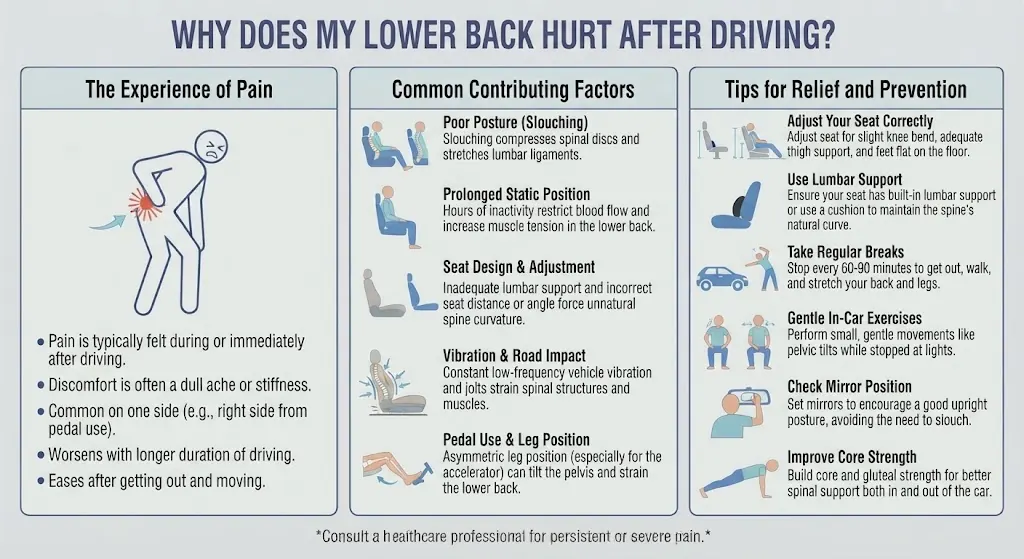
Sitting in a car keeps your hips and knees bent while limiting movement in your lower back. Over time, this position may aggravate sensitive muscles, joints, or spinal structures. Vehicle vibration, repeated pressure from an uncomfortable seat, and getting in or out with a twisting motion may also contribute.
Common causes include:
| Possible cause | What you may notice | Helpful clue |
|---|---|---|
| Muscle fatigue or strain | Aching, tightness, or spasms | Symptoms follow a long drive or recent lifting |
| Prolonged sitting | Stiffness after leaving the car | Discomfort improves after gentle movement |
| Irritated spinal joints | Localized pain with bending or twisting | Certain movements consistently trigger symptoms |
| Disc-related irritation | Back pain that may spread into the buttock or leg | Tingling, numbness, or radiating pain may occur |
| Sciatica or nerve irritation | Burning, shooting, or electric-like pain down one leg | Sitting may increase symptoms, depending on the cause |
These patterns can overlap and cannot confirm a diagnosis. For a broader overview, see what causes back pain and why it can develop.
Can a car seat cause lower back pain?
Yes. A seat that leaves your back unsupported, places your hips too low, or forces you to reach for the pedals may increase discomfort during longer drives. However, even a well-adjusted seat cannot prevent every cause of back pain.
If symptoms mainly occur behind the wheel, the guide to adjusting your car seat to reduce lower back pain may help you identify practical changes.
Why Does Driving Make Back Pain Worse?
Driving combines prolonged sitting with limited opportunities to change position. Your muscles may become fatigued from maintaining the same posture, while sensitive joints or discs may become more uncomfortable under sustained loading.
The length of the drive matters, but there is no single sitting duration that triggers pain in everyone. A short trip may be uncomfortable during a flare-up, while another person may tolerate a much longer journey without symptoms.
Other factors can include:
-
Poor seat support: Your lower back may remain unsupported or overly rounded.
-
Limited movement: Remaining in one position can increase stiffness.
-
Road vibration: Repeated jolts may aggravate an already sensitive back.
-
Repeated twisting: Reaching behind you, lifting luggage, or getting out of the car awkwardly can strain the back.
-
Existing back or leg symptoms: Conditions involving spinal joints, discs, or nerves may make sitting less comfortable.
If your pain also appears during desk work or other seated activities, review how to sit to avoid lower back pain.
How Can You Prevent Lower Back Pain While Driving?
The goal is to make your driving position comfortable and avoid staying still for too long. You do not need to maintain a rigid, perfectly upright posture; small position changes can be helpful.
| Adjustment | What to do | Why it may help |
|---|---|---|
| Seat distance | Move close enough to reach the pedals without stretching | Reduces unnecessary reaching |
| Backrest angle | Use a comfortable, slightly reclined position that supports your back | May reduce sustained postural effort |
| Lumbar support | Adjust the built-in support or use a small cushion if comfortable | Helps support the natural curve of your lower back |
| Steering wheel | Position it so your shoulders remain relaxed | Limits reaching forward |
| Movement breaks | Stop periodically on longer trips and walk briefly | Interrupts prolonged sitting |
For longer journeys, plan safe stops before discomfort becomes severe. Get out, walk gently, and change position. Do not adjust your seat or stretch in ways that distract you while driving.
The guide to preventing back pain during a long car ride offers additional travel-focused strategies.
How Can You Relieve Lower Back Pain After Driving?
If your back feels sore after getting out of the car, start with gentle movement rather than immediately returning to prolonged sitting or lying in bed for hours.
Try these approaches:
-
Walk for a few minutes if comfortable. Gentle walking can help ease stiffness. If walking consistently worsens the pain, reduce the distance and seek advice if the problem persists. See whether walking helps lower back pain.
-
Use heat or ice. Wrapped heat may ease muscle tightness, while a wrapped cold pack may help with recently aggravated pain. Protect your skin and avoid falling asleep with a heating pad. Learn more about whether to use heat or ice for back pain.
-
Change positions regularly. Alternate comfortable sitting, standing, and walking rather than remaining in one position.
-
Avoid forceful stretching. Gentle movement may help, but stop if an exercise causes sharp pain, radiating symptoms, or new numbness. See exercises that may ease lower back pain.
-
Review your daily sitting habits. If driving is followed by hours at a desk, regular movement breaks may reduce the total time spent sitting. Tips on how often to get up from sitting to prevent back pain may be useful.
For more options, explore how to relieve back pain at home. If you are considering over-the-counter medication, check with a pharmacist or clinician if you have other medical conditions, take other medicines, or are unsure what is safe for you.
How Long Does Back Pain After Driving Last?
Mild discomfort related to muscle fatigue or prolonged sitting may improve after changing position and moving gently. A strain can take days to several weeks to settle. Recovery depends on the cause, the severity of symptoms, and whether the activity continues to aggravate the area.
| Symptom pattern | Recommended next step |
|---|---|
| Mild soreness that improves with movement | Adjust driving habits and monitor progress |
| Pain that repeatedly returns after driving | Review seat setup and arrange medical advice if it continues |
| Pain lasting several weeks or limiting daily activities | Schedule a clinical evaluation |
| Back pain with fever, feeling unwell, or rapidly worsening symptoms | Seek prompt medical assessment |
| Back pain with new bladder or bowel problems, groin numbness, or progressive leg weakness | Seek emergency care |
If the pain is not improving, read how long is too long to have lower back pain. A clinician may assess your movement, strength, sensation, and medical history. Imaging is not routinely needed for uncomplicated back pain; it may be considered when symptoms or examination findings suggest a specific concern.
When Should You Seek Medical Care?
Symptoms you can usually monitor
Mild, localized soreness that improves after movement and is not accompanied by warning signs can often be monitored briefly at home. Pay attention to whether the discomfort becomes less frequent or starts affecting activities beyond driving.
Symptoms that need medical evaluation
Arrange an appointment if pain persists, repeatedly disrupts sleep, travels down your leg, or comes with ongoing tingling or numbness. Seek prompt advice if symptoms are worsening or you have a history of cancer, significant osteoporosis, recent infection, or a recent injury.
For guidance on when to see a doctor for lower back pain, consider how long the symptoms have lasted and how much they limit your normal activities.
Symptoms requiring emergency care
Seek emergency care for new loss of bladder or bowel control, difficulty urinating with back symptoms, numbness around the groin or saddle area, or rapidly worsening leg weakness. These can indicate serious nerve compression. Severe back pain after a major collision or other significant trauma also needs urgent assessment. See when back pain is an emergency.
Frequently Asked Questions
1. Why does my lower back hurt after driving but not before?
Prolonged sitting, muscle fatigue, and sustained pressure may bring on symptoms that were not noticeable beforehand. If the pain repeatedly returns after driving, consider your seat setup and whether another back problem may be contributing.
2. Can driving cause a pulled muscle in the lower back?
Driving itself may contribute to muscle fatigue, while lifting luggage or twisting when getting out of the car may strain the muscles. A strain can cause aching, tightness, or pain with movement, but other conditions can feel similar.
3. Is it normal for my back to hurt after a long drive?
Temporary stiffness or soreness can occur after prolonged sitting. Pain that is severe, persistent, worsening, or accompanied by leg weakness or numbness should not be assumed to be normal.
4. Should I use a lumbar cushion while driving?
A small lumbar cushion may help if your seat does not comfortably support your lower back. Adjust its position so it feels supportive rather than forcing your back into an uncomfortable arch.
5. Is it better to sit upright or recline while driving?
A comfortable, slightly reclined backrest often makes it easier to maintain support without reaching forward. The best position is one that lets you operate the vehicle safely while keeping your shoulders relaxed and your back comfortable.
6. How often should I stop on a long drive?
Take breaks regularly, before discomfort becomes difficult to manage. There is no universal interval that works for everyone; trip length, symptoms, and individual needs all matter.
7. Can driving make sciatica worse?
It can. Prolonged sitting may aggravate sciatic-type pain in some people, particularly when symptoms travel from the lower back or buttock down a leg. New or progressive weakness needs prompt medical assessment.
8. Should I stretch immediately after driving?
Gentle movement may help reduce stiffness, but forceful stretching is not necessary. Stop any movement that increases pain or causes symptoms to spread into your leg.
9. Can a bad mattress make driving-related back pain worse?
An uncomfortable mattress may contribute to poor sleep or morning stiffness, but it does not necessarily cause pain after driving. If symptoms also occur at night, consider discussing the overall pattern with a clinician and reviewing the best mattress for back pain.
10. Do I need an MRI for lower back pain after driving?
Most uncomplicated lower back pain does not require immediate MRI. A clinician may recommend imaging if your symptoms, medical history, or examination suggest a serious condition or if the results would change treatment.
Conclusion
Lower back pain after driving is often associated with prolonged sitting, muscle fatigue, or an uncomfortable car setup, although other causes are possible. Adjust your seat, take safe movement breaks, and use gentle activity to manage stiffness. If symptoms persist, worsen, or spread into your leg, arrange a medical evaluation; seek emergency care for new bladder or bowel dysfunction, saddle numbness, or progressive weakness.
Disclaimer: This article is provided for educational and informational purposes only.