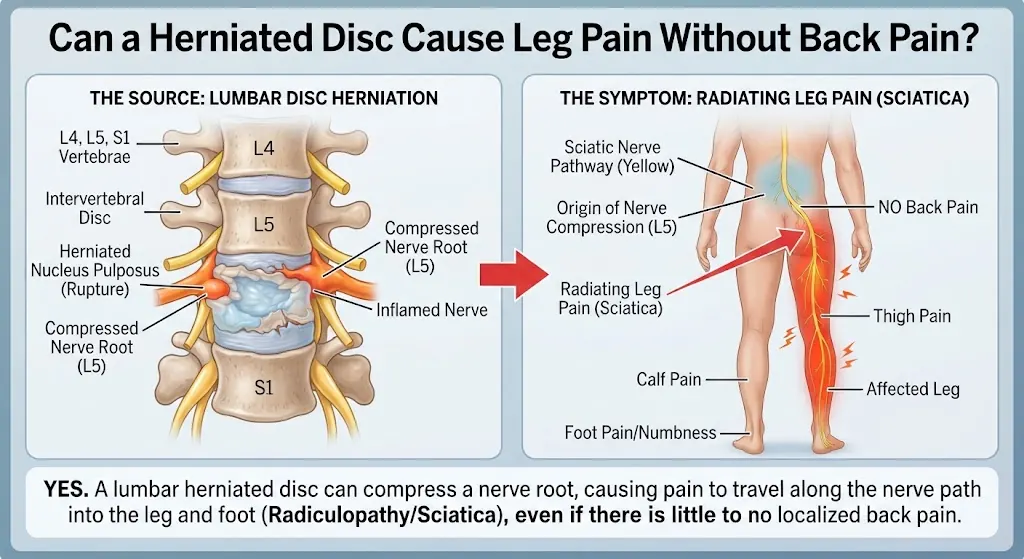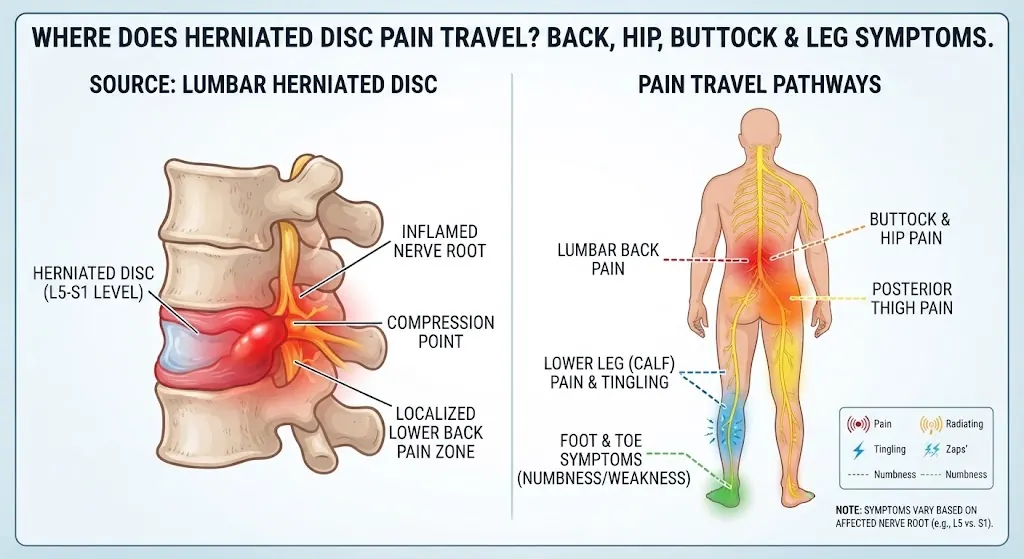
However, not every case of buttock pain or leg pain comes from the piriformis muscle. Similar symptoms can occur when a nerve root in the lower spine is irritated, including from a herniated disc. Understanding the difference matters because the most helpful treatment depends on the underlying cause.
This guide explains how a tight piriformis muscle may cause sciatica-like pain, which symptoms to look for, how piriformis-related pain differs from spinal sciatica, and what you can safely do at home. It also covers when to seek medical evaluation and which warning signs require urgent attention.
What Is the Piriformis Muscle, and How Can It Affect the Sciatic Nerve?


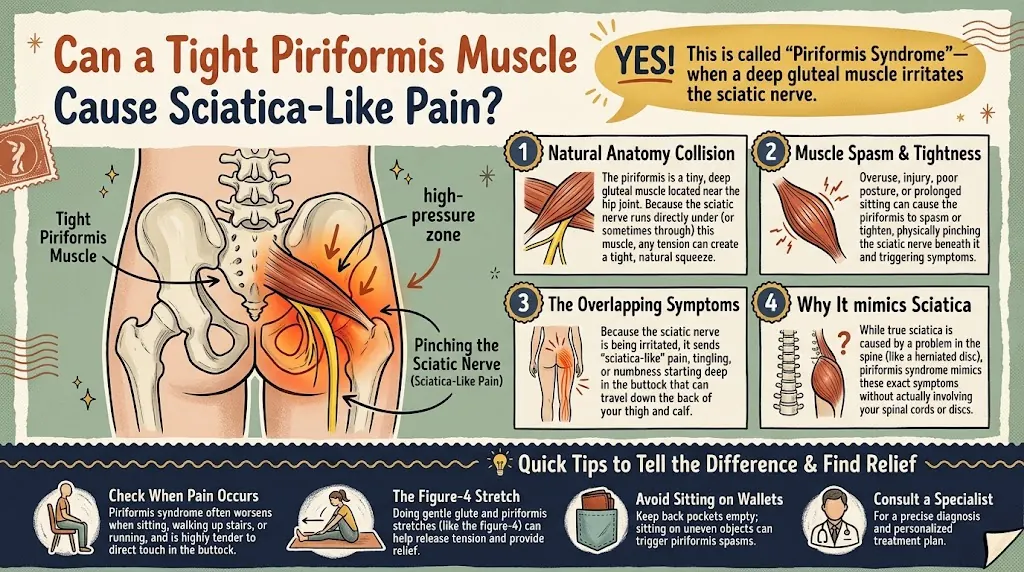
The piriformis is a small muscle deep in the buttock that connects the sacrum, at the base of the spine, to the upper femur. It helps rotate the hip outward and contributes to hip stability during walking and other movements.
The sciatic nerve passes close to the piriformis muscle, although the precise anatomical relationship varies between people. Irritation or compression around this area can sometimes produce pain that follows the nerve’s pathway into the back of the thigh and, in some cases, farther down the leg.
This type of presentation is often associated with deep gluteal syndrome. Piriformis syndrome is one possible cause, but muscle tightness alone does not establish that the piriformis is responsible for the symptoms.
What Does Piriformis-Related Sciatica Feel Like?
Symptoms vary, but discomfort typically centers on one buttock and may extend into the leg.
Common symptoms include:
-
A deep ache, tightness, or tenderness in one buttock.
-
Pain that worsens after prolonged sitting, particularly on a firm surface.
-
Discomfort during hip rotation, climbing stairs, or getting up from a chair.
-
Burning, tingling, or shooting pain extending down the back of the thigh.
-
Tenderness when pressing the muscles deep in the buttock.
Some people experience buttock pain without leg pain. Others have symptoms extending toward the calf or foot, although this pattern can also indicate irritation of a spinal nerve root.
For a closer look at this symptom pattern, see how sciatica can cause buttock pain without leg pain.
What Causes the Piriformis Muscle to Become Tight or Irritated?
Several factors may contribute to piriformis-related discomfort. Tightness is not always the primary problem; muscle overload, sensitivity in nearby tissues, or irritation around the sciatic nerve may also play a role.
-
Prolonged sitting: Remaining seated for extended periods may aggravate deep buttock discomfort, particularly when symptoms are already present.
-
Sudden increases in activity: Running, hill climbing, or unfamiliar exercise may overload the hip muscles.
-
Repetitive hip movements: Activities involving repeated hip rotation can irritate the surrounding tissues.
-
Muscle strain: An abrupt movement, heavy effort, or exercise-related injury may cause pain and protective muscle tension.
-
Hip or pelvic movement changes: Altered movement patterns may increase demand on the muscles around the hip.
These factors do not prove that the piriformis is causing nerve symptoms. Lower-back disorders, hip conditions, and other deep gluteal problems can produce similar discomfort.
Piriformis Syndrome vs. Sciatica From the Lower Back
Piriformis-related pain and spinal sciatica can feel similar, but their possible causes differ. Sciatica describes symptoms associated with irritation of the sciatic nerve or its nerve roots; it does not identify one specific cause.
| Feature | Piriformis-related pain | Spinal sciatica |
|---|---|---|
| Common pain location | Deep buttock, sometimes extending down the leg | Lower back or buttock, often radiating down the leg |
| Sitting | May aggravate buttock pain | May aggravate symptoms, depending on the cause |
| Back pain | May be absent | May occur but is not always present |
| Tingling or numbness | Possible | Possible |
| Common underlying issue | Irritation in the deep gluteal region | Nerve-root irritation, sometimes from a disc problem |
| Diagnosis | Clinical assessment and exclusion of other causes | Clinical assessment, with imaging when appropriate |
A herniated disc that causes pain down the leg can resemble piriformis-related pain. Symptoms such as sciatica-related foot numbness or leg weakness associated with sciatica deserve particular attention because they may indicate nerve dysfunction.
Research reviews highlight an important limitation: there is no universally accepted single test that reliably confirms piriformis syndrome. Diagnosis relies on symptom history, physical examination, and consideration of other causes.
How Can You Relieve Piriformis-Related Pain at Home?
Gentle movement, changes to prolonged sitting, and appropriately selected exercises may help. Avoid forcing stretches or assuming that all buttock pain needs aggressive muscle release.
1. Change your sitting habits
If sitting aggravates your symptoms, stand up periodically, take short walks, and adjust your seat so your hips feel comfortable. Avoid sitting on a wallet or other hard object in the back pocket.
If symptoms occur mainly during prolonged sitting, these practical ways to manage sitting-related sciatica may help you identify aggravating positions.
2. Try gentle piriformis stretching

A gentle figure-four stretch may reduce discomfort for some people:
-
Lie on your back with both knees bent.
-
Place the ankle of the affected side over the opposite thigh, just above the knee.
-
If comfortable, draw the supporting thigh gently toward your chest.
-
Hold briefly while breathing normally, then release.
Stop if the stretch produces sharp pain, increasing tingling, numbness, or pain traveling farther down your leg. A stretch should not force the hip into an uncomfortable position.
3. Maintain comfortable movement
Short walks and gentle hip movements may help maintain mobility. If walking aggravates symptoms, reduce the distance or pace rather than pushing through worsening pain. A physical therapist can tailor exercises to your symptoms and assess whether the problem appears muscular or nerve-related.
For broader guidance, see exercises that may help lower-back pain and how to relieve back pain at home.
| Home-care approach | Potential benefit | Important limitation |
|---|---|---|
| Frequent movement breaks | Reduces prolonged pressure and stiffness | Does not establish the underlying cause |
| Gentle stretching | May improve comfortable hip movement | Can worsen irritated nerves if forced |
| Short, comfortable walks | Maintains activity and mobility | Reduce activity if symptoms escalate |
| Warm compress | May ease muscle discomfort | Avoid excessive heat or burns |
| Physical therapy | Provides individualized assessment and rehabilitation | Treatment depends on the diagnosis |
For heat-related discomfort, review whether heat or ice is appropriate for back pain. Evidence specifically supporting individual piriformis treatments remains limited, so improvement with a particular technique does not confirm the diagnosis.
How Is Piriformis Syndrome Diagnosed?
A clinician will ask where the pain starts, what triggers it, whether symptoms extend below the knee, and whether you have numbness or weakness. The examination may include hip movements, muscle tenderness, strength testing, sensation checks, and maneuvers that reproduce symptoms.
Imaging is not always necessary. Depending on the findings, an MRI may help evaluate a suspected spinal cause or another condition. Nerve testing or targeted injections may be considered in selected cases, but neither is a universally definitive test for piriformis syndrome.
If the diagnosis remains unclear or symptoms persist, discuss when lower-back pain needs medical evaluation and whether an MRI is needed for lower-back pain.
Warning Signs: When Should You Seek Medical Care?
Symptoms you can monitor
Mild discomfort that improves with position changes and gentle activity may be monitored briefly, provided there is no new numbness, weakness, or other warning sign.
Arrange a medical evaluation
Seek an appointment if pain persists for several weeks, worsens, repeatedly returns, limits normal activities, or causes ongoing tingling or numbness. New or progressive leg weakness warrants prompt assessment.
Seek emergency care
New difficulty urinating, loss of bladder or bowel control, numbness around the groin or anus, or severe or rapidly worsening weakness in both legs may indicate a serious spinal nerve emergency. Seek emergency care immediately.
Frequently Asked Questions
1. Can a tight piriformis muscle cause sciatica?
It can contribute to sciatic nerve irritation in some people. However, spinal nerve-root problems and other conditions can produce similar symptoms.
2. Can piriformis syndrome cause pain without back pain?
Yes. Pain may be concentrated in the buttock and extend into the leg even when the lower back does not hurt.
3. Can piriformis syndrome cause pain below the knee?
It can, although pain extending into the calf or foot also occurs with spinal sciatica and other nerve conditions.
4. Does sitting make piriformis pain worse?
Prolonged sitting can aggravate symptoms, particularly when pressure or hip positioning irritates the deep buttock region. Changing positions may help.
5. Should I stretch a tight piriformis muscle every day?
Gentle stretching may help if it feels comfortable, but the ideal frequency depends on your symptoms. Stop if stretching increases radiating pain or neurological symptoms.
6. How long does piriformis syndrome last?
Recovery varies with the cause, severity, and response to treatment. Seek evaluation if symptoms persist, worsen, or interfere with daily activities.
7. Is walking good for piriformis syndrome?
Comfortable walking may help maintain mobility. Shorten your walks if pain increases or travels farther down your leg.
8. Can massage relieve piriformis pain?
Gentle massage may temporarily ease muscle discomfort, but forceful pressure over an irritated nerve can worsen symptoms. Massage does not confirm the cause of pain.
9. Does piriformis syndrome require an MRI?
Not always. A clinician may recommend imaging when symptoms or examination findings suggest a spinal problem or another condition requiring further investigation.
10. Can piriformis syndrome cause permanent nerve damage?
Persistent nerve compression can sometimes cause lasting problems, but permanent damage is not inevitable. New weakness or worsening numbness needs prompt medical assessment.
Conclusion
A tight or irritated piriformis muscle can cause sciatica-like buttock and leg pain, particularly when sitting or moving the hip aggravates symptoms. Gentle activity, comfortable movement, and carefully selected stretches may help, but symptoms alone cannot reliably distinguish piriformis syndrome from spinal sciatica. If pain persists or neurological symptoms develop, seek a clinical assessment to identify the cause and choose appropriate treatment.
Disclaimer: This article is provided for educational and informational purposes only.