Spinal stenosis and sciatica can both cause pain, tingling, numbness, or weakness in the legs, making it difficult to tell them apart. You might notice discomfort after walking, sharp pain traveling from your lower back into your leg, or symptoms that worsen when sitting or standing.
Although these conditions can feel similar, they are not the same. Spinal stenosis describes narrowing of spaces in the spine, while sciatica describes symptoms caused by irritation or compression of the sciatic nerve or its contributing nerve roots.
Understanding spinal stenosis vs. sciatica can help you recognize common symptom patterns, understand possible causes, and decide when to seek medical care. Because the conditions can overlap, symptoms alone cannot confirm which one you have.
What Is the Difference Between Spinal Stenosis and Sciatica?
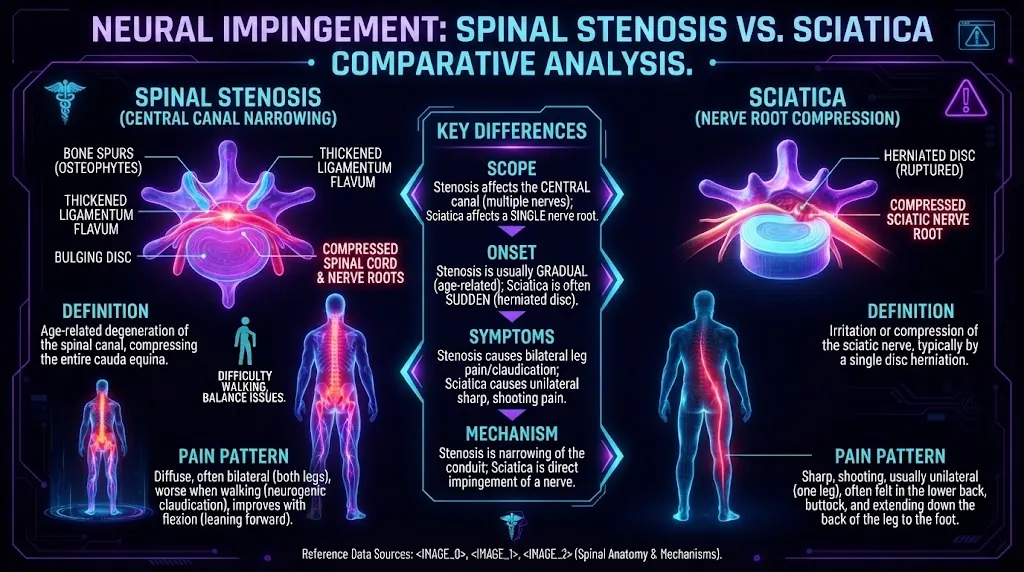
The main difference is that spinal stenosis is a structural condition, while sciatica is a pattern of nerve-related pain. Spinal stenosis can cause sciatica-like symptoms when narrowed spaces compress or irritate nerves in the lower spine.
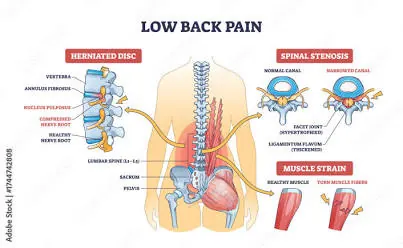
Lumbar spinal stenosis often develops as age-related changes affect spinal joints, discs, and ligaments. Sciatica can occur when a herniated disc, spinal stenosis, or another condition irritates the nerve roots that contribute to the sciatic nerve.
| Feature | Spinal stenosis | Sciatica |
|---|---|---|
| What it means | Narrowing of space around spinal nerves | Pain and other symptoms along the sciatic nerve pathway |
| Common causes | Age-related joint changes, thickened ligaments, disc changes | Herniated disc, spinal stenosis, or other nerve irritation |
| Typical symptoms | Leg heaviness, numbness, aching, weakness, sometimes back pain | Sharp, burning, electric, or shooting pain into the buttock and leg |
| Walking pattern | Symptoms may worsen with standing or walking | Symptoms may worsen with sitting, bending, coughing, or movement, depending on the cause |
| Relief pattern | Sitting or leaning forward may help | Relief depends on the source of nerve irritation |
| Can they occur together? | Yes | Yes |
What Does Spinal Stenosis Pain Feel Like?
Spinal stenosis may cause lower back discomfort, buttock pain, or symptoms in one or both legs. A common pattern is pain, tingling, numbness, or heaviness that develops after standing or walking and improves when sitting or bending forward.
This pattern is known as neurogenic claudication. Leaning forward may temporarily create more room around affected nerves, although the amount of relief varies. Some people also experience weakness or reduced walking tolerance.
Learn more about what spinal stenosis feels like and why spinal stenosis causes leg pain when walking.
What Does Sciatica Feel Like?
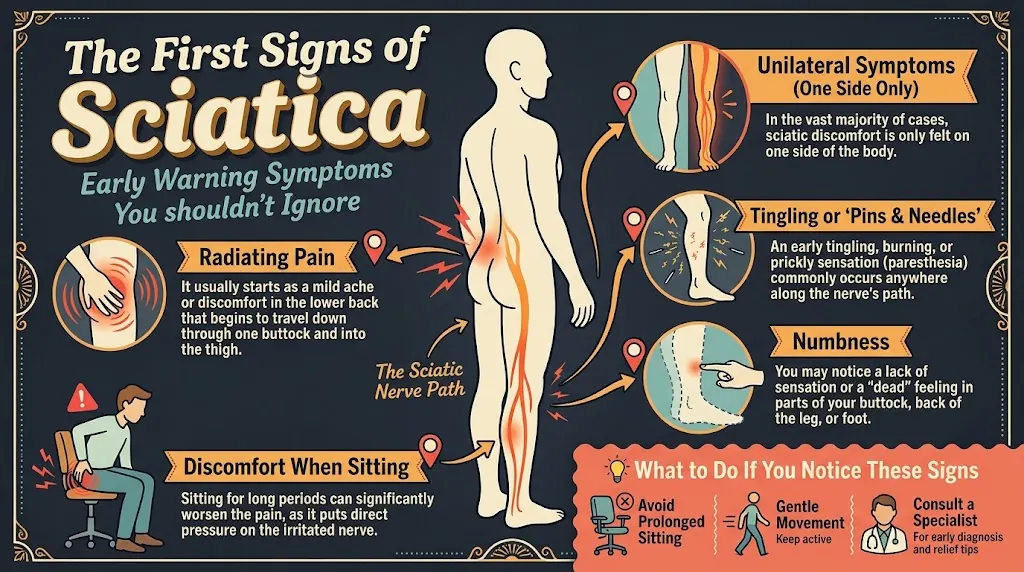
Sciatica commonly causes pain that travels from the lower back or buttock down one leg. The discomfort may feel sharp, burning, shooting, or electric, and it may extend into the calf or foot. Tingling, numbness, or weakness can also occur.
Sciatica often affects one side, although symptoms can sometimes involve both legs. Sitting, bending, coughing, or sneezing may aggravate symptoms in some people, particularly when a disc irritates a nerve root.
Read about the common causes of sciatica and the first signs of sciatica.
How Can You Tell Which Condition You Might Have?
Symptom patterns can provide clues, but they cannot reliably distinguish spinal stenosis from every other cause of leg pain.
| Symptom pattern | Possible explanation | What to consider |
|---|---|---|
| Leg pain begins while walking and improves when sitting | Lumbar spinal stenosis may be involved | Discuss walking distance, posture, and symptom progression with a clinician |
| Shooting pain travels from the buttock down one leg | Sciatica may be involved | A nerve root may be irritated or compressed |
| Numbness or tingling affects the foot | Nerve compression or another nerve condition | Report persistent or worsening sensory changes |
| Leg pain occurs with weakness or balance problems | Several neurological or musculoskeletal causes are possible | Arrange medical evaluation, especially if symptoms are new or progressing |
Other conditions, including reduced blood flow to the legs, can also cause pain with walking. Do not assume that posture-related relief or leg pain automatically means spinal stenosis.
How Are Spinal Stenosis and Sciatica Diagnosed?
A clinician usually reviews your symptoms, medical history, walking tolerance, and physical examination findings. The examination may assess muscle strength, sensation, reflexes, balance, and the movements that trigger symptoms.
MRI may be recommended when symptoms suggest significant nerve compression, when neurological findings are present, or when imaging would affect treatment decisions. However, spinal narrowing or disc changes on a scan do not necessarily explain every symptom. Results must be interpreted alongside your history and examination.
What Treatments May Help?
Treatment depends on the cause, symptom severity, and whether nerve function is affected. Many people begin with nonsurgical care.
| Treatment approach | Potential role | Important limitation |
|---|---|---|
| Activity modification | Reduces movements or positions that aggravate symptoms | Avoid prolonged inactivity unless specifically advised |
| Physical therapy | May improve strength, mobility, balance, and function | Exercises should match the condition and symptom response |
| Medication | May help manage pain in selected cases | Side effects and benefits vary by medicine and health history |
| Specialist assessment | Helps evaluate persistent symptoms and discuss other options | Surgery is not necessary for everyone |
Gentle movement may help maintain function, but stop activities that cause increasing pain, numbness, or weakness. A clinician or physical therapist can help tailor exercises and activity changes to your needs.
See what helps spinal stenosis pain and physical therapy for lower back pain.
When Should You Seek Medical Care?
Arrange a medical appointment if leg pain persists, walking becomes increasingly difficult, numbness continues, or symptoms interfere with everyday activities. New or worsening weakness deserves prompt assessment.
Seek emergency care immediately for new loss of bladder or bowel control, difficulty starting or emptying your bladder, numbness around the groin or saddle area, or rapidly worsening weakness in the legs. These symptoms can indicate serious nerve compression and should not wait for a routine appointment.
For additional guidance, review spinal stenosis emergency symptoms and when back pain is an emergency.
Frequently Asked Questions
1. Is spinal stenosis the same as sciatica?
No. Spinal stenosis is narrowing around spaces in the spine, while sciatica describes nerve-related symptoms that travel along the sciatic nerve pathway. Spinal stenosis can cause sciatica.
2. Can spinal stenosis cause sciatica in both legs?
Yes. Lumbar spinal stenosis can affect nerves on both sides and cause symptoms in both legs. The severity may differ from one side to the other.
3. Which is worse, spinal stenosis or sciatica?
Neither is always worse. The impact depends on pain severity, walking ability, nerve function, and the underlying cause.
4. Does sciatica always come from a herniated disc?
No. A herniated disc is a common cause, but spinal stenosis and other sources of nerve irritation can also produce sciatica symptoms.
5. Can you have spinal stenosis without back pain?
Yes. Some people mainly experience leg pain, numbness, heaviness, or weakness, with little or no lower back pain.
6. Why does spinal stenosis pain improve when leaning forward?
Bending forward may increase the available space around spinal nerves in some people. This can reduce symptoms temporarily, but it does not reverse the underlying narrowing.
7. Can walking make sciatica worse?
Yes, depending on the cause and the person’s symptoms. If walking consistently increases pain, numbness, or weakness, seek advice about adjusting your activity safely.
8. Do spinal stenosis and sciatica require surgery?
Not always. Treatment often begins with nonsurgical approaches, while surgery may be considered for persistent disabling symptoms or significant nerve problems.
9. Can an MRI tell the difference between spinal stenosis and sciatica?
MRI can show spinal narrowing and disc changes that may affect nerves. However, sciatica is a clinical symptom pattern, so scan results must be considered alongside symptoms and examination findings.
10. When should leg pain or numbness be treated as an emergency?
Seek emergency care for new bladder or bowel dysfunction, numbness around the groin, or rapidly progressing leg weakness. These may signal serious nerve compression.
Conclusion
Spinal stenosis and sciatica can cause overlapping leg symptoms, but they describe different things: one is a narrowing of spinal spaces, and the other is a pattern of nerve-related pain. Walking-related symptoms that improve with sitting may suggest spinal stenosis, while shooting pain down the leg may fit sciatica. A clinical evaluation is the best way to identify the cause and choose appropriate treatment.
Disclaimer: This article is provided for educational and informational purposes only.