Understanding what causes sciatica can be confusing because several conditions can produce similar symptoms. A herniated disc is a common cause, but age-related changes in the spine, narrowing around nerve roots, and irritation of nearby tissues can also contribute. Not every episode of lower back pain or leg pain is sciatica, and the location of the discomfort alone cannot identify its cause.
This guide explains how sciatic nerve pain develops, which conditions can trigger it, what symptoms may help distinguish possible causes, and when to seek medical care. Knowing the potential cause can help you understand which treatments may be appropriate without assuming that you have a particular spinal condition.
What Is Sciatica?
Sciatica is pain or other neurological symptoms caused by irritation or compression of the sciatic nerve or the nerve roots that contribute to it. The sciatic nerve forms from nerves in the lower spine, passes through the buttock, and extends down each leg.
Sciatica usually affects one side of the body. Symptoms can include pain, tingling, numbness, or muscle weakness along part of the leg. Some people have leg pain without significant back pain.
The term describes a pattern of symptoms rather than one specific disease. Identifying the underlying cause matters because treatment for a herniated disc, spinal stenosis, or a less common source of nerve irritation may differ.
For broader context, see these explanations of what causes back pain and lower back pain symptoms and common causes.
What Are the Most Common Causes of Sciatica?
Sciatica most often develops when a spinal nerve root becomes irritated or compressed. Several conditions can create this pressure, while other problems can produce similar symptoms and require a different evaluation.
1. Herniated or bulging disc
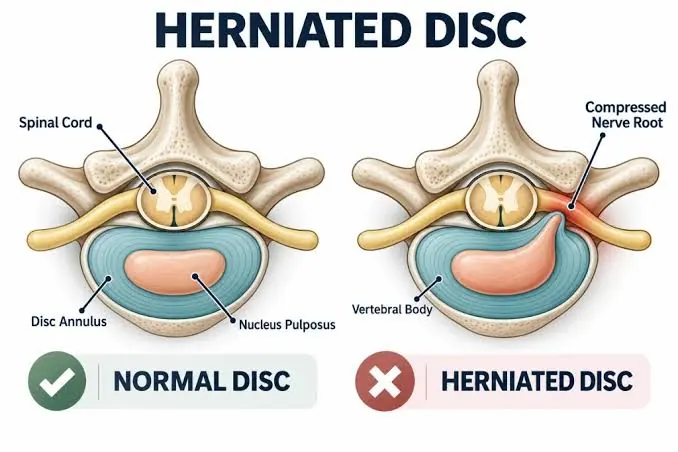
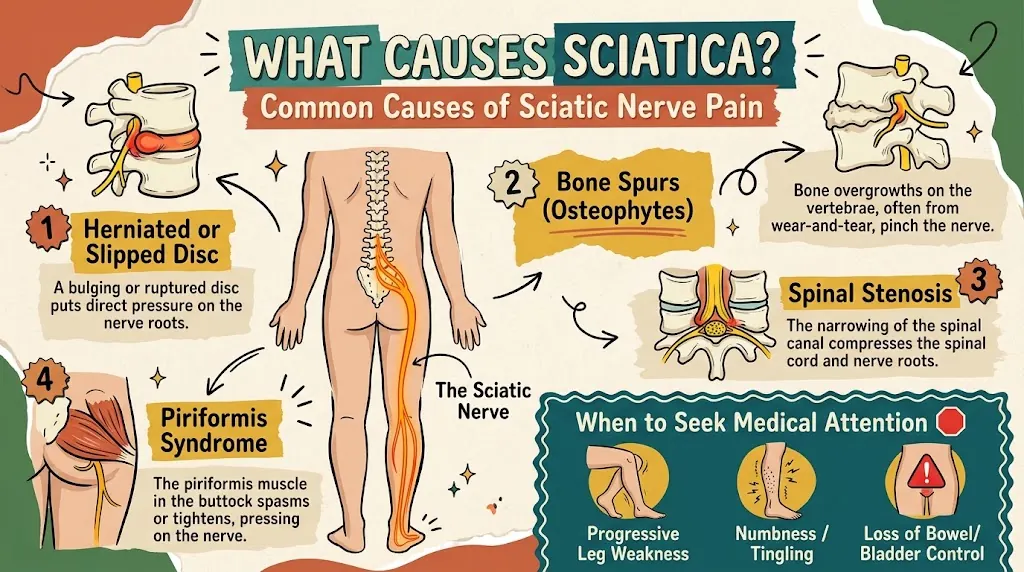
A herniated disc is one of the most common causes of sciatica. Spinal discs cushion the bones of the spine, and a herniation occurs when disc material pushes through its outer layer. If it irritates or compresses a nearby nerve root, pain may travel from the lower back into the buttock and leg.
Symptoms may worsen with prolonged sitting, bending, coughing, or sneezing. However, a disc bulge on an imaging scan does not automatically mean it is causing symptoms.
Learn more about what a herniated disc feels like and how a bulging disc can cause sciatica.
2. Spinal stenosis
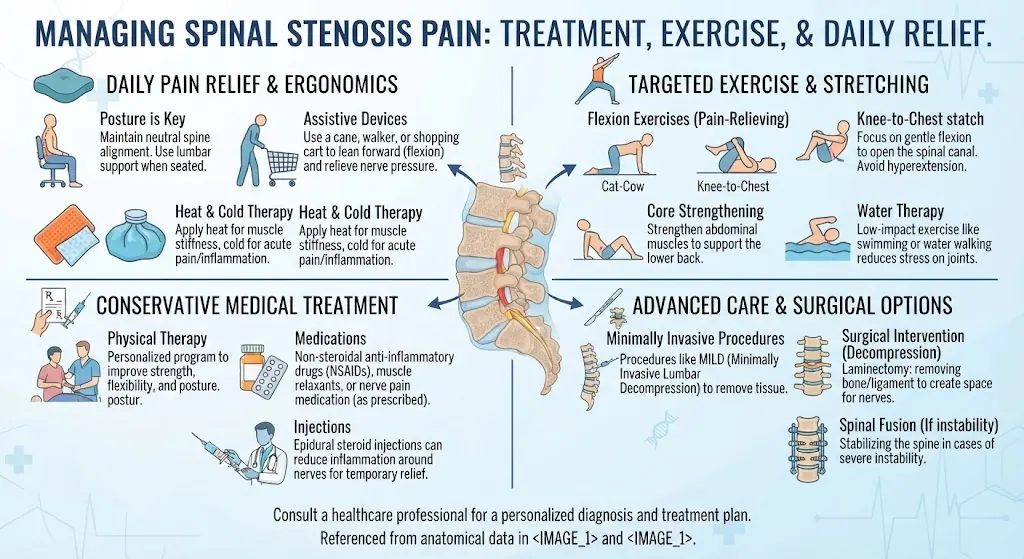
Spinal stenosis is narrowing of the spaces within the spine, which can put pressure on nerve roots. It often develops as age-related changes affect spinal joints, discs, and ligaments.
Symptoms may include pain, tingling, heaviness, or weakness in the legs when standing or walking. Some people feel better when sitting or leaning forward, although symptoms vary.
See what spinal stenosis feels like for a closer look at its symptoms.
3. Bone spurs and age-related spinal changes
As the spine changes with age, bony growths called bone spurs may develop around joints. These growths do not always cause pain, but they can contribute to nerve compression if they narrow the space around a nerve root.
Disc degeneration and spinal arthritis can also occur together. Whether these findings explain sciatica depends on their location and how well they match the person’s symptoms and examination.
4. Spondylolisthesis
Spondylolisthesis occurs when one vertebra slips forward relative to the vertebra below it. In some cases, this changes the available space for spinal nerves and contributes to leg pain, numbness, or weakness.
Not everyone with this condition develops sciatica. The degree of nerve involvement and the person’s symptoms help guide treatment decisions.
5. Piriformis-related nerve irritation
The piriformis is a muscle deep in the buttock that helps rotate the hip. Irritation in this region can cause buttock pain and sometimes symptoms that travel down the leg, resembling sciatica from the spine.
However, pain around the sciatic nerve in the buttock is not necessarily true spinal sciatica. A clinician may need to distinguish these possibilities because the treatments can differ.
Read about whether a tight piriformis muscle can cause sciatica-like pain.
6. Injury or, less commonly, another medical condition
A fall, collision, or pelvic injury can damage tissues near the sciatic nerve or irritate spinal nerve roots. Rarely, a tumor or another serious condition may compress a nerve.
New pain after significant trauma, unexplained weight loss, fever, or a history of cancer should prompt medical evaluation rather than being assumed to be routine sciatica.
How Do Different Causes of Sciatica Compare?
| Possible cause | Typical clues | Important limitation |
|---|---|---|
| Herniated disc | Leg pain that may worsen with sitting, bending, coughing, or sneezing | Symptoms alone cannot confirm a disc herniation |
| Spinal stenosis | Leg symptoms during standing or walking that may ease with sitting | Other conditions can also cause walking-related pain |
| Spondylolisthesis | Back pain with possible radiating leg symptoms | Some cases cause no symptoms |
| Piriformis-related irritation | Buttock tenderness or pain, sometimes extending down the leg | Similar symptoms can originate in the spine |
| Injury or other serious cause | Symptoms following trauma or accompanied by other warning signs | Requires assessment based on the circumstances |
These patterns are clues, not a substitute for examination. For example, the difference between a herniated disc and sciatica is that a herniated disc is a structural finding, while sciatica describes a pattern of symptoms.
What Increases the Risk of Sciatica?
Certain factors may increase the likelihood of nerve irritation, although sciatica can occur without an obvious trigger.
-
Age-related changes: Disc herniations are more common in younger and middle-aged adults, while spinal narrowing becomes more common with age.
-
Repeated lifting or twisting: Heavy loads and awkward movements may aggravate the back, particularly when combined with other risk factors.
-
Prolonged sitting: Long periods in one position may worsen symptoms for some people. See whether sitting too much can cause sciatica.
-
Higher body weight and diabetes: These can contribute to spinal loading or nerve-health risks, although neither proves the cause of an individual’s symptoms.
-
Previous back problems: A history of disc or spinal conditions may increase the likelihood of recurring symptoms.
How Is the Cause of Sciatica Diagnosed?
A clinician usually starts by asking where the pain travels, when it began, which activities make it worse, and whether you have numbness or weakness. A physical and neurological examination may assess muscle strength, sensation, reflexes, walking, and movements that reproduce symptoms.
| Evaluation method | What it can help determine |
|---|---|
| Medical history and examination | Whether symptoms suggest nerve irritation and whether warning signs are present |
| MRI | Whether disc herniation or spinal narrowing may explain symptoms |
| X-ray or CT | Certain bone changes, fractures, or structural abnormalities |
| Nerve testing | Selected cases involving persistent or unclear neurological symptoms |
Imaging is not always needed immediately. An MRI for lower back pain may be considered when symptoms are severe, persistent, or associated with findings that could change treatment. Scan results must be interpreted alongside symptoms and examination findings.
What Helps Relieve Sciatica?
Treatment depends on the cause and severity. Many people improve without surgery, but persistent symptoms or progressive neurological problems require assessment.
-
Stay gently active: Short walks and comfortable daily movements may be preferable to prolonged bed rest. Learn whether walking is good for lower back pain.
-
Modify aggravating activities: Temporarily reduce heavy lifting or positions that clearly worsen symptoms. Guidance on what to avoid when you have sciatica can help you adapt activities.
-
Consider physical therapy: An individualized plan may improve strength, mobility, and movement tolerance.
-
Use heat or cold cautiously: These may provide temporary comfort but do not remove nerve compression.
-
Discuss medication with a clinician or pharmacist: Anti-inflammatory medicines are not suitable for everyone and may have kidney, stomach, cardiovascular, or medication-interaction risks.
For additional guidance, see how to relieve back pain at home, exercises for lower back pain, and how long a herniated disc takes to heal.
When Is Sciatica an Emergency?
Seek emergency medical care if you develop:
-
New difficulty starting urination, inability to urinate, or loss of bladder or bowel control.
-
Numbness around the groin, genitals, or buttocks.
-
Severe or rapidly worsening weakness, particularly in both legs.
These symptoms can indicate serious compression of nerves near the bottom of the spinal canal. Prompt assessment is also important for progressive leg weakness, significant trauma, fever with back pain, or unexplained weight loss.
Frequently Asked Questions
Can sciatica happen without lower back pain?
Yes. Some people experience pain, tingling, or numbness mainly in the buttock or leg, with little or no back pain.
Does sciatica always mean a herniated disc?
No. A herniated disc is a common cause, but spinal stenosis, vertebral slippage, and other sources of nerve irritation can produce similar symptoms.
How long does sciatica last?
Many episodes improve over several weeks to a few months, although recovery varies with the cause and severity. Persistent or worsening symptoms deserve medical evaluation.
Can sciatica go away on its own?
Yes, some cases improve as irritation settles and the body recovers. New weakness or bladder or bowel changes should never be left to resolve on their own.
Can exercise make sciatica worse?
Some movements can aggravate nerve symptoms, particularly if they repeatedly reproduce shooting pain, tingling, or numbness. Exercise should be adapted to your symptoms rather than forced.
Conclusion
Sciatica is a symptom pattern, not a single diagnosis. Herniated discs, spinal stenosis, age-related spinal changes, and other conditions may irritate the nerve roots that form the sciatic nerve. The most useful next step is to match your symptoms with a clinical examination, use appropriate activity modifications, and seek prompt care for warning signs.
Disclaimer: This article is provided for educational and informational purposes only.