This discomfort does not always mean you have a serious back injury. Tight muscles, prolonged sitting, limited hip mobility, and irritation around the spine can all contribute. However, pain that is severe, persistent, or accompanied by numbness or weakness deserves medical attention.
Understanding why your lower back hurts when you get into a car can help you identify movements that aggravate it, adjust how you enter the vehicle, and decide when to seek professional care. The pattern of your symptoms matters, but it cannot confirm a specific cause on its own.
What Causes Lower Back Pain When Getting Into a Car?
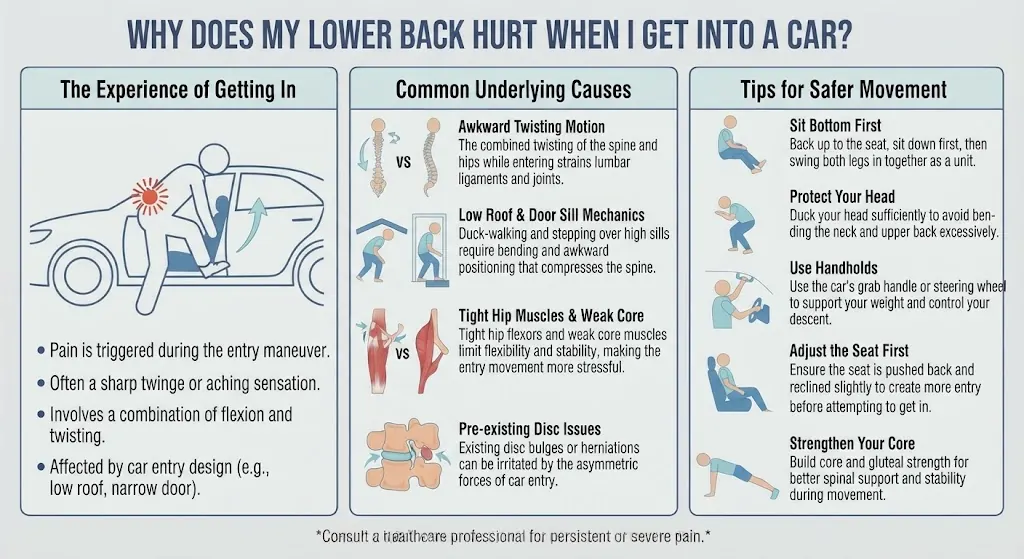
Getting into a car combines several movements: bending, rotating your trunk, lifting a leg, and lowering your body into a relatively low seat. If your back is sensitive to one or more of these movements, the combination may trigger pain.
Common possibilities include:
-
Muscle strain or stiffness: Back muscles may become irritated after lifting, exercise, or prolonged sitting. Sudden twisting can aggravate an already sensitive area.
-
Limited hip mobility: If your hips do not rotate comfortably, your lower back may compensate when you lift your legs into the vehicle.
-
Spinal joint or disc irritation: Bending and twisting can provoke symptoms in some people with spinal conditions. Learn more about what a herniated disc can feel like.
-
Nerve irritation: Pain that travels from the lower back into the buttock or leg, especially with tingling or numbness, may involve a nerve. These symptoms can occur with the first signs of sciatica.
Other factors, including age-related spinal changes and previous back injuries, may contribute. For a broader overview, see what commonly causes back pain.
Which Movement Triggers the Pain?
The movement that hurts can help you describe your symptoms to a healthcare professional, although it does not establish a diagnosis.
| When pain occurs | Possible contributing factor | What to notice |
|---|---|---|
| Lifting your leg into the car | Hip stiffness or back muscle irritation | Whether one side hurts more |
| Twisting to sit down | Sensitive muscles, joints, or discs | Whether rotation triggers a sharp twinge |
| Lowering into a low seat | Pain with bending or loading the back | Whether a higher seat feels easier |
| Sitting after entry | Sensitivity to prolonged sitting or seat position | Whether discomfort builds during the drive |
| Pain travels down the leg | Possible nerve irritation | Tingling, numbness, or weakness |
If your back also hurts during driving, why lower back pain develops after driving may help you understand the role of prolonged sitting and vehicle posture.
How Can You Get Into a Car Without Hurting Your Back?
Changing the order of your movements may reduce unnecessary twisting. Move slowly and use a comfortable range of motion rather than forcing your back or hips into position.
-
Move the seat back. Create enough room to enter without folding your body tightly.
-
Sit down first. If comfortable, back up to the seat and lower yourself gently while keeping your feet supported.
-
Bring your legs in together. Turn your hips and torso as a unit instead of twisting your lower back while lifting one leg at a time.
-
Use your hands for support. Hold a stable part of the vehicle if needed, but avoid pulling hard on the door or an unstable object.
-
Adjust the seat afterward. Keep your back supported, your knees comfortably bent, and the pedals within easy reach.
If your vehicle has a particularly low seat, try a different entry angle or a higher vehicle when practical. Avoid movements that repeatedly cause sharp or escalating pain.
For additional guidance, learn how to adjust a car seat for lower back pain and how to prevent back pain during a long car ride.
What Can Help Relieve the Pain?
For mild discomfort without warning signs, conservative measures may help:
-
Keep moving gently. Short walks and normal activities within your tolerance are often preferable to prolonged bed rest. See whether you should rest or keep moving with lower back pain.
-
Try heat or cold. A wrapped cold pack may help after a recent strain, while gentle heat may ease stiffness. Review whether heat or ice is better for back pain.
-
Avoid repeated painful twisting. Do not force stretches or exercises that make symptoms worse. Gentle exercises for lower back pain may be appropriate when tolerated.
-
Break up long periods of sitting. During longer trips, stop somewhere safe to stand and walk briefly when possible. Regular movement breaks can reduce prolonged sitting.
A suitable chair and supported sitting posture may also help outside the car. Explore how to sit to avoid lower back pain and how often to take breaks from sitting.
How Long Should the Pain Last?
Recovery depends on the underlying cause, symptom severity, and whether the aggravating movement continues. Mild muscle-related discomfort may improve over several days, while other causes can last longer.
| Symptom pattern | Sensible next step |
|---|---|
| Mild pain that gradually improves | Continue gentle activity and monitor symptoms |
| Pain that repeatedly returns when entering a car | Adjust movement and arrange an evaluation if it persists |
| Pain that interferes with driving, walking, or sleep | Contact a healthcare professional |
| Pain with new or worsening neurological symptoms | Seek prompt medical assessment |
For more context, read how long lower back pain can last before it needs evaluation.
When Should You Seek Medical Care?
Arrange a medical appointment if the pain does not improve, keeps returning, worsens, or limits everyday activities. An evaluation is also appropriate if you develop pain radiating down a leg, persistent tingling, or numbness. A clinician can assess your back, hips, strength, sensation, and movement to determine whether further testing is needed.
Seek emergency care immediately for new loss of bladder or bowel control, difficulty urinating associated with back symptoms, numbness around the groin or saddle area, or significant or rapidly worsening leg weakness. These can be signs of serious nerve compression. Severe back pain after a major accident, or pain accompanied by chest pain, fainting, or difficulty breathing, also warrants emergency assessment. Review when back pain is an emergency.
Imaging is not automatically necessary for every episode of back pain. Whether you need an MRI depends on your symptoms, examination findings, and suspected cause; learn when lower back pain may need an MRI.
Frequently Asked Questions
1. Why does my lower back hurt when I lift my leg into a car?
Lifting your leg combines hip movement with trunk stabilization. Muscle irritation, restricted hip motion, or sensitivity in the lower back may contribute.
2. Why does one side of my back hurt when getting into a car?
One-sided pain can occur when muscles or joints are more sensitive on one side or when you twist unevenly. Persistent or worsening pain should be assessed.
3. Why does my back hurt more in a low car?
A low seat may require deeper bending and more hip rotation. Changing the entry angle or using a higher seat may make the movement easier.
4. Can getting into a car cause a back strain?
A sudden or awkward movement can strain back muscles, especially if they are already fatigued. Pain alone cannot confirm that a strain is the cause.
5. Why does my lower back hurt after sitting in the car?
Prolonged sitting and a poorly supported position may aggravate symptoms. Adjust the seat and take safe movement breaks during longer trips.
6. Should I stretch before getting into a car?
Gentle movement may help if stiffness is contributing, but forceful stretching can worsen some symptoms. Stop if a movement causes sharp pain, numbness, or pain spreading down the leg.
7. Can sciatica cause pain when entering a vehicle?
Yes, some people with sciatica experience symptoms during sitting, bending, or leg movement. Pain radiating down the leg may warrant clinical assessment.
8. Should I keep driving if my back hurts?
Do not drive if pain limits your ability to turn, operate the pedals, or react safely. If symptoms are severe or distracting, stop somewhere safe and arrange another way to travel.
9. When should I see a doctor for this pain?
Seek care if pain persists, repeatedly returns, worsens, or affects daily activities. New weakness, significant numbness, or bladder or bowel changes require urgent assessment.
10. Can changing my car seat prevent the pain?
Better seat positioning and adequate room to enter may reduce strain, but they will not resolve every underlying cause. If pain continues despite adjustments, seek professional advice.
Conclusion
Lower back pain when getting into a car can be related to twisting, bending, muscle stiffness, hip mobility, or spinal irritation. Give yourself room to enter, move your torso and legs together, adjust your seat, and stay gently active as tolerated. If pain persists or limits normal activities, arrange a medical evaluation; seek emergency care for serious warning signs.
Disclaimer: This article is provided for educational and informational purposes only.