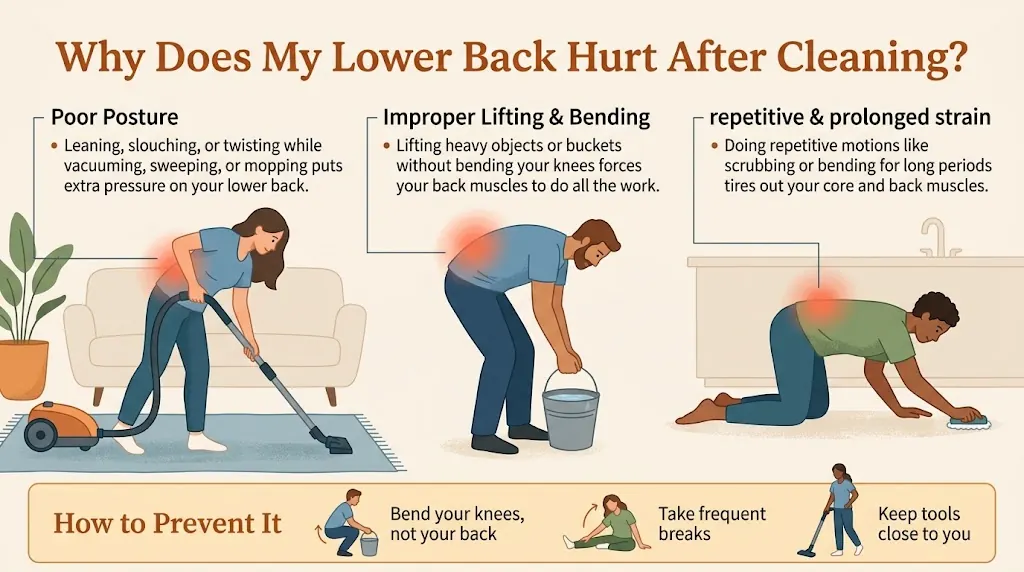
This type of pain is often related to muscle fatigue, repeated bending, twisting, or lifting, especially when you spend a long time cleaning without breaks. However, not every episode of back pain has the same cause. Pain that travels into a leg, causes weakness, or occurs with other concerning symptoms may require medical evaluation rather than home treatment alone.
Understanding why your lower back hurts after cleaning the house can help you choose safer ways to move, relieve discomfort, and prevent another flare-up. This guide explains common causes, practical home care, recovery expectations, and warning signs that should not be ignored.
What Causes Lower Back Pain After Cleaning the House?
The most common explanation is that cleaning places repeated demands on the muscles, joints, and other structures supporting your lower spine. Several factors can contribute, and more than one may be involved.
| Possible cause | What you might notice | Common trigger |
|---|---|---|
| Muscle strain or fatigue | Aching, tenderness, or pain when moving | Scrubbing, mopping, lifting laundry |
| Repeated bending | Stiffness or pain when straightening up | Cleaning low shelves or bathtubs |
| Twisting while lifting | Sudden discomfort or muscle tightness | Turning while carrying a basket |
| Prolonged standing | Gradually increasing lower back ache | Ironing, washing dishes, cooking |
| Irritated spinal joints or discs | Pain with particular movements; sometimes symptoms into a leg | Repeated bending or lifting |
| Nerve irritation | Burning, tingling, numbness, or pain extending into a leg | Certain spinal conditions or movements |
These patterns can provide clues, but symptoms alone cannot confirm the underlying cause. For a broader explanation, see what causes back pain and why it develops.
1. Repeated bending and reaching
Bending forward to clean floors, reach beneath furniture, or scrub low surfaces places additional demands on the lower back. Repeating these movements for an extended period can fatigue muscles and aggravate sensitive tissues.
The risk may increase when you bend from the waist while reaching far away from your body. Working in an awkward position for several minutes at a time can also make discomfort more noticeable.
2. Lifting and carrying household items
Laundry baskets, buckets of water, vacuum cleaners, and bags of rubbish can all challenge your back, particularly when they are heavy or difficult to hold close to your body. Lifting while twisting or moving quickly may increase the strain.
A sudden sharp pain during a lift can occur with a muscle strain, but it does not automatically establish that a muscle is the only structure involved.
3. Standing or cleaning without breaks
Standing at a sink, ironing board, or countertop for a long time can make the lower back feel tired or achy. The discomfort may be worse if you lean forward, repeatedly shift your weight, or stay in one position without moving.
If your symptoms are particularly noticeable after extended standing, why lower back pain develops when standing for a long time may help you understand the pattern.
4. An underlying back condition
Cleaning may reveal an existing problem rather than cause a new injury. Conditions involving spinal joints, discs, or nerves can become symptomatic during bending, lifting, or prolonged activity.
For example, a herniated disc and its possible symptoms may be relevant if back discomfort occurs with leg pain, tingling, or numbness. These symptoms can have other causes, so a clinical assessment may be needed.
How Can You Relieve Lower Back Pain After Cleaning?
Mild back discomfort after housework often improves with sensible activity changes and time. The goal is to reduce aggravating movements without keeping your back completely inactive.
What to do during the first 24–48 hours
-
Pause painful chores: Avoid repeated bending, heavy lifting, and vigorous scrubbing until symptoms settle.
-
Keep moving gently: Take short walks and change positions regularly if movement does not significantly worsen your symptoms. See whether walking helps lower back pain.
-
Try heat or cold: Wrapped cold packs may help with recent soreness, while gentle heat may ease muscle tightness. Learn when to use heat or ice for back pain.
-
Avoid prolonged bed rest: Gentle movement is generally preferable to staying in bed for extended periods.
-
Resume chores gradually: Start with lighter tasks and increase activity as your comfort improves.
| Self-care option | How to use it | Important precaution |
|---|---|---|
| Gentle walking | Start with short, comfortable walks | Stop if symptoms worsen significantly |
| Heat | Apply comfortable warmth for 15–20 minutes | Avoid burns and excessive heat |
| Cold pack | Wrap it in a towel and apply briefly | Never place ice directly on skin |
| Gentle mobility | Move within a comfortable range | Do not force painful stretches |
For additional guidance, explore how to relieve back pain at home. If stretching feels helpful, gentle stretches for a tight lower back may be worth discussing with a clinician or physical therapist. Stop any movement that causes sharp pain, new tingling, or worsening symptoms.
How Can You Prevent Back Pain While Cleaning?
Small changes in how you organize and perform household chores can reduce repeated strain.
-
Keep items close: Hold laundry baskets and other loads near your body instead of reaching forward while carrying them.
-
Bend your knees and hips: Use a comfortable squat or hip hinge when picking items up, and avoid twisting while lifting.
-
Raise your work surface when possible: Use an appropriate-height ironing board or cleaning tool to reduce prolonged bending.
-
Alternate tasks: Switch between standing chores and lighter activities instead of mopping or scrubbing continuously.
-
Use long-handled tools: Choose equipment that lets you reach floors and high surfaces without excessive bending or stretching.
-
Take movement breaks: Change positions before your back becomes increasingly tired.
If pain repeatedly develops during bending, review how to lift heavy objects without aggravating lower back pain and exercises for lower back pain when you are ready to resume more activity.
Research on low back pain generally supports staying active as tolerated rather than relying on prolonged bed rest. However, no single posture, exercise, or cleaning technique prevents every episode. Individual needs vary depending on the cause of pain, physical capacity, and other health conditions.
How Long Does Back Pain After Cleaning Last?
Recovery depends on the severity of the irritation and whether an underlying condition is present.
| Symptom pattern | Possible course | Suggested next step |
|---|---|---|
| Mild soreness after chores | May improve over several days | Modify activity and monitor symptoms |
| Stiffness with bending or standing | May take days to a few weeks to settle | Gradually resume comfortable movement |
| Recurrent pain after routine chores | May persist or repeatedly return | Arrange a clinical assessment |
| Pain with numbness or weakness | Depends on the underlying cause | Seek medical evaluation promptly |
These are general patterns, not guaranteed recovery timelines. If pain is not improving after a week or two, keeps returning, or interferes with sleep or everyday activities, consider speaking with a healthcare professional. Guidance on when to see a doctor for lower back pain can help you decide on the next step.
When Is Lower Back Pain After Cleaning a Warning Sign?
Symptoms that can usually be monitored: Mild soreness or stiffness that improves with rest from aggravating chores and gentle movement, without other concerning symptoms.
Symptoms needing medical evaluation: Pain that persists, repeatedly returns, radiates down a leg, or occurs with ongoing tingling or numbness. New pain accompanied by fever, unexplained weight loss, or significant nighttime discomfort also warrants assessment.
Symptoms requiring emergency care: Seek emergency medical attention for new difficulty controlling your bladder or bowels, inability to urinate, numbness around the groin or saddle area, or rapidly worsening leg weakness. Severe back pain after a major accident also requires urgent assessment. See when back pain is an emergency.
Frequently Asked Questions
1. Why does my lower back hurt after mopping?
Mopping involves repeated reaching, bending, and twisting, which can fatigue or irritate the muscles supporting your lower spine. Use a longer-handled mop, alternate tasks, and take breaks.
2. Why does my back hurt hours after cleaning?
Muscle soreness and tissue irritation can become more noticeable after activity rather than during it. Delayed pain does not identify the cause by itself, so monitor how symptoms change.
3. Should I stop cleaning completely if my back hurts?
You may need to pause heavy or painful chores temporarily, but complete inactivity is generally unnecessary for uncomplicated back pain. Continue comfortable daily movement and increase activity gradually.
4. Is heat or ice better after cleaning?
Either may help, depending on your symptoms and preference. Use a wrapped cold pack for short periods or gentle heat for stiffness, and protect your skin from burns or cold injury.
5. Can cleaning cause sciatica?
Cleaning does not necessarily cause sciatica, but bending or lifting may aggravate symptoms from an already irritated nerve. Sciatica often involves pain extending from the lower back or buttock into the leg.
6. Why does my back hurt when I straighten up after bending?
Your back muscles and other tissues may be irritated or fatigued after sustained bending. Persistent or severe pain, especially with leg symptoms, should be assessed rather than assumed to be ordinary soreness.
7. Should I stretch a sore back after housework?
Gentle movement may help, but aggressive stretching can worsen some symptoms. Stop if a stretch causes sharp pain, radiating symptoms, or increasing numbness.
8. Can poor posture while cleaning cause back pain?
Awkward positions and prolonged bending can contribute to discomfort, but there is no single perfect posture that prevents all back pain. Changing positions and avoiding prolonged, uncomfortable movements are practical strategies.
9. When should I see a doctor for back pain after cleaning?
Seek an appointment if pain persists, worsens, repeatedly returns, or limits daily activities. New weakness, significant numbness, fever, or other concerning symptoms may require more urgent evaluation.
10. How can I stop lower back pain from returning after cleaning?
Break chores into shorter sessions, use tools that reduce bending, keep loads close to your body, and alternate tasks. If the pain keeps recurring despite these changes, ask a healthcare professional whether physical therapy or further evaluation would be appropriate.
Conclusion
Lower back pain after cleaning the house is often associated with repeated bending, lifting, twisting, or muscle fatigue. Modify painful chores, keep moving comfortably, use heat or cold if helpful, and return to household tasks gradually. Persistent, worsening, or neurological symptoms deserve medical attention, while bladder or bowel changes, saddle numbness, and rapidly worsening weakness require emergency care.
Disclaimer: This article is provided for educational and informational purposes only.