
Not every episode of lower back pain or leg discomfort means you have sciatica. Sciatica describes symptoms associated with irritation or compression of nerve roots that contribute to the sciatic nerve, and other conditions can cause similar symptoms. The location, pattern, and progression of your symptoms can help a clinician determine what may be happening.
Recognizing the early signs of sciatica can help you decide what to do next, which activities to modify, and when to seek medical attention. The most important distinction is whether symptoms remain mild and manageable or include warning signs of significant nerve involvement.
What Are the Earliest Symptoms of Sciatica?
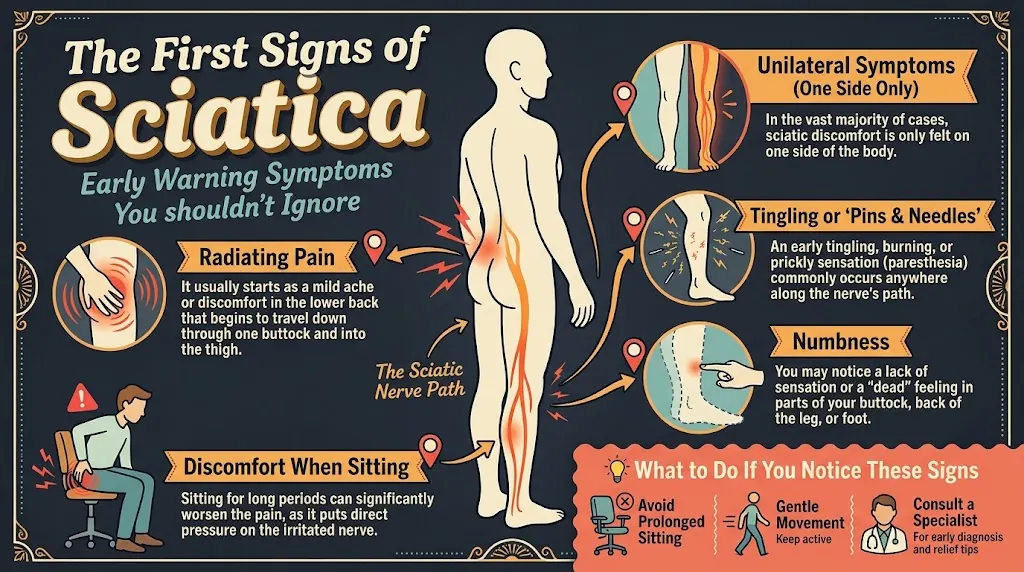
The earliest symptoms of sciatica commonly involve pain, tingling, or altered sensation in one buttock or leg. Symptoms may occur with or without lower back pain, and their intensity can range from mild discomfort to sharp, shooting pain.
Common early signs include:
-
Pain traveling down one leg: Discomfort may extend from the buttock into the thigh, calf, or foot.
-
Burning or electric-like sensations: Pain may feel sharp, shooting, or similar to an electric shock.
-
Tingling or pins and needles: You may notice unusual sensations in part of the leg or foot.
-
Numbness: An area of the leg or foot may feel less sensitive than usual.
-
Pain that changes with position: Sitting, bending, or certain movements may aggravate symptoms.
-
Occasional weakness: The affected leg or foot may feel less capable during everyday activities.
Not everyone experiences all these symptoms. Pain traveling along a leg is a useful clue, but no single symptom confirms sciatica.
If you are trying to understand what causes sciatica and sciatic nerve pain, the underlying issue is often irritation of a nerve root in the lower spine, sometimes associated with a herniated disc or age-related narrowing around the nerves.
How Does Sciatica Pain Differ From Ordinary Back Pain?
Sciatica typically involves symptoms extending from the lower back or buttock into one leg, whereas uncomplicated muscular back pain may stay around the lower back. However, these patterns overlap, and a physical examination may be needed to distinguish them.
| Feature | Possible sciatica | Possible muscular back pain |
|---|---|---|
| Pain location | Often travels into one buttock and leg | Often stays around the back |
| Sensation | May burn, shoot, tingle, or feel numb | Often feels sore, tight, or tender |
| Leg symptoms | Tingling, numbness, or weakness may occur | Usually no nerve-related symptoms |
| Effect of movement | Certain positions may trigger radiating pain | Bending or lifting may increase local soreness |
| Diagnosis | Depends on symptom pattern and clinical examination | Also depends on examination and history |
These are general patterns, not a way to diagnose yourself. A person can have sciatica and local back pain at the same time.
For example, lower back pain with leg numbness may indicate nerve involvement and deserves attention, especially if numbness is new or progressing. Likewise, tingling in the leg associated with back pain can have several possible causes.
Where Do the First Signs of Sciatica Usually Appear?
Sciatica symptoms often affect one side of the body, following a path from the buttock down the back or side of the leg. The exact location depends partly on which nerve roots are irritated.
| Symptom location | What you might notice | What it can mean |
|---|---|---|
| Buttock | Aching, burning, or sharp pain | May occur with sciatic nerve irritation or other hip and pelvic conditions |
| Back of the thigh | Pain that travels downward | Can fit a sciatic pain pattern |
| Calf or foot | Tingling, numbness, or shooting pain | May suggest irritation of particular nerve roots |
| Foot or ankle | Difficulty lifting the foot or toes | New weakness requires prompt medical assessment |
Sciatica can sometimes cause buttock pain without leg pain, although isolated buttock pain is less specific and may arise from muscles, joints, or other structures.
Symptoms may also include foot tingling related to lower back pain or numbness in the foot associated with sciatica. These symptoms should be evaluated if they persist, recur, or worsen.
What Causes Sciatica to Start?
Sciatica develops when nerve roots that contribute to the sciatic nerve become irritated or compressed. One possible cause is a herniated disc, in which disc material protrudes and may irritate a nearby nerve root. Other causes include narrowing of the spinal canal, age-related changes, and, less commonly, other conditions affecting the spine.
Everyday activities such as lifting, bending, or twisting may trigger symptoms or make an existing problem more noticeable. However, sciatica does not always follow an obvious injury, and a particular movement does not prove that it caused nerve damage.
A herniated disc that causes lower back pain may also contribute to radiating leg symptoms. A disc finding on imaging does not automatically mean it is the source of pain; clinicians interpret imaging alongside symptoms and examination findings.
Research summarized in clinical guidelines supports beginning with a history and physical examination for suspected sciatica, rather than automatically ordering imaging for every new episode. Imaging is generally considered when serious causes are suspected or the result is likely to change management.
What Should You Do if You Notice Early Signs of Sciatica?
If symptoms are mild and you have no warning signs, gentle activity and avoiding movements that clearly worsen pain may help. Long periods of bed rest can contribute to stiffness and reduced activity tolerance, so aim to keep moving within your comfort level.
Consider these practical steps:
-
Change positions regularly. If sciatica pain gets worse when sitting, try shorter sitting periods and stand or walk when comfortable.
-
Avoid painful lifting and twisting. Temporarily modify activities that trigger shooting pain rather than repeatedly testing the painful movement.
-
Try gentle walking. Short walks may help you remain active, provided symptoms do not intensify or spread.
-
Choose a comfortable sleeping position. Experiment with supported positions using the guidance on how to sleep with sciatica.
-
Avoid aggressive stretching. Stop exercises that increase radiating pain, numbness, or weakness.
For additional guidance, review activities to avoid with sciatica and how to relieve back pain at home. These approaches may help with comfort, but they do not replace an assessment when symptoms are severe, persistent, or worsening.
When Should You Seek Medical Care?
The severity and progression of symptoms matter more than whether you recognize every typical sign of sciatica.
| Symptom pattern | Recommended action |
|---|---|
| Mild pain or tingling that is stable and improving | Monitor symptoms and maintain comfortable activity |
| Persistent or recurring radiating pain, numbness, or difficulty with daily activities | Arrange a medical appointment |
| New or worsening leg weakness, including difficulty lifting the foot | Seek prompt medical assessment |
| Loss of bladder or bowel control, inability to urinate, numbness around the groin, or rapidly progressing weakness | Seek emergency care immediately |
New leg weakness is particularly important because it can indicate more significant nerve dysfunction. For example, leg weakness associated with sciatica should not be dismissed as ordinary muscle fatigue if it is new or progressing.
If you experience emergency warning signs, do not wait for symptoms to improve on their own. You can also review when back pain requires emergency care.
Frequently Asked Questions
1. Can sciatica start without lower back pain?
Yes. Sciatica can cause buttock or leg pain without noticeable lower back pain. The absence of back pain does not rule it out, although other causes of leg pain must also be considered.
2. Can the first sign of sciatica be tingling?
Yes. Tingling or pins and needles may appear before significant pain or alongside it. Persistent or worsening tingling warrants medical evaluation, especially if weakness develops.
3. Does sciatica always affect one leg?
Sciatica most often affects one leg, but symptoms can occasionally occur on both sides. Symptoms affecting both legs, particularly with new weakness or bladder or bowel changes, require urgent assessment.
4. Can sciatica cause pain in the hip?
Yes. Sciatic pain may be felt around the buttock and hip region. However, hip joint conditions and muscle problems can produce similar discomfort.
5. Does sciatica get worse when sitting?
It can. Sitting may aggravate symptoms in some people, particularly when certain positions increase irritation around the affected nerve roots. Frequent position changes may help.
6. How long do early sciatica symptoms last?
Duration varies with the cause and severity. Many episodes improve over several weeks, but persistent symptoms or worsening neurological changes need clinical evaluation.
7. Can walking make sciatica worse?
Yes, depending on the underlying cause and severity. Try shorter walks and adjust your activity if pain intensifies, spreads farther down the leg, or causes increasing numbness or weakness.
8. Should I stretch when sciatica first starts?
Gentle movement may help, but forceful stretching can aggravate symptoms. Stop any movement that increases radiating pain, tingling, or numbness.
9. Do you need an MRI to diagnose sciatica?
Not always. Many cases can initially be assessed through medical history and physical examination. MRI may be appropriate when serious causes are suspected, neurological deficits are concerning, or symptoms persist and imaging would affect treatment.
10. Can early sciatica become permanent nerve damage?
Most episodes do not automatically lead to permanent damage, but significant or prolonged nerve compression can sometimes cause lasting problems. Seek prompt care for progressive weakness or other neurological warning signs.
Conclusion
The first signs of sciatica often include pain traveling from the buttock down one leg, tingling, numbness, or burning sensations. These symptoms can overlap with other conditions, so their pattern and progression matter more than any single symptom. Stay gently active if comfortable, modify aggravating activities, and seek medical assessment for persistent symptoms or new weakness. Emergency warning signs require immediate care.
Disclaimer: This article is provided for educational and informational purposes only.