Pain that appears when you lie down does not automatically mean you have a serious back problem. Muscle strain, prolonged sitting, spinal joint irritation, and an unsuitable sleeping position can contribute to nighttime discomfort. However, pain that repeatedly wakes you, becomes progressively worse, or occurs with other unexplained symptoms deserves medical attention.
Understanding why your lower back hurts when you lie down can help you identify possible triggers, adjust your sleeping position, and decide what to do next. The right approach depends on when the pain starts, whether movement changes it, how long it lasts, and whether you have other symptoms.
Why Does Your Lower Back Hurt When You Lie Down?
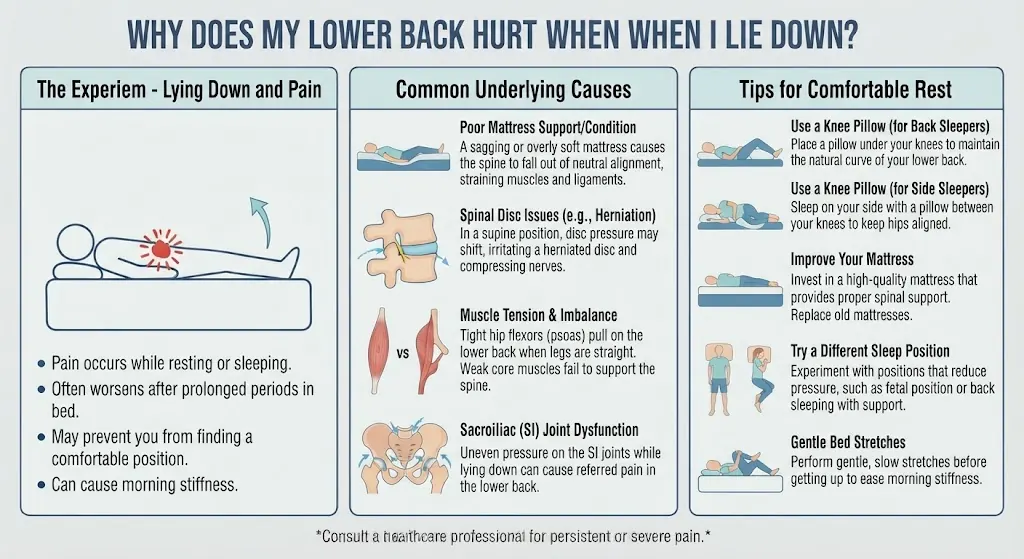
Lower back pain when lying down often results from muscles, joints, discs, or other structures becoming irritated in a particular position. During the day, standing and walking continually change the forces on your spine. When you lie down, your spine and pelvis settle into a different position, which may aggravate an existing source of discomfort.
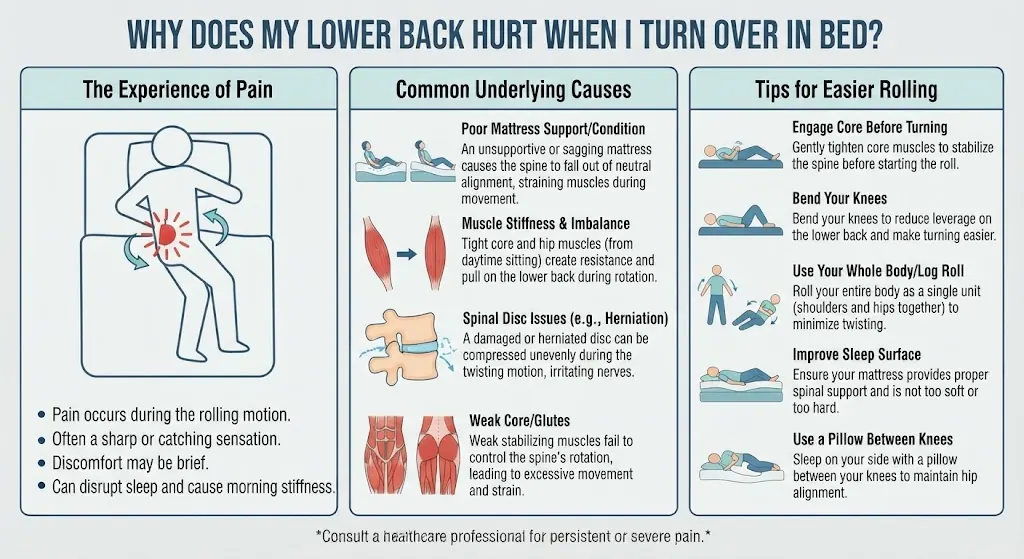
Common explanations include muscle tightness after sitting, strain from lifting or exercise, and sensitivity in the joints or discs of the lower spine. Some people notice pain only when lying flat, while others experience it when sleeping on their stomach or turning in bed.
The location and timing of the pain provide useful clues, but they cannot confirm the cause on their own.
What causes lower back pain when lying down?
Several conditions can make your lower back uncomfortable at rest. The pattern of symptoms may help you decide which factors to discuss with a healthcare professional.
| Possible cause | What you may notice | Typical pattern |
|---|---|---|
| Muscle strain or tightness | Aching, tenderness, or spasms | After lifting, exercise, or prolonged sitting |
| Sleeping position | Discomfort in certain positions | Improves after changing position |
| Mattress or inadequate support | Stiffness or aching | Worse after spending hours in bed |
| Arthritis or spinal joint irritation | Stiffness and pain after inactivity | May improve with gentle movement |
| Disc or nerve irritation | Pain that may travel into the buttock or leg | May worsen with certain movements or positions |
| Inflammatory spinal conditions | Persistent stiffness, sometimes waking you at night | Often improves with activity |
These patterns overlap, so symptoms alone cannot establish a diagnosis.
1. Muscle strain or tightness
Lifting heavy objects, bending repeatedly, exercising, or sitting for long periods can irritate the muscles and ligaments supporting your lower back. When you lie down, certain positions may stretch or compress the affected tissues and trigger discomfort.
If your pain began after physical activity, compare your symptoms with the signs of lower back pain after lifting something heavy. Avoid movements that sharply increase pain while maintaining gentle activity as tolerated.
2. Sleeping position or mattress support
Your mattress, pillow placement, and preferred sleeping position can influence how your hips and lower spine rest overnight. A sagging mattress or a position that forces your lower back into an uncomfortable arch may aggravate existing symptoms.
If pain is strongest after sleeping, consider whether you also experience lower back pain after waking up. A mattress change is not automatically necessary; first try adjusting your position and pillow support.
3. Arthritis, disc problems, or nerve irritation
Spinal joints affected by arthritis may become stiff after inactivity. A herniated disc or irritated nerve can also cause lower back pain, sometimes with burning, tingling, numbness, or pain extending into a leg.
For example, what a herniated disc feels like may include back pain with radiating leg symptoms, although some people have few symptoms. Pain traveling down the leg may also suggest possible causes of sciatica.
4. Inflammatory or other medical conditions
Inflammatory spinal conditions can cause prolonged morning stiffness and pain that worsens during rest or overnight. Less commonly, persistent pain at rest may be associated with an infection, fracture, cancer, or a problem outside the spine.
Kidney conditions may cause pain toward one side of the back, especially when accompanied by fever, urinary changes, nausea, or pain near the flank. Pain that is consistently worse when lying down should not automatically be attributed to your mattress.
Why does my lower back hurt more at night than during the day?
Pain may become more noticeable at night because you remain in one position for hours, move less, or have fewer distractions. A position that irritates a muscle, joint, or nerve may become increasingly uncomfortable the longer you maintain it.
However, persistent pain that repeatedly wakes you or progressively worsens at night deserves medical evaluation, particularly when it occurs with unexplained weight loss, fever, a history of cancer, or other new symptoms.
The following comparison can help distinguish patterns without attempting to diagnose the cause.
| Symptom pattern | Possible explanation | What to do |
|---|---|---|
| Pain improves after repositioning | Positional or mechanical irritation | Adjust pillows and monitor symptoms |
| Stiffness improves after moving | Muscle or joint stiffness; sometimes inflammation | Try gentle movement if tolerated |
| Pain steadily worsens or repeatedly wakes you | Requires assessment for an underlying cause | Arrange prompt medical evaluation |
| Pain with fever or new neurological symptoms | Possible serious condition | Seek urgent medical assessment |
These are general patterns, not diagnostic rules. Serious conditions can initially cause nonspecific symptoms.
How can you relieve lower back pain when lying down?
If you have no warning signs and the discomfort is mild, a few practical adjustments may improve comfort.
Try a different sleeping position


-
On your side: Keep your knees slightly bent and place a pillow between them to reduce twisting through your pelvis.
-
On your back: Place a pillow beneath your knees to reduce strain on your lower back.
-
On your stomach: If this position is comfortable and you prefer it, try a thin pillow under your lower abdomen or hips. Stop if it increases pain.
For more guidance, explore the best sleeping positions for lower back pain.
Use heat or cold carefully
A warm compress may ease muscle tightness, while a cold pack wrapped in a towel may help with discomfort after a recent strain. Apply either for about 15–20 minutes, checking your skin regularly. Do not sleep with a heating pad or ice pack in place.
You can compare heat or ice for back pain to decide which option better suits your symptoms.
Keep moving gently
Avoid prolonged bed rest. Short walks, gentle changes of position, and ordinary daily activities as tolerated may help prevent stiffness. Do not force stretches or exercises that increase pain, numbness, or symptoms traveling down your leg.
If movement is comfortable, try appropriate exercises for lower back pain. For additional practical strategies, see how to relieve back pain at home.
When should you seek medical care?
The severity, duration, and accompanying symptoms matter more than the fact that pain occurs while lying down.
| Level of concern | Warning signs | Recommended action |
|---|---|---|
| Monitor at home | Mild discomfort that improves with repositioning and gradually settles | Adjust sleeping posture and remain gently active |
| Arrange medical evaluation | Persistent pain, repeated nighttime waking, worsening symptoms, or unexplained weight loss | Contact a healthcare professional promptly |
| Seek emergency care | New loss of bladder or bowel control, difficulty urinating with neurological symptoms, numbness around the groin, or rapidly progressing leg weakness | Go to an emergency department immediately |
Seek urgent assessment for back pain with fever, significant recent trauma, or severe pain that is rapidly worsening. A history of cancer, immune suppression, or prolonged steroid use also lowers the threshold for medical evaluation.
For a fuller explanation, review when back pain is an emergency and when to see a doctor for lower back pain.
How is lower back pain when lying down evaluated?
A clinician will usually ask when the pain began, whether it changes with movement, whether it radiates into your legs, and whether you have experienced an injury or other symptoms. A physical examination may assess movement, tenderness, strength, sensation, and reflexes.
Imaging is not necessary for every episode of lower back pain. An MRI or other tests may be appropriate when symptoms, examination findings, or medical history suggest a specific underlying condition.
If your pain continues despite reasonable self-care, understanding how long lower back pain should last can help you decide when reassessment is appropriate. A clinician can also explain whether lower back pain needs an MRI.
Frequently Asked Questions
1. Why does my lower back hurt when I lie flat on my back?
Lying flat may place your lower spine in a position that aggravates sensitive muscles or joints. Try placing a pillow beneath your knees and see whether the discomfort changes.
2. Why does my lower back hurt when I lie on my side?
Your pelvis may rotate or your hips may become uncomfortable if your legs are poorly supported. Keeping your knees slightly bent and using a pillow between them may help.
3. Why does my lower back hurt only at night?
Reduced movement and prolonged positioning can make discomfort more noticeable at night. Pain that repeatedly wakes you, worsens over time, or occurs with other unexplained symptoms needs medical assessment.
4. Can a bad mattress cause lower back pain?
A mattress that sags or feels uncomfortable may contribute to poor sleep posture and discomfort. However, a mattress is not necessarily the underlying cause, and replacing it does not guarantee relief.
5. Is lower back pain when lying down a sign of a herniated disc?
It can occur with a herniated disc, but muscle strain, joint irritation, and other conditions can cause similar symptoms. Pain, numbness, or tingling that travels down a leg warrants assessment if persistent or worsening.
6. Should I sleep on my back or side with lower back pain?
Either position may be comfortable if it keeps your spine in a relaxed, supported position. Try a pillow under your knees when sleeping on your back or between your knees when sleeping on your side.
7. Is it better to rest or move when my back hurts in bed?
Brief rest for comfort is reasonable, but prolonged bed rest can increase stiffness. Gentle walking and normal activities as tolerated are generally preferable when no warning signs are present.
8. Can kidney problems cause lower back pain when lying down?
Yes. Kidney infections and kidney stones can cause pain in the back or flank, although the pain is not necessarily related to lying down. Fever, painful urination, blood in the urine, or severe flank pain should prompt medical evaluation.
9. How long does lower back pain when lying down last?
Minor muscle-related pain may improve over days to several weeks, depending on the injury and individual circumstances. Pain that persists, worsens, or regularly disrupts sleep should be assessed rather than managed indefinitely at home.
10. Can stress make lower back pain worse at night?
Stress can increase muscle tension and make pain more difficult to manage, while pain itself can disrupt sleep. Relaxation techniques and a consistent sleep routine may help, but persistent pain still deserves appropriate evaluation.
Conclusion
Lower back pain when lying down can result from muscle strain, sleeping posture, joint irritation, or other medical conditions. Start by adjusting your sleeping position, using pillows for support, and staying gently active as tolerated. If the pain persists, repeatedly disrupts sleep, or becomes progressively worse, arrange a medical assessment. Seek emergency care for new bladder or bowel dysfunction, saddle numbness, or rapidly worsening weakness.
Disclaimer: This article is provided for educational and informational purposes only.