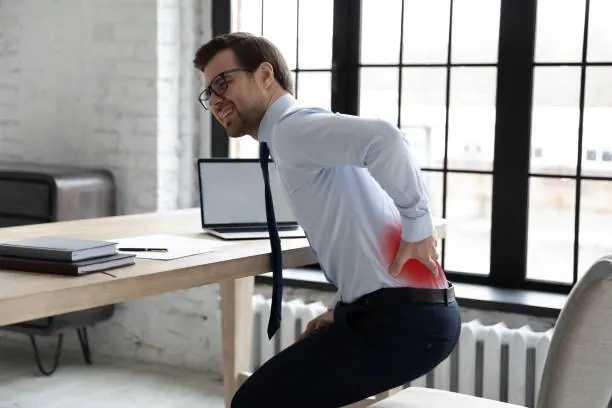
Stretching is supposed to help your back feel looser, so it can be frustrating when you finish a stretch and notice aching, tightness, or sharp pain in your lower back. You may feel discomfort immediately, several hours later, or the next morning, especially after touching your toes, pulling your knees toward your chest, or twisting your spine.
Mild muscle soreness does not always indicate an injury, but pain that increases during stretching should not be ignored. Forcing a movement, holding an uncomfortable position, or stretching an already irritated area may make symptoms worse.
Understanding why your lower back hurts after stretching can help you decide whether to modify your routine, take a short break, or seek medical advice. The type of pain, when it starts, and whether it travels into your legs can provide useful clues.
Why Does Stretching Make Your Lower Back Hurt?
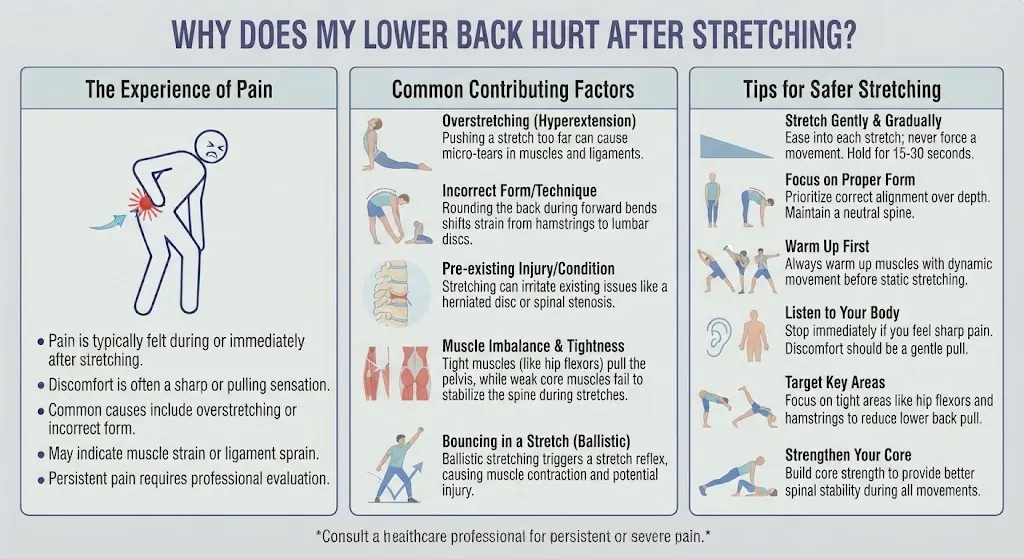
Lower back pain after stretching can result from muscle irritation, excessive force, limited mobility, or an underlying spinal condition. The movement itself does not reveal the exact cause, so consider the pattern and severity of your symptoms.
Common possibilities include:
- Overstretching: Pushing beyond your comfortable range can irritate muscles and other soft tissues.
- Muscle strain: A sudden movement, excessive force, or repeated stretching may aggravate or injure muscle fibers.
- Poor technique: Rounding or twisting your lower back excessively can increase discomfort during certain movements.
- Muscle spasms: Irritated muscles may tighten involuntarily, producing sudden pain or stiffness.
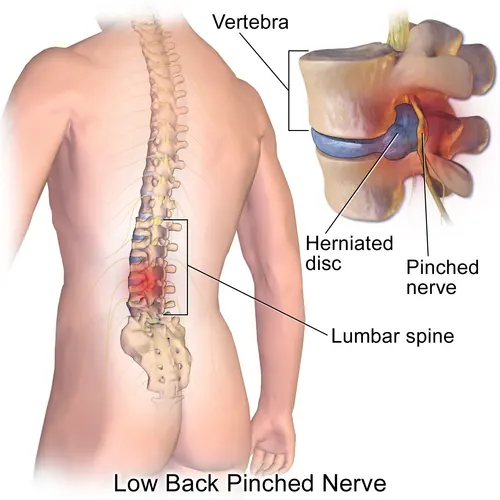
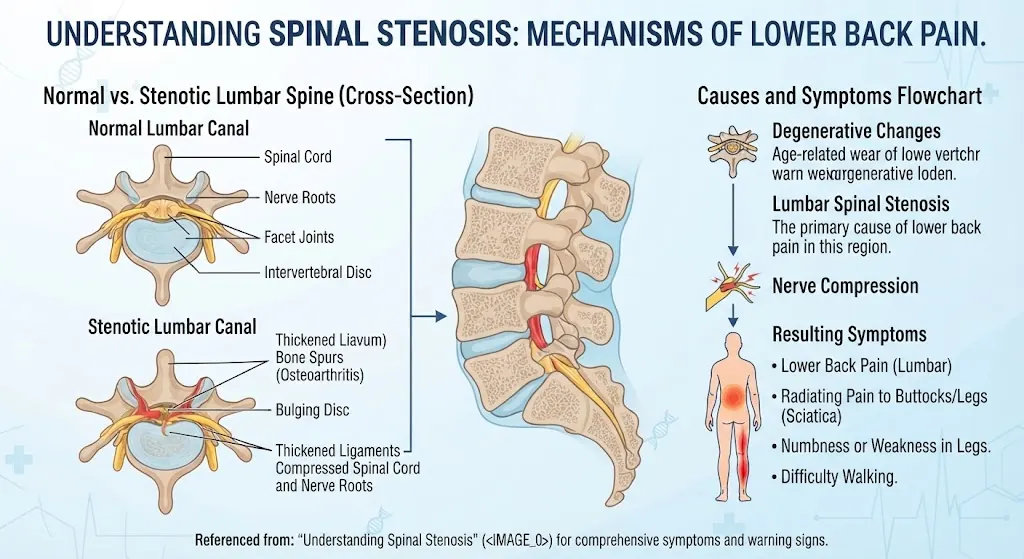
- Disc or nerve irritation: Forward bending may aggravate some disc-related conditions, particularly when pain spreads into the buttock or leg.
Other factors, including existing joint problems and prolonged inactivity, may contribute. Understanding what causes back pain can help put these possibilities into context.
What Does Your Pain Pattern Suggest?
| Pain pattern | Possible explanation | What to do |
|---|---|---|
| Mild soreness after an unfamiliar stretch | Temporary muscular soreness | Reduce intensity and monitor symptoms |
| Sharp pain during a stretch | Excessive force or irritated tissue | Stop the painful movement |
| Tightness with limited bending | Muscle sensitivity or restricted mobility | Use comfortable, gentle movement |
| Pain spreading into the buttock or leg | Possible nerve irritation | Seek assessment if persistent or worsening |
| Severe pain with new weakness or numbness | Possible significant nerve involvement | Obtain prompt medical evaluation |
These patterns are clues, not diagnoses. If your back also hurts after a workout, review why lower back pain occurs after exercise.
How Can You Relieve Lower Back Pain After Stretching?
For mild pain without warning signs, temporarily stop the movement that triggered your symptoms and allow your back to settle. You generally do not need to stop all activity.
Try these steps:
- Stop forcing the stretch. Do not bounce, push through sharp pain, or repeatedly test the painful movement.
- Keep moving comfortably. Short walks and gentle changes of position may help prevent stiffness.
- Apply heat or ice. Choose whichever feels more comfortable, protecting your skin and limiting each application to about 15–20 minutes.
- Modify daily activities. Temporarily reduce heavy lifting, deep bending, and twisting if they aggravate your back.
- Return gradually. Resume gentle mobility exercises when ordinary movement becomes more comfortable.
For more guidance, see how to relieve back pain at home, whether heat or ice is better for a pulled back muscle, and whether you should rest or keep moving with lower back pain.
Evidence-based back-pain guidance generally favors remaining active as tolerated rather than prolonged bed rest for uncomplicated back pain. However, the right activity level depends on the cause and severity of your symptoms.
Which Stretches Should You Avoid?
You do not necessarily need to avoid stretching permanently. Instead, temporarily remove movements that reproduce your pain and focus on comfortable, controlled motion.
| Movement | Why it may aggravate symptoms | Safer adjustment |
|---|---|---|
| Deep toe touches | Requires substantial forward bending | Bend your knees and reduce the range |
| Forceful knee-to-chest stretches | May aggravate some sensitive backs | Stop if pain increases |
| Deep spinal twists | Combine rotation with end-range movement | Use smaller, comfortable movements |
| Aggressive hamstring stretches | May increase tension through the back or leg | Keep the stretch gentle and avoid pulling forcefully |
The best approach depends on your symptoms. Learn whether stretching is good for lower back pain, which exercises to avoid with lower back pain, and how to stretch tight lower back muscles safely.
When you are ready, exercises for lower back pain may help you gradually restore comfortable movement. If stretching repeatedly triggers symptoms, a physical therapist can help identify suitable movements and correct your technique.
How Long Should Lower Back Pain After Stretching Last?
Mild muscular soreness often improves over a few days, while a strain or another underlying problem may take longer. There is no single recovery timeline that applies to everyone.
| Recovery pattern | Recommended response |
|---|---|
| Mild soreness that gradually improves | Continue comfortable daily activities |
| Pain that repeatedly returns with stretching | Modify your routine and consider an assessment |
| Pain that worsens or limits normal activities | Arrange medical evaluation |
| Pain accompanied by new neurological symptoms | Seek prompt medical advice |
If symptoms persist, consider how long lower back pain can last before evaluation is needed. A clinician may recommend physical therapy for lower back pain when tailored rehabilitation could help.
When Should You Seek Medical Care?
Arrange an appointment if your pain is persistent, repeatedly returns, interferes with daily activities, or travels down your leg. Symptoms such as progressive weakness, significant numbness, fever, or pain following a substantial injury also warrant medical assessment.
Seek emergency care if back pain occurs with new loss of bladder or bowel control, difficulty urinating, numbness around the groin or saddle area, or rapidly worsening leg weakness. These symptoms can indicate serious nerve compression.
For further guidance, review when to see a doctor for lower back pain and when back pain is an emergency.
Frequently Asked Questions
1. Is it normal for my lower back to hurt after stretching?
Mild soreness can occur after unfamiliar physical activity, but sharp or increasing pain is not a reason to push harder. Stop the triggering movement and monitor how symptoms change.
2. Why does my lower back hurt immediately after stretching?
Immediate pain may result from excessive force, an uncomfortable position, or irritation of sensitive tissues. The timing alone cannot identify the cause.
3. Can stretching cause a lower back muscle strain?
Yes. Forceful or sudden stretching can strain muscles, although not every painful stretch indicates an injury. Pain that persists or worsens deserves assessment.
4. Should I stretch again the next day?
Wait until the painful movement is comfortable before trying it again. Restart with a smaller range and stop if symptoms return.
5. Should I use heat or ice after stretching?
Either may provide temporary relief. Use a cloth barrier, avoid extreme temperatures, and choose the option that feels better.
6. Can tight hamstrings cause lower back pain during stretching?
Limited hamstring flexibility may change how you bend and move your pelvis. However, tight hamstrings are not the only possible explanation for back pain.
7. Why does stretching cause pain down my leg?
Pain radiating down the leg can occur with nerve irritation, including sciatica. Persistent symptoms, numbness, or weakness should be medically assessed.
8. Should I stop exercising if my back hurts after stretching?
Stop the painful exercise, but comfortable daily movement is often appropriate. Avoid activities that worsen symptoms until you can resume them gradually.
9. Can a herniated disc make stretching painful?
Yes, some disc-related conditions can become more painful with particular movements. An examination is needed to determine whether a disc problem is responsible.
10. When should I worry about back pain after stretching?
Seek medical advice for worsening, persistent, or function-limiting pain. Bladder or bowel changes, saddle-area numbness, or rapidly progressive weakness require emergency assessment.
The Bottom Line
Lower back pain after stretching may reflect temporary soreness, muscle strain, poor technique, or another underlying problem. Stop painful movements, remain gently active as tolerated, and return to stretching gradually rather than forcing your range of motion. Seek medical care if symptoms persist, worsen, or include warning signs.
Disclaimer: This article is provided for educational and informational purposes only.