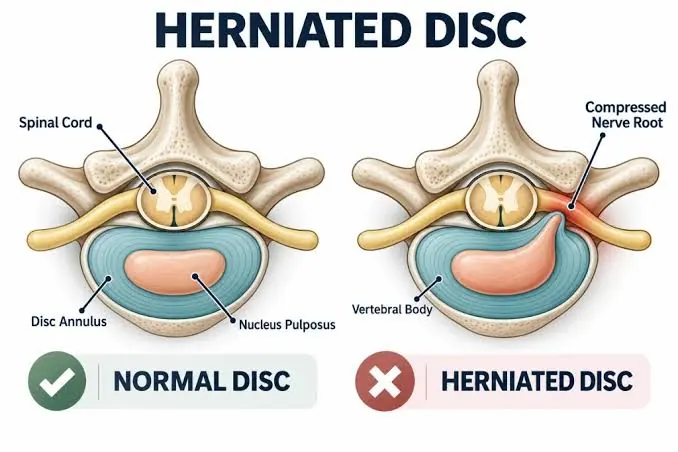
Although the terms are sometimes used interchangeably, a herniated disc and a pinched nerve are not the same thing. A herniated disc describes a change in the structure of a spinal disc, while a pinched nerve describes pressure or irritation affecting a nerve. A herniated disc can cause a pinched nerve, but nerve symptoms can also develop for other reasons.
Understanding the difference between a herniated disc vs. a pinched nerve can help you recognize possible symptom patterns, understand how clinicians evaluate these conditions, and know which treatments may be appropriate. Symptoms alone cannot confirm the cause, and certain warning signs require prompt medical attention.
What Is the Difference Between a Herniated Disc and a Pinched Nerve?
A herniated disc occurs when material inside a spinal disc pushes through a weakened or damaged area of its outer layer. A pinched nerve occurs when a nerve is compressed or irritated, potentially affecting sensation, movement, or both.
The two conditions overlap when a herniated disc presses on a nearby spinal nerve root. However, a nerve can also become compressed by narrowed spaces in the spine, bone spurs, or surrounding tissues.
| Feature | Herniated disc | Pinched nerve |
|---|---|---|
| What it means | Disc material protrudes through a weakened outer layer | A nerve is compressed or irritated |
| Common causes | Disc damage or age-related changes | Disc herniation, spinal narrowing, bone spurs, or tissue pressure |
| Typical symptoms | Back or neck pain, sometimes with radiating nerve pain | Shooting pain, tingling, numbness, or weakness; location varies |
| Can they occur together? | Yes, if the disc affects a nearby nerve | Yes, a herniated disc can be the cause |
| How it is evaluated | Examination and imaging when indicated | Examination, with imaging or nerve tests when appropriate |
For a closer look at herniated disc symptoms, remember that not every disc herniation causes pain. Imaging can reveal disc changes in people who have no symptoms, so findings must be interpreted alongside the clinical examination.
What Symptoms Can Help Distinguish Them?
Both conditions can cause similar symptoms, and the location of discomfort depends on which spinal region or nerve is affected.
| Symptom | What it may suggest |
|---|---|
| Localized neck or lower-back pain | A disc problem or another musculoskeletal cause |
| Pain traveling down one leg | Irritation of a lumbar nerve root, sometimes called sciatica |
| Pain radiating into an arm or hand | Possible nerve irritation in the neck |
| Tingling or numbness | Sensory nerve involvement |
| Muscle weakness | Possible motor nerve involvement requiring assessment |
A herniated disc in the lower back may cause lower-back pain from a herniated disc, but some people experience leg pain without significant back pain. The pattern described in leg pain without back pain is one reason symptoms alone cannot establish a diagnosis.
Pain traveling down the leg may be described as sciatica. This term describes a symptom pattern rather than one specific structural problem. A bulging disc causing sciatica is one possible explanation, but other conditions can also irritate the sciatic nerve.
What Causes a Pinched Nerve or Herniated Disc?
A herniated disc can develop when the disc’s outer layer weakens and its inner material protrudes. Age-related wear, repetitive loading, and some injuries may contribute. However, symptoms do not necessarily indicate that a disc has recently been damaged.
Other causes of nerve compression include:
-
Spinal stenosis: Narrowing around the spinal nerves.
-
Bone spurs: Bony growths that can reduce space around a nerve.
-
Local tissue pressure: Structures around a nerve may compress or irritate it.
-
Other spinal changes: Arthritis and degenerative changes can contribute to nerve irritation.
For example, spinal stenosis symptoms may include leg discomfort or heaviness during walking. The distinction matters because treatment depends on the underlying cause, not simply whether symptoms resemble a pinched nerve.
How Do Doctors Diagnose These Conditions?
Clinicians typically review your symptoms, medical history, and physical examination findings. They may assess muscle strength, sensation, reflexes, walking, and movements that reproduce your symptoms.
An MRI may be appropriate when symptoms persist, significant neurological changes occur, or imaging could affect treatment decisions. It is not routinely necessary for every episode of back pain. Nerve conduction studies or electromyography may sometimes help evaluate suspected nerve dysfunction.
If you are wondering whether lower-back pain needs an MRI, the decision generally depends on your examination, symptom duration, warning signs, and whether the results would change management.
How Are a Herniated Disc and a Pinched Nerve Treated?
Treatment depends on the cause, severity, and presence of neurological changes. Many cases can initially be managed without surgery, but progressive weakness or other serious findings may require more urgent evaluation.
| Treatment approach | When it may help | Important consideration |
|---|---|---|
| Gentle activity | Maintains movement and everyday function | Modify activities that worsen symptoms |
| Physical therapy | Builds strength and improves movement tolerance | Exercises should match your symptoms and abilities |
| Medication | May provide symptom relief | Benefits and risks depend on the medication and your health |
| Surgery | Selected cases with significant compression or persistent disabling symptoms | Requires individualized assessment |
For appropriate cases, physical therapy for lower-back pain can support recovery. Gentle exercises for lower-back pain may also help, but stop movements that increase radiating pain, numbness, or weakness.
For short-term comfort, consider relieving back pain at home and choosing heat or ice for back pain according to what feels helpful. Avoid prolonged bed rest, forceful stretching, and heavy lifting that aggravates symptoms.
Seek emergency care for new loss of bladder or bowel control, difficulty urinating, numbness around the groin or saddle area, or rapidly worsening weakness. These can indicate serious nerve compression. Persistent numbness, new weakness, or worsening radiating pain also warrants prompt medical assessment.
Frequently Asked Questions
1. Is a herniated disc always a pinched nerve?
No. A herniated disc may not affect a nearby nerve, and some people have no symptoms. It becomes a cause of nerve compression when the displaced material affects a nerve or nerve root.
2. Which is more serious: a herniated disc or a pinched nerve?
Neither term automatically indicates greater severity. The degree of nerve dysfunction, the underlying cause, and the progression of symptoms are more important.
3. Can a pinched nerve heal on its own?
Some cases improve when inflammation and pressure decrease. Recovery depends on the cause and severity, so persistent or worsening symptoms need evaluation.
4. Can you have a herniated disc without back pain?
Yes. A herniated disc can cause symptoms mainly in an arm or leg, or it may cause no symptoms at all.
5. Does a pinched nerve always cause numbness?
No. It may cause pain, tingling, weakness, numbness, or a combination of symptoms. Some people primarily experience pain.
6. How long does a herniated disc take to heal?
Many symptomatic disc herniations improve over several weeks, although recovery varies. Persistent symptoms or neurological changes may require additional treatment.
7. Can an MRI tell the difference?
MRI can show disc abnormalities and possible nerve compression, but findings must match your symptoms and examination. Imaging alone does not prove that a visible abnormality is causing pain.
8. Should you rest with a pinched nerve?
Briefly reducing aggravating activities may help, but prolonged bed rest is generally not recommended for uncomplicated back pain. Maintain gentle movement as tolerated.
9. Can exercise make a herniated disc worse?
Certain movements may aggravate symptoms, particularly if they increase pain traveling down a limb. A clinician or physical therapist can help identify appropriate modifications.
10. When should you seek urgent care?
Seek emergency care for new bladder or bowel dysfunction, saddle-area numbness, or rapidly progressing weakness. Severe or worsening neurological symptoms should not be managed with home treatment alone.
Conclusion
A herniated disc describes a structural change, while a pinched nerve describes nerve compression or irritation. They can occur together, but other conditions can also cause nerve symptoms. If pain persists, numbness worsens, or weakness develops, seek medical evaluation to determine the cause and appropriate treatment.
Disclaimer: This article is provided for educational and informational purposes only.