Sciatica-related walking pain does not automatically mean that you are damaging your spine or that you need surgery. However, pain that repeatedly worsens with movement, limits your walking distance, or occurs with numbness or weakness deserves attention, particularly if your symptoms are progressing.
Sciatica can cause pain when walking because irritation or compression of a spinal nerve can produce symptoms along the leg. The underlying cause, walking posture, duration of activity, and severity of nerve involvement can influence how much discomfort you experience. Understanding these factors can help you adjust your activity safely and recognize when medical evaluation is necessary.
Why Does Sciatica Cause Pain When Walking?
Sciatica describes pain associated with irritation or compression of the sciatic nerve or its contributing nerve roots in the lower spine. It commonly affects one side of the body and may cause sharp, burning, shooting, or electric-like pain that travels from the buttock into the leg.
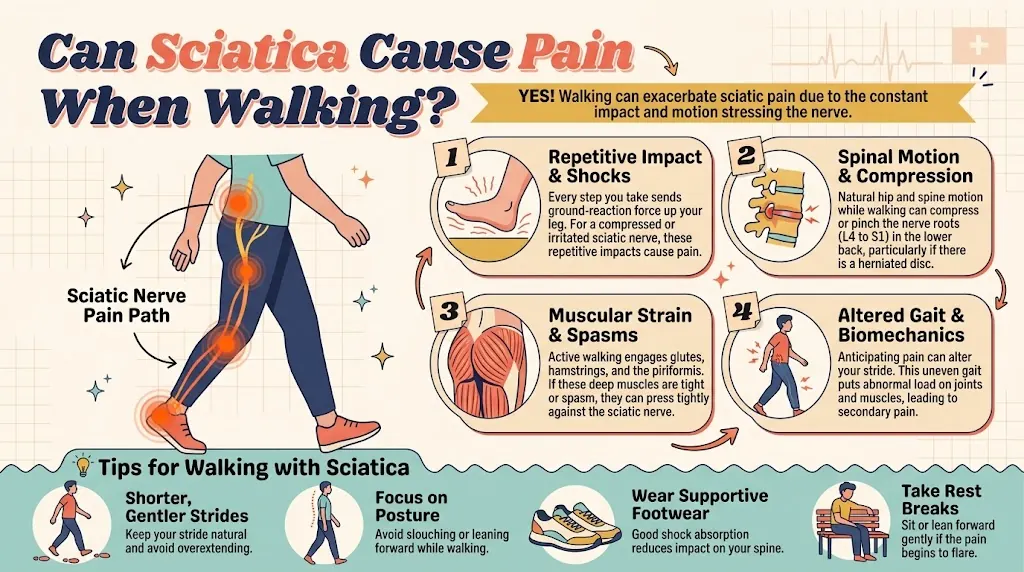
Walking repeatedly moves the hips and lower back and places demands on the muscles supporting the spine. Depending on the underlying condition, these movements may aggravate sensitive nerve tissue or increase pressure around a nerve root.
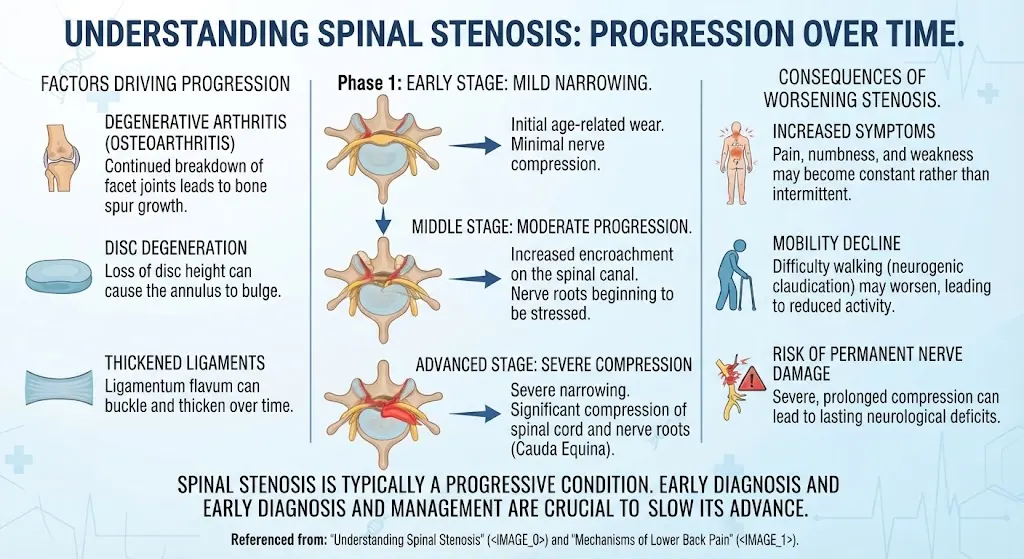
Several conditions can contribute to sciatica, including a herniated disc, age-related changes in the spine, and spinal stenosis. For example, narrowing of the spinal canal can produce leg pain or heaviness during standing and walking that improves when sitting or bending forward.
Understanding the common causes of sciatica can help explain why walking affects some people more than others.
What Does Sciatica Pain While Walking Feel Like?
Symptoms vary according to the affected nerve and the underlying cause. Some people experience discomfort primarily in the buttock or thigh, while others feel pain extending toward the ankle or foot.
Common symptoms include:
-
Sharp or shooting pain traveling down one leg.
-
Burning, tingling, or pins-and-needles sensations.
-
Numbness in the calf, foot, or toes.
-
A pulling sensation or heaviness in the leg.
-
Pain that becomes worse after standing or walking for several minutes.
-
Difficulty walking normally because of discomfort or weakness.
Some people also experience sciatica-related leg tingling or foot numbness associated with sciatica.
Pain does not always begin in the lower back. Leg pain can occur even when back discomfort is mild or absent, so the location of pain alone cannot identify its cause.
Why Is Sciatica Worse When Walking?
Walking-related sciatica can have different patterns depending on what irritates the nerve. Noticing when the pain begins and what relieves it can help a clinician narrow down possible causes.
| Possible cause | Typical walking-related pattern |
|---|---|
| Herniated disc | Pain may travel from the lower back or buttock down one leg and worsen with certain movements. |
| Spinal stenosis | Leg pain, tingling, or heaviness may develop while standing or walking and ease when sitting or leaning forward. |
| Nerve-root irritation | Shooting pain, tingling, or numbness may follow a particular path down the leg. |
| Muscle or soft-tissue irritation | Buttock discomfort may worsen with activity, although similar symptoms can have several causes. |
A herniated disc can contribute to lower back pain that travels into the leg. Spinal stenosis can cause leg pain that develops during walking, especially when the spinal canal becomes narrower during standing or back extension.
Other conditions can resemble sciatica. For example, circulation problems may cause calf pain during walking, while hip or knee conditions can cause pain around the joints. Do not assume every episode of leg pain is nerve-related.
Is Walking Good for Sciatica or Should You Rest?
Gentle walking can help many people with sciatica, provided it does not substantially worsen their symptoms. Prolonged bed rest and avoiding all movement are generally discouraged, but pushing through severe or increasing pain is not advisable.
The best approach is to adjust your walking distance to your current tolerance and increase it gradually.
| Walking approach | When it may help |
|---|---|
| Short, frequent walks | When longer walks trigger symptoms |
| Slower pace | When fast walking increases discomfort |
| Brief sitting breaks | When standing or walking progressively worsens leg symptoms |
| Temporary activity modification | When hills, long strides, or prolonged standing aggravate pain |
If you also experience sciatica pain when sitting, alternate between comfortable positions rather than remaining seated for long periods. Some people feel better sitting, while others find that sitting increases nerve-related symptoms.
How to Walk More Comfortably With Sciatica
Try these practical adjustments:
-
Start with a manageable distance. Walk for a few minutes if that is all you can tolerate comfortably.
-
Choose level ground. Hills and uneven surfaces may increase the demands on your back and legs.
-
Take shorter steps. Avoid forcing a long stride if it increases pain.
-
Change positions regularly. Pause or sit briefly when symptoms begin to build.
-
Increase gradually. Extend your walking time only when your current level is manageable.
If walking causes calf pain related to possible sciatica or knee pain that may be nerve-related, arrange an evaluation if the symptoms persist or interfere with daily activities. These locations alone cannot confirm that sciatica is responsible.
What Can You Do at Home to Relieve Sciatica Pain While Walking?
Home care focuses on maintaining tolerable movement and avoiding activities that repeatedly aggravate symptoms.
-
Use gentle movement: Try brief walks or other comfortable activities rather than prolonged bed rest.
-
Apply heat if it helps: A warm pack may ease muscle tightness. Protect your skin and avoid excessive heat.
-
Consider appropriate exercises: Gentle exercises may help maintain mobility, but stop any movement that causes increasing leg pain, numbness, or weakness.
-
Avoid prolonged aggravating positions: Repeated bending, heavy lifting, or twisting may worsen symptoms in some people.
-
Review medication safety: Ask a clinician or pharmacist whether an over-the-counter pain reliever is appropriate, especially if you have kidney disease, stomach ulcers, take blood thinners, or have other medical conditions.
For additional guidance, see how to relieve back pain at home, exercises for lower back pain, and what to avoid doing with sciatica.
Evidence-based guidance supports self-management, appropriate exercise, and continuing normal activities as tolerated. However, the right exercise and activity level depend on the person’s symptoms and functional ability.
How Long Does Sciatica Pain When Walking Last?
Recovery depends on the underlying cause, symptom severity, and whether nerve irritation is continuing. Many episodes improve over several weeks, although some persist longer or recur.
| Recovery pattern | What it may mean |
|---|---|
| Gradual improvement over days or weeks | Symptoms may be settling with time and activity adjustments. |
| Pain returns after longer walks | Your current walking tolerance may be lower than the activity demands. |
| Persistent or worsening symptoms | A clinician should assess whether additional treatment is needed. |
A useful goal is gradual improvement in walking distance and daily function, rather than expecting all pain to disappear immediately. If symptoms are not improving after a few weeks, are limiting normal activities, or worsen at any point, arrange medical evaluation. Persistent symptoms may require physical therapy or further assessment
When Is Sciatica Pain While Walking a Warning Sign?
Walking pain should not automatically be attributed to sciatica, especially when symptoms are new, severe, or changing.
| Symptom pattern | Recommended action |
|---|---|
| Mild, stable discomfort that improves with rest or position changes | Monitor symptoms and adjust activity as tolerated. |
| Persistent pain, increasing numbness, or difficulty walking normally | Arrange prompt medical evaluation. |
| New or worsening leg weakness | Seek urgent medical assessment. |
| New loss of bladder or bowel control, difficulty urinating, or numbness around the groin or buttocks | Seek emergency care immediately. |
Emergency warning signs can indicate serious nerve compression. If you experience warning signs that make back pain an emergency, do not wait for symptoms to resolve on their own.
A clinician can assess your strength, sensation, reflexes, walking pattern, and medical history. Imaging, such as an MRI, is not routinely necessary for every episode; it may be considered when findings could change treatment decisions.
Frequently Asked Questions
1. Can sciatica cause pain only when walking?
Yes. Some people mainly notice symptoms during standing or walking, while others experience discomfort when sitting or lying down. The pattern depends on the underlying cause.
2. Why does my leg hurt after walking but feel better when I sit?
Sitting may reduce pressure around certain irritated nerve roots, particularly in spinal stenosis. However, other conditions can produce similar patterns, so persistent symptoms should be evaluated.
3. Should I keep walking if sciatica hurts?
Continue gentle movement if it remains tolerable, but shorten your walks or pause when pain increases. Do not push through severe pain, new weakness, or worsening numbness.
4. Can sciatica cause foot pain during walking?
Yes. Sciatic nerve-root irritation can cause pain that travels into the foot. Other causes of foot pain are possible, so new or persistent symptoms deserve assessment.
5. Can sciatica cause leg weakness while walking?
Yes, nerve involvement can affect muscle strength. New or progressive weakness needs urgent medical assessment, particularly if it makes walking difficult.
6. Is walking uphill worse for sciatica?
It can be for some people because inclines change hip and trunk movement and increase physical demands. Try level ground if hills aggravate your symptoms.
7. Can sciatica get worse if I walk too much?
Walking beyond your current tolerance may trigger a flare-up. Reduce the distance temporarily and build up gradually rather than repeatedly provoking severe symptoms.
8. Do I need an MRI for sciatica pain when walking?
Not necessarily. An MRI is generally considered when symptoms or examination findings suggest that imaging could affect treatment, rather than simply because walking hurts.
9. When should I see a doctor for sciatica?
Seek an appointment if pain persists for several weeks, worsens, or interferes with normal activities. Get urgent assessment for new weakness and emergency care for bladder or bowel changes or numbness around the groin.
10. Can sciatica pain when walking go away on its own?
Many cases improve over several weeks with time, appropriate activity adjustments, and sometimes guided exercise or other treatment. Recovery varies, and worsening symptoms should not be ignored.
Related Symptoms Worth Tracking
When discussing walking-related pain with a healthcare professional, note whether symptoms extend into the hip or buttock, foot, or groin. Also record whether you experience leg weakness, lower back pain and leg numbness, or heavy legs with back pain.
These patterns may help distinguish nerve-related symptoms from other causes. If discomfort occurs mainly after walking and improves when you stop, a clinician may also consider other causes of leg pain during walking and whether physical therapy can help lower back pain.
Conclusion
Sciatica can cause pain while walking when nerve roots in the lower spine are irritated or compressed. Shorter walks, comfortable movement, and gradual increases in activity may help, but persistent pain or worsening symptoms warrant medical evaluation. Seek emergency care for new bladder or bowel dysfunction, numbness around the groin, or other signs of serious nerve compression.
Disclaimer: This article is provided for educational and informational purposes only.